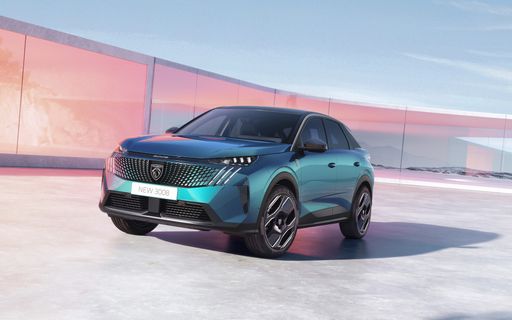
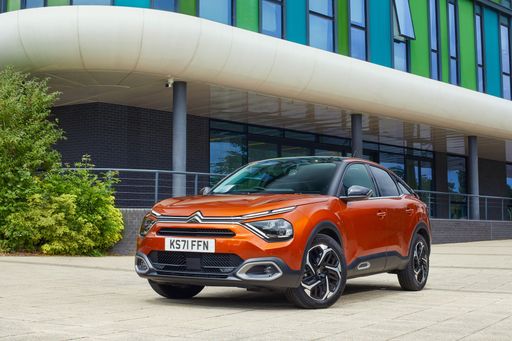
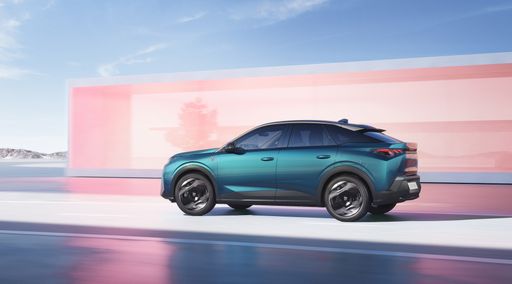
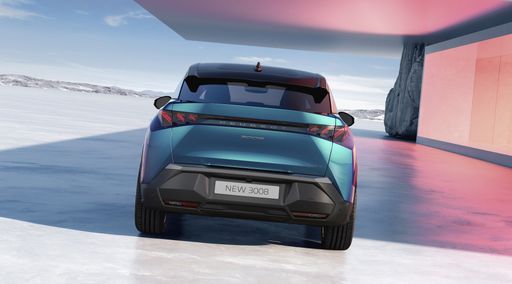
Compare performance (156 HP vs 325 HP), boot space and price (20,600 £ vs 36,500 £ ) at a glance. Find out which car is the better choice for you – Citroen C4 or Peugeot 3008?
All details on performance, efficiency, range and trunk space can be found in the technical comparison below – including user reviews for both models.
Price and efficiency are often the first things buyers look at. Here it becomes clear which model has the long-term edge – whether at the pump, the plug, or in purchase price.
Citroen C4 is substantially cheaper – starting at 20,600 £ , while the Peugeot 3008 costs 36,500 £ . That’s a price difference of around 15,952 £.
Fuel consumption also shows a difference: the Peugeot 3008 uses 2.4 L/100km and is substantially more efficient than the Citroen C4 with 4.7 L/100km. The difference is about 2.3 L/100km.
In terms of energy consumption, the Citroen C4 is somewhat more efficient: consuming 14.5 kWh/100km compared to 16.9 kWh/100km for the Peugeot 3008. That’s a difference of about 2.4 kWh/100km.
As for electric range, the Peugeot 3008 offers markedly more range – reaching up to 698 km, about 271 km more than the Citroen C4.
Under the bonnet, it becomes clear which model is tuned for sportiness and which one takes the lead when you hit the accelerator.
When it comes to engine power, the Peugeot 3008 offers significantly more power – delivering 325 HP compared to 156 HP. That’s roughly 169 HP more horsepower.
When accelerating from 0 to 100 km/h, the Peugeot 3008 is markedly quicker – completing the sprint in 6 s, while the Citroen C4 takes 8 s. That’s about 2 s quicker.
Looking at top speed, the Peugeot 3008 is slightly faster – reaching 170 km/h, while the Citroen C4 tops out at 150 km/h. The difference is around 20 km/h.
There’s also a difference in torque: the Peugeot 3008 delivers substantially more torque with 511 Nm compared to 270 Nm. That’s about 241 Nm more.
Beyond pure performance, interior space and usability matter most in daily life. This is where you see which car is more practical and versatile.
Both vehicles offer seating for 5 people.
In terms of curb weight, Citroen C4 is moderately lighter – 1,403 kg compared to 1,648 kg. The difference is around 245 kg.
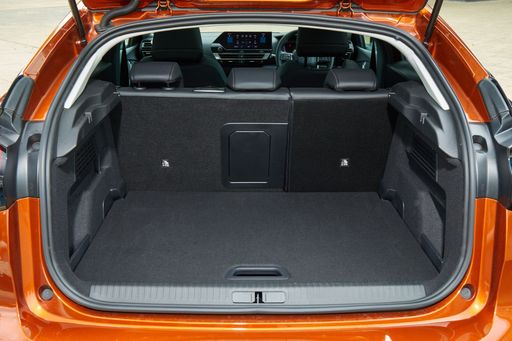
Looking at boot space, the Peugeot 3008 offers barely more boot space – 520 L compared to 510 L. That’s a difference of about 10 L.
For maximum load capacity, the Peugeot 3008 offers marginally more capacity – up to 1,480 L, about 120 L more than the Citroen C4.
When it comes to payload, the Peugeot 3008 carries moderately more – 467 kg compared to 406 kg. That’s a difference of about 61 kg.
The Peugeot 3008 stands well ahead of its rival in the objective data comparison.
This result only shows which model scores more points on paper – not which of the two cars feels right for you.
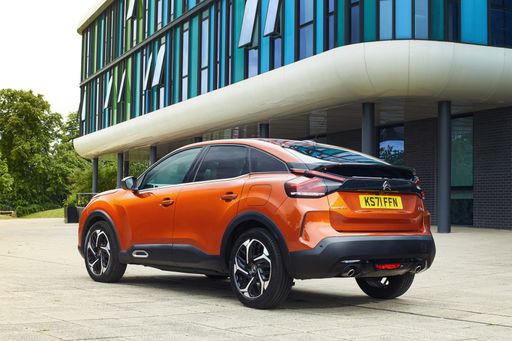
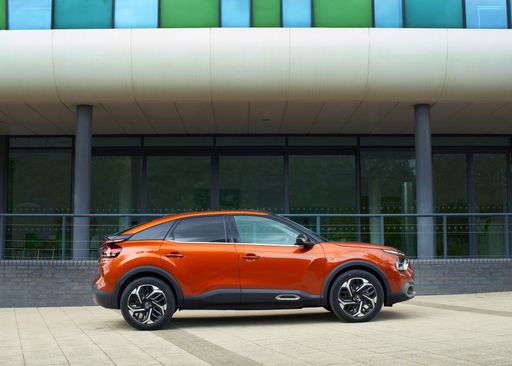
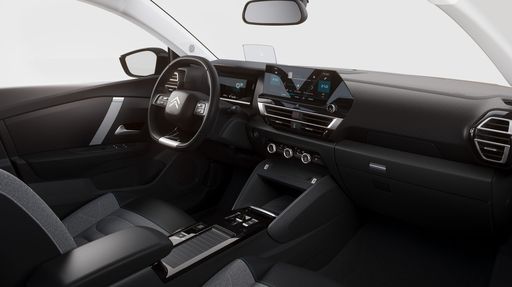
Citroën C4 wears its French eccentricity with confidence, pairing bold, sculpted styling with a supremely comfortable ride that turns mundane commutes into a gentler affair. If you value relaxed comfort, clever practicality and a car with personality rather than pretence, the C4 is a charming, sensible choice — and it won't make you miss the usual hot‑hatch theatrics.
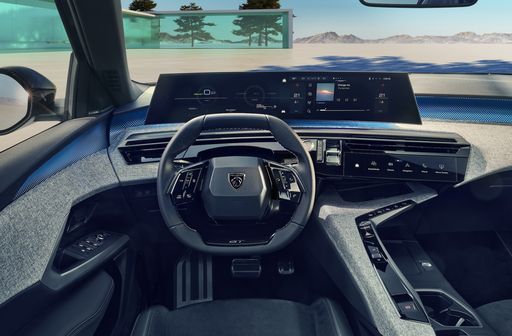
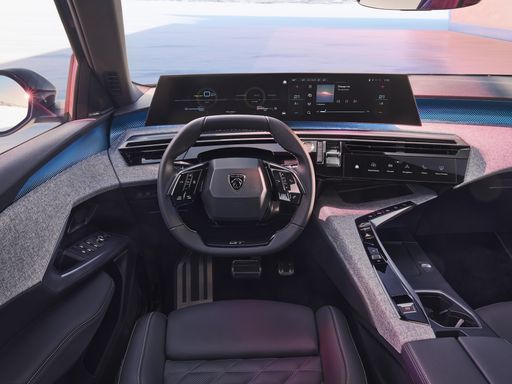
detailsThe Peugeot 3008 blends bold French styling with a surprisingly grown-up interior that makes even dull commutes feel a little bit special. Practical enough for family life yet lively to drive, it’s a clever all‑rounder that stands out from the crossover crowd without shouting for attention.
detailsCosts and Consumption |
|
|---|---|
|
Price
20,600 - 32,200 £
|
Price
36,500 - 52,200 £
|
|
Consumption L/100km
4.7 - 4.8 L/100km
|
Consumption L/100km
2.4 - 5.3 L/100km
|
|
Consumption kWh/100km
14.5 - 15.3 kWh/100km
|
Consumption kWh/100km
16.9 - 17.4 kWh/100km
|
|
Electric Range
354 - 427 km
|
Electric Range
81 - 698 km
|
|
Battery Capacity
46 - 51 kWh
|
Battery Capacity
96.9 kWh
|
|
co2
0 - 108 g/km
|
co2
0 - 121 g/km
|
|
Fuel tank capacity
-
|
Fuel tank capacity
-
|
Dimensions and Body |
|
|---|---|
|
Body Type
SUV
|
Body Type
SUV
|
|
Seats
5
|
Seats
5
|
|
Doors
4 - 5
|
Doors
5
|
|
Curb weight
1,403 - 1,659 kg
|
Curb weight
1,648 - 2,266 kg
|
|
Trunk capacity
380 - 510 L
|
Trunk capacity
470 - 520 L
|
|
Length
4,350 - 4,580 mm
|
Length
4,542 mm
|
|
Width
1,800 - 1,834 mm
|
Width
1,895 mm
|
|
Height
1,520 - 1,525 mm
|
Height
1,641 mm
|
|
Max trunk capacity
1,250 - 1,360 L
|
Max trunk capacity
1,480 L
|
|
Payload
379 - 406 kg
|
Payload
432 - 467 kg
|
Engine and Performance |
|
|---|---|
|
Engine Type
Electric, Petrol MHEV
|
Engine Type
Electric, Petrol MHEV, Plugin Hybrid
|
|
Transmission
Automatic
|
Transmission
Automatic
|
|
Transmission Detail
Reduction Gearbox, Dual-Clutch Automatic
|
Transmission Detail
Reduction Gearbox, Dual-Clutch Automatic
|
|
Drive Type
Front-Wheel Drive
|
Drive Type
Front-Wheel Drive, All-Wheel Drive
|
|
Power HP
110 - 156 HP
|
Power HP
145 - 325 HP
|
|
Acceleration 0-100km/h
8 - 10.8 s
|
Acceleration 0-100km/h
6 - 10.2 s
|
|
Max Speed
150 km/h
|
Max Speed
170 km/h
|
|
Torque
205 - 270 Nm
|
Torque
230 - 511 Nm
|
|
Number of Cylinders
3
|
Number of Cylinders
3 - 4
|
|
Power kW
81 - 115 kW
|
Power kW
107 - 239 kW
|
|
Engine capacity
1,199 cm3
|
Engine capacity
1,199 - 1,598 cm3
|
General |
|
|---|---|
|
Model Year
2,025 - 2,026
|
Model Year
2,024 - 2,026
|
|
CO2 Efficiency Class
A, C
|
CO2 Efficiency Class
A, D, B
|
|
Brand
Citroen
|
Brand
Peugeot
|