VS

Citroen C5 Aircross vs Peugeot 308 SW comparison

Compare performance (225 HP vs 195 HP), boot space and price (29,100 £ vs 30,100 £ ) at a glance. Find out which car is the better choice for you – Citroen C5 Aircross or Peugeot 308 SW?

Citroen C5 Aircross vs Peugeot 308 SW: Key differences

Citroen C5 Aircross

4 (6 Reviews)
rate
  • barely cheaper
  • somewhat more power
  • slightly more electric range
  • barely more trunk space
details

Peugeot 308 SW

4.5 (2 Reviews)
rate
  • very slightly more efficient
  • only slightly more efficient
  • marginally quicker 0–100 km/h
  • marginally lighter
details

All details on performance, efficiency, range and trunk space can be found in the technical comparison below – including user reviews for both models.

By Achim Sedelmaier

C5 Aircross

Head to Head: Citroen C5 Aircross vs. Peugeot 308 SW

As we charge into 2024, the automotive market continues to see a surge in interest around SUVs and wagons, thanks to their emphasis on utility, style, and efficiency. Today, we delve into a comparison of two intriguing contenders: the Citroen C5 Aircross and the Peugeot 308 SW. With both offering a myriad of options in terms of powertrains and features, let's explore how they measure up against each other in this automotive showdown.
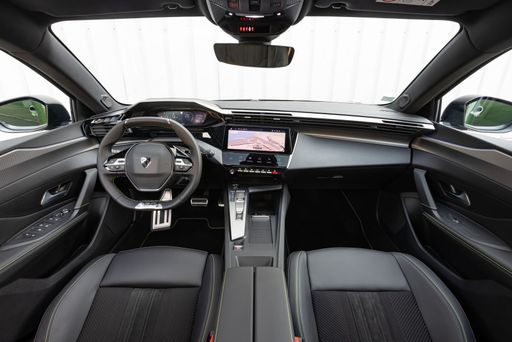
308 SW

Design and Body Type

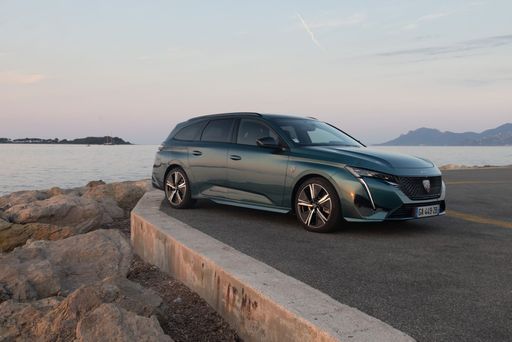
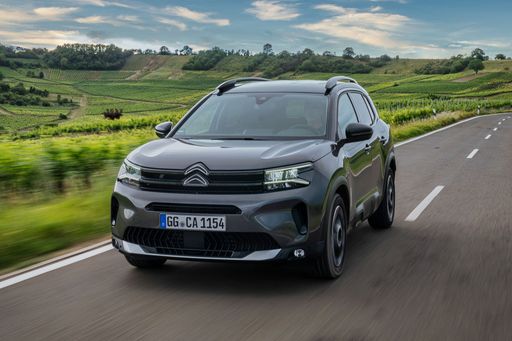
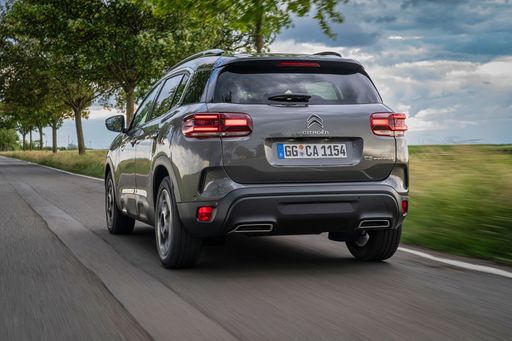
The Citroen C5 Aircross proudly stands as a compact SUV, embodying a commanding presence with its length of 4500mm and a height of 1688mm. The Peugeot 308 SW, on the other hand, presents itself as a sleek wagon, slightly longer at 4636mm but significantly lower in height at 1442mm. Both vehicles boast five-door configurations, ensuring practicality and easy access for passengers and cargo.

C5 Aircross

Powertrain and Performance

The Citroen C5 Aircross offers a versatile engine lineup, featuring diesel, petrol mild-hybrid, and plug-in hybrid options. Horsepower ranges from 131 to an impressive 224 HP, allowing for a choice that balances between economy and performance. The Peugeot 308 SW counters with an array of powerplant options as well, including an electric variant promising up to 410 km of range. Over its petrol and hybrid selections, the 308 SW delivers a power spectrum from 130 to 225 HP.

Both vehicles share a front-wheel-drive system and are equipped with dual-clutch automatic transmissions, with manual options available for the 308 SW. Analyzing the acceleration figures, the C5 Aircross completes a 0-100 km/h sprint in times ranging from 8.9 to 10.6 seconds, while the 308 SW can do the same in a brisker 7.6 to 10.9 seconds, showcasing its sportier edge.

308 SW

Efficiency and Economy

Efficiency is where these two models both shine yet differ subtly. The fuel consumption of the C5 Aircross varies from 5.5 to 5.6 L/100km for the non-hybrids, with an exceptional 1.4 L/100km for its plug-in hybrid model. In contrast, the 308 SW offers similar figures in its hybrid form at 1.3 L/100km, while its conventional engines range between 5.1 to 5.9 L/100km. The electrified 308 SW boasts a low consumption of 15.3 kWh/100km, further asserting Peugeot's commitment to sustainable driving.

C5 Aircross

Interior and Cargo Space

When it comes to carrying capacity, the Citroen C5 Aircross delivers with a trunk volume of up to 580 liters, slightly outweighing the Peugeot 308 SW's offering of 608 liters, thanks to its efficient wagon design. Both vehicles come with ample seating for five passengers, ensuring a comfortable journey for all on board.

308 SW

Technology and Innovations

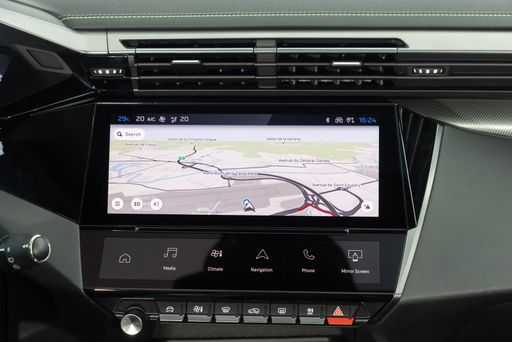
Both the C5 Aircross and the 308 SW brim with the latest automotive innovations, offering intuitive infotainment systems and connectivity options. Advanced driving aids are standard, with capabilities like lane-keeping assistance and adaptive cruise control to bolster safety and convenience. Battery capacity in their hybrid models runs from Citroen's 12.9 kWh to Peugeot’s 11.3 kWh in the plugin versions.

C5 Aircross

Concluding Thoughts

Choosing between the Citroen C5 Aircross and the Peugeot 308 SW boils down to priorities: whether it's the elevated ride and distinctive stance of an SUV or the sharper handling and sleeker profile of a wagon. Both models offer compelling benefits and cater to a wide array of drivers' needs. Be it the family-oriented SUV with its larger profile or the dynamic and efficient wagon, there's no wrong decision—only the one that best fits your lifestyle and tastes. The journey ahead in either will surely be a satisfying one.

Here’s where it gets real: The technical differences in detail

C5 Aircross

Costs and Efficiency:

When it comes to price and running costs, the biggest differences usually appear. This is often where you see which car fits your budget better in the long run.

Citroen C5 Aircross is barely cheaper – starting at 29,100 £ , while the Peugeot 308 SW costs 30,100 £ . That’s a price difference of around 986 £.

Fuel consumption also shows a difference: the Peugeot 308 SW uses 2.3 L/100km and is very slightly more efficient than the Citroen C5 Aircross with 2.5 L/100km. The difference is about 0.2 L/100km.

In terms of energy consumption, the Peugeot 308 SW is only slightly more efficient: consuming 15.7 kWh/100km compared to 17 kWh/100km for the Citroen C5 Aircross. That’s a difference of about 1.3 kWh/100km.

As for electric range, the Citroen C5 Aircross offers slightly more range – reaching up to 520 km, about 76 km more than the Peugeot 308 SW.

308 SW

Engine and Performance:

Under the bonnet, it becomes clear which model is tuned for sportiness and which one takes the lead when you hit the accelerator.

When it comes to engine power, the Citroen C5 Aircross offers somewhat more power – delivering 225 HP compared to 195 HP. That’s roughly 30 HP more horsepower.

When accelerating from 0 to 100 km/h, the Peugeot 308 SW is marginally quicker – completing the sprint in 7.7 s, while the Citroen C5 Aircross takes 8.3 s. That’s about 0.6 s quicker.

Both models offer the same torque – 300 Nm.

C5 Aircross

Space and Everyday Use:

Beyond pure performance, interior space and usability matter most in daily life. This is where you see which car is more practical and versatile.

Both vehicles offer seating for 5 people.

In terms of curb weight, Peugeot 308 SW is marginally lighter – 1,484 kg compared to 1,629 kg. The difference is around 145 kg.

Looking at boot space, the Citroen C5 Aircross offers barely more boot space – 565 L compared to 551 L. That’s a difference of about 14 L.

When it comes to payload, the Peugeot 308 SW carries only slightly more – 508 kg compared to 471 kg. That’s a difference of about 37 kg.

Who wins the race in the data check?

The Citroen C5 Aircross sits just ahead overall in the objective data comparison.
This result only shows which model scores more points on paper – not which of the two cars feels right for you.

from £29,100
C5 Aircross

Citroen C5 Aircross

  • Engine Type Petrol MHEV, Electric, Plugin Hybrid
  • Transmission Automatic
  • Drive Type Front-Wheel Drive
  • Power HP 145 - 225 HP
  • Consumption L/100km 2.5 - 5.4 L/100km
  • Consumption kWh/100km 17 kWh/100km
  • Electric Range 81 - 520 km
Citroen C5 Aircross
Peugeot 308 SW

Costs and Consumption

View detailed analysis

Engine and Performance

View detailed analysis

Dimensions and Body

View detailed analysis

Citroen C5 Aircross

The Citroën C5 Aircross feels like a sofa on wheels, delivering a calm, floaty ride and clever packaging that makes life with luggage and kids noticeably easier. Quirky French styling and a supremely practical, family-focused cabin mean it quietly wins hearts by prioritising comfort over showroom bravado.

details

Peugeot 308 SW

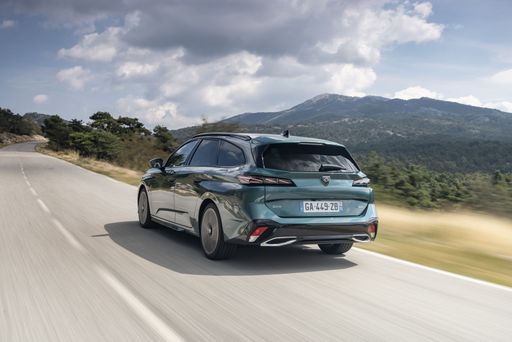
The Peugeot 308 SW blends French flair with estate practicality, dressing up daily chores in a surprisingly handsome package. Inside it's cleverly laid out and comfortable, and the composed, entertaining drive makes family duty feel a little less like a chore.

details
Citroen C5 Aircross
Peugeot 308 SW

Costs and Consumption

Price
29,100 - 43,000 £
Price
30,100 - 43,800 £
Consumption L/100km
2.5 - 5.4 L/100km
Consumption L/100km
2.3 - 5.1 L/100km
Consumption kWh/100km
17 kWh/100km
Consumption kWh/100km
15.7 kWh/100km
Electric Range
81 - 520 km
Electric Range
81 - 444 km
Battery Capacity
-
Battery Capacity
-
co2
0 - 121 g/km
co2
0 - 134 g/km
Fuel tank capacity
-
Fuel tank capacity
-

Dimensions and Body

Body Type
SUV
Body Type
Estate
Seats
5
Seats
5
Doors
-
Doors
-
Curb weight
1,629 - 2,184 kg
Curb weight
1,484 - 1,783 kg
Trunk capacity
565 L
Trunk capacity
467 - 551 L
Length
-
Length
-
Width
1,870 mm
Width
1,852 mm
Height
-
Height
-
Max trunk capacity
-
Max trunk capacity
-
Payload
446 - 471 kg
Payload
417 - 508 kg

Engine and Performance

Engine Type
Petrol MHEV, Electric, Plugin Hybrid
Engine Type
Petrol MHEV, Diesel, Plugin Hybrid, Electric
Transmission
Automatic
Transmission
Automatic
Transmission Detail
Dual-Clutch Automatic, Reduction Gearbox
Transmission Detail
Dual-Clutch Automatic, Automatic Gearbox, Reduction Gearbox
Drive Type
Front-Wheel Drive
Drive Type
Front-Wheel Drive
Power HP
145 - 225 HP
Power HP
131 - 195 HP
Acceleration 0-100km/h
8.3 - 11.2 s
Acceleration 0-100km/h
7.7 - 10.9 s
Max Speed
-
Max Speed
-
Torque
230 - 300 Nm
Torque
230 - 300 Nm
Number of Cylinders
3 - 4
Number of Cylinders
3 - 4
Power kW
107 - 165 kW
Power kW
96 - 143 kW
Engine capacity
1,199 - 1,598 cm3
Engine capacity
1,199 - 1,598 cm3

General

Model Year
2,025 - 2,026
Model Year
2,025 - 2,026
CO2 Efficiency Class
D, A, B
CO2 Efficiency Class
C, D, B, A
Brand
Citroen
Brand
Peugeot
DriveDuel uses data analysis and artificial intelligence to evaluate vehicle data and create content. Content is regularly reviewed and improved. The displayed prices are estimates based on German list prices, adjusted to the respective country’s VAT. Country-specific registration taxes are not included. This information is not legally binding.