@ CUPRA / SEAT S.A.
@ Renault Group Media
VS

CUPRA Tavascan vs Renault Scénic – Differences & prices compared

Compare performance, boot capacity, efficiency and price at a glance.
Find out which car is the better choice for you – CUPRA Tavascan or Renault Scénic?

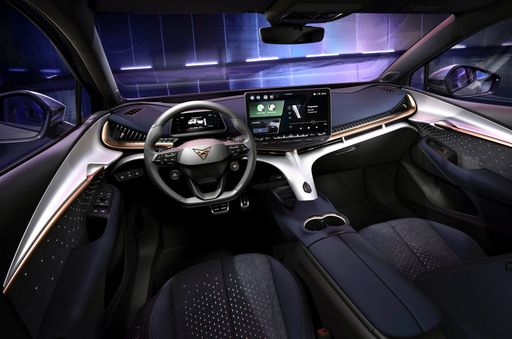
Tavascan @ CUPRA / SEAT S.A.

Head-to-Head: CUPRA Tavascan vs. Renault Scénic

As the automotive world shifts increasingly towards electrification, consumers are greeted with a plethora of new electric SUVs. Among them, the CUPRA Tavascan and Renault Scénic stand out as two compelling options in the 2024 model year. With advancements in technology, design, and driving performance, these vehicles cater to the rising demand for sustainable driving without compromising on excitement or functionality. Let’s delve into the key technical aspects and innovations of both models.
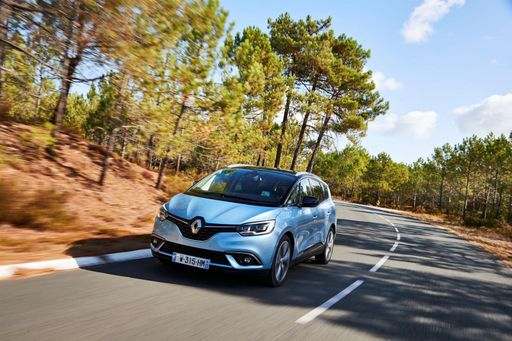
Scénic @ Renault Group Media

Powertrain and Performance

Starting with the CUPRA Tavascan, this all-electric SUV offers two variants that impress on multiple fronts. The Tavascan is available in both rear-wheel drive (RWD) and all-wheel drive (AWD) configurations, boasting power outputs of 286 HP (210 kW) and a top-tier version reaching 340 HP (250 kW). This performance translates to exhilarating acceleration, with the Tavascan achieving 0-100 km/h in just 5.5 seconds for the more powerful variant. Its remarkable torque of up to 679 Nm ensures that drivers experience instant power delivery.

On the other hand, the Renault Scénic, while slightly less powerful, still holds its ground. It offers two engine options, producing 170 HP (125 kW) and 220 HP (160 kW). The Scénic's acceleration of 0-100 km/h in 7.9 seconds for the higher variant is commendable, proving it can still deliver a spirited driving experience. With torque figures of up to 300 Nm, the Scénic showcases respectable performance for daily commutes and weekend getaways alike.

Tavascan @ CUPRA / SEAT S.A.

Range and Efficiency

Range is a critical factor for electric vehicles, and both models perform admirably. The CUPRA Tavascan offers an impressive range of up to 568 km, outpacing the Renault Scénic's maximum of 598 km for its more efficient variant. However, it is worth noting the Scénic's consumption figures stand at 16.7-17.6 kWh/100 km, compared to the Tavascan's more efficient 15.2-16.5 kWh/100 km. This efficiency can play an important role for eco-conscious consumers looking to maximize their vehicle’s potential on a single charge.

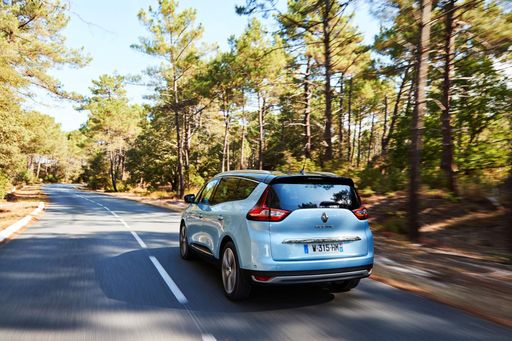
Scénic @ Renault Group Media

Interior and Practicality

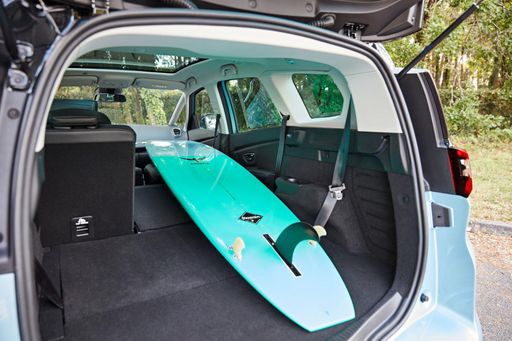
Both vehicles provide spacious interiors for five passengers, ensuring comfort on long journeys. The CUPRA Tavascan has a trunk capacity of 540 liters, making it slightly less than the Renault Scénic’s 545 liters, indicating that either option accommodates baggage and shopping trips quite well.

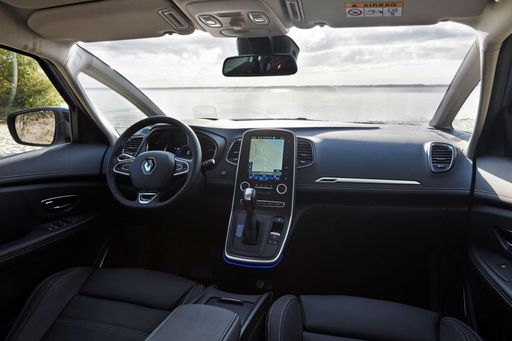
Tech-wise, the Tavascan boasts innovative features including a well-integrated infotainment system, designed for seamless connectivity and user experience. Its focus on sporty aesthetics and functionality, combined with an inspiring interior design, ensures it appeals to a younger audience. The Renault Scénic, meanwhile, emphasizes practicality and comfort, featuring a user-friendly dashboard and ample storage compartments—a nod to family-oriented buyers.

Tavascan @ CUPRA / SEAT S.A.

Dimensions and Design

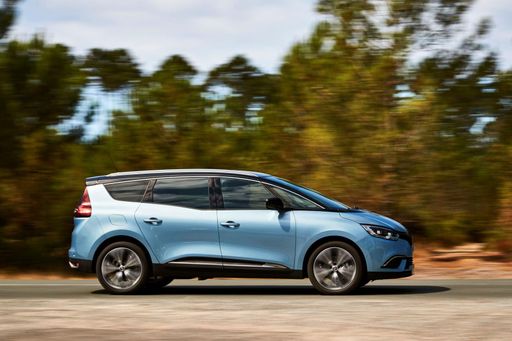
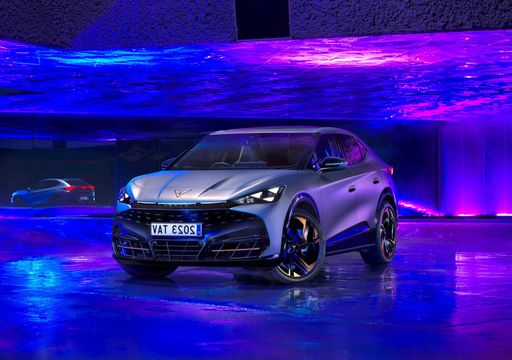
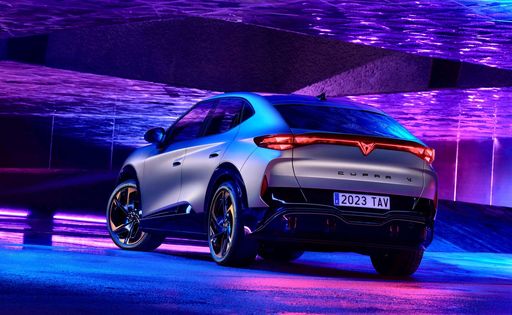
When it comes to size, the CUPRA Tavascan measures 4644 mm in length, 1861 mm in width, and 1597 mm in height, giving it a robust road presence. The Scénic, while slightly shorter at 4470 mm, has a width of 1864 mm, making it marginally broader. The design philosophy of both models aligns with their brand values, with the Tavascan leaning towards an aggressive sporty character, while the Scénic adopts a more sophisticated and practical aesthetic.

Scénic @ Renault Group Media

Conclusion: Choose Your Drive

The CUPRA Tavascan and Renault Scénic each have their unique strengths, catering to different segments of the electric SUV market. The Tavascan appeals to performance-driven enthusiasts with a larger electric range and superior acceleration, while the Scénic offers family-friendly practicality and technology that some buyers may prioritize. Ultimately, the choice between the two will depend on individual lifestyle needs, driving preferences, and brand loyalty in an increasingly electrified automotive landscape.

Here’s where it gets real: The technical differences in detail

Costs and Efficiency:

When it comes to price and running costs, the biggest differences usually appear. This is often where you see which car fits your budget better in the long run.

Renault Scénic has a noticeable advantage in terms of price – it starts at 34600 £, while the CUPRA Tavascan costs 45700 £. That’s a price difference of around 11092 £.

In terms of energy consumption, the advantage goes to the CUPRA Tavascan: with 15.90 kWh per 100 km, it’s hardly perceptible more efficient than the Renault Scénic with 16.60 kWh. That’s a difference of about 0.70 kWh.

As for range, the Renault Scénic performs hardly perceptible better – achieving up to 598 km, about 45 km more than the CUPRA Tavascan.

Engine and Performance:

Under the bonnet, it becomes clear which model is tuned for sportiness and which one takes the lead when you hit the accelerator.

When it comes to engine power, the CUPRA Tavascan has a evident edge – offering 340 HP compared to 218 HP. That’s roughly 122 HP more horsepower.

In acceleration from 0 to 100 km/h, the CUPRA Tavascan is convincingly quicker – completing the sprint in 5.50 s, while the Renault Scénic takes 7.90 s. That’s about 2.40 s faster.

In terms of top speed, the CUPRA Tavascan performs slight better – reaching 180 km/h, while the Renault Scénic tops out at 170 km/h. The difference is around 10 km/h.

There’s also a difference in torque: CUPRA Tavascan pulls convincingly stronger with 679 Nm compared to 300 Nm. That’s about 379 Nm difference.

Space and Everyday Use:

Whether family car or daily driver – which one offers more room, flexibility and comfort?

Both vehicles offer seating for 5 people.

In curb weight, Renault Scénic is a bit lighter – 1822 kg compared to 2178 kg. The difference is around 356 kg.

In terms of boot space, the Renault Scénic offers hardly perceptible more room – 545 L compared to 540 L. That’s a difference of about 5 L.

When it comes to payload, CUPRA Tavascan minimal takes the win – 522 kg compared to 518 kg. That’s a difference of about 4 kg.

Who comes out on top?

Overall, the CUPRA Tavascan shows itself to be is largely superior and secures the title of DriveDuel Champion.
It convinces with the more balanced overall package and proves to be the more versatile choice for everyday use.

from about £45,700
Tavascan @ CUPRA / SEAT S.A.

CUPRA Tavascan

  • Engine Type : Electric
  • Transmission : Automatic
  • Drive Type : Rear-Wheel Drive, All-Wheel Drive
  • Power HP : 286 - 340 HP
  • Consumption kWh/100km : 15.9 - 17.1 kWh
  • Electric Range : 513 - 553 km

CUPRA Tavascan

The CUPRA Tavascan is a striking electric crossover that blends aggressive, sporty design with surprising everyday practicality, pairing a coupe-like silhouette with SUV versatility. It feels lively and engaging on the road while offering premium touches inside, making it a compelling choice for buyers who want attitude without sacrificing comfort.

details

Renault Scénic

5 (1)
rate

The Renault Scénic is a quietly clever family MPV that balances everyday practicality with unexpected flair, offering a roomy, flexible cabin that makes school runs and weekend escapes less of a chore. It won't dazzle like a sports car, but its composed ride, sensible tech and thoughtful storage solutions make it a superbly pragmatic choice for buyers who prefer substance with a wink.

details
CUPRA Tavascan
Renault Scénic
Tavascan @ CUPRA / SEAT S.A.
Scénic @ Renault Group Media

Costs and Consumption

Price
45700 - 49600 £
Price
34600 - 44000 £
Consumption L/100km
-
Consumption L/100km
-
Consumption kWh/100km
15.9 - 17.1 kWh
Consumption kWh/100km
16.6 - 17.5 kWh
Electric Range
513 - 553 km
Electric Range
420 - 598 km
Battery Capacity
77 kWh
Battery Capacity
-
co2
0 g/km
co2
0 g/km
Fuel tank capacity
-
Fuel tank capacity
-

Dimensions and Body

Body Type
SUV
Body Type
SUV
Seats
5
Seats
5
Doors
5
Doors
5
Curb weight
2178 - 2273 kg
Curb weight
1822 - 1927 kg
Trunk capacity
540 L
Trunk capacity
545 L
Length
4644 mm
Length
4470 mm
Width
1861 mm
Width
1864 mm
Height
1597 mm
Height
1571 mm
Max trunk capacity
-
Max trunk capacity
1670 L
Payload
507 - 522 kg
Payload
514 - 518 kg

Engine and Performance

Engine Type
Electric
Engine Type
Electric
Transmission
Automatic
Transmission
Automatic
Transmission Detail
Reduction Gearbox
Transmission Detail
Reduction Gearbox
Drive Type
Rear-Wheel Drive, All-Wheel Drive
Drive Type
Front-Wheel Drive
Power HP
286 - 340 HP
Power HP
170 - 218 HP
Acceleration 0-100km/h
5.5 - 6.8 s
Acceleration 0-100km/h
7.9 - 8.6 s
Max Speed
180 km/h
Max Speed
150 - 170 km/h
Torque
545 - 679 Nm
Torque
280 - 300 Nm
Number of Cylinders
-
Number of Cylinders
-
Power kW
210 - 250 kW
Power kW
125 - 160 kW
Engine capacity
-
Engine capacity
-

General

Model Year
2024
Model Year
2025
CO2 Efficiency Class
A
CO2 Efficiency Class
A
Brand
CUPRA
Brand
Renault
What drivetrain options does the CUPRA Tavascan have?

Available configurations include Rear-Wheel Drive or All-Wheel Drive.

The prices and data displayed are estimates based on German list prices and may vary by country. This information is not legally binding.