VS

Dacia Duster vs BMW X1 comparison

Compare performance (158 HP vs 326 HP), boot space and price (16,300 £ vs 38,200 £ ) at a glance. Find out which car is the better choice for you – Dacia Duster or BMW X1?

Dacia Duster vs BMW X1: Key differences

Dacia Duster

4.8 (3 Reviews)
rate
  • considerably cheaper
  • a bit lighter
details

BMW X1

4.2 (6 Reviews)
rate
  • substantially more power
  • considerably more efficient
  • significantly quicker 0–100 km/h
  • marginally more trunk space
details

All details on performance, efficiency, range and trunk space can be found in the technical comparison below – including user reviews for both models.

By Achim Sedelmaier

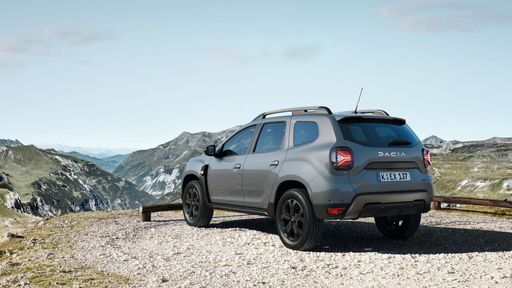
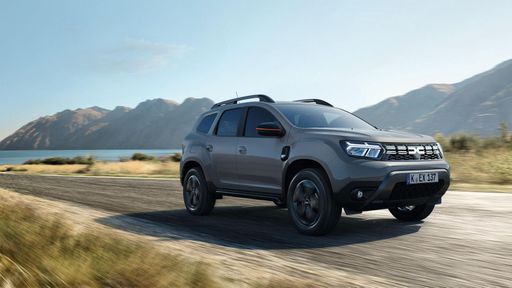
Duster

The Compact SUV Showdown: BMW X1 vs. Dacia Duster

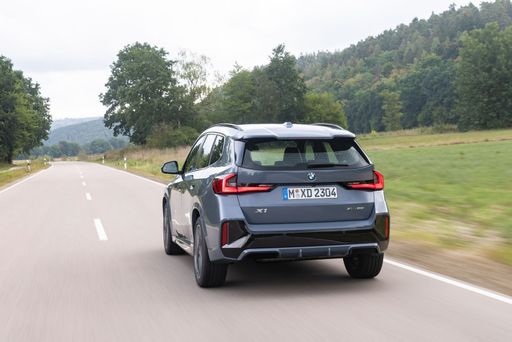
In the ever-competitive world of compact SUVs, the BMW X1 and Dacia Duster stand as two compelling options, each catering to different ends of the market spectrum. Both models offer unique advantages, from luxury to practicality, and choosing between these two could be a matter of preference and priorities. Let's delve into the details and innovations of these popular models.
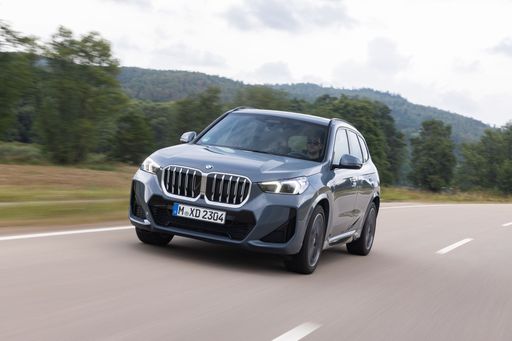
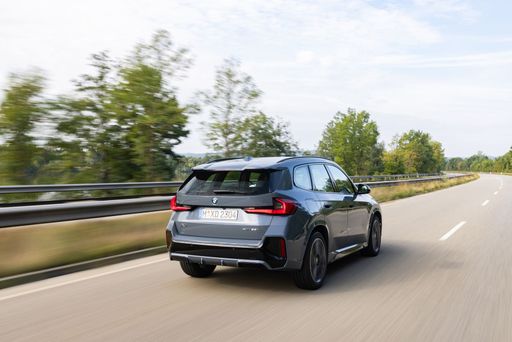
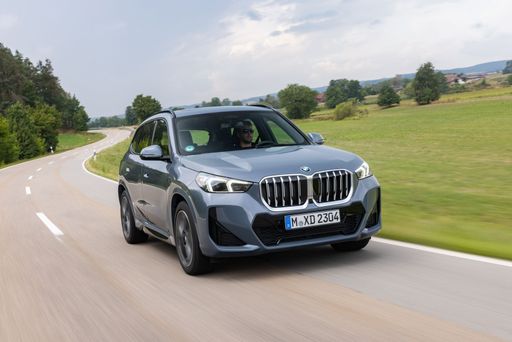
X1

Engineering Excellence: Power and Performance

The BMW X1, a hallmark of German engineering, offers an impressive range of engine options, from diesel and petrol to hybrid variants. The top-tier X1 model with 326 HP can accelerate from 0 to 100 km/h in a rapid 5.4 seconds, showcasing its sporty capabilities. Moreover, the plug-in hybrid version boasts an electric range of 83 km, making it a strong contender for eco-conscious drivers.

In contrast, the Dacia Duster, known for its affordability and reliability, provides a more modest yet efficient performance. With power outputs ranging up to 140 HP, the Duster achieves 0 to 100 km/h in a respectable 9.9 seconds. Its engine variants, including LPG, full hybrid, and petrol MHEV, offer excellent fuel economy, with consumption figures as low as 5 L/100 km.

Duster

Driving Options: Transmission and Drive Types

The X1 features a sophisticated dual-clutch automatic transmission, available in both front-wheel and all-wheel drive configurations, enhancing its driving dynamics across various terrains. This flexibility is part of what places the X1 at a higher echelon of luxury SUVs.

Meanwhile, the Duster presents both manual and automated manual gearbox options, catering to traditional driving enthusiasts and those who prefer automation. Its availability in front-wheel and all-wheel drive gives it the versatility to handle urban and off-road scenarios effectively.

X1

Diverse Dimensions: Design and Comfort

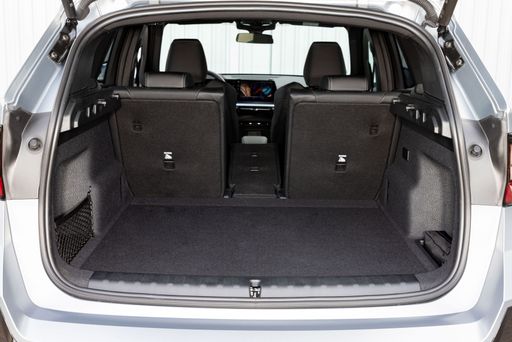
BMW's craftsmanship is evident in the X1's dimensions, with a length of about 4505 mm, width of 1845 mm, and height varying around 1630 mm. This results in spacious interiors and a trunk capacity of up to 540 L, ensuring comfort and practicality for all passengers.

The Duster, slightly more compact with a length of 4343 mm and width of 1813 mm, offers a height advantage at 1661 mm, resulting in a commanding road presence. Despite its smaller size, the Duster still provides a generous trunk space of up to 517 L, highlighting its practicality.

Duster

Efficiency and Environmental Impact

When it comes to CO2 efficiency, the BMW X1's hybrid and plug-in variants stand out, with emissions as low as 17 g/km, making it an environmentally friendly choice. The X1's eco-friendly approach is complemented by a fuel consumption rate as low as 0.8 L/100 km in hybrid form.

The Dacia Duster, while not as low-emission as the X1's hybrids, still maintains commendable CO2 figures, with its best performers emitting just 114 g/km. The Duster’s emphasis is more on economy and less on emissions, making it an accessible choice for budget-conscious buyers.

X1

Final Verdict: Which SUV Suits You?

Ultimately, the decision between the BMW X1 and Dacia Duster boils down to individual needs and budget. The X1 is perfect for those who crave luxury, spirited performance, and cutting-edge technology. In contrast, the Duster offers unbeatable value for money, practicality, and fuel efficiency, appealing to those who prioritize affordability and off-road capability.

Both the BMW X1 and Dacia Duster excel in their domains, proving that the compact SUV market has something for every driver. Choose wisely, and enjoy the road ahead in your new ride.

Here’s where it gets real: The technical differences in detail

Duster

Costs and Efficiency:

Price and efficiency are key factors when choosing a car – and this is often where the real differences emerge.

Dacia Duster is considerably cheaper – starting at 16,300 £ , while the BMW X1 costs 38,200 £ . That’s a price difference of around 21,951 £.

Fuel consumption also shows a difference: the BMW X1 uses 2.5 L/100km and is considerably more efficient than the Dacia Duster with 4.7 L/100km. The difference is about 2.2 L/100km.

X1

Engine and Performance:

Power, torque and acceleration say a lot about how a car feels on the road. This is where you see which model delivers more driving dynamics.

When it comes to engine power, the BMW X1 offers substantially more power – delivering 326 HP compared to 158 HP. That’s roughly 168 HP more horsepower.

When accelerating from 0 to 100 km/h, the BMW X1 is significantly quicker – completing the sprint in 5.4 s, while the Dacia Duster takes 9.4 s. That’s about 4 s quicker.

There’s also a difference in torque: the BMW X1 delivers considerably more torque with 477 Nm compared to 230 Nm. That’s about 247 Nm more.

Duster

Space and Everyday Use:

Beyond pure performance, interior space and usability matter most in daily life. This is where you see which car is more practical and versatile.

Both vehicles offer seating for 5 people.

In terms of curb weight, Dacia Duster is a bit lighter – 1,377 kg compared to 1,575 kg. The difference is around 198 kg.

Looking at boot space, the BMW X1 offers marginally more boot space – 540 L compared to 517 L. That’s a difference of about 23 L.

When it comes to payload, the BMW X1 carries marginally more – 500 kg compared to 453 kg. That’s a difference of about 47 kg.

Who wins the race in the data check?

The BMW X1 stands well ahead of its rival in the objective data comparison.
This result only shows which model scores more points on paper – not which of the two cars feels right for you.

from £38,200
X1

BMW X1

  • Engine Type : Diesel MHEV, Petrol MHEV, Petrol, Diesel, Plugin Hybrid
  • Transmission : Automatic
  • Drive Type : Front-Wheel Drive, All-Wheel Drive
  • Power HP : 136 - 326 HP
  • Consumption L/100km : 2.5 - 7.7 L/100km
  • Electric Range : 81 km
Dacia Duster
BMW X1

Costs and Consumption

View detailed analysis

Engine and Performance

View detailed analysis

Dimensions and Body

View detailed analysis

Dacia Duster

The Dacia Duster is a no-nonsense compact SUV that delivers rugged practicality and surprisingly comfortable everyday driving without fuss. It might not win any beauty contests, but its honest design, easy-to-live-with cabin and tough attitude make it a smart pick for buyers who want reliable transport without luxury frills.

details

BMW X1

The BMW X1 brings a premium feel to compact crossover life, wrapping practical space and agile handling into a tidy, upscale package. It’s ideal for buyers who want BMW driving dynamics without the bulk, offering everyday comfort and a few clever tricks to keep the commute interesting.

details
Dacia Duster
BMW X1

Costs and Consumption

Price
16,300 - 24,900 £
Price
38,200 - 55,500 £
Consumption L/100km
4.7 - 7.6 L/100km
Consumption L/100km
2.5 - 7.7 L/100km
Consumption kWh/100km
-
Consumption kWh/100km
-
Electric Range
-
Electric Range
81 km
Battery Capacity
-
Battery Capacity
-
co2
107 - 140 g/km
co2
57 - 175 g/km
Fuel tank capacity
-
Fuel tank capacity
-

Dimensions and Body

Body Type
SUV
Body Type
SUV
Seats
5
Seats
5
Doors
-
Doors
-
Curb weight
1,377 - 1,559 kg
Curb weight
1,575 - 1,935 kg
Trunk capacity
348 - 517 L
Trunk capacity
490 - 540 L
Length
-
Length
-
Width
1,813 mm
Width
1,845 mm
Height
-
Height
-
Max trunk capacity
-
Max trunk capacity
-
Payload
402 - 453 kg
Payload
490 - 500 kg

Engine and Performance

Engine Type
Petrol MHEV, Full Hybrid, LPG
Engine Type
Diesel MHEV, Petrol MHEV, Petrol, Diesel, Plugin Hybrid
Transmission
Manuel, Automatic
Transmission
Automatic
Transmission Detail
Manual Gearbox, Automated Manual, Dual-Clutch Automatic
Transmission Detail
Dual-Clutch Automatic
Drive Type
Front-Wheel Drive, All-Wheel Drive
Drive Type
Front-Wheel Drive, All-Wheel Drive
Power HP
115 - 158 HP
Power HP
136 - 326 HP
Acceleration 0-100km/h
9.4 - 11.7 s
Acceleration 0-100km/h
5.4 - 9.2 s
Max Speed
-
Max Speed
-
Torque
190 - 230 Nm
Torque
230 - 477 Nm
Number of Cylinders
3 - 4
Number of Cylinders
3 - 4
Power kW
84 - 116 kW
Power kW
100 - 240 kW
Engine capacity
1,199 - 1,789 cm3
Engine capacity
1,499 - 1,998 cm3

General

Model Year
2,025 - 2,026
Model Year
2,024 - 2,025
CO2 Efficiency Class
D, C
CO2 Efficiency Class
D, E, F, B
Brand
Dacia
Brand
BMW
DriveDuel uses data analysis and artificial intelligence to evaluate vehicle data and create content. Content is regularly reviewed and improved. The displayed prices are estimates based on German list prices, adjusted to the respective country’s VAT. Country-specific registration taxes are not included. This information is not legally binding.