VS

Dacia Duster vs Maserati MC20 Coupe comparison

Compare performance (158 HP vs 630 HP), boot space and price (16,300 £ vs 210,000 £ ) at a glance. Find out which car is the better choice for you – Dacia Duster or Maserati MC20 Coupe?

Dacia Duster vs Maserati MC20 Coupe: Key differences

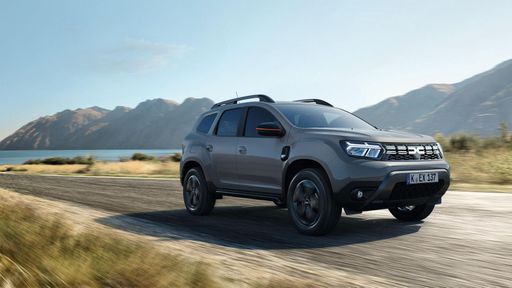
Dacia Duster

4.6 (5 Reviews)
rate
  • clearly cheaper
  • clearly more efficient
  • barely lighter
  • clearly more trunk space
details

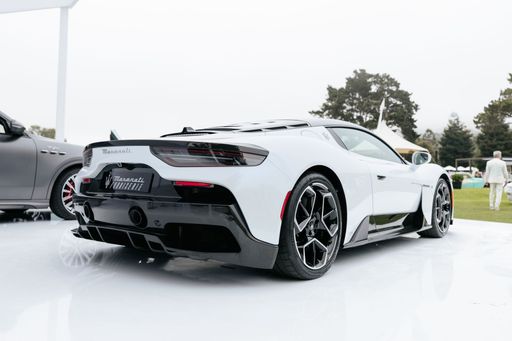
Maserati MC20 Coupe

  • clearly more power
  • significantly quicker 0–100 km/h
details

All details on performance, efficiency, range and trunk space can be found in the technical comparison below – including user reviews for both models.

By Achim Sedelmaier

Duster

Direct comparison: Dacia Duster VS Maserati MC20 Coupe

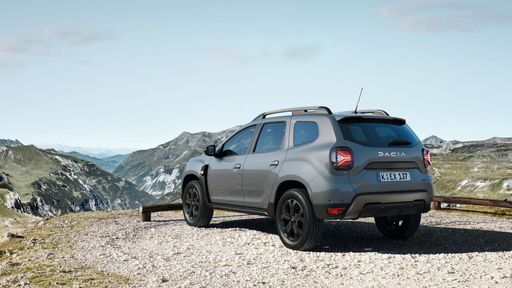
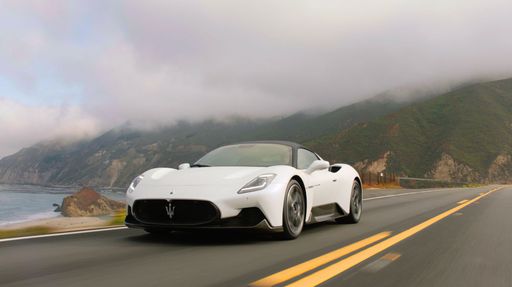
Dacia Duster VS Maserati MC20 Coupe pits practical, no-nonsense utility against rare, high-performance exotica in a way that could not be more stark. The Dacia Duster is built around everyday usefulness: room for people and gear, a high seating position and tolerant suspension. The Maserati MC20 Coupe is constructed around performance and presence — a two-seater mid‑engine car that prioritises dynamic poise and exclusivity. This page walks through how those opposing characters play out for buyers, emphasizing real-world trade-offs rather than headline figures.
MC20 Coupe

Character and driving experience

The Dacia Duster feels like a sensible companion: relaxed steering, a soft ride and the option to tackle rough surfaces without drama, making it forgiving for daily errands and gravel tracks. The Maserati MC20 Coupe, by contrast, is taut, immediate and rewarding when you push it — steering and balance that invite fast cornering and focused driving. That sportier character of the MC20 comes with greater driver engagement but also demands more attention and care, whereas the Duster rewards low‑stress, practical driving. Choose the Duster if you want confidence and simplicity; choose the MC20 if you want an involving, precision car for spirited roads.

Duster

Comfort and long‑distance behavior

On long runs the two cars deliver opposite pleasures: the Dacia Duster soaks up everyday imperfections with a cushioned, upright seating position that’s easy on the lower back, though it can get noisier at motorway speeds. The Maserati MC20 Coupe surprises for its grand‑touring ability — composed and quiet in its softer settings with supportive seats that make long distances engaging rather than exhausting. That said, the MC20’s sports intent means luggage and refuelling considerations can interrupt a long trip more often than in the Duster. If you prioritise relaxed, low‑cost touring choose the Duster; if you prioritise high‑speed refinement and don’t mind the logistical compromises, the MC20 is the better companion.

MC20 Coupe

Practicality and everyday usability

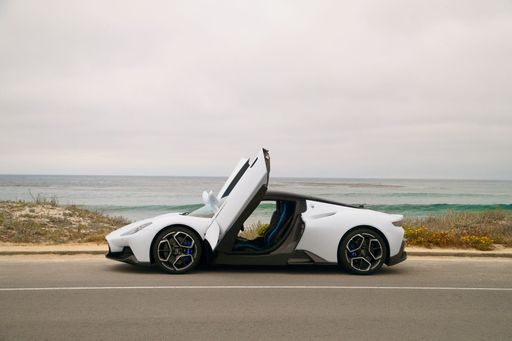
Practicality is where the Dacia Duster emphatically outshines the MC20: five seats, a generous boot and a high ride height make loading bikes, buggies or dog crates straightforward and stress‑free. The Maserati MC20 Coupe’s two‑seat layout and tiny front and rear luggage spaces force you to travel light and plan around the car’s constraints. City life also favors the Duster’s easier ingress/egress and simpler ergonomics, whereas the MC20’s wide body, low nose and dramatic doors demand more attention in tight urban environments. If you need a do‑everything car, Duster; if you accept compromises for the sake of a sporting statement, MC20.

Duster

Cabin feel and perceived quality

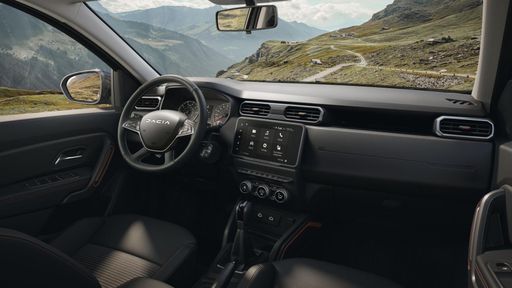
The Dacia Duster’s interior is emphatically functional: durable plastics, sensible switches and an aesthetic that says “use me” more than “admire me.” The Maserati MC20 Coupe wraps occupants in more upscale materials, cleaner design and a modern infotainment environment, yet reviewers note occasional part‑sharing and small detail choices that temper the sense of perfection. In daily life the Duster’s pragmatic finishes hold up to mud and pets, while the MC20’s cabin rewards careful ownership and polishes the ownership experience with exclusivity. The difference is not just in materials but in mindset: practical resilience versus curated luxury.

MC20 Coupe

Who should choose which — buyer fit and trade‑offs

Put simply: the Dacia Duster is for buyers who want maximum utility, low ownership friction and a vehicle that tolerates rough use without drama — families, outdoor enthusiasts and value‑minded drivers will feel at home. The Maserati MC20 Coupe suits buyers who prioritise rare performance, emotional driving and a strong design statement, accepting tighter everyday practicality and higher running costs. Both cars make sense, but for fundamentally different lives: one is a tool for many everyday tasks, the other is a specialised companion for spirited drives and exclusivity. The technical comparison that follows will translate these real‑world trade‑offs into the specific engineering choices and numbers behind them.

Here’s where it gets real: The technical differences in detail

Duster

Costs and Efficiency:

Price and efficiency are key factors when choosing a car – and this is often where the real differences emerge.

Dacia Duster is clearly cheaper – starting at 16,300 £ , while the Maserati MC20 Coupe costs 210,000 £ . That’s a price difference of around 193,719 £.

Fuel consumption also shows a difference: the Dacia Duster uses 4.7 L/100km and is clearly more efficient than the Maserati MC20 Coupe with 11.5 L/100km. The difference is about 6.8 L/100km.

MC20 Coupe

Engine and Performance:

Power, torque and acceleration are the classic benchmarks for car enthusiasts – and here, some clear differences start to show.

When it comes to engine power, the Maserati MC20 Coupe offers clearly more power – delivering 630 HP compared to 158 HP. That’s roughly 472 HP more horsepower.

When accelerating from 0 to 100 km/h, the Maserati MC20 Coupe is significantly quicker – completing the sprint in 2.9 s, while the Dacia Duster takes 9.4 s. That’s about 6.5 s quicker.

There’s also a difference in torque: the Maserati MC20 Coupe delivers clearly more torque with 730 Nm compared to 230 Nm. That’s about 500 Nm more.

Duster

Space and Everyday Use:

Cabin size, boot volume and payload all play a role in everyday practicality. Here, comfort and flexibility make the difference.

Seats: Dacia Duster offers more seats – 5 vs 2.

In terms of curb weight, Dacia Duster is barely lighter – 1,377 kg compared to 1,469 kg. The difference is around 92 kg.

Looking at boot space, the Dacia Duster offers clearly more boot space – 517 L compared to 100 L. That’s a difference of about 417 L.

When it comes to payload, the Dacia Duster carries visibly more – 453 kg compared to 321 kg. That’s a difference of about 132 kg.

Who wins the race in the data check?

The Dacia Duster stands well ahead of its rival in the objective data comparison.
This result only shows which model scores more points on paper – not which of the two cars feels right for you.

from £16,300
Duster

Dacia Duster

  • Engine Type Petrol MHEV, Full Hybrid, LPG
  • Transmission Manuel, Automatic
  • Drive Type Front-Wheel Drive, All-Wheel Drive
  • Power HP 115 - 158 HP
  • Consumption L/100km 4.7 - 7.6 L/100km
Dacia Duster
Maserati MC20 Coupe

Costs and Consumption

View detailed analysis

Engine and Performance

View detailed analysis

Dimensions and Body

View detailed analysis

Dacia Duster

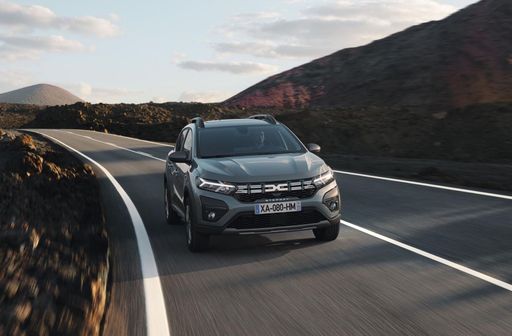
The Dacia Duster is a straightforward, budget-friendly SUV that prioritizes practicality and value over flashy features. Its rugged styling and simple, roomy interior make it a sensible choice for buyers who want capable everyday transport without paying for extras they won’t use.

details

Maserati MC20 Coupe

The Maserati MC20 is a siren-song of Italian drama — sleek, sculpted and built to provoke a grin every time you slide behind the wheel. It pairs exotic looks and an intoxicating soundtrack with razor-sharp handling, though its focused nature makes it more of a weekend indulgence than a grocery-run companion.

details
Dacia Duster
Maserati MC20 Coupe

Costs and Consumption

Price
16,300 - 24,900 £
Price
210,000 £
Consumption L/100km
4.7 - 7.6 L/100km
Consumption L/100km
11.5 L/100km
Consumption kWh/100km
-
Consumption kWh/100km
-
Electric Range
-
Electric Range
-
Battery Capacity
-
Battery Capacity
-
co2
107 - 140 g/km
co2
261 g/km
Fuel tank capacity
-
Fuel tank capacity
60 L

Dimensions and Body

Body Type
SUV
Body Type
Coupe
Seats
5
Seats
2
Doors
-
Doors
2
Curb weight
1,377 - 1,559 kg
Curb weight
1,469 kg
Trunk capacity
348 - 517 L
Trunk capacity
100 L
Length
-
Length
4,669 mm
Width
1,813 mm
Width
1,965 mm
Height
-
Height
1,224 mm
Max trunk capacity
-
Max trunk capacity
-
Payload
402 - 453 kg
Payload
321 kg

Engine and Performance

Engine Type
Petrol MHEV, Full Hybrid, LPG
Engine Type
Petrol
Transmission
Manuel, Automatic
Transmission
Automatic
Transmission Detail
Manual Gearbox, Automated Manual, Dual-Clutch Automatic
Transmission Detail
Dual-Clutch Automatic
Drive Type
Front-Wheel Drive, All-Wheel Drive
Drive Type
Rear-Wheel Drive
Power HP
115 - 158 HP
Power HP
630 HP
Acceleration 0-100km/h
9.4 - 11.7 s
Acceleration 0-100km/h
2.9 s
Max Speed
-
Max Speed
325 km/h
Torque
190 - 230 Nm
Torque
730 Nm
Number of Cylinders
3 - 4
Number of Cylinders
6
Power kW
84 - 116 kW
Power kW
463 kW
Engine capacity
1,199 - 1,789 cm3
Engine capacity
3,000 cm3

General

Model Year
2,025 - 2,026
Model Year
2024
CO2 Efficiency Class
D, C
CO2 Efficiency Class
G
Brand
Dacia
Brand
Maserati
DriveDuel uses data analysis and artificial intelligence to evaluate vehicle data and create content. Content is regularly reviewed and improved. The displayed prices are estimates based on German list prices, adjusted to the respective country’s VAT. Country-specific registration taxes are not included. This information is not legally binding.