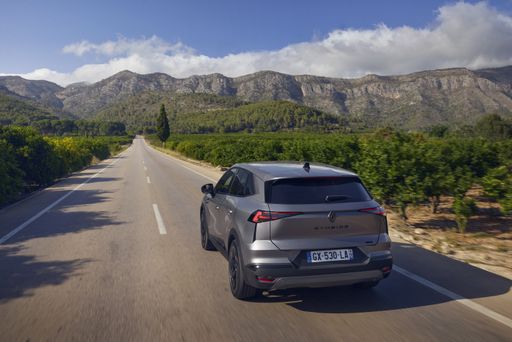
VS

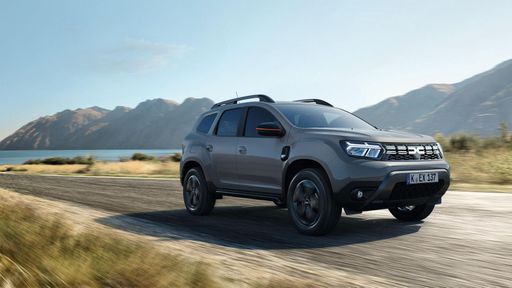
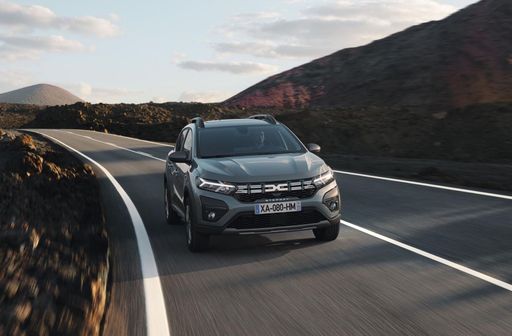
Dacia Duster vs Renault Symbioz comparison

Compare performance (158 HP vs 158 HP), boot space and price (16,300 £ vs 24,700 £ ) at a glance. Find out which car is the better choice for you – Dacia Duster or Renault Symbioz?

Dacia Duster vs Renault Symbioz: Key differences

Dacia Duster

4.6 (4 Reviews)
rate
  • significantly cheaper
details

Renault Symbioz

4.5 (5 Reviews)
rate
  • only slightly more efficient
  • marginally quicker 0–100 km/h
  • barely lighter
  • slightly more trunk space
details

All details on performance, efficiency, range and trunk space can be found in the technical comparison below – including user reviews for both models.

By Achim Sedelmaier

Duster

Quick take: Dacia Duster VS Renault Symbioz — price, purpose and everyday reality

Dacia Duster VS Renault Symbioz pend a clear line between two very different ideas of value: the Dacia Duster sells rugged, low-cost usefulness, while the Renault Symbioz trades a bit more refinement and tech for everyday efficiency. If you care most about getting practical space and off-road options for the least money, the Dacia Duster makes that decision simple. If your priority is low running costs, a quiet cruising experience and a slick infotainment, the Renault Symbioz leans that way. This page focuses on how those philosophies translate into cabin feel, daily usability and who each car actually suits in real life.
Symbioz

Character and driving feel

The Dacia Duster feels unapologetically durable and straightforward — softly sprung, raised seating and the option of genuine off‑road modes give it a go-anywhere attitude that rewards outdoor and rural buyers. The Renault Symbioz is gentler in character: calm, composed and tuned for efficiency rather than thrills, so it rewards relaxed, point‑A‑to‑B drivers with quiet cruising. Steering in the Dacia is light and intuitive for town maneuvers but lacks sporty feedback, whereas the Symbioz’s steering feels even more artificial, favouring comfort over engagement. In short, choose the Dacia Duster if you want practicality and a bit of adventure; pick the Renault Symbioz if you want a refined, economical everyday cruiser.

Duster

Comfort and long‑distance behaviour

On long trips the Dacia Duster delivers a forgiving ride that masks potholes and rough lanes, yet it becomes noticeably louder on fast motorway stretches — wind and tyre noise remind you where cost was saved. The Renault Symbioz is quieter on the move and generally feels more settled at highway speeds, which makes it the better companion for frequent long runs or long commutes. Both cars can transmit sharp inputs over really rough urban surfaces, but the Symbioz’s suspension is tuned to keep cabin noise lower when cruising. If calm, low‑stress long‑distance travel matters most, the Symbioz has the edge; if you prioritise plush low‑speed comfort and ruggedness, the Duster still impresses.

Symbioz

City friendliness and everyday usability

In town the Dacia Duster’s high driving position, simple controls and easy‑to-clean surfaces make life straightforward for families, dog owners and anyone who needs a robust daily driver. The Renault Symbioz feels more city‑savvy thanks to a high electric‑drive share around town and a compact, manoeuvrable footprint paired with Google‑powered infotainment that makes navigation and voice control less fiddly. Practical annoyances differ: the Dacia’s camera and screen can seem basic, while the Symbioz sometimes shows jerky assistant interventions or a camera image that isn’t always crisp. For frequent short trips and tight parking the Dacia Duster’s visibility and durability are useful, but the Renault Symbioz rewards tech‑oriented urban drivers with smoother, more efficient stop‑start behaviour.

Duster

Cabin feel, controls and perceived quality

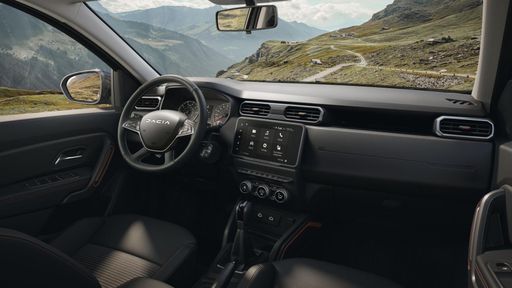
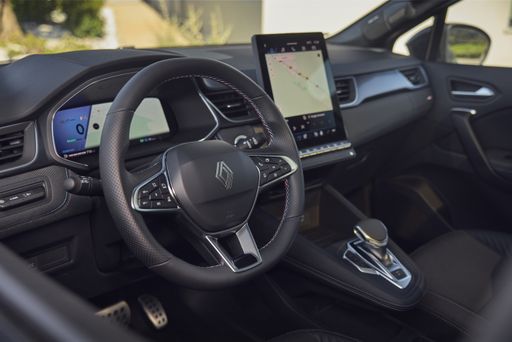
The Dacia Duster’s interior reads as honest and practical: robust plastics, tactile physical switches and clever utility details that survive muddy boots and pets without drama. The Renault Symbioz offers a more modern cockpit experience, notably with a faster, better‑integrated infotainment system and cleaner interface, but its materials are functional rather than luxurious. Both cars have some compromises — visibility to the rear is limited in different ways and camera systems can be inconsistent — yet the emotional impression differs: the Duster feels purposeful and workmanlike, the Symbioz feels considered and slightly more refined. Pick the Dacia Duster if rugged, no‑nonsense practicality is more important than trim finesse; pick the Renault Symbioz if you want a cockpit that feels a step closer to current mainstream tech expectations.

Symbioz

Practicality, space and buyer fit

Space-wise, the Renault Symbioz scores with a more flexible rear bench and a variable cargo area that adapts to family or luggage needs, while the Dacia Duster trades some refinement for rugged usability like washable surfaces and clever storage choices. The Dacia Duster also brings the option of genuine low-speed off‑road ability, which is decisive for buyers who actually need rough‑road competence rather than merely the look of an SUV. Price and running priorities are the decisive trade-off: the Dacia Duster is substantially cheaper at purchase and built for low‑fuss ownership, whereas the Renault Symbioz asks for more upfront for quieter cruising and lower real‑world consumption. If your checklist reads “outdoor, durable, lowest cost,” the Dacia Duster fits; if it reads “efficient, tech‑forward, comfortable highway miles,” the Renault Symbioz is the better match — the technical comparison that follows will unpack exactly how those differences are achieved.

Here’s where it gets real: The technical differences in detail

Duster

Costs and Efficiency:

When it comes to price and running costs, the biggest differences usually appear. This is often where you see which car fits your budget better in the long run.

Dacia Duster is significantly cheaper – starting at 16,300 £ , while the Renault Symbioz costs 24,700 £ . That’s a price difference of around 8,408 £.

Fuel consumption also shows a difference: the Renault Symbioz uses 4.5 L/100km and is only slightly more efficient than the Dacia Duster with 4.7 L/100km. The difference is about 0.2 L/100km.

Symbioz

Engine and Performance:

Power, torque and acceleration are the classic benchmarks for car enthusiasts – and here, some clear differences start to show.

Both models deliver identical power – 158 HP each.

When accelerating from 0 to 100 km/h, the Renault Symbioz is marginally quicker – completing the sprint in 9.1 s, while the Dacia Duster takes 9.4 s. That’s about 0.3 s quicker.

There’s also a difference in torque: the Renault Symbioz delivers a bit more torque with 265 Nm compared to 230 Nm. That’s about 35 Nm more.

Duster

Space and Everyday Use:

Whether family car or daily driver – which one offers more room, flexibility and comfort?

Both vehicles offer seating for 5 people.

In terms of curb weight, Renault Symbioz is barely lighter – 1,359 kg compared to 1,377 kg. The difference is around 18 kg.

Looking at boot space, the Renault Symbioz offers slightly more boot space – 576 L compared to 517 L. That’s a difference of about 59 L.

When it comes to payload, the Renault Symbioz carries marginally more – 459 kg compared to 453 kg. That’s a difference of about 6 kg.

Who wins the race in the data check?

The Dacia Duster holds a slight edge in the objective data comparison.
This result only shows which model scores more points on paper – not which of the two cars feels right for you.

from £16,300
Duster

Dacia Duster

  • Engine Type Petrol MHEV, Full Hybrid, LPG
  • Transmission Manuel, Automatic
  • Drive Type Front-Wheel Drive, All-Wheel Drive
  • Power HP 115 - 158 HP
  • Consumption L/100km 4.7 - 7.6 L/100km
Dacia Duster
Renault Symbioz

Costs and Consumption

View detailed analysis

Engine and Performance

View detailed analysis

Dimensions and Body

View detailed analysis

Dacia Duster

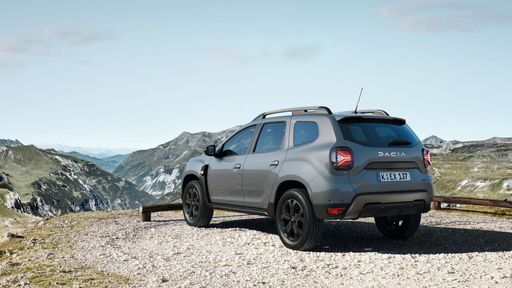
The Dacia Duster is a straightforward, budget-friendly SUV that prioritizes practicality and value over flashy features. Its rugged styling and simple, roomy interior make it a sensible choice for buyers who want capable everyday transport without paying for extras they won’t use.

details

Renault Symbioz

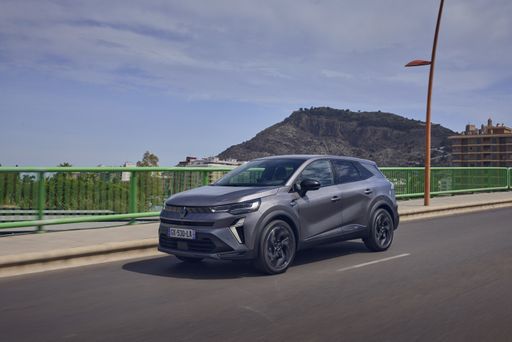
The Renault Symbioz is a forward-looking concept car that imagines a seamless link between vehicle and home, pairing a lounge-like cabin with striking, futuristic styling. More idea than production plan, it showcases Renault's vision for connected, autonomous and sustainable mobility while provoking debate about how we will live and travel.

details
Dacia Duster
Renault Symbioz

Costs and Consumption

Price
16,300 - 24,900 £
Price
24,700 - 31,100 £
Consumption L/100km
4.7 - 7.6 L/100km
Consumption L/100km
4.5 - 6 L/100km
Consumption kWh/100km
-
Consumption kWh/100km
-
Electric Range
-
Electric Range
-
Battery Capacity
-
Battery Capacity
-
co2
107 - 140 g/km
co2
102 - 136 g/km
Fuel tank capacity
-
Fuel tank capacity
-

Dimensions and Body

Body Type
SUV
Body Type
SUV
Seats
5
Seats
5
Doors
-
Doors
-
Curb weight
1,377 - 1,559 kg
Curb weight
1,359 - 1,465 kg
Trunk capacity
348 - 517 L
Trunk capacity
492 - 576 L
Length
-
Length
-
Width
1,813 mm
Width
1,797 mm
Height
-
Height
-
Max trunk capacity
-
Max trunk capacity
-
Payload
402 - 453 kg
Payload
455 - 459 kg

Engine and Performance

Engine Type
Petrol MHEV, Full Hybrid, LPG
Engine Type
Full Hybrid, Petrol MHEV
Transmission
Manuel, Automatic
Transmission
Automatic, Manuel
Transmission Detail
Manual Gearbox, Automated Manual, Dual-Clutch Automatic
Transmission Detail
Automatic Gearbox, Manual Gearbox, Dual-Clutch Automatic
Drive Type
Front-Wheel Drive, All-Wheel Drive
Drive Type
Front-Wheel Drive
Power HP
115 - 158 HP
Power HP
140 - 158 HP
Acceleration 0-100km/h
9.4 - 11.7 s
Acceleration 0-100km/h
9.1 - 11 s
Max Speed
-
Max Speed
-
Torque
190 - 230 Nm
Torque
250 - 265 Nm
Number of Cylinders
3 - 4
Number of Cylinders
4
Power kW
84 - 116 kW
Power kW
103 - 116 kW
Engine capacity
1,199 - 1,789 cm3
Engine capacity
1,332 - 1,789 cm3

General

Model Year
2,025 - 2,026
Model Year
2025
CO2 Efficiency Class
D, C
CO2 Efficiency Class
C, D, E
Brand
Dacia
Brand
Renault
DriveDuel uses data analysis and artificial intelligence to evaluate vehicle data and create content. Content is regularly reviewed and improved. The displayed prices are estimates based on German list prices, adjusted to the respective country’s VAT. Country-specific registration taxes are not included. This information is not legally binding.