VS

Dacia Duster vs Nissan Qashqai comparison

Compare performance (158 HP vs 205 HP), boot space and price (16,300 £ vs 29,600 £ ) at a glance. Find out which car is the better choice for you – Dacia Duster or Nissan Qashqai?

Dacia Duster vs Nissan Qashqai: Key differences

Dacia Duster

4.8 (3 Reviews)
rate
  • considerably cheaper
  • very slightly lighter
  • barely more trunk space
details

Nissan Qashqai

4.9 (4 Reviews)
rate
  • noticeably more power
  • very slightly more efficient
  • markedly quicker 0–100 km/h
details

All details on performance, efficiency, range and trunk space can be found in the technical comparison below – including user reviews for both models.

By Achim Sedelmaier

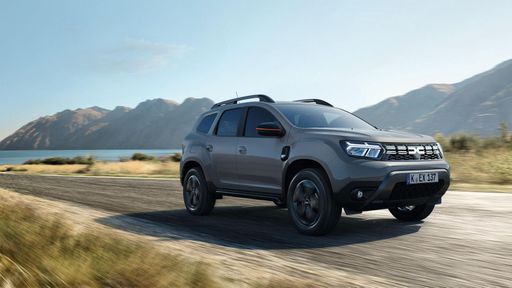
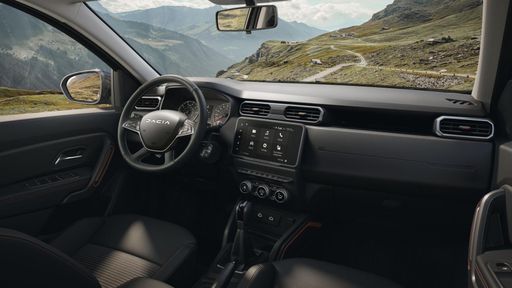
Duster

Battle of the SUVs: Dacia Duster vs. Nissan Qashqai

As 2024 unfolds, the competition between compact SUVs heats up with two popular contenders: the Dacia Duster and the Nissan Qashqai. Both vehicles offer robust builds and competitive features, yet each appeals to different segments of automotive enthusiasts. This article dives into the nitty-gritty details of both models, highlighting technical aspects and innovations each brings to the table.

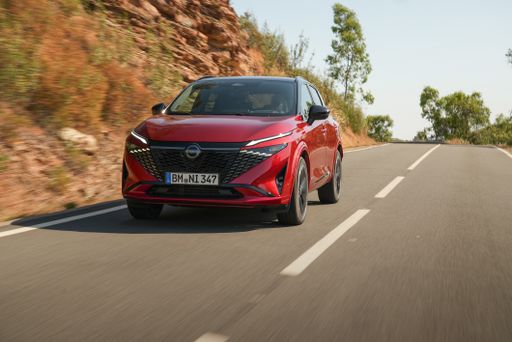
Qashqai

Engine and Performance

The Dacia Duster presents a versatile engine lineup that includes LPG, Full Hybrid, and Petrol MHEV options, delivering power that ranges from 91 to 140 HP. It pairs these engines with both manual and automated manual transmissions, catering to a wide audience. The consumption figures range from 5 L/100km to 8.1 L/100km, making it an efficient contender. The Duster achieves 0-100km/h acceleration in as fast as 9.9 seconds, with a maximum speed of 180 km/h, underlining its capability as a performance-oriented SUV within its class.

Conversely, the Nissan Qashqai focuses on delivering enhanced power with its Petrol MHEV and Full Hybrid engine variants, offering between 140 to 190 HP. The Qashqai also provides a broader range of transmissions, including manual, CVT, and reduction gearbox options. With a fuel consumption of 5.1 L/100km to 6.8 L/100km, it competes effectively on efficiency, while its 0-100km/h acceleration ranges from 7.9 seconds, suggesting a more spirited drive experience. Its top speed reaches up to 206 km/h, showcasing its strength as a faster-paced vehicle for thrill-seekers.


Duster

Design and Practicality

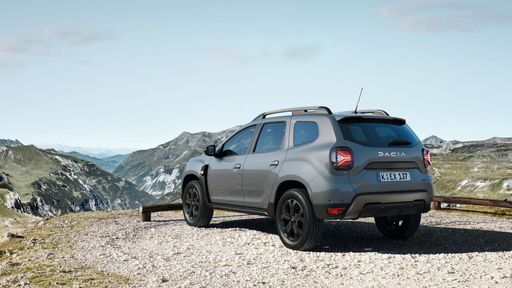
The Duster flaunts a compact yet commanding presence with its dimensions of 4343 mm in length, 1813 mm in width, and a height that varies slightly between 1656 mm to 1661 mm. These dimensions house a trunk capacity ranging from 430 L to 517 L, providing ample storage. The Duster is designed for practicality with a payload capacity up to 430 kg, making it a practical choice for families or those requiring extra space for adventures.

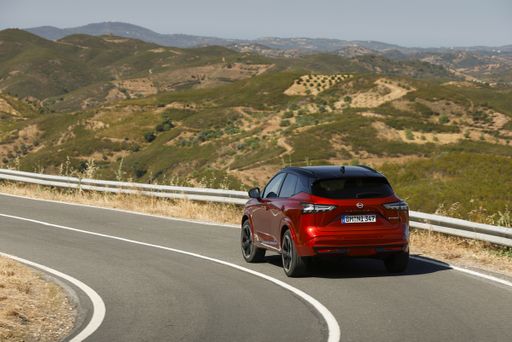
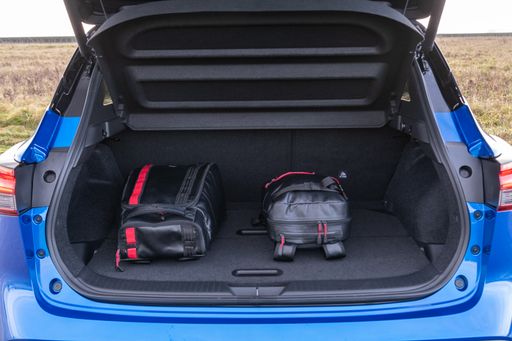
The Qashqai, measuring 4425 mm in length, 1835 mm in width, and 1625 mm in height, offers a more streamlined silhouette that appeals to urban dwellers. Its trunk capacity of 479 L to 504 L ensures it remains spacious enough for daily needs. With a payload capacity reaching up to 520 kg, the Qashqai also caters to those with substantial carrying demands, ensuring a balance between style and functionality.

Qashqai

Technological and Safety Features

When it comes to technology, the Duster doesn't lag behind, providing essential modern-day features combined with practical enhancements that ensure safety and comfort. Although it emphasizes simplicity, the Duster covers all necessary bases for the budget-conscious buyer seeking a reliable SUV.

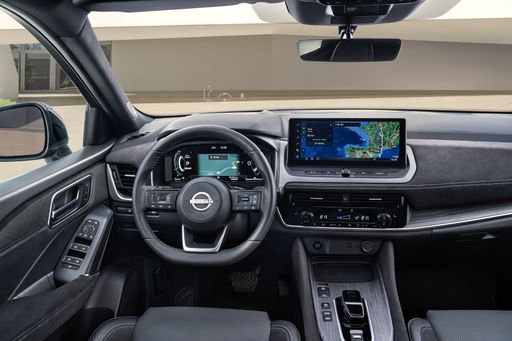
On the other hand, the Nissan Qashqai integrates a suite of advanced technology and safety features, often presenting as a more premium offering in this comparison. Its array of innovations supports an enhanced driving experience, making it appealing for those who desire modern comforts and tech-savvy enhancements while on the road.

Duster

Conclusion: Which is the Right Choice for You?

The Dacia Duster stands out as an excellent choice for drivers prioritizing affordability, practicality, and a robust performance without frills. Its design caters to those who appreciate utility without unnecessary embellishments. In contrast, the Nissan Qashqai beckons drivers desiring more power, advanced features, and sleek design, effectively positioning itself as a vehicle for the modern SUV enthusiast.

Ultimately, the decision between these two will rest on individual priorities—whether that be cutting-edge technology, vibrant performance, or functional design. Both the Duster and the Qashqai deliver impressive offerings for the discerning driver in 2024.

Here’s where it gets real: The technical differences in detail

Duster

Costs and Efficiency:

Price and efficiency are often the first things buyers look at. Here it becomes clear which model has the long-term edge – whether at the pump, the plug, or in purchase price.

Dacia Duster is considerably cheaper – starting at 16,300 £ , while the Nissan Qashqai costs 29,600 £ . That’s a price difference of around 13,328 £.

Fuel consumption also shows a difference: the Nissan Qashqai uses 4.3 L/100km and is very slightly more efficient than the Dacia Duster with 4.7 L/100km. The difference is about 0.4 L/100km.

Qashqai

Engine and Performance:

Power, torque and acceleration say a lot about how a car feels on the road. This is where you see which model delivers more driving dynamics.

When it comes to engine power, the Nissan Qashqai offers noticeably more power – delivering 205 HP compared to 158 HP. That’s roughly 47 HP more horsepower.

When accelerating from 0 to 100 km/h, the Nissan Qashqai is markedly quicker – completing the sprint in 7.6 s, while the Dacia Duster takes 9.4 s. That’s about 1.8 s quicker.

There’s also a difference in torque: the Nissan Qashqai delivers visibly more torque with 330 Nm compared to 230 Nm. That’s about 100 Nm more.

Duster

Space and Everyday Use:

Beyond pure performance, interior space and usability matter most in daily life. This is where you see which car is more practical and versatile.

Both vehicles offer seating for 5 people.

In terms of curb weight, Dacia Duster is very slightly lighter – 1,377 kg compared to 1,420 kg. The difference is around 43 kg.

Looking at boot space, the Dacia Duster offers barely more boot space – 517 L compared to 504 L. That’s a difference of about 13 L.

When it comes to payload, the Nissan Qashqai carries a bit more – 516 kg compared to 453 kg. That’s a difference of about 63 kg.

Who wins the race in the data check?

The Nissan Qashqai has the upper hand in the objective data comparison.
This result only shows which model scores more points on paper – not which of the two cars feels right for you.

from £29,600
Qashqai

Nissan Qashqai

  • Engine Type Petrol MHEV, Full Hybrid
  • Transmission Manuel, Automatic
  • Drive Type Front-Wheel Drive, All-Wheel Drive
  • Power HP 158 - 205 HP
  • Consumption L/100km 4.3 - 6.8 L/100km
Dacia Duster
Nissan Qashqai

Costs and Consumption

View detailed analysis

Engine and Performance

View detailed analysis

Dimensions and Body

View detailed analysis

Dacia Duster

The Dacia Duster is a straightforward, budget-friendly SUV that prioritizes practicality and value over flashy features. Its rugged styling and simple, roomy interior make it a sensible choice for buyers who want capable everyday transport without paying for extras they won’t use.

details

Nissan Qashqai

The Nissan Qashqai is a compact crossover that blends everyday practicality with a comfortable, composed driving experience and a smart, well finished interior. It feels sensible and versatile for city life and longer trips, appealing to buyers who want a reliable, low fuss family car.

details
Dacia Duster
Nissan Qashqai

Costs and Consumption

Price
16,300 - 24,900 £
Price
29,600 - 39,900 £
Consumption L/100km
4.7 - 7.6 L/100km
Consumption L/100km
4.3 - 6.8 L/100km
Consumption kWh/100km
-
Consumption kWh/100km
-
Electric Range
-
Electric Range
-
Battery Capacity
-
Battery Capacity
-
co2
107 - 140 g/km
co2
98 - 152 g/km
Fuel tank capacity
-
Fuel tank capacity
-

Dimensions and Body

Body Type
SUV
Body Type
SUV
Seats
5
Seats
5
Doors
-
Doors
-
Curb weight
1,377 - 1,559 kg
Curb weight
1,420 - 1,624 kg
Trunk capacity
348 - 517 L
Trunk capacity
479 - 504 L
Length
-
Length
-
Width
1,813 mm
Width
1,835 mm
Height
-
Height
-
Max trunk capacity
-
Max trunk capacity
-
Payload
402 - 453 kg
Payload
446 - 516 kg

Engine and Performance

Engine Type
Petrol MHEV, Full Hybrid, LPG
Engine Type
Petrol MHEV, Full Hybrid
Transmission
Manuel, Automatic
Transmission
Manuel, Automatic
Transmission Detail
Manual Gearbox, Automated Manual, Dual-Clutch Automatic
Transmission Detail
Manual Gearbox, CVT, Reduction Gearbox
Drive Type
Front-Wheel Drive, All-Wheel Drive
Drive Type
Front-Wheel Drive, All-Wheel Drive
Power HP
115 - 158 HP
Power HP
158 - 205 HP
Acceleration 0-100km/h
9.4 - 11.7 s
Acceleration 0-100km/h
7.6 - 9.9 s
Max Speed
-
Max Speed
-
Torque
190 - 230 Nm
Torque
260 - 330 Nm
Number of Cylinders
3 - 4
Number of Cylinders
3 - 4
Power kW
84 - 116 kW
Power kW
116 - 151 kW
Engine capacity
1,199 - 1,789 cm3
Engine capacity
1,332 - 1,498 cm3

General

Model Year
2,025 - 2,026
Model Year
2,025 - 2,026
CO2 Efficiency Class
D, C
CO2 Efficiency Class
E, C
Brand
Dacia
Brand
Nissan
DriveDuel uses data analysis and artificial intelligence to evaluate vehicle data and create content. Content is regularly reviewed and improved. The displayed prices are estimates based on German list prices, adjusted to the respective country’s VAT. Country-specific registration taxes are not included. This information is not legally binding.