@ Dacia / Renault Group Media
@ Nissan Motor Corporation
VS

Dacia Duster vs Nissan X-Trail – Which car suits you better?

Both models have their strengths – but which one suits you more?
Compare performance, efficiency, price and space directly: Dacia Duster or Nissan X-Trail?

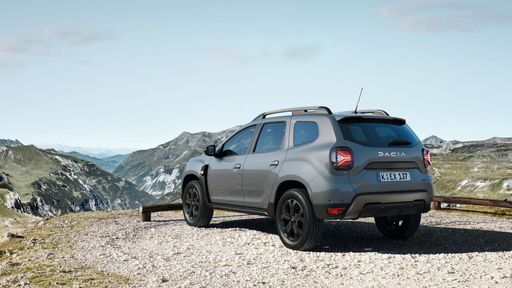
Duster @ Dacia / Renault Group Media

The Battle of the SUVs: Dacia Duster vs. Nissan X-Trail

The SUV segment continues to dominate the automotive market with its unmatched versatility and commanding presence. Today, we pit two popular contenders against each other: the Dacia Duster and the Nissan X-Trail. Both offer modern features and respectable performance, yet they cater to slightly different audiences. Let's dive into what makes each vehicle unique and who might favor one over the other.
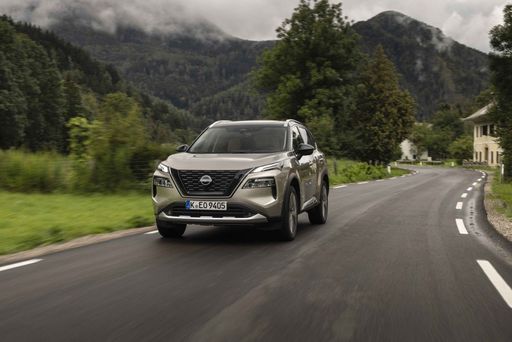
X-Trail @ Nissan Motor Corporation

Power and Performance

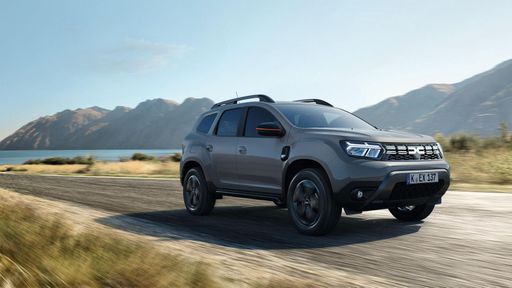
The Dacia Duster, known for its practicality and affordability, offers a range of engines including LPG, full hybrid, and petrol MHEV. With horsepower ranging from 91 to 140 HP, its peak acceleration from 0-100 km/h is between 9.9 to 14 seconds, suitable for varied driving experiences. Enthusiasts might appreciate the manual gearbox option and the choice between front-wheel and all-wheel drive, making it adaptable to different terrains.

The Nissan X-Trail, on the other hand, is engineered for those seeking a bit more power and refinement. Its engines, comprising petrol MHEV and full hybrid options, produce power between 163 and 213 HP. The X-Trail accelerates from 0-100 km/h in a brisk 7 to 9.6 seconds, providing a quicker and more exhilarating experience. The X-Trail’s CVT and reduction gearbox transmission enhance its smooth driving dynamics, with the added benefit of available all-wheel drive for adventurous terrains.

Duster @ Dacia / Renault Group Media

Fuel Efficiency and Environmental Impact

Efficiency is crucial in modern vehicles, and both models offer commendable performance. The Dacia Duster's fuel consumption ranges from 5 to 8.1 L/100km, while CO2 emissions vary between 114 and 147 g/km, reflecting its focus on budget-friendly economy.

In contrast, the Nissan X-Trail delivers a slightly more upscale efficiency, with consumption figures between 5.7 and 6.9 L/100km and CO2 emissions from 131 to 161 g/km. This positions the X-Trail as a balanced option between performance and environmental consciousness.

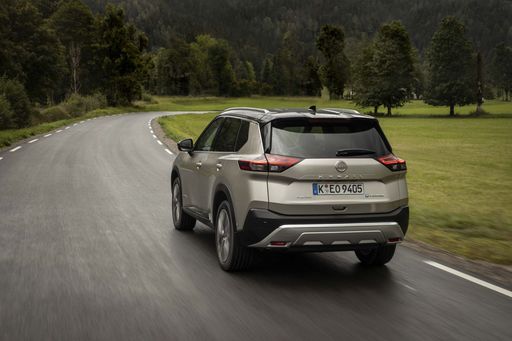
X-Trail @ Nissan Motor Corporation

Interior and Comfort

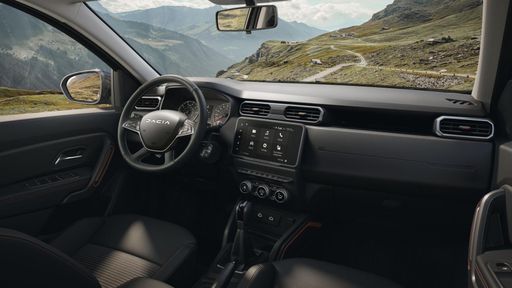
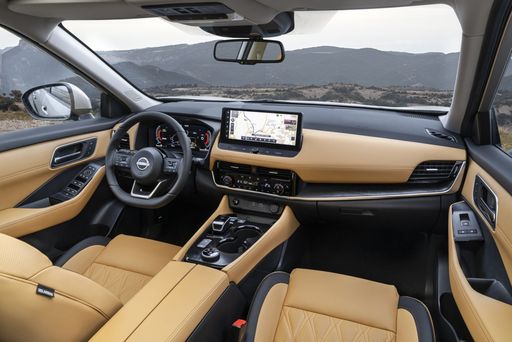
Both SUVs come equipped with a spacious five-door layout, enhancing accessibility and cargo loading options. Dacia Duster's boot offers 430 to 517 liters of capacity, a practical solution for daily needs and adventure gear. Inside, it seats five comfortably, merging functionality and modest comfort.

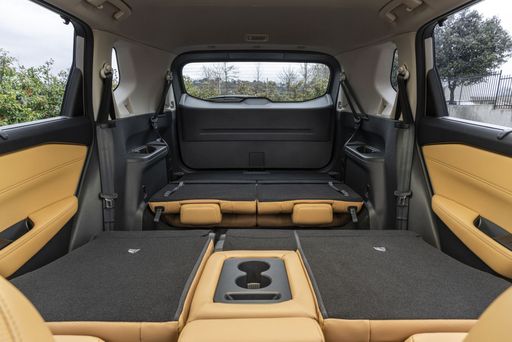
The Nissan X-Trail raises the bar with optional seating for up to seven passengers, increasing its utility for larger families or carpooling. A trunk capacity ranging from 177 to 585 liters offers flexible storage solutions, depending on the seating configuration. The X-Trail’s cabin is designed with quality materials and thoughtful ergonomics, prioritizing passenger comfort and convenience.

Duster @ Dacia / Renault Group Media

Dimensions and Weight

The compact Duster measures 4,343 mm in length, 1,813 mm in width, and up to 1,661 mm in height, making it ideal for urban driving and tight parking spaces. Its curb weight ranges from 1,351 to 1,465 kg, supporting its agile handling.

Conversely, the X-Trail features a more substantial presence with dimensions of 4,680 mm in length, 1,840 mm in width, and 1,720 mm in height. Weighing between 1,668 and 1,961 kg, it offers a more robust option with a commanding road presence, ideal for those who desire a larger SUV.

X-Trail @ Nissan Motor Corporation

The Verdict: Which SUV for You?

The decision between the Dacia Duster and Nissan X-Trail boils down to personal needs and budget. The Duster stands out as an economical companion with enough features for the average driver who values practicality over luxury. On the other hand, the Nissan X-Trail offers superior performance and spaciousness, catering to drivers who value comfort, technology, and a touch of sophistication in their SUVs.

Whatever your requirements, both the Dacia Duster and the Nissan X-Trail demonstrate their capabilities as reliable choices in the competitive SUV landscape, each with unique benefits tailored to different lifestyles.

Here’s where it gets real: The technical differences in detail

Duster @ Dacia / Renault Group Media

Costs and Efficiency:

Price and efficiency are often the first things buyers look at. Here it becomes clear which model has the long-term edge – whether at the pump, the plug, or in purchase price.

Dacia Duster has a clearly advantage in terms of price – it starts at 16300 £, while the Nissan X-Trail costs 34000 £. That’s a price difference of around 17751 £.

Fuel consumption also shows a difference: Dacia Duster manages with 4.70 L and is therefore evident more efficient than the Nissan X-Trail with 5.70 L. The difference is about 1 L per 100 km.

X-Trail @ Nissan Motor Corporation

Engine and Performance:

Power, torque and acceleration say a lot about how a car feels on the road. This is where you see which model delivers more driving dynamics.

When it comes to engine power, the Nissan X-Trail has a noticeable edge – offering 213 HP compared to 158 HP. That’s roughly 55 HP more horsepower.

In acceleration from 0 to 100 km/h, the Nissan X-Trail is noticeable quicker – completing the sprint in 7 s, while the Dacia Duster takes 9.40 s. That’s about 2.40 s faster.

In terms of top speed, the Nissan X-Trail performs slight better – reaching 200 km/h, while the Dacia Duster tops out at 180 km/h. The difference is around 20 km/h.

There’s also a difference in torque: Nissan X-Trail pulls decisively stronger with 525 Nm compared to 230 Nm. That’s about 295 Nm difference.

Space and Everyday Use:

Cabin size, boot volume and payload all play a role in everyday practicality. Here, comfort and flexibility make the difference.

Seats: Nissan X-Trail offers noticeable more seating capacity – 7 vs 5.

In curb weight, Dacia Duster is clearly perceptible lighter – 1377 kg compared to 1668 kg. The difference is around 291 kg.

In terms of boot space, the Nissan X-Trail offers somewhat more room – 585 L compared to 517 L. That’s a difference of about 68 L.

In maximum load capacity, the Dacia Duster performs a bit better – up to 1609 L, which is about 185 L more than the Nissan X-Trail.

When it comes to payload, Nissan X-Trail evident takes the win – 574 kg compared to 453 kg. That’s a difference of about 121 kg.

Who wins the race?

The Dacia Duster proves to be barely ahead and therefore becomes our DriveDuel Champion!
Dacia Duster is the better all-rounder in this comparison.

from about £16,300
Duster @ Dacia / Renault Group Media

Dacia Duster

  • Engine Type : Petrol MHEV, Full Hybrid, LPG
  • Transmission : Manuel, Automatic
  • Drive Type : Front-Wheel Drive, All-Wheel Drive
  • Power HP : 115 - 158 HP
  • Consumption L/100km : 4.7 - 7.5 L

Dacia Duster

5 (1)
rate

The Dacia Duster is a no-nonsense compact SUV that delivers rugged practicality and surprisingly comfortable everyday driving without fuss. It might not win any beauty contests, but its honest design, easy-to-live-with cabin and tough attitude make it a smart pick for buyers who want reliable transport without luxury frills.

details

Nissan X-Trail

5 (1)
rate

The Nissan X-Trail is a roomy, no-nonsense family SUV that mixes sensible practicality with a quietly modern look, making it an easy choice for busy lives and weekend escapes. It drives with calm confidence, delivers a comfortable ride and sensible tech, and won’t demand drama while doing the everyday heavy lifting.

details
Dacia Duster
Nissan X-Trail
Duster @ Dacia / Renault Group Media
X-Trail @ Nissan Motor Corporation

Costs and Consumption

Price
16300 - 24900 £
Price
34000 - 50400 £
Consumption L/100km
4.7 - 7.5 L
Consumption L/100km
5.7 - 6.9 L
Consumption kWh/100km
-
Consumption kWh/100km
-
Electric Range
-
Electric Range
-
Battery Capacity
0.60 kWh
Battery Capacity
-
co2
107 - 124 g/km
co2
131 - 161 g/km
Fuel tank capacity
50 L
Fuel tank capacity
55 L

Dimensions and Body

Body Type
SUV
Body Type
SUV
Seats
5
Seats
5 - 7
Doors
5
Doors
5
Curb weight
1377 - 1455 kg
Curb weight
1668 - 1961 kg
Trunk capacity
348 - 517 L
Trunk capacity
177 - 585 L
Length
4343 mm
Length
4680 mm
Width
1813 mm
Width
1840 mm
Height
1656 - 1659 mm
Height
1720 mm
Max trunk capacity
1414 - 1609 L
Max trunk capacity
1396 - 1424 L
Payload
450 - 453 kg
Payload
432 - 574 kg

Engine and Performance

Engine Type
Petrol MHEV, Full Hybrid, LPG
Engine Type
Petrol MHEV, Full Hybrid
Transmission
Manuel, Automatic
Transmission
Automatic
Transmission Detail
Manual Gearbox, Automated Manual, Dual-Clutch Automatic
Transmission Detail
CVT, Reduction Gearbox
Drive Type
Front-Wheel Drive, All-Wheel Drive
Drive Type
Front-Wheel Drive, All-Wheel Drive
Power HP
115 - 158 HP
Power HP
163 - 213 HP
Acceleration 0-100km/h
9.4 - 11.6 s
Acceleration 0-100km/h
7 - 9.6 s
Max Speed
180 km/h
Max Speed
170 - 200 km/h
Torque
190 - 230 Nm
Torque
300 - 525 Nm
Number of Cylinders
3 - 4
Number of Cylinders
3
Power kW
84 - 116 kW
Power kW
120 - 157 kW
Engine capacity
1199 - 1789 cm3
Engine capacity
1497 cm3

General

Model Year
2025
Model Year
2024
CO2 Efficiency Class
D, C
CO2 Efficiency Class
F, D, E
Brand
Dacia
Brand
Nissan
What drivetrain options does the Dacia Duster have?

The Dacia Duster is offered with Front-Wheel Drive or All-Wheel Drive.

The prices and data displayed are estimates based on German list prices and may vary by country. This information is not legally binding.