
 Deutschland
 France
 Nederland
 Great Britain
 Sverige
 Danmark
 Suomi
Suomi Italia
 Polska
 España
VS
Dacia Duster vs Peugeot Expert Bus comparison
Compare performance (158 HP vs 136 HP), boot space and price (16,300 £ vs 38,000 £ ) at a glance. Find out which car is the better choice for you – Dacia Duster or Peugeot Expert Bus?
Duster
Costs and Efficiency:
Price and efficiency are key factors when choosing a car – and this is often where the real differences emerge.
Dacia Duster is considerably cheaper – starting at 16,300 £ , while the Peugeot Expert Bus costs 38,000 £ . That’s a price difference of around 21,720 £.
Expert Bus
Engine and Performance:
Under the bonnet, it becomes clear which model is tuned for sportiness and which one takes the lead when you hit the accelerator.
When it comes to engine power, the Dacia Duster offers slightly more power – delivering 158 HP compared to 136 HP. That’s roughly 22 HP more horsepower.
When accelerating from 0 to 100 km/h, the Dacia Duster is considerably quicker – completing the sprint in 9.4 s, while the Peugeot Expert Bus takes 13.3 s. That’s about 3.9 s quicker.
Looking at top speed, the Dacia Duster is visibly faster – reaching 180 km/h, while the Peugeot Expert Bus tops out at 130 km/h. The difference is around 50 km/h.
There’s also a difference in torque: the Peugeot Expert Bus delivers somewhat more torque with 270 Nm compared to 230 Nm. That’s about 40 Nm more.
Duster
Space and Everyday Use:
Beyond pure performance, interior space and usability matter most in daily life. This is where you see which car is more practical and versatile.
Seats: Peugeot Expert Bus offers more seats – 9 vs 5.
In terms of curb weight, Dacia Duster is clearly lighter – 1,377 kg compared to 2,018 kg. The difference is around 641 kg.
Looking at boot space, the Peugeot Expert Bus offers significantly more boot space – 3,497 L compared to 517 L. That’s a difference of about 2,980 L.
For maximum load capacity, the Peugeot Expert Bus offers substantially more capacity – up to 4,554 L, about 2,945 L more than the Dacia Duster.
When it comes to payload, the Peugeot Expert Bus carries substantially more – 982 kg compared to 453 kg. That’s a difference of about 529 kg.
Who wins the race in the data check?
The Peugeot Expert Bus is clearly superior overall in the objective data comparison.
This result only shows which model scores more points on paper – not which of the two cars feels right for you.
from £38,000
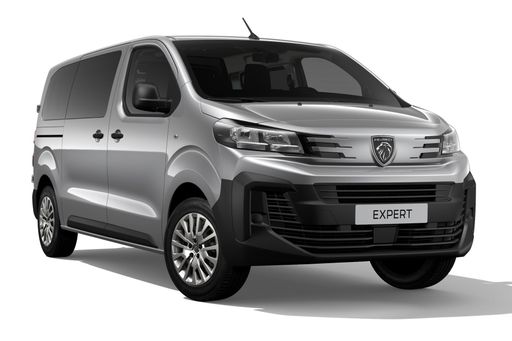
Peugeot Expert Bus
Dacia Duster
Peugeot Expert Bus
Costs and Consumption
View detailed analysis
View detailed analysis
Engine and Performance
View detailed analysis
View detailed analysis
Dimensions and Body
View detailed analysis
View detailed analysis
Dacia Duster
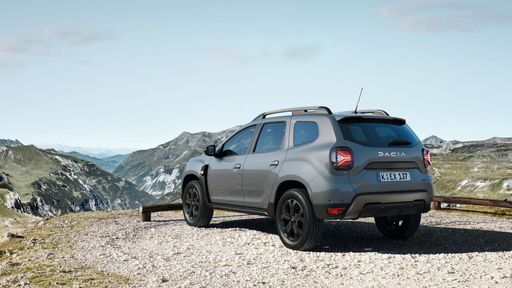
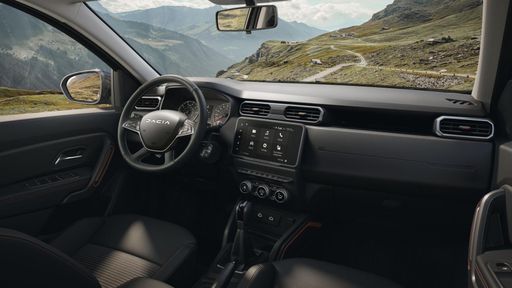
The Dacia Duster is a no-nonsense compact SUV that delivers rugged practicality and surprisingly comfortable everyday driving without fuss. It might not win any beauty contests, but its honest design, easy-to-live-with cabin and tough attitude make it a smart pick for buyers who want reliable transport without luxury frills.
details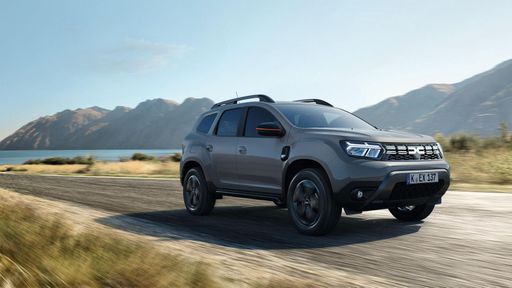
Peugeot Expert Bus
The Peugeot Expert Bus is a sensible people-mover that pairs commercial durability with a surprisingly comfy interior, making it ideal for shuttle duty or large-family road trips. It won’t steal any style prizes, but its practical layout, easy-driving manners and thoughtful kit mean you’ll spend more time moving people and less time fussing over details.
details
Dacia Duster
Peugeot Expert Bus
Costs and Consumption |
|
|---|---|
|
Price
16,300 - 24,900 £
|
Price
38,000 - 44,000 £
|
|
Consumption L/100km
4.7 - 7.6 L/100km
|
Consumption L/100km
-
|
|
Consumption kWh/100km
-
|
Consumption kWh/100km
24.2 - 24.6 kWh/100km
|
|
Electric Range
-
|
Electric Range
218 - 348 km
|
|
Battery Capacity
0.6 kWh
|
Battery Capacity
-
|
|
co2
107 - 140 g/km
|
co2
0 g/km
|
|
Fuel tank capacity
50 L
|
Fuel tank capacity
-
|
Dimensions and Body |
|
|---|---|
|
Body Type
SUV
|
Body Type
Bus
|
|
Seats
5
|
Seats
9
|
|
Doors
5
|
Doors
4
|
|
Curb weight
1,377 - 1,455 kg
|
Curb weight
2,018 - 2,241 kg
|
|
Trunk capacity
348 - 517 L
|
Trunk capacity
3,061 - 3,497 L
|
|
Length
4,343 mm
|
Length
4,983 - 5,333 mm
|
|
Width
1,813 mm
|
Width
1,920 mm
|
|
Height
1,656 - 1,659 mm
|
Height
1,890 mm
|
|
Max trunk capacity
1,414 - 1,609 L
|
Max trunk capacity
3,968 - 4,554 L
|
|
Payload
402 - 453 kg
|
Payload
889 - 982 kg
|
Engine and Performance |
|
|---|---|
|
Engine Type
Petrol MHEV, Full Hybrid, LPG
|
Engine Type
Electric
|
|
Transmission
Manuel, Automatic
|
Transmission
Automatic
|
|
Transmission Detail
Manual Gearbox, Automated Manual, Dual-Clutch Automatic
|
Transmission Detail
Reduction Gearbox
|
|
Drive Type
Front-Wheel Drive, All-Wheel Drive
|
Drive Type
Front-Wheel Drive
|
|
Power HP
115 - 158 HP
|
Power HP
136 HP
|
|
Acceleration 0-100km/h
9.4 - 11.7 s
|
Acceleration 0-100km/h
13.3 - 14.2 s
|
|
Max Speed
180 km/h
|
Max Speed
130 km/h
|
|
Torque
190 - 230 Nm
|
Torque
270 Nm
|
|
Number of Cylinders
3 - 4
|
Number of Cylinders
-
|
|
Power kW
84 - 116 kW
|
Power kW
100 kW
|
|
Engine capacity
1,199 - 1,789 cm3
|
Engine capacity
-
|
General |
|
|---|---|
|
Model Year
2,025 - 2,026
|
Model Year
2,024
|
|
CO2 Efficiency Class
D, C
|
CO2 Efficiency Class
A
|
|
Brand
Dacia
|
Brand
Peugeot
|
DriveDuel uses data analysis and artificial intelligence to evaluate vehicle data and create content. Content is regularly reviewed and improved.
The displayed prices are estimates based on German list prices, adjusted to the respective country’s VAT. Country-specific registration taxes are not included. This information is not legally binding.