VS

Dacia Duster vs Skoda Superb Combi comparison

Compare performance (158 HP vs 265 HP), boot space and price (16,300 £ vs 36,100 £ ) at a glance. Find out which car is the better choice for you – Dacia Duster or Skoda Superb Combi?

Dacia Duster vs Skoda Superb Combi: Key differences

Dacia Duster

4.6 (5 Reviews)
rate
  • substantially cheaper
  • slightly lighter
details

Skoda Superb Combi

4.7 (1 Reviews)
rate
  • significantly more power
  • considerably more efficient
  • clearly quicker 0–100 km/h
  • clearly more trunk space
details

All details on performance, efficiency, range and trunk space can be found in the technical comparison below – including user reviews for both models.

By Achim Sedelmaier

Duster

A New Contender in the Ring: Dacia Duster vs. Skoda Superb Combi

In the ever-evolving automotive landscape, two prominent contenders have carved niches in their respective categories: the versatile Dacia Duster and the elegant Skoda Superb Combi. Both vehicles offer unique experiences and cater to different segments of car enthusiasts. Here's a detailed comparative analysis of their technical aspects and innovations.
Superb Combi

Body Type and Design

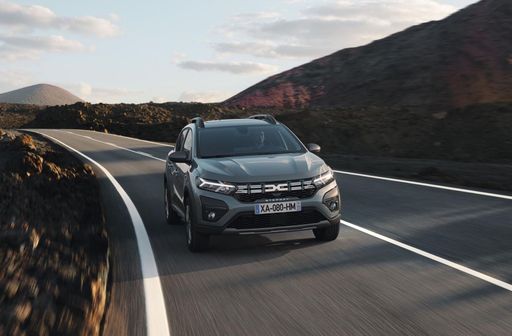
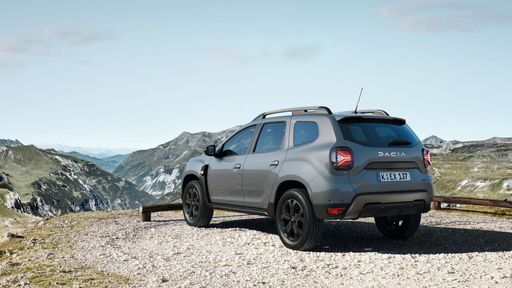
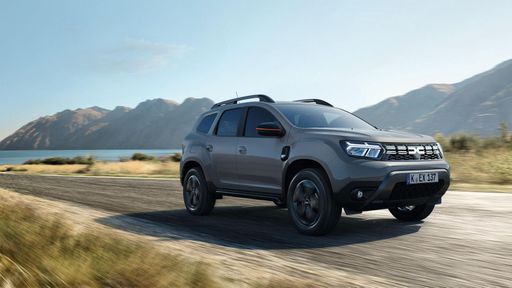
The Dacia Duster proudly positions itself as an SUV, ideal for those who value a higher driving position and off-road capabilities. With a robust build and a length of 4343 mm, width of 1813 mm, and height of up to 1661 mm, the Duster exudes a rugged charm suited for adventurous drives.

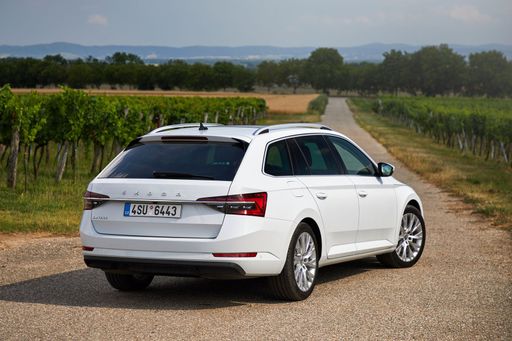
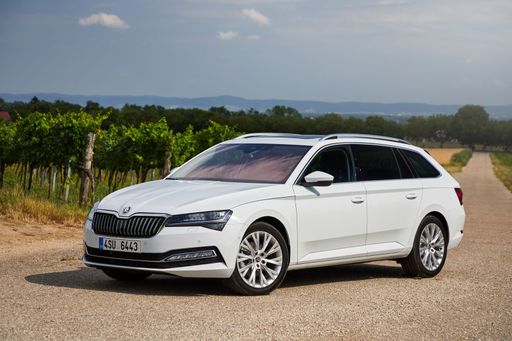
On the other hand, the Skoda Superb Combi, a Wagon, is crafted for those seeking elegance and spaciousness. It boasts an impressive length of 4902 mm, a width of 1849 mm, and a sleek height of approximately 1521 mm, offering a metropolitan grace that appeals to the urban chic.

Duster

Engine Options and Performance

The Dacia Duster offers a selection of engine types, including LPG, Full Hybrid, and Petrol MHEV, providing versatility to match diverse driving needs. With power outputs ranging from 91 HP to 140 HP, it comfortably balances power and economy. The Duster's acceleration ranges from 9.9 to 14 seconds for 0-100 km/h, illustrating its adaptability to varying terrains.

In comparison, the Skoda Superb Combi showcases a wider power spectrum with engine types including Petrol MHEV, Diesel, Petrol, and a Plugin Hybrid. Its power range stretches from 150 HP to a formidable 265 HP. This vehicle excels in performance with a faster acceleration range of 5.7 to 9.3 seconds for 0-100 km/h, reflecting its strong on-road presence.

Superb Combi

Innovations and Efficiency

The Dacia Duster incorporates a practical approach with options for both manual and automated manual transmissions. Its fuel consumption ranges from 5 to 8.1 L/100km and accommodates a fuel tank capacity of up to 55 liters, aligning efficiency with long journeys.

The Skoda Superb Combi, meanwhile, is equipped with an advanced dual-clutch automatic transmission, promising seamless gear shifts. It highlights innovations with its plugin hybrid variant, boasting an electric range of up to 134 km. Fuel consumption wizardry allows for as low as 4.9 L/100km for some variants, establishing a benchmark in eco-friendly travel.

Duster

Interior and Practicality

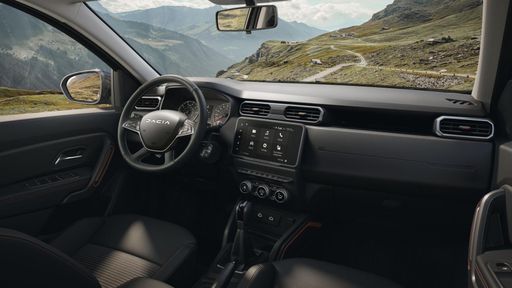
Both vehicles meet family-friendly demands with seating for five. The Duster offers practicality with a trunk capacity ranging from 430 to 517 liters, making it a trusty companion for weekend getaways.

The Superb Combi stands out in practicality with an impressive trunk capacity of up to 690 liters, ideal for those who never travel light. This, combined with its payload up to 584 kg, makes it the king of cargo among wagons.

Conclusion

Ultimately, the choice between the Dacia Duster and the Skoda Superb Combi comes down to lifestyle preferences. The Duster appeals to the adventurous spirits seeking practicality and off-road capabilities at an attractive value. Meanwhile, the Superb Combi caters to those who prioritize elegance, performance, and advanced hybrid technology.

Whether you're an adventurer or a city dweller, both vehicles offer something unique. Each model captures the essence of its brand's philosophy, making both the Duster and the Superb Combi strong contenders in their respective fields.

Here’s where it gets real: The technical differences in detail

Duster

Costs and Efficiency:

Price and efficiency are often the first things buyers look at. Here it becomes clear which model has the long-term edge – whether at the pump, the plug, or in purchase price.

Dacia Duster is substantially cheaper – starting at 16,300 £ , while the Skoda Superb Combi costs 36,100 £ . That’s a price difference of around 19,808 £.

Fuel consumption also shows a difference: the Skoda Superb Combi uses 1.2 L/100km and is considerably more efficient than the Dacia Duster with 4.7 L/100km. The difference is about 3.5 L/100km.

Superb Combi

Engine and Performance:

Under the bonnet, it becomes clear which model is tuned for sportiness and which one takes the lead when you hit the accelerator.

When it comes to engine power, the Skoda Superb Combi offers significantly more power – delivering 265 HP compared to 158 HP. That’s roughly 107 HP more horsepower.

When accelerating from 0 to 100 km/h, the Skoda Superb Combi is clearly quicker – completing the sprint in 5.7 s, while the Dacia Duster takes 9.4 s. That’s about 3.7 s quicker.

There’s also a difference in torque: the Skoda Superb Combi delivers considerably more torque with 400 Nm compared to 230 Nm. That’s about 170 Nm more.

Duster

Space and Everyday Use:

Whether family car or daily driver – which one offers more room, flexibility and comfort?

Both vehicles offer seating for 5 people.

In terms of curb weight, Dacia Duster is slightly lighter – 1,377 kg compared to 1,575 kg. The difference is around 198 kg.

Looking at boot space, the Skoda Superb Combi offers clearly more boot space – 690 L compared to 517 L. That’s a difference of about 173 L.

When it comes to payload, the Skoda Superb Combi carries visibly more – 584 kg compared to 453 kg. That’s a difference of about 131 kg.

Who wins the race in the data check?

The Skoda Superb Combi stands well ahead of its rival in the objective data comparison.
This result only shows which model scores more points on paper – not which of the two cars feels right for you.

from £36,100
Superb Combi

Skoda Superb Combi

  • Engine Type Petrol, Petrol MHEV, Diesel, Plugin Hybrid
  • Transmission Automatic
  • Drive Type Front-Wheel Drive, All-Wheel Drive
  • Power HP 150 - 265 HP
  • Consumption L/100km 1.2 - 7.8 L/100km
  • Electric Range 128 - 137 km
Dacia Duster
Skoda Superb Combi

Costs and Consumption

View detailed analysis

Engine and Performance

View detailed analysis

Dimensions and Body

View detailed analysis

Dacia Duster

The Dacia Duster is a straightforward, budget-friendly SUV that prioritizes practicality and value over flashy features. Its rugged styling and simple, roomy interior make it a sensible choice for buyers who want capable everyday transport without paying for extras they won’t use.

details

Skoda Superb Combi

The Skoda Superb Combi is the practical hero of the estate world, offering cavernous space and a calm, refined ride that makes family life feel effortless. Its clever features, understated design and no-nonsense value make it a smart pick for buyers who want Germanic engineering without the badge premium — and it even manages to stay surprisingly stylish while doing all the heavy lifting.

details
Dacia Duster
Skoda Superb Combi

Costs and Consumption

Price
16,300 - 24,900 £
Price
36,100 - 52,300 £
Consumption L/100km
4.7 - 7.6 L/100km
Consumption L/100km
1.2 - 7.8 L/100km
Consumption kWh/100km
-
Consumption kWh/100km
-
Electric Range
-
Electric Range
128 - 137 km
Battery Capacity
-
Battery Capacity
-
co2
107 - 140 g/km
co2
28 - 178 g/km
Fuel tank capacity
-
Fuel tank capacity
-

Dimensions and Body

Body Type
SUV
Body Type
Estate
Seats
5
Seats
5
Doors
-
Doors
-
Curb weight
1,377 - 1,559 kg
Curb weight
1,575 - 1,853 kg
Trunk capacity
348 - 517 L
Trunk capacity
510 - 690 L
Length
-
Length
-
Width
1,813 mm
Width
1,849 mm
Height
-
Height
-
Max trunk capacity
-
Max trunk capacity
-
Payload
402 - 453 kg
Payload
497 - 584 kg

Engine and Performance

Engine Type
Petrol MHEV, Full Hybrid, LPG
Engine Type
Petrol, Petrol MHEV, Diesel, Plugin Hybrid
Transmission
Manuel, Automatic
Transmission
Automatic
Transmission Detail
Manual Gearbox, Automated Manual, Dual-Clutch Automatic
Transmission Detail
Dual-Clutch Automatic
Drive Type
Front-Wheel Drive, All-Wheel Drive
Drive Type
Front-Wheel Drive, All-Wheel Drive
Power HP
115 - 158 HP
Power HP
150 - 265 HP
Acceleration 0-100km/h
9.4 - 11.7 s
Acceleration 0-100km/h
5.7 - 9.3 s
Max Speed
-
Max Speed
-
Torque
190 - 230 Nm
Torque
250 - 400 Nm
Number of Cylinders
3 - 4
Number of Cylinders
4
Power kW
84 - 116 kW
Power kW
110 - 195 kW
Engine capacity
1,199 - 1,789 cm3
Engine capacity
1,498 - 1,984 cm3

General

Model Year
2,025 - 2,026
Model Year
2,024 - 2,025
CO2 Efficiency Class
D, C
CO2 Efficiency Class
E, F, D, G, B
Brand
Dacia
Brand
Skoda
DriveDuel uses data analysis and artificial intelligence to evaluate vehicle data and create content. Content is regularly reviewed and improved. The displayed prices are estimates based on German list prices, adjusted to the respective country’s VAT. Country-specific registration taxes are not included. This information is not legally binding.