VS

Dacia Duster vs Volvo XC60 comparison

Compare performance (158 HP vs 455 HP), boot space and price (16,300 £ vs 49,200 £ ) at a glance. Find out which car is the better choice for you – Dacia Duster or Volvo XC60?

Dacia Duster vs Volvo XC60: Key differences

Dacia Duster

5 (2 Reviews)
rate
  • considerably cheaper
  • noticeably lighter
  • only slightly more trunk space

Volvo XC60

4.8 (6 Reviews)
rate
  • substantially more power
  • clearly more efficient
  • substantially quicker 0–100 km/h

All details on performance, efficiency, range and trunk space can be found in the technical comparison below – including user reviews for both models.

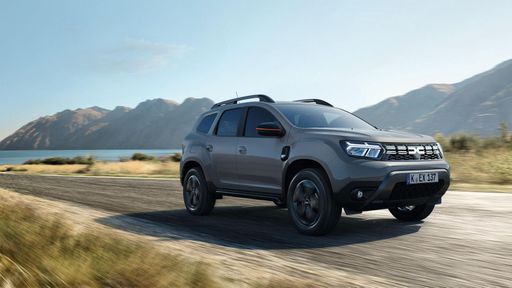
Duster

A Showdown of Utility and Sophistication: Dacia Duster VS Volvo XC60

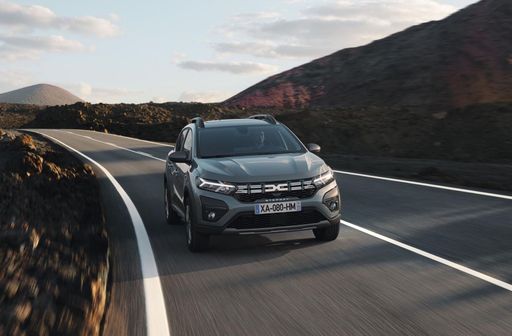
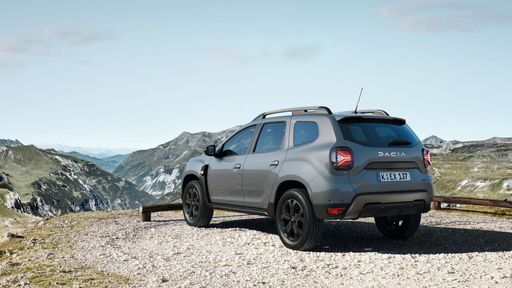
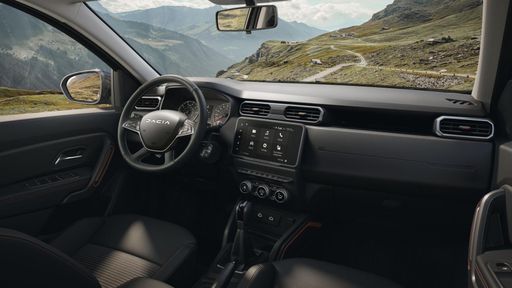
In the diverse world of SUVs, the Dacia Duster and Volvo XC60 stand out for a variety of reasons. While both vehicles clothe themselves in the SUV badge, they cater to different desires and demands. Let’s dive into what makes the 2024 models of these SUV titans exceptional in their own right, examining all from technical aspects to innovative features.
XC60

Performance and Power: Engines Under the Hood

The Dacia Duster comes equipped with a mix of engine options, ranging from LPG and full hybrid to petrol mild hybrid. These variants accommodate power outputs of 91 to 140 HP and can achieve a maximum speed between 160 to 180 km/h. Transmission choices include both manual and automated manual gearboxes, along with options for front-wheel and all-wheel drive systems. Acceleration times from 0 to 100 km/h span 9.9 to 14 seconds, reflecting the vehicle’s focus on both economy and agility.

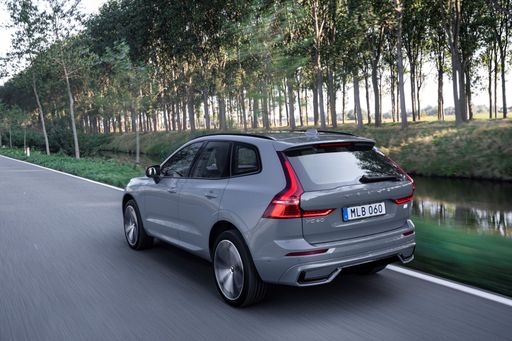
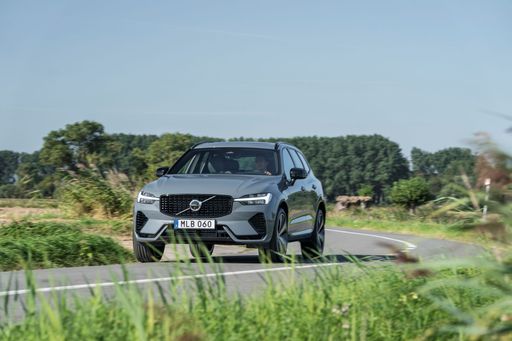
Contrarily, the Volvo XC60 leans towards a more powerful presentation with engine types such as petrol mild hybrid and plug-in hybrid, producing between 250 and 455 HP. This strength is paired exclusively with automatic transmission and all-wheel drive. Its acceleration times are significantly swifter, ranging from 4.9 to 6.9 seconds, underscoring its blend of elegance and force. The maximum speed mirrors that of the Duster at 180 km/h.

Duster

Efficiency and Environment: Fuel and CO2 Emissions

The Dacia Duster keeps efficiency in focus with consumption rates varying between 5 and 8.1 L/100km. CO2 emissions range from 114 to 147 g/km, with efficiency classes spanning from D to E. This makes it a modest choice for those conscious of both budget and environmental footprint.

On the other hand, the Volvo XC60 showcases ultimate fuel efficiency in its plug-in hybrid variant, achieving a remarkable 0.9 L/100km and an electric range of up to 80 km. CO2 emissions plunge as low as 22 g/km, with efficiency classes B being the most eco-friendly. Such figures highlight Volvo’s commitment to sustainability without sacrificing luxury and performance.

XC60

Design and Dimensions: The Bold vs. the Sleek

Dimension-wise, both SUVs promise substantial interior space yet differ in their specifics. The Dacia Duster stretches 4343 mm long and, with its 1656 mm height, captures a robust profile suitable for rugged adventures. Its trunk capacity is capable of holding between 430 to 517 liters, offering practical convenience for any journey.

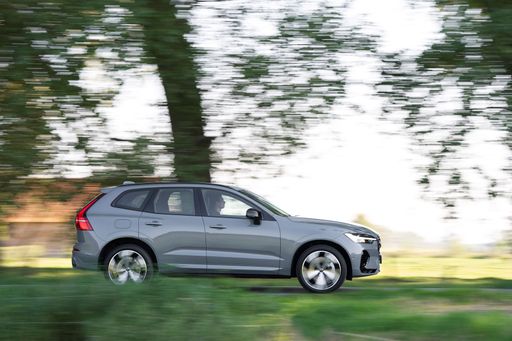
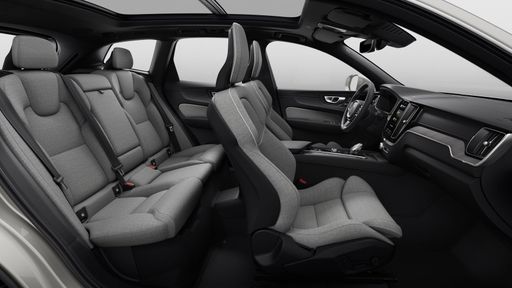
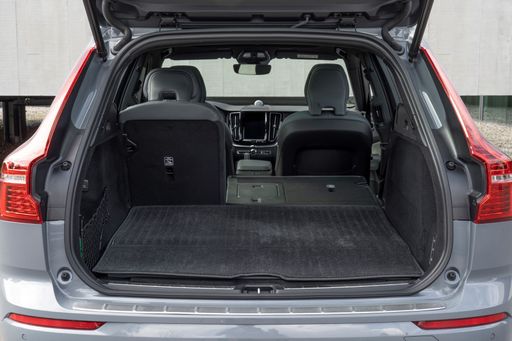
The Volvo XC60 takes on a more refined aura, spanning a length of 4688 mm and a slightly taller stature of 1658 mm. Its trunk offers up to 483 liters of space and benefits from Volvo's emphasis on elegant interior design, providing luxurious comfort for all passengers.

Duster

Final Reflections: Diverse Paths to the Same Destination

The Dacia Duster and Volvo XC60 serve very different kinds of SUV enthusiasts. The Duster appeals to those seeking reliability, affordability, and a touch of ruggedness ideal for both urban and rural escapades. In contrast, the Volvo XC60 lures drivers with its refined power and attention to eco-friendly innovation, crafted for those who prioritize sophistication alongside sustainability.

In conclusion, whether your heart leans towards the robust utility of the Duster or the opulent journey of the XC60, both vehicles pave the path for diverse adventures all while under the SUV moniker.

Here’s where it gets real: The technical differences in detail

Duster

Costs and Efficiency:

When it comes to price and running costs, the biggest differences usually appear. This is often where you see which car fits your budget better in the long run.

Dacia Duster is considerably cheaper – starting at 16,300 £ , while the Volvo XC60 costs 49,200 £ . That’s a price difference of around 32,914 £.

Fuel consumption also shows a difference: the Volvo XC60 uses 2.8 L/100km and is clearly more efficient than the Dacia Duster with 4.7 L/100km. The difference is about 1.9 L/100km.

XC60

Engine and Performance:

Power, torque and acceleration say a lot about how a car feels on the road. This is where you see which model delivers more driving dynamics.

When it comes to engine power, the Volvo XC60 offers substantially more power – delivering 455 HP compared to 158 HP. That’s roughly 297 HP more horsepower.

When accelerating from 0 to 100 km/h, the Volvo XC60 is substantially quicker – completing the sprint in 4.9 s, while the Dacia Duster takes 9.4 s. That’s about 4.5 s quicker.

There’s no difference in top speed – both reach 180 km/h.

There’s also a difference in torque: the Volvo XC60 delivers substantially more torque with 709 Nm compared to 230 Nm. That’s about 479 Nm more.

Duster

Space and Everyday Use:

Cabin size, boot volume and payload all play a role in everyday practicality. Here, comfort and flexibility make the difference.

Both vehicles offer seating for 5 people.

In terms of curb weight, Dacia Duster is noticeably lighter – 1,377 kg compared to 1,900 kg. The difference is around 523 kg.

Looking at boot space, the Dacia Duster offers only slightly more boot space – 517 L compared to 483 L. That’s a difference of about 34 L.

For maximum load capacity, the Dacia Duster offers only slightly more capacity – up to 1,609 L, about 66 L more than the Volvo XC60.

When it comes to payload, the Volvo XC60 carries moderately more – 550 kg compared to 453 kg. That’s a difference of about 97 kg.

Who wins the race in the data check?

The Volvo XC60 holds a decisive overall lead in the objective data comparison.
This result only shows which model scores more points on paper – not which of the two cars feels right for you.

from £49,200
XC60

Volvo XC60

  • Engine Type : Petrol MHEV, Plugin Hybrid
  • Transmission : Automatic
  • Drive Type : All-Wheel Drive
  • Power HP : 250 - 455 HP
  • Consumption L/100km : 2.8 - 7.5 L/100km
  • Electric Range : 74 - 82 km
Dacia Duster
Volvo XC60

Costs and Consumption

View detailed analysis

Engine and Performance

View detailed analysis

Dimensions and Body

View detailed analysis

Dacia Duster

The Dacia Duster is a no-nonsense compact SUV that delivers rugged practicality and surprisingly comfortable everyday driving without fuss. It might not win any beauty contests, but its honest design, easy-to-live-with cabin and tough attitude make it a smart pick for buyers who want reliable transport without luxury frills.

details

Volvo XC60

The Volvo XC60 blends Scandinavian calm with confident presence, offering a cabin that feels plush without shouting for attention. It’s a smart pick for buyers after a composed ride, clever practicality and thoughtful safety touches — it even makes running the family shuttle feel almost serene, which is a small miracle.

details
Dacia Duster
Volvo XC60

Costs and Consumption

Price
16,300 - 24,900 £
Price
49,200 - 75,100 £
Consumption L/100km
4.7 - 7.6 L/100km
Consumption L/100km
2.8 - 7.5 L/100km
Consumption kWh/100km
-
Consumption kWh/100km
-
Electric Range
-
Electric Range
74 - 82 km
Battery Capacity
0.6 kWh
Battery Capacity
-
co2
107 - 140 g/km
co2
64 - 169 g/km
Fuel tank capacity
50 L
Fuel tank capacity
71 L

Dimensions and Body

Body Type
SUV
Body Type
SUV
Seats
5
Seats
5
Doors
5
Doors
5
Curb weight
1,377 - 1,455 kg
Curb weight
1,900 - 2,150 kg
Trunk capacity
348 - 517 L
Trunk capacity
468 - 483 L
Length
4,343 mm
Length
4,708 mm
Width
1,813 mm
Width
1,902 mm
Height
1,656 - 1,659 mm
Height
1,655 mm
Max trunk capacity
1,414 - 1,609 L
Max trunk capacity
1,543 L
Payload
402 - 453 kg
Payload
510 - 550 kg

Engine and Performance

Engine Type
Petrol MHEV, Full Hybrid, LPG
Engine Type
Petrol MHEV, Plugin Hybrid
Transmission
Manuel, Automatic
Transmission
Automatic
Transmission Detail
Manual Gearbox, Automated Manual, Dual-Clutch Automatic
Transmission Detail
Automatic Gearbox
Drive Type
Front-Wheel Drive, All-Wheel Drive
Drive Type
All-Wheel Drive
Power HP
115 - 158 HP
Power HP
250 - 455 HP
Acceleration 0-100km/h
9.4 - 11.7 s
Acceleration 0-100km/h
4.9 - 6.9 s
Max Speed
180 km/h
Max Speed
180 km/h
Torque
190 - 230 Nm
Torque
350 - 709 Nm
Number of Cylinders
3 - 4
Number of Cylinders
4
Power kW
84 - 116 kW
Power kW
184 - 335 kW
Engine capacity
1,199 - 1,789 cm3
Engine capacity
1,969 cm3

General

Model Year
2,025 - 2,026
Model Year
2,025
CO2 Efficiency Class
D, C
CO2 Efficiency Class
F, B
Brand
Dacia
Brand
Volvo
DriveDuel uses data analysis and artificial intelligence to evaluate vehicle data and create content. Content is regularly reviewed and improved. The displayed prices are estimates based on German list prices, adjusted to the respective country’s VAT. Country-specific registration taxes are not included. This information is not legally binding.