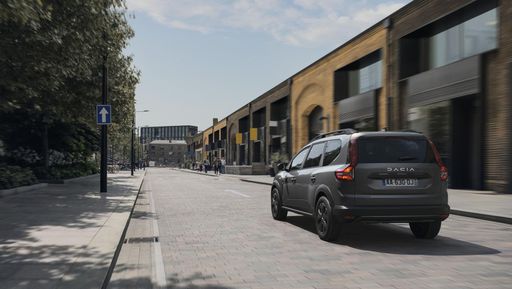
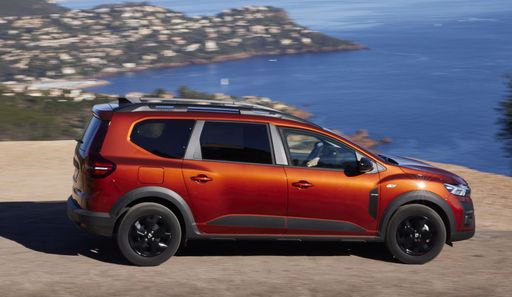
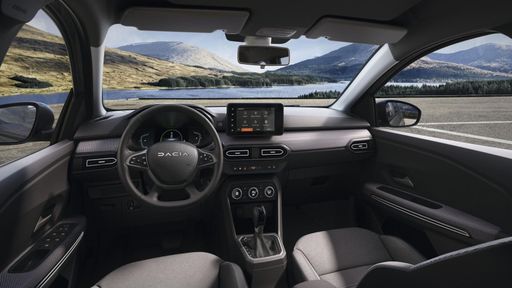
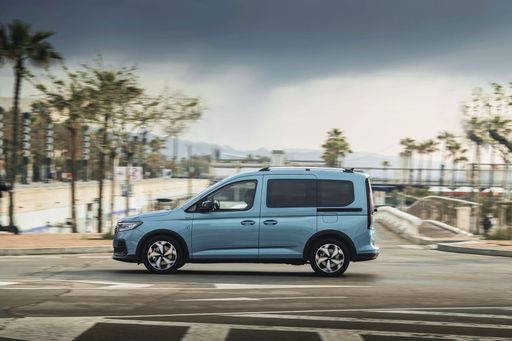
@ Dacia / Renault Group Media
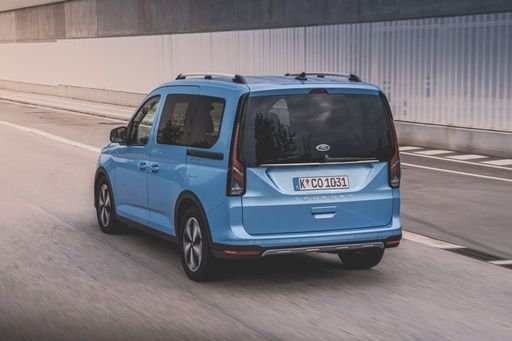
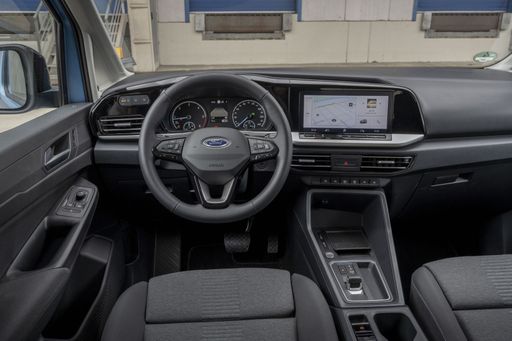
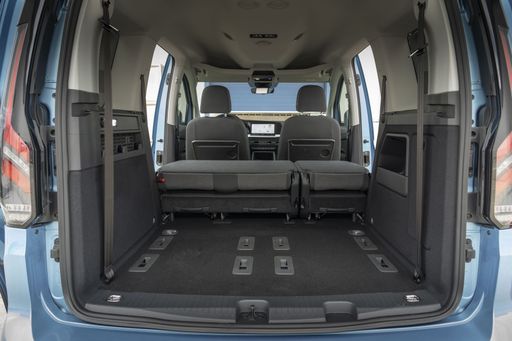
@ Ford Motor Company / Ford Media Center
VS

Dacia Jogger vs Ford Tourneo Connect – Differences & prices compared

Both models have their strengths – but which one suits you more?
Compare performance, efficiency, price and space directly: Dacia Jogger or Ford Tourneo Connect?

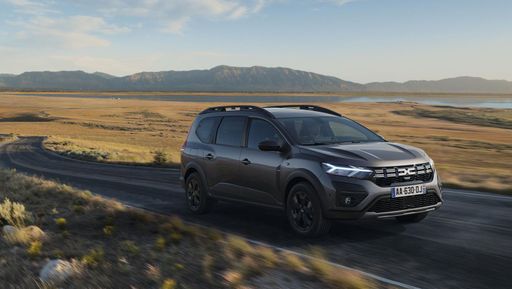
Jogger @ Dacia / Renault Group Media

A Clash of Utility: Dacia Jogger vs. Ford Tourneo Connect

In the competitive world of multi-purpose vehicles (MPVs), the Dacia Jogger and Ford Tourneo Connect are making waves. Both models have been upgraded for 2024, offering enhanced features that cater to families and adventurers alike. In this article, we dive into the technical specifics, performance, and innovations of these two titans of practicality.
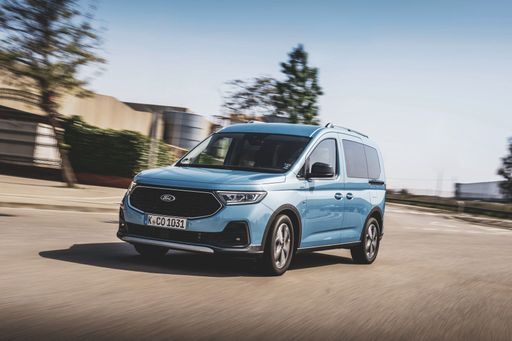
Tourneo Connect @ Ford Motor Company / Ford Media Center

Design and Practicality

The Dacia Jogger, categorized as an MPV, captures attention with its rugged and robust design. Its dimensions are compact enough for city driving, measuring 4547 mm in length, 1784 mm in width, and 1674 mm in height. With the option of five or seven seats, it is tailored for growing families or those needing extra passenger capacity. Not to be outdone, the Ford Tourneo Connect comes as a high-roof wagon, stretching slightly longer with a length range of up to 4868 mm, offering height and width at 1833 mm and 1855 mm, respectively. It seats five, focusing more on cargo with a maximum trunk capacity of 1720 liters compared to Jogger's 607 liters.

Jogger @ Dacia / Renault Group Media

Engine and Performance

The Dacia Jogger is versatile, offering multiple engine options such as full hybrid, LPG, and petrol. With a power output ranging from 91 to 140 HP, it provides a decent punch whether you're opting for manual or automatic gearboxes. The acceleration finds itself moderate with its fastest 0-100 km/h at 9.8 seconds. Alternatively, the Tourneo Connect presents a choice of petrol, diesel, and plugin hybrid engines, delivering power between 102 and 150 HP. A notable advantage is its dual-clutch automatic option, enhancing driving smoothness. Despite its greater power, its acceleration is more leisurely, clocking at 11.4-13.5 seconds to reach 100 km/h.

Tourneo Connect @ Ford Motor Company / Ford Media Center

Efficiency and Eco-Friendliness

In terms of consumption, the Jogger's hybrid version is commendable with a consumption of just 4.7 L/100 km. For those mindful of emissions, it maintains CO2 outputs as low as 105 g/km. The Tourneo Connect’s plugin hybrid model impresses further on fuel economy, boasting an exceptional 0.5 L/100 km. Additionally, its CO2 efficiency classes range from B to F, indicative of a broader spectrum of environmental impact considerations.

Jogger @ Dacia / Renault Group Media

Driving Dynamics and Safety

Both vehicles stand as front-wheel drives, offering stability in typical driving conditions. The Jogger’s ride is characterized by its simplicity and practicality, while the Tourneo Connect offers more modern technologies like the dual-clutch system to refine the driving experience. In terms of safety, both models are equipped with essential features. However, the Tourneo Connect edges forward with advanced driver assistance systems thanks to Ford’s commitment to safety innovation.

Tourneo Connect @ Ford Motor Company / Ford Media Center

Final Thoughts

Choosing between the Dacia Jogger and the Ford Tourneo Connect hinges largely on your personal needs. The Jogger is an economical choice with flexibility for more passengers, while the Tourneo Connect provides more cargo space and advanced technological features. Both are robust contenders in the MPV segment, offering unique benefits that cater to their respective audience's needs.

Whichever model you lean towards, rest assured that both the Jogger and the Tourneo Connect deliver in terms of utility, comfort, and innovation.

Here’s where it gets real: The technical differences in detail

Jogger @ Dacia / Renault Group Media

Costs and Efficiency:

When it comes to price and running costs, the biggest differences usually appear. This is often where you see which car fits your budget better in the long run.

Dacia Jogger has a significantly advantage in terms of price – it starts at 15400 £, while the Ford Tourneo Connect costs 27300 £. That’s a price difference of around 11922 £.

Fuel consumption also shows a difference: Ford Tourneo Connect manages with 0.50 L and is therefore convincingly more efficient than the Dacia Jogger with 4.70 L. The difference is about 4.20 L per 100 km.

Tourneo Connect @ Ford Motor Company / Ford Media Center

Engine and Performance:

Power, torque and acceleration say a lot about how a car feels on the road. This is where you see which model delivers more driving dynamics.

When it comes to engine power, the Ford Tourneo Connect has a barely noticeable edge – offering 150 HP compared to 140 HP. That’s roughly 10 HP more horsepower.

In acceleration from 0 to 100 km/h, the Dacia Jogger is slight quicker – completing the sprint in 9.80 s, while the Ford Tourneo Connect takes 10.10 s. That’s about 0.30 s faster.

In terms of top speed, the Ford Tourneo Connect performs barely noticeable better – reaching 186 km/h, while the Dacia Jogger tops out at 174 km/h. The difference is around 12 km/h.

There’s also a difference in torque: Ford Tourneo Connect pulls significantly stronger with 350 Nm compared to 200 Nm. That’s about 150 Nm difference.

Space and Everyday Use:

Whether family car or daily driver – which one offers more room, flexibility and comfort?

Seats: Dacia Jogger offers clearly perceptible more seating capacity – 7 vs 5.

In curb weight, Dacia Jogger is clearly perceptible lighter – 1251 kg compared to 1542 kg. The difference is around 291 kg.

In terms of boot space, the Ford Tourneo Connect offers convincingly more room – 1720 L compared to 607 L. That’s a difference of about 1113 L.

In maximum load capacity, the Ford Tourneo Connect performs clearly better – up to 3105 L, which is about 1286 L more than the Dacia Jogger.

When it comes to payload, Ford Tourneo Connect evident takes the win – 818 kg compared to 582 kg. That’s a difference of about 236 kg.

Who wins the race?

The Ford Tourneo Connect proves to be is largely superior and therefore becomes our DriveDuel Champion!
Ford Tourneo Connect is the better all-rounder in this comparison.

from about £27,300
Tourneo Connect @ Ford Motor Company / Ford Media Center

Ford Tourneo Connect

  • Engine Type : Plugin Hybrid, Petrol, Diesel
  • Transmission : Automatic, Manuel
  • Drive Type : Front-Wheel Drive, All-Wheel Drive
  • Power HP : 102 - 150 HP
  • Consumption L/100km : 0.5 - 6.9 L
  • Electric Range : 116 - 119 km

Dacia Jogger

The Dacia Jogger is a no-nonsense family mover that stretches the idea of value with cavernous practicality and flexible space, perfect for buyers who need a sensible, everyday Swiss Army knife on wheels. It doesn’t try to be glamorous — instead it wins hearts with cheerful thrift, durable materials and honest engineering, giving you useful transport without the pretence.

details

Ford Tourneo Connect

The Ford Tourneo Connect is a practical, surprisingly polished people-mover that balances family-friendly flexibility with car-like driving manners. With clever storage, sliding doors and a bright, airy cabin it’s a smart choice for buyers who want sensible versatility without sacrificing everyday comfort — and it’s oddly enjoyable to drive for its size.

details
Dacia Jogger
Ford Tourneo Connect
Jogger @ Dacia / Renault Group Media
Tourneo Connect @ Ford Motor Company / Ford Media Center

Costs and Consumption

Price
15400 - 23400 £
Price
27300 - 41900 £
Consumption L/100km
4.7 - 7.8 L
Consumption L/100km
0.5 - 6.9 L
Consumption kWh/100km
-
Consumption kWh/100km
-
Electric Range
-
Electric Range
116 - 119 km
Battery Capacity
0.60 kWh
Battery Capacity
19.70 kWh
co2
105 - 137 g/km
co2
11 - 164 g/km
Fuel tank capacity
40 - 50 L
Fuel tank capacity
32 - 50 L

Dimensions and Body

Body Type
MPV
Body Type
High Roof Estate
Seats
5 - 7
Seats
5
Doors
5
Doors
5
Curb weight
1251 - 1460 kg
Curb weight
1542 - 1781 kg
Trunk capacity
160 - 607 L
Trunk capacity
1213 - 1720 L
Length
4547 mm
Length
4500 - 4868 mm
Width
1784 mm
Width
1855 mm
Height
1674 mm
Height
1833 mm
Max trunk capacity
1807 - 1819 L
Max trunk capacity
2556 - 3105 L
Payload
393 - 582 kg
Payload
563 - 818 kg

Engine and Performance

Engine Type
Full Hybrid, LPG, Petrol
Engine Type
Plugin Hybrid, Petrol, Diesel
Transmission
Automatic, Manuel
Transmission
Automatic, Manuel
Transmission Detail
Automatic Gearbox, Manual Gearbox
Transmission Detail
Dual-Clutch Automatic, Manual Gearbox
Drive Type
Front-Wheel Drive
Drive Type
Front-Wheel Drive, All-Wheel Drive
Power HP
91 - 140 HP
Power HP
102 - 150 HP
Acceleration 0-100km/h
9.8 - 13.2 s
Acceleration 0-100km/h
10.1 - 13.5 s
Max Speed
167 - 174 km/h
Max Speed
175 - 186 km/h
Torque
160 - 200 Nm
Torque
220 - 350 Nm
Number of Cylinders
3 - 4
Number of Cylinders
4
Power kW
67 - 103 kW
Power kW
75 - 110 kW
Engine capacity
999 - 1598 cm3
Engine capacity
1498 - 1968 cm3

General

Model Year
2024 - 2025
Model Year
2024 - 2025
CO2 Efficiency Class
C, D
CO2 Efficiency Class
B, E, F
Brand
Dacia
Brand
Ford
What drivetrain options does the Dacia Jogger have?

The Dacia Jogger is offered with Front-Wheel Drive.

The prices and data displayed are estimates based on German list prices and may vary by country. This information is not legally binding.