@ Dacia / Renault Group Media
@ SEAT S.A. / SEAT Media Center
VS

Dacia Sandero vs SEAT Arona – Differences & prices compared

Compare performance, boot capacity, efficiency and price at a glance.
Find out which car is the better choice for you – Dacia Sandero or SEAT Arona?

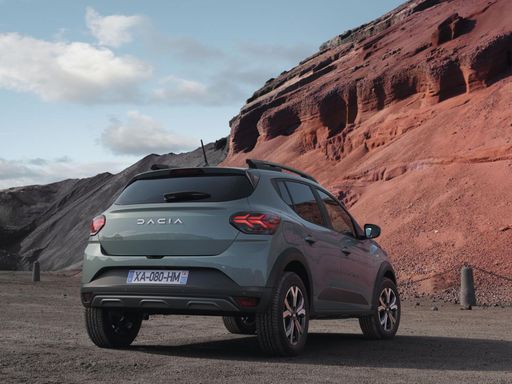
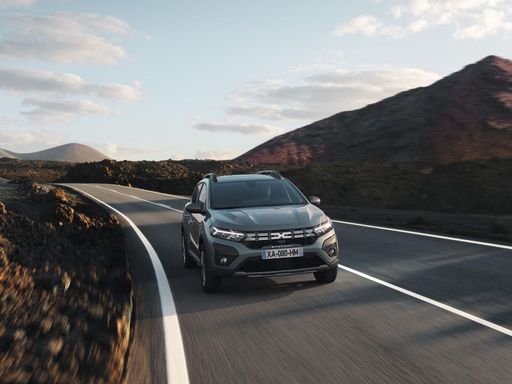
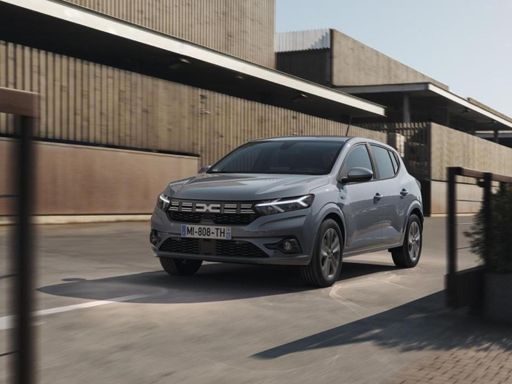
Sandero @ Dacia / Renault Group Media

Battle of the Budget Champs: Dacia Sandero vs. SEAT Arona

In the realm of budget-friendly vehicles, the Dacia Sandero and SEAT Arona emerge as attractive options for those seeking practicality without compromising on certain comforts. We delve into these compact models to evaluate their technical prowess, innovations, and overall offerings.
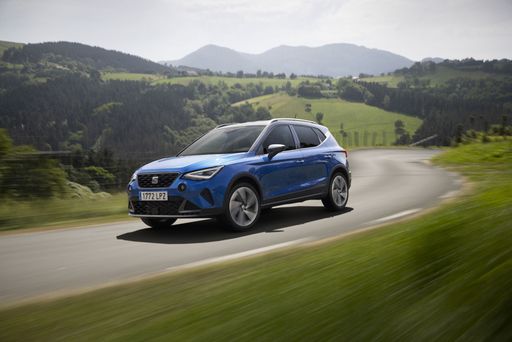
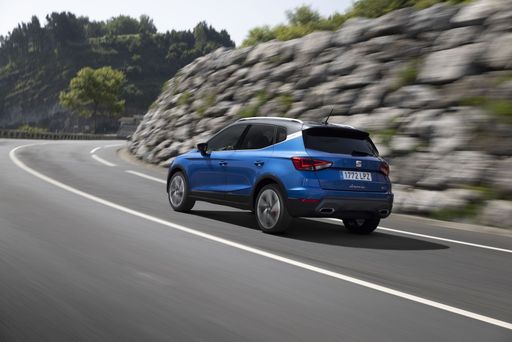
Arona @ SEAT S.A. / SEAT Media Center

Exterior Dimensions and Style

The Dacia Sandero, a well-rounded hatchback, showcases an appealingly compact build with a length of up to 4,099 mm, a width of 1,848 mm, and a height reaching 1,535 mm. Meanwhile, the SEAT Arona, a stylish SUV, stands slightly taller at 1,537 mm, with a longer length of 4,153 mm and a slightly narrower width of 1,780 mm. Both vehicles feature a contemporary design, though the Arona leans more towards a rugged SUV appearance.

Sandero @ Dacia / Renault Group Media

Powertrain and Performance

The Sandero offers versatility with a range of petrol and LPG engines boasting outputs from 67 HP to 110 HP (49 kW to 81 kW). While acceleration may not be its strong point — varying between 16.7 seconds to 10 seconds from 0-100 km/h — the available CVT and manual transmissions provide a satisfactory driving experience for urban environments. Performance culminates in a top speed of up to 183 km/h, with adequate torque figures reaching up to 200 Nm.

Conversely, the SEAT Arona features more potent petrol engines, ranging from 95 HP to 150 HP (70 kW to 110 kW), and offers enhanced performance with smooth manual and dual-clutch automatic transmissions. It exhibits zesty acceleration, taking as little as 8.4 seconds to hit 100 km/h and peaks at a top speed of 210 km/h. The torque output extends to a robust 250 Nm, showcasing its capability for dynamic driving.

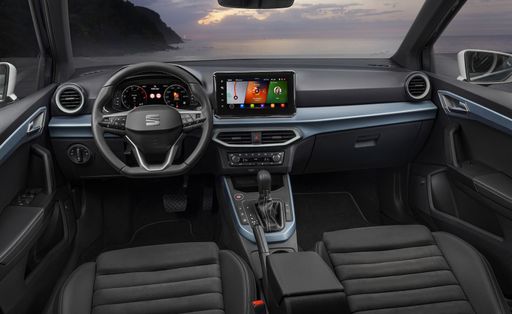
Arona @ SEAT S.A. / SEAT Media Center

Interior Comfort and Capacity

Inside, both models seat five passengers comfortably. The Sandero offers a trunk capacity of 328 liters, making it slightly less accommodating than the Arona's 400-liter boot. In terms of payload, the Dacia manages up to 436 kg, while the Arona extends its utility potential with a payload up to 522 kg.

Sandero @ Dacia / Renault Group Media

Fuel Efficiency and Environmental Impact

Fuel efficiency is a practical consideration for both vehicles. The Sandero showcases consumption rates ranging from 5.2 to 7 liters per 100 km, alongside CO2 emissions of 105 to 139 g/km. Its CO2 efficiency class varies among D, C, and E categories. The Arona holds its own with consumption figures from 5.4 to 5.6 liters per 100 km, producing emissions between 122 and 128 g/km, categorized consistently in efficiency class D.

Arona @ SEAT S.A. / SEAT Media Center

Price and Value Proposition

The fiscal aspect reveals the Dacia Sandero's competitive edge in cost-effectiveness, traditionally priced lower than the Arona, catering especially to budget-conscious buyers without sacrificing essential functionalities. Meanwhile, the SEAT Arona, with its additional performance and comfort features, justifies a higher price point for those inclined towards a spirited driving experience.

Conclusion

Ultimately, choosing between the Dacia Sandero and the SEAT Arona hinges on priorities. For those prioritizing affordability and straightforward utility, the Sandero stands as a commendable choice. Meanwhile, the Arona appeals to buyers seeking lively performance and additional cargo space with a slightly higher budget. Both models, however, underscore the burgeoning capabilities of compact cars in today's automotive landscape.

Here’s where it gets real: The technical differences in detail

Costs and Efficiency:

Price and efficiency are often the first things buyers look at. Here it becomes clear which model has the long-term edge – whether at the pump, the plug, or in purchase price.

Dacia Sandero has a clearly advantage in terms of price – it starts at 10700 £, while the SEAT Arona costs 19300 £. That’s a price difference of around 8597 £.

Fuel consumption also shows a difference: Dacia Sandero manages with 5.30 L and is therefore barely noticeable more efficient than the SEAT Arona with 5.40 L. The difference is about 0.10 L per 100 km.

Engine and Performance:

Power, torque and acceleration say a lot about how a car feels on the road. This is where you see which model delivers more driving dynamics.

When it comes to engine power, the SEAT Arona has a distinct edge – offering 150 HP compared to 110 HP. That’s roughly 40 HP more horsepower.

In acceleration from 0 to 100 km/h, the SEAT Arona is somewhat quicker – completing the sprint in 8.40 s, while the Dacia Sandero takes 10 s. That’s about 1.60 s faster.

In terms of top speed, the SEAT Arona performs to a small extent better – reaching 210 km/h, while the Dacia Sandero tops out at 183 km/h. The difference is around 27 km/h.

There’s also a difference in torque: SEAT Arona pulls a bit stronger with 250 Nm compared to 200 Nm. That’s about 50 Nm difference.

Space and Everyday Use:

Whether family car or daily driver – which one offers more room, flexibility and comfort?

Both vehicles offer seating for 5 people.

In curb weight, Dacia Sandero is hardly perceptible lighter – 1089 kg compared to 1188 kg. The difference is around 99 kg.

In terms of boot space, the SEAT Arona offers somewhat more room – 400 L compared to 328 L. That’s a difference of about 72 L.

In maximum load capacity, the SEAT Arona performs to a small extent better – up to 1280 L, which is about 172 L more than the Dacia Sandero.

When it comes to payload, SEAT Arona a bit takes the win – 522 kg compared to 436 kg. That’s a difference of about 86 kg.

Who wins the race?

The SEAT Arona proves to be leaves the rival little chance and therefore becomes our DriveDuel Champion!
SEAT Arona is the better all-rounder in this comparison.

from about £19,300
Arona @ SEAT S.A. / SEAT Media Center

SEAT Arona

  • Engine Type : Petrol
  • Transmission : Manuel, Automatic
  • Drive Type : Front-Wheel Drive
  • Power HP : 95 - 150 HP
  • Consumption L/100km : 5.4 - 5.6 L

Dacia Sandero

The Dacia Sandero is the everyman's hatchback — unpretentious, practical and brilliantly affordable, with sensible space and straightforward charm where it matters most. It won't wow in the premium lane, but for buyers who want honest, dependable transport without showroom theatrics, the Sandero is a clever, no‑nonsense pick that keeps running costs low and grin levels high.

details

SEAT Arona

The SEAT Arona is a cheeky urban crossover that mixes sharp styling with sensible practicality, making it an appealing choice for buyers who want personality without fuss. It’s zippy in traffic, comfortable enough for daily driving, and brings enough character to make routine journeys feel a little more fun.

details
Dacia Sandero
SEAT Arona
Sandero @ Dacia / Renault Group Media
Arona @ SEAT S.A. / SEAT Media Center

Costs and Consumption

Price
10700 - 16700 £
Price
19300 - 29300 £
Consumption L/100km
5.3 - 7.1 L
Consumption L/100km
5.4 - 5.6 L
Consumption kWh/100km
-
Consumption kWh/100km
-
Electric Range
-
Electric Range
-
Battery Capacity
-
Battery Capacity
-
co2
105 - 140 g/km
co2
122 - 128 g/km
Fuel tank capacity
32 - 50 L
Fuel tank capacity
40 L

Dimensions and Body

Body Type
Hatchback
Body Type
SUV
Seats
5
Seats
5
Doors
5
Doors
5
Curb weight
1089 - 1209 kg
Curb weight
1188 - 1268 kg
Trunk capacity
328 L
Trunk capacity
400 L
Length
4088 - 4099 mm
Length
4153 mm
Width
1848 mm
Width
1780 mm
Height
1499 - 1535 mm
Height
1537 mm
Max trunk capacity
1108 L
Max trunk capacity
1280 L
Payload
404 - 436 kg
Payload
502 - 522 kg

Engine and Performance

Engine Type
Petrol, LPG
Engine Type
Petrol
Transmission
Manuel, Automatic
Transmission
Manuel, Automatic
Transmission Detail
Manual Gearbox, CVT
Transmission Detail
Manual Gearbox, Dual-Clutch Automatic
Drive Type
Front-Wheel Drive
Drive Type
Front-Wheel Drive
Power HP
67 - 110 HP
Power HP
95 - 150 HP
Acceleration 0-100km/h
10 - 16.7 s
Acceleration 0-100km/h
8.4 - 11.3 s
Max Speed
158 - 183 km/h
Max Speed
182 - 210 km/h
Torque
95 - 200 Nm
Torque
175 - 250 Nm
Number of Cylinders
3
Number of Cylinders
3 - 4
Power kW
49 - 81 kW
Power kW
70 - 110 kW
Engine capacity
999 cm3
Engine capacity
999 - 1498 cm3

General

Model Year
2024 - 2025
Model Year
2025
CO2 Efficiency Class
D, C, E
CO2 Efficiency Class
D
Brand
Dacia
Brand
SEAT
What drive types are available for the Dacia Sandero?

The Dacia Sandero is available as Front-Wheel Drive.

The prices and data displayed are estimates based on German list prices and may vary by country. This information is not legally binding.