VS

Dacia Sandero vs Skoda Fabia comparison

Compare performance (122 HP vs 177 HP), boot space and price (11,000 £ vs 17,300 £ ) at a glance. Find out which car is the better choice for you – Dacia Sandero or Skoda Fabia?

Dacia Sandero vs Skoda Fabia: Key differences

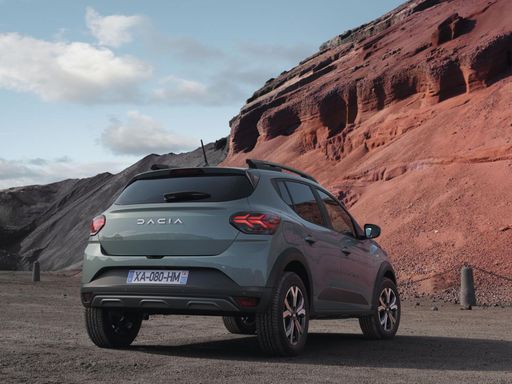
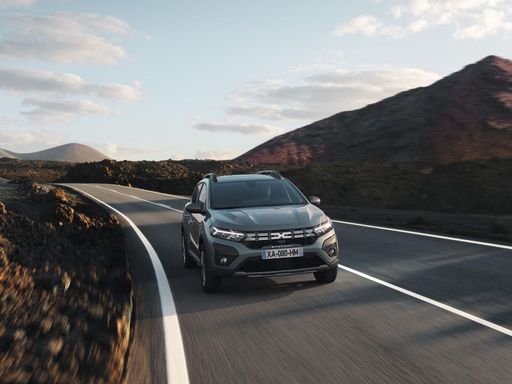
Dacia Sandero

3.5 (3 Reviews)
rate
  • significantly cheaper
  • very slightly lighter

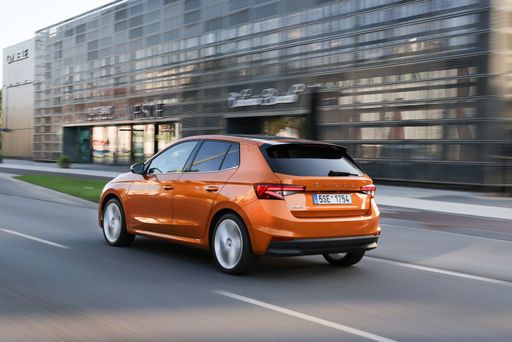
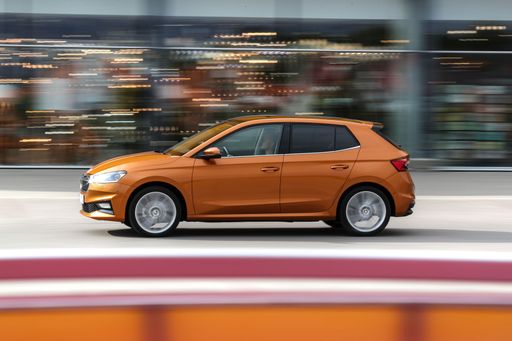
Skoda Fabia

5 (1 Reviews)
rate
  • noticeably more power
  • only slightly more efficient
  • clearly quicker 0–100 km/h
  • only slightly more trunk space

All details on performance, efficiency, range and trunk space can be found in the technical comparison below – including user reviews for both models.

Sandero

Compact Hatchback Showdown: Dacia Sandero vs Skoda Fabia

While the automotive world often shines its spotlight on flashy sports cars and luxurious SUVs, an equally fascinating battle unfolds under the radar in the compact hatchback segment. Two contenders, the Dacia Sandero and Skoda Fabia, are vying for supremacy in this competitive arena, each offering unique strengths and appealing to different kinds of drivers. In this thorough comparison, we delve into the 2024 models of both vehicles, uncovering their technical intricacies, innovative features, and distinct personalities.
Fabia

Under the Hood: Engines and Performance

The Dacia Sandero stakes its claim with a straightforward approach to engine options. It offers a choice of petrol and LPG engines, with power outputs ranging between 67 and 110 HP. Its engines are paired with either a manual gearbox or a CVT transmission, underscoring Dacia’s focus on efficiency and simplicity. The top engine configuration accelerates from 0 to 100 km/h in just 10 seconds, hitting a maximum speed of 183 km/h. Despite the modest power, the Sandero maintains an attractive fuel consumption rate, starting at just 5.2 L/100km.

On the other hand, the Skoda Fabia presents a more diverse engine lineup, including petrol options that vary in power from 80 to 150 HP. The Fabia’s engines are combined with either a manual gearbox or a more sophisticated dual-clutch automatic transmission. Its top-tier model can achieve a blistering 0 to 100 km/h in 8 seconds flat, with a maximum speed of 225 km/h. While offering greater power, the Fabia remains competitive in fuel efficiency, with consumption figures as low as 5 L/100km.

Sandero

Environmental Impact: CO2 Emissions

Both hatchbacks strive for better environmental performance. The Dacia Sandero exhibits CO2 emissions between 105 and 139 g/km, matching typical expectations for compact vehicles. The Fabia, however, manages slightly better figures, with emissions ranging from 112 to 124 g/km, reflecting Skoda’s commitment to sustainability without compromising on performance.

Fabia

Dimensions and Practicality

Both the Sandero and Fabia are quintessential five-door hatchbacks, but their dimensions reveal differences in practicality. The Sandero offers a length of 4088 mm and a width of 1848 mm, creating a sturdy and spacious hatchback with a trunk capacity of 328 liters. The Fabia, while slightly longer at 4108 mm, is narrower at 1780 mm, offering a slightly larger trunk space of 380 liters. Both cars accommodate five passengers comfortably, but their unique dimensions make the Fabia slightly better for those requiring more luggage room.

Sandero

Weight and Payload

The curb weight of the Dacia Sandero varies between 1089 to 1209 kg, allowing a payload capacity that ranges up to 436 kg. The Skoda Fabia, meanwhile, weighs between 1116 and 1238 kg, offering a payload capacity of up to 457 kg. These figures underline the Fabia’s slightly larger carrying potential, appealing to those with greater load-carrying needs.

Fabia

Technology and Innovation

In terms of technology, both vehicles embrace modernity with comparable features aimed at enhancing the driving experience. The Sandero focuses on practicality with its essential tech features, ensuring reliability and ease of use. The Fabia, however, pushes the envelope a bit further with the availability of more advanced connectivity options and assists, which will appeal to tech-savvy buyers seeking a more connected drive.

Conclusion: Choosing Your Champion

When deciding between the Dacia Sandero and Skoda Fabia, it eventually comes down to individual priorities. The Sandero appeals with its no-nonsense efficiency, affordability, and robust simplicity, making it an excellent option for value-seekers and the budget-conscious. Meanwhile, the Fabia lures potential buyers with its superior power, additional tech features, and refined driving experience, suitable for those willing to invest a little extra for added luxury and performance.

In the ever-shifting landscape of compact hatchbacks, both the Dacia Sandero and Skoda Fabia present compelling cases. Your decision will ultimately reflect your driving ethos, balancing between the allure of simplicity and the desire for additional sophistication.

Here’s where it gets real: The technical differences in detail

Sandero

Costs and Efficiency:

Price and efficiency are often the first things buyers look at. Here it becomes clear which model has the long-term edge – whether at the pump, the plug, or in purchase price.

Dacia Sandero is significantly cheaper – starting at 11,000 £ , while the Skoda Fabia costs 17,300 £ . That’s a price difference of around 6,343 £.

Fuel consumption also shows a difference: the Skoda Fabia uses 4.9 L/100km and is only slightly more efficient than the Dacia Sandero with 5.3 L/100km. The difference is about 0.4 L/100km.

Fabia

Engine and Performance:

Power, torque and acceleration say a lot about how a car feels on the road. This is where you see which model delivers more driving dynamics.

When it comes to engine power, the Skoda Fabia offers noticeably more power – delivering 177 HP compared to 122 HP. That’s roughly 55 HP more horsepower.

When accelerating from 0 to 100 km/h, the Skoda Fabia is clearly quicker – completing the sprint in 7.4 s, while the Dacia Sandero takes 9.7 s. That’s about 2.3 s quicker.

There’s also a difference in torque: the Skoda Fabia delivers somewhat more torque with 250 Nm compared to 200 Nm. That’s about 50 Nm more.

Sandero

Space and Everyday Use:

Whether family car or daily driver – which one offers more room, flexibility and comfort?

Both vehicles offer seating for 5 people.

In terms of curb weight, Dacia Sandero is very slightly lighter – 1,100 kg compared to 1,143 kg. The difference is around 43 kg.

Looking at boot space, the Skoda Fabia offers only slightly more boot space – 380 L compared to 372 L. That’s a difference of about 8 L.

When it comes to payload, the Skoda Fabia carries very slightly more – 437 kg compared to 436 kg. That’s a difference of about 1 kg.

Who wins the race in the data check?

The Skoda Fabia is clearly superior overall in the objective data comparison.
This result only shows which model scores more points on paper – not which of the two cars feels right for you.

from £17,300
Fabia

Skoda Fabia

  • Engine Type : Petrol
  • Transmission : Manuel, Automatic
  • Drive Type : Front-Wheel Drive
  • Power HP : 80 - 177 HP
  • Consumption L/100km : 4.9 - 5.6 L/100km
Dacia Sandero
Skoda Fabia

Costs and Consumption

View detailed analysis

Engine and Performance

View detailed analysis

Dimensions and Body

View detailed analysis

Dacia Sandero

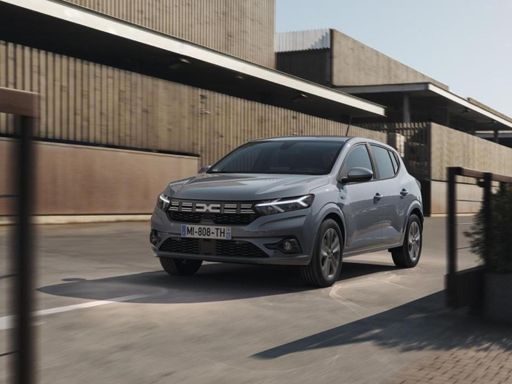
The Dacia Sandero is the everyman's hatchback — unpretentious, practical and brilliantly affordable, with sensible space and straightforward charm where it matters most. It won't wow in the premium lane, but for buyers who want honest, dependable transport without showroom theatrics, the Sandero is a clever, no‑nonsense pick that keeps running costs low and grin levels high.

details

Skoda Fabia

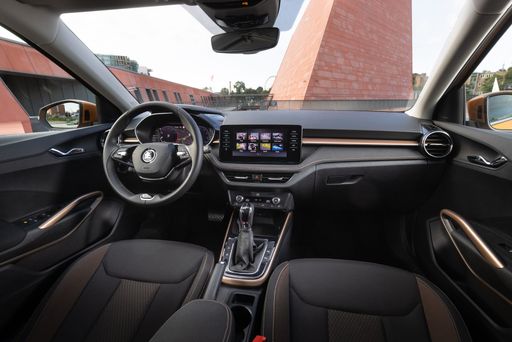
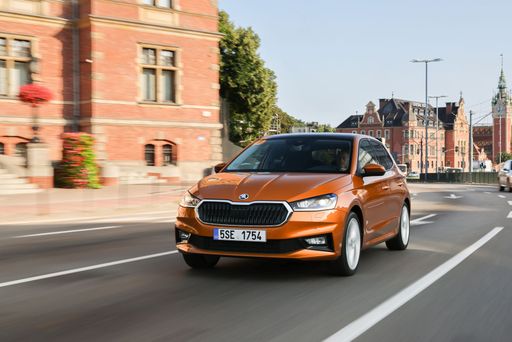
The Skoda Fabia is a clever, no-nonsense small car that turns everyday chores into a breeze thanks to smart packaging and a surprisingly roomy cabin. It won’t set your pulses racing, but it’s a consistently sensible choice — reliable, easy to live with and blessed with a few neat tricks that make city life less faff.

details
Dacia Sandero
Skoda Fabia

Costs and Consumption

Price
11,000 - 16,300 £
Price
17,300 - 30,500 £
Consumption L/100km
5.3 - 7.2 L/100km
Consumption L/100km
4.9 - 5.6 L/100km
Consumption kWh/100km
-
Consumption kWh/100km
-
Electric Range
-
Electric Range
-
Battery Capacity
-
Battery Capacity
-
co2
111 - 131 g/km
co2
112 - 126 g/km
Fuel tank capacity
-
Fuel tank capacity
40 L

Dimensions and Body

Body Type
Hatchback
Body Type
Hatchback
Seats
5
Seats
5
Doors
-
Doors
5
Curb weight
1,100 - 1,297 kg
Curb weight
1,143 - 1,278 kg
Trunk capacity
372 L
Trunk capacity
380 L
Length
-
Length
4,108 - 4,137 mm
Width
1,853 mm
Width
1,780 mm
Height
-
Height
1,458 - 1,459 mm
Max trunk capacity
-
Max trunk capacity
1,190 L
Payload
385 - 436 kg
Payload
402 - 437 kg

Engine and Performance

Engine Type
Petrol, LPG
Engine Type
Petrol
Transmission
Manuel, Automatic
Transmission
Manuel, Automatic
Transmission Detail
Manual Gearbox, Dual-Clutch Automatic
Transmission Detail
Manual Gearbox, Dual-Clutch Automatic
Drive Type
Front-Wheel Drive
Drive Type
Front-Wheel Drive
Power HP
67 - 122 HP
Power HP
80 - 177 HP
Acceleration 0-100km/h
9.7 - 16.7 s
Acceleration 0-100km/h
7.4 - 15.7 s
Max Speed
-
Max Speed
175 - 228 km/h
Torque
95 - 200 Nm
Torque
93 - 250 Nm
Number of Cylinders
3
Number of Cylinders
3 - 4
Power kW
49 - 90 kW
Power kW
59 - 130 kW
Engine capacity
999 - 1,199 cm3
Engine capacity
999 - 1,498 cm3

General

Model Year
2,025
Model Year
2,025
CO2 Efficiency Class
D, C
CO2 Efficiency Class
D, C
Brand
Dacia
Brand
Skoda
DriveDuel uses data analysis and artificial intelligence to evaluate vehicle data and create content. Content is regularly reviewed and improved. The displayed prices are estimates based on German list prices, adjusted to the respective country’s VAT. Country-specific registration taxes are not included. This information is not legally binding.