VS

DS Automobiles DS 4 vs Renault Captur comparison

Compare performance (130 HP vs 158 HP), boot space and price (34,000 £ vs 21,100 £ ) at a glance. Find out which car is the better choice for you – DS Automobiles DS 4 or Renault Captur?

DS Automobiles DS 4 vs Renault Captur: Key differences

DS Automobiles DS 4

  • marginally more trunk space

Renault Captur

4.8 (5 Reviews)
rate
  • considerably cheaper
  • slightly more power
  • a bit more efficient
  • clearly quicker 0–100 km/h
  • slightly lighter

All details on performance, efficiency, range and trunk space can be found in the technical comparison below – including user reviews for both models.

By Achim Sedelmaier

DS 4

Head-to-Head: DS 4 vs. Renault Captur

In today's dynamic automotive market, the choice between a stylish hatchback and a versatile SUV can be challenging. The DS Automobiles DS 4 and Renault Captur offer compelling arguments for enthusiasts and practical motorists alike. While the DS 4 charms with its French chic and hybrid tech innovations, the Captur stands out as a budget-friendly, spacious SUV filled with modern features. Let’s delve into their technical details and see what sets them apart.
Captur

Design and Dimensions

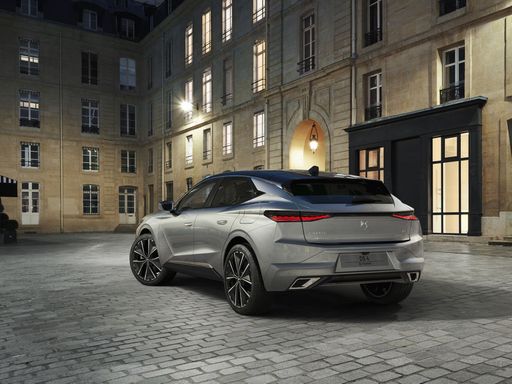
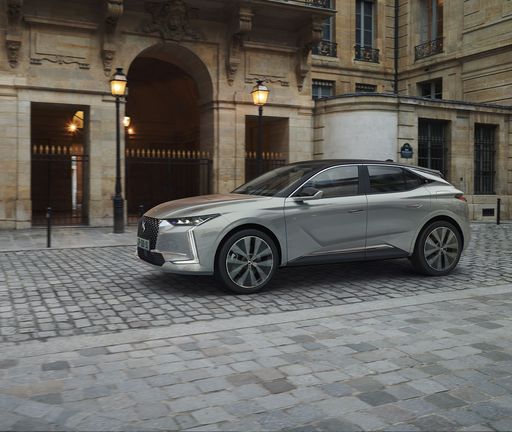
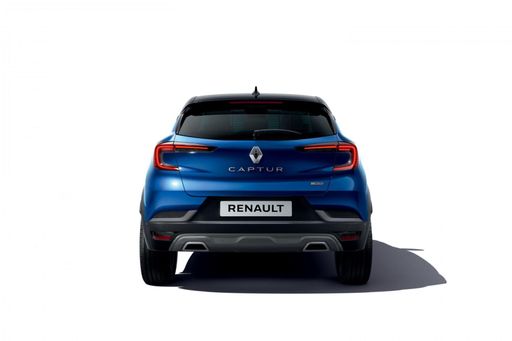
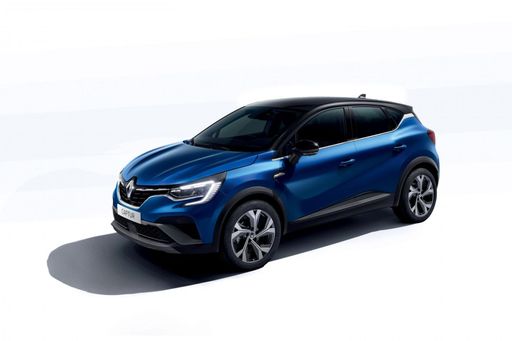
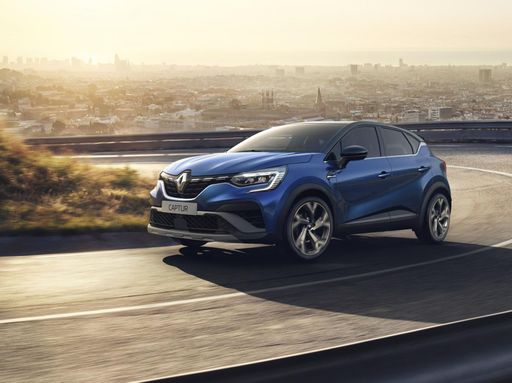
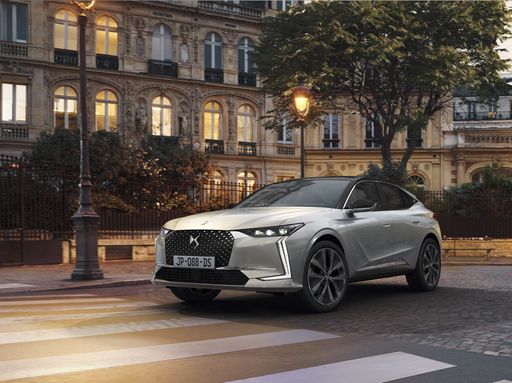
The DS 4 embraces a sleek, elegant design typical of the hatchback category. With a length of 4400 mm, a width of 1830 mm, and a height of 1470 mm, it presents quite an athletic stance. The Renault Captur, being an SUV, opts for utility and space, evident in its dimensions — 4239 mm long, 1797 mm wide, and 1575 mm tall, making it slightly more compact than the DS 4 but with a taller profile for improved headroom and visibility.

DS 4

Powertrain Options and Efficiency

Under the hood, the DS 4 offers a variety of engines: from diesel to a plug-in hybrid, with power outputs ranging from 130 to 224 HP. It's designed for front-wheel drive and showcases a range of automatic transmissions, ensuring smooth power delivery. Notably, the hybrid version achieves an impressive electric range of 62 km, with consumption as low as 1.4 L/100km.

Conversely, Renault Captur emphasizes flexibility with full hybrid, petrol MHEV, and LPG options, producing between 91 and 158 HP. Its standout is the full hybrid variant with remarkable fuel consumption at 4.7 L/100km. Like the DS 4, it offers front-wheel drive and a mix of manual and automatic transmissions giving drivers a choice based on preference and economy.

Captur

Performance and Handling

Driving enthusiasts will appreciate the DS 4’s potent performance. The plug-in hybrid model reaches 0-100km/h in 7.7 seconds, competing with some of the sportier vehicles in its class. The Max speed ranges between 203 to 233 km/h, depending on the variant, offering brisk acceleration and speed on open roads.

The Captur doesn’t shy away from performance either. Its full hybrid variant clocks in a respectable 0-100 km/h time of 9.9 seconds, while the max speed peaks at 180 km/h, delivering adequate urban and highway performance for an SUV of its class.

DS 4

Interior and Space

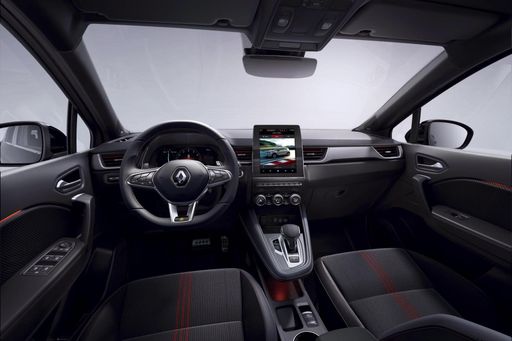
Inside, both vehicles seat five passengers, but layout and space utilization differ. DS 4's trunk capacity sits at 390 liters, blending luxury and practicality. Renault Captur, with its 422-liter boot (or 326 liters in some variants), offers slightly more storage, catering to families or those needing extra cargo space for journeys.

Captur

Sustainability and CO2 Efficiency

Sustainability is shared between these models. The DS 4 hears a noteworthy CO2 footprint in its hybrid form at just 32 g/km. The Captur also targets eco-conscious drivers with a best CO2 output of 106 g/km. Both vehicles adhere to modern demands for reduced environmental impact.

DS 4

Conclusion: Style vs. Practicality?

Choosing between the DS Automobiles DS 4 and the Renault Captur largely depends on priorities. The DS 4 gives you a blend of luxury, performance, and advanced hybrid technology wrapped in a sophisticated design. The Renault Captur provides practicality, efficiency, and a more affordable SUV experience. Both vehicles showcase French automotive flair, yet each echoes a distinct personality suited to different lifestyles.

Here’s where it gets real: The technical differences in detail

DS 4

Costs and Efficiency:

Price and efficiency are key factors when choosing a car – and this is often where the real differences emerge.

Renault Captur is considerably cheaper – starting at 21,100 £ , while the DS Automobiles DS 4 costs 34,000 £ . That’s a price difference of around 12,849 £.

Fuel consumption also shows a difference: the Renault Captur uses 4.4 L/100km and is a bit more efficient than the DS Automobiles DS 4 with 5.2 L/100km. The difference is about 0.8 L/100km.

Captur

Engine and Performance:

Under the bonnet, it becomes clear which model is tuned for sportiness and which one takes the lead when you hit the accelerator.

When it comes to engine power, the Renault Captur offers slightly more power – delivering 158 HP compared to 130 HP. That’s roughly 28 HP more horsepower.

When accelerating from 0 to 100 km/h, the Renault Captur is clearly quicker – completing the sprint in 8.9 s, while the DS Automobiles DS 4 takes 10.9 s. That’s about 2 s quicker.

Looking at top speed, the DS Automobiles DS 4 is slightly faster – reaching 203 km/h, while the Renault Captur tops out at 180 km/h. The difference is around 23 km/h.

There’s also a difference in torque: the DS Automobiles DS 4 delivers moderately more torque with 300 Nm compared to 265 Nm. That’s about 35 Nm more.

DS 4

Space and Everyday Use:

Cabin size, boot volume and payload all play a role in everyday practicality. Here, comfort and flexibility make the difference.

Both vehicles offer seating for 5 people.

In terms of curb weight, Renault Captur is slightly lighter – 1,323 kg compared to 1,558 kg. The difference is around 235 kg.

Looking at boot space, the DS Automobiles DS 4 offers marginally more boot space – 430 L compared to 422 L. That’s a difference of about 8 L.

For maximum load capacity, the Renault Captur offers barely more capacity – up to 1,363 L, about 123 L more than the DS Automobiles DS 4.

When it comes to payload, the Renault Captur carries barely more – 453 kg compared to 442 kg. That’s a difference of about 11 kg.

Who wins the race in the data check?

The Renault Captur is clearly superior overall in the objective data comparison.
This result only shows which model scores more points on paper – not which of the two cars feels right for you.

from £21,100
Captur

Renault Captur

  • Engine Type : Full Hybrid, Petrol, Petrol MHEV
  • Transmission : Automatic, Manuel
  • Drive Type : Front-Wheel Drive
  • Power HP : 115 - 158 HP
  • Consumption L/100km : 4.4 - 6 L/100km
DS Automobiles DS 4
Renault Captur

Costs and Consumption

View detailed analysis

Engine and Performance

View detailed analysis

Dimensions and Body

View detailed analysis

DS Automobiles DS 4

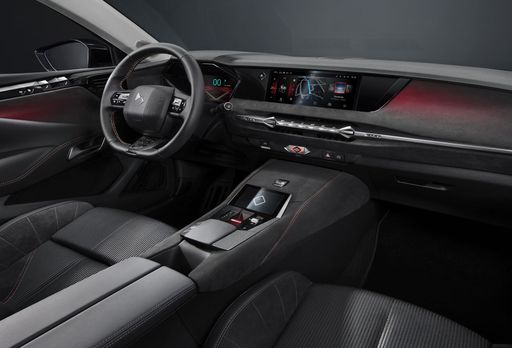
The DS 4 is a striking compact that wears couture-inspired styling like a tailored suit, and its cabin feels more boutique hotel than ordinary hatchback with premium materials and clever detailing. On the road it mixes poise with comfort, rewarding drivers who want a refined, characterful alternative to the usual suspects — and enjoy the odd admiring glance at the lights.

details

Renault Captur

The Renault Captur is a cheeky little crossover that pairs city-friendly agility with a roomy, well-thought-out cabin and enough style to turn heads at the lights. It’s a sensible choice for buyers who want practical versatility and a dash of personality on their daily drives, without taking itself too seriously.

details
DS Automobiles DS 4
Renault Captur

Costs and Consumption

Price
34,000 - 41,700 £
Price
21,100 - 28,400 £
Consumption L/100km
5.2 L/100km
Consumption L/100km
4.4 - 6 L/100km
Consumption kWh/100km
-
Consumption kWh/100km
-
Electric Range
-
Electric Range
-
Battery Capacity
-
Battery Capacity
-
co2
137 g/km
co2
100 - 137 g/km
Fuel tank capacity
53 L
Fuel tank capacity
48 L

Dimensions and Body

Body Type
Hatchback
Body Type
SUV
Seats
5
Seats
5
Doors
5
Doors
5
Curb weight
1,558 kg
Curb weight
1,323 - 1,441 kg
Trunk capacity
430 L
Trunk capacity
326 - 422 L
Length
4,400 mm
Length
4,239 mm
Width
1,830 mm
Width
1,797 mm
Height
1,470 mm
Height
1,575 mm
Max trunk capacity
1,240 L
Max trunk capacity
1,363 L
Payload
442 kg
Payload
447 - 453 kg

Engine and Performance

Engine Type
Diesel
Engine Type
Full Hybrid, Petrol, Petrol MHEV
Transmission
Automatic
Transmission
Automatic, Manuel
Transmission Detail
Automatic Gearbox
Transmission Detail
Automatic Gearbox, Manual Gearbox, Dual-Clutch Automatic
Drive Type
Front-Wheel Drive
Drive Type
Front-Wheel Drive
Power HP
130 HP
Power HP
115 - 158 HP
Acceleration 0-100km/h
10.9 s
Acceleration 0-100km/h
8.9 - 12.3 s
Max Speed
203 km/h
Max Speed
180 km/h
Torque
300 Nm
Torque
160 - 265 Nm
Number of Cylinders
4
Number of Cylinders
3 - 4
Power kW
96 kW
Power kW
84 - 116 kW
Engine capacity
1,499 cm3
Engine capacity
1,199 - 1,789 cm3

General

Model Year
2,024 - 2,025
Model Year
2,025
CO2 Efficiency Class
E
CO2 Efficiency Class
C, D, E
Brand
DS Automobiles
Brand
Renault
DriveDuel uses data analysis and artificial intelligence to evaluate vehicle data and create content. Content is regularly reviewed and improved. The displayed prices are estimates based on German list prices, adjusted to the respective country’s VAT. Country-specific registration taxes are not included. This information is not legally binding.