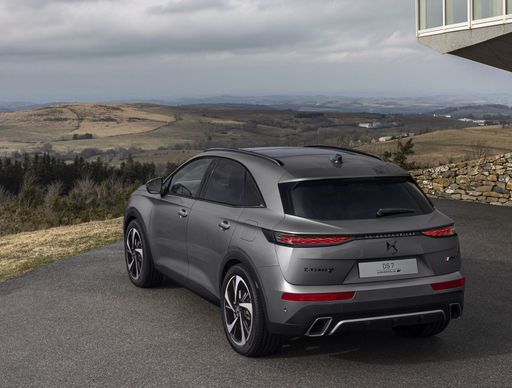
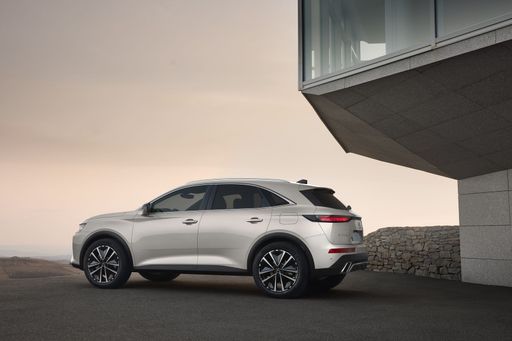
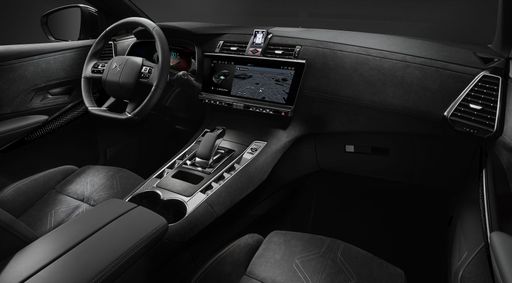
@ DS Automobiles / Stellantis Media
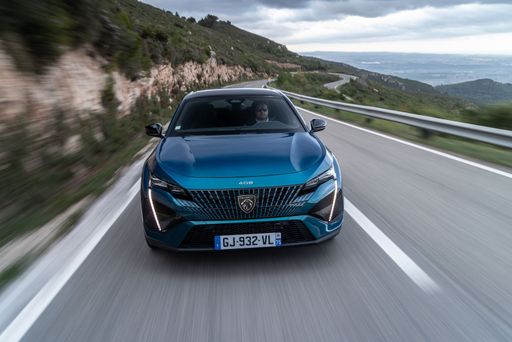
@ Peugeot / Stellantis Media
VS

DS Automobiles DS 7 vs Peugeot 408 – Which model is better for everyday use?

Both models have their strengths – but which one suits you more?
Compare performance, efficiency, price and space directly: DS Automobiles DS 7 or Peugeot 408?

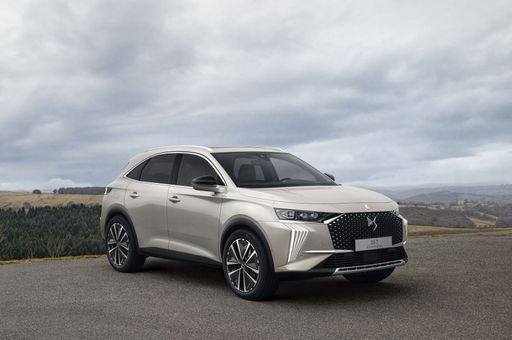
DS 7 @ DS Automobiles / Stellantis Media

Unveiling the Differences: DS 7 Crossback vs. Peugeot 408

In the realm of SUVs, two French titans are grabbing attention: the DS Automobiles DS 7 Crossback and the Peugeot 408. Both vehicles embody a blend of innovative technology, sophisticated design, and versatile performance, yet they cater to slightly different audiences. Let’s dive into a detailed comparison to unravel which might better suit your driving desires.
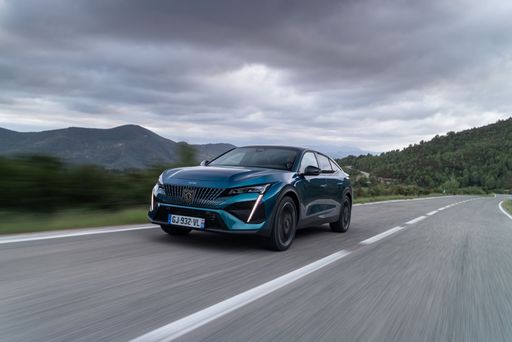
408 @ Peugeot / Stellantis Media

Design and Dimensions

The DS 7 Crossback exudes a classic SUV stance, with dimensions of 4593 mm in length, 1891 mm in width, and 1625 mm in height. Its robust presence is complemented by a spacious interior that comfortably seats five, offering a trunk capacity of 555 liters. Meanwhile, the Peugeot 408 asserts a slightly extended profile at 4687 mm in length and a sleeker, lower height of 1478 mm, contributing to its modern silhouette.

DS 7 @ DS Automobiles / Stellantis Media

Engine and Performance

Both vehicles are available with Plug-in Hybrid options while differing in their petrol and electric engine offerings. The DS 7 Crossback comes with potential power outputs ranging from 130 to an impressive 360 HP – catering to both practical and performance-driven motor enthusiasts. It provides an acceleration from 0 to 100 km/h in as low as 5.7 seconds. The Peugeot 408 doesn’t fall far behind with a maximum horsepower of 225 in its hybrid models, achieving a 0 to 100 km/h dash in 7.9 seconds.

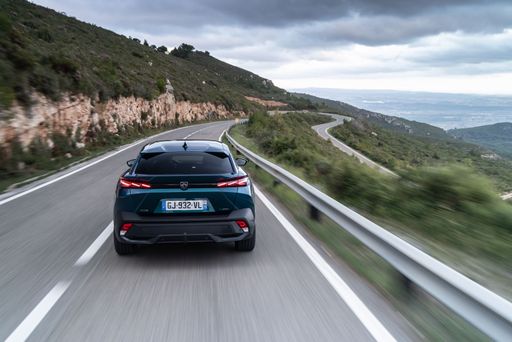
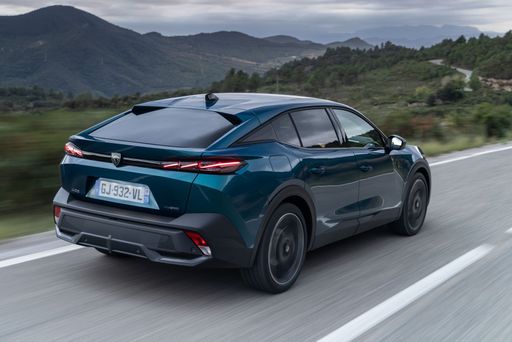
408 @ Peugeot / Stellantis Media

Drive and Transmission

Driving dynamics also diverge between the two. The DS 7 Crossback offers both front-wheel and all-wheel drive options, presenting flexibility based on driving conditions and user preference. It comes with an automatic gearbox, facilitating a smoother ride across different terrains. The Peugeot 408 features a front-wheel-drive setup using either a dual-clutch automatic or reduction gearbox for its electric variant, appealing to a segment focused on fuel efficiency and city driving.

DS 7 @ DS Automobiles / Stellantis Media

Fuel Efficiency and Emission

Both vehicles endeavor for eco-conscious performance. The DS 7 Crossback’s hybrid variant impressively consumes as low as 1.3 L/100km and offers an electric range up to 65 km, with CO2 emissions starting at 30 g/km. On the other hand, Peugeot 408’s hybrid and electric varieties boast a slightly better CO2 footprint, with its electric version emitting zero emissions while achieving an electric range of up to 453 km, thanks to a 58.2 kWh battery.

408 @ Peugeot / Stellantis Media

Interior Comfort and Technology

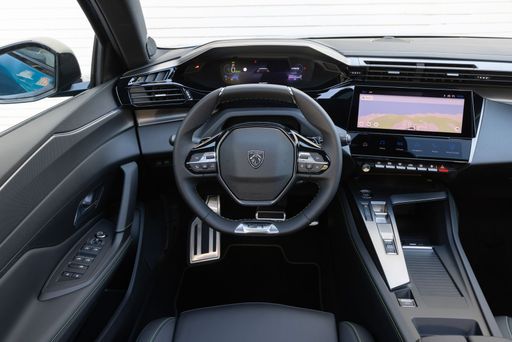
Luxury is synonymous with the DS brand, and the Crossback doesn’t compromise, equipped with state-of-the-art infotainment systems and premium materials throughout the cabin. Conversely, the Peugeot 408 draws on its innovative use of tech, offering a user-friendly interface and contemporary design elements, making it appealing to the tech-savvy buyer.

DS 7 @ DS Automobiles / Stellantis Media

Conclusion

Ultimately, both the DS Automobiles DS 7 Crossback and Peugeot 408 present enticing offerings in the SUV market. The DS 7 Crossback would suit those who enjoy a more opulent atmosphere with opportunities for powerful performance and all-terrain capability. In contrast, the Peugeot 408 appeals to the environmentally conscious urbanite, providing a forward-thinking electric range with modern aesthetics. Whichever choice you make, both models ensure a driving experience that is quintessentially French—stylish, spirited, and sophisticated.

Here’s where it gets real: The technical differences in detail

408 @ Peugeot / Stellantis Media

Costs and Efficiency:

When it comes to price and running costs, the biggest differences usually appear. This is often where you see which car fits your budget better in the long run.

Peugeot 408 has a somewhat advantage in terms of price – it starts at 35100 £, while the DS Automobiles DS 7 costs 41900 £. That’s a price difference of around 6763 £.

Fuel consumption also shows a difference: DS Automobiles DS 7 manages with 1.30 L and is therefore clearly more efficient than the Peugeot 408 with 2.70 L. The difference is about 1.40 L per 100 km.

As for range, the Peugeot 408 performs decisively better – achieving up to 455 km, about 390 km more than the DS Automobiles DS 7.

Engine and Performance:

Power, torque and acceleration are the classic benchmarks for car enthusiasts – and here, some clear differences start to show.

When it comes to engine power, the DS Automobiles DS 7 has a clearly perceptible edge – offering 360 HP compared to 225 HP. That’s roughly 135 HP more horsepower.

In acceleration from 0 to 100 km/h, the DS Automobiles DS 7 is clearly perceptible quicker – completing the sprint in 5.70 s, while the Peugeot 408 takes 7.20 s. That’s about 1.50 s faster.

In terms of top speed, the DS Automobiles DS 7 performs minimal better – reaching 235 km/h, while the Peugeot 408 tops out at 233 km/h. The difference is around 2 km/h.

There’s also a difference in torque: DS Automobiles DS 7 pulls evident stronger with 520 Nm compared to 360 Nm. That’s about 160 Nm difference.

Space and Everyday Use:

Whether family car or daily driver – which one offers more room, flexibility and comfort?

Both vehicles offer seating for 5 people.

In curb weight, Peugeot 408 is minimal lighter – 1544 kg compared to 1651 kg. The difference is around 107 kg.

In terms of boot space, the DS Automobiles DS 7 offers hardly perceptible more room – 555 L compared to 536 L. That’s a difference of about 19 L.

In maximum load capacity, the DS Automobiles DS 7 performs hardly perceptible better – up to 1750 L, which is about 167 L more than the Peugeot 408.

When it comes to payload, Peugeot 408 minimal takes the win – 456 kg compared to 424 kg. That’s a difference of about 32 kg.

Who comes out on top?

Overall, the DS Automobiles DS 7 shows itself to be leaves the rival little chance and secures the title of DriveDuel Champion.
It convinces with the more balanced overall package and proves to be the more versatile choice for everyday use.

from about £41,900
DS 7 @ DS Automobiles / Stellantis Media

DS Automobiles DS 7

  • Engine Type : Diesel, Plugin Hybrid
  • Transmission : Automatic
  • Drive Type : Front-Wheel Drive, All-Wheel Drive
  • Power HP : 130 - 360 HP
  • Consumption L/100km : 1.3 - 5.5 L
  • Electric Range : 50 - 65 km

DS Automobiles DS 7

5 (1)
rate

The DS 7 wraps Parisian elegance into SUV practicality, with sculpted surfaces, a jewel-like grille and an interior that feels more boutique lounge than family transporter. It appeals to buyers who want style and comfort without shouting, delivering a refined ride and clever tech that make daily driving feel a little more special — and yes, it’ll turn heads in the school run.

details

Peugeot 408

The Peugeot 408 blends a coupe-like roofline with practical sensibility, delivering striking looks and a surprisingly airy, premium-feeling cabin. On the road it prefers comfort and poise over manic thrills, making it a smart, stylish choice for buyers who want something a bit different from the usual family hatchback.

details
DS Automobiles DS 7
Peugeot 408
DS 7 @ DS Automobiles / Stellantis Media
408 @ Peugeot / Stellantis Media

Costs and Consumption

Price
41900 - 59300 £
Price
35100 - 48000 £
Consumption L/100km
1.3 - 5.5 L
Consumption L/100km
2.7 - 5.1 L
Consumption kWh/100km
-
Consumption kWh/100km
14.80 kWh
Electric Range
50 - 65 km
Electric Range
79 - 455 km
Battery Capacity
12.90 kWh
Battery Capacity
58.20 kWh
co2
30 - 145 g/km
co2
0 - 114 g/km
Fuel tank capacity
43 - 55 L
Fuel tank capacity
42 - 52 L

Dimensions and Body

Body Type
SUV
Body Type
SUV
Seats
5
Seats
5
Doors
5
Doors
5
Curb weight
1651 - 2002 kg
Curb weight
1544 - 1879 kg
Trunk capacity
555 L
Trunk capacity
471 - 536 L
Length
4593 mm
Length
4687 mm
Width
1891 mm
Width
1848 mm
Height
1625 mm
Height
1478 mm
Max trunk capacity
1750 L
Max trunk capacity
1528 - 1583 L
Payload
398 - 424 kg
Payload
371 - 456 kg

Engine and Performance

Engine Type
Diesel, Plugin Hybrid
Engine Type
Electric, Petrol MHEV, Plugin Hybrid
Transmission
Automatic
Transmission
Automatic
Transmission Detail
Automatic Gearbox
Transmission Detail
Reduction Gearbox, Dual-Clutch Automatic
Drive Type
Front-Wheel Drive, All-Wheel Drive
Drive Type
Front-Wheel Drive
Power HP
130 - 360 HP
Power HP
145 - 225 HP
Acceleration 0-100km/h
5.7 - 11.9 s
Acceleration 0-100km/h
7.2 - 9.4 s
Max Speed
195 - 235 km/h
Max Speed
160 - 233 km/h
Torque
300 - 520 Nm
Torque
230 - 360 Nm
Number of Cylinders
4
Number of Cylinders
4
Power kW
96 - 265 kW
Power kW
107 - 165 kW
Engine capacity
1499 - 1598 cm3
Engine capacity
1199 - 1598 cm3

General

Model Year
2024 - 2025
Model Year
2024 - 2025
CO2 Efficiency Class
E, B
CO2 Efficiency Class
A, C, B
Brand
DS Automobiles
Brand
Peugeot
What drive types are available for the DS Automobiles DS 7?

The DS Automobiles DS 7 is available as Front-Wheel Drive or All-Wheel Drive.

The prices and data displayed are estimates based on German list prices and may vary by country. This information is not legally binding.