VS

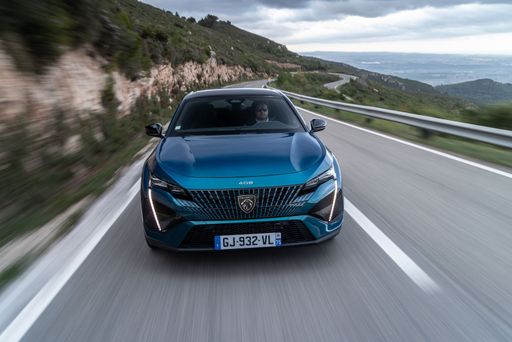
Peugeot 408 vs Peugeot 508 comparison

Compare performance (225 HP vs 360 HP), boot space and price (35,100 £ vs 44,600 £ ) at a glance. Find out which car is the better choice for you – Peugeot 408 or Peugeot 508?

Peugeot 408 vs Peugeot 508: Key differences

Peugeot 408

4.9 (1 Reviews)
rate
  • markedly cheaper
  • substantially more electric range
  • moderately lighter
  • very slightly more trunk space

Peugeot 508

4.9 (2 Reviews)
rate
  • markedly more power
  • considerably more efficient
  • noticeably quicker 0–100 km/h

All details on performance, efficiency, range and trunk space can be found in the technical comparison below – including user reviews for both models.

408

A Dynamic Duo: Peugeot 408 vs Peugeot 508

The French automaker, Peugeot, is renowned for its elegant and technologically advanced vehicles. Among its latest lineup, two models stand out: the versatile Peugeot 408 and the sophisticated Peugeot 508. Both cater to different needs, offering a mix of traditional performance and modern innovation. In this article, we delve into the technical details and innovations that define these two remarkable models.
508

Design & Build: SUV vs Hatchback

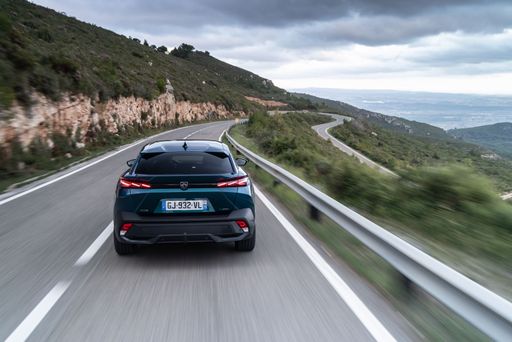
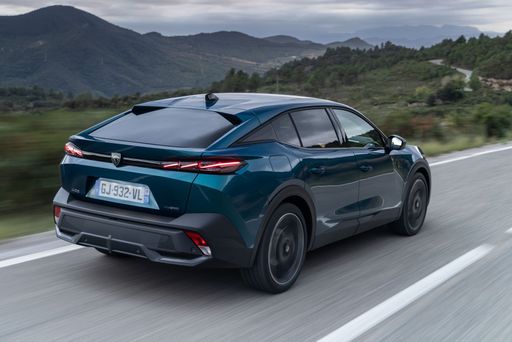
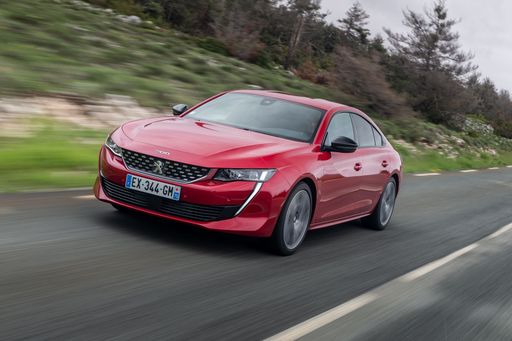
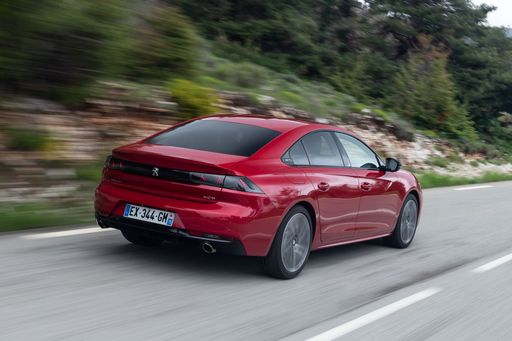
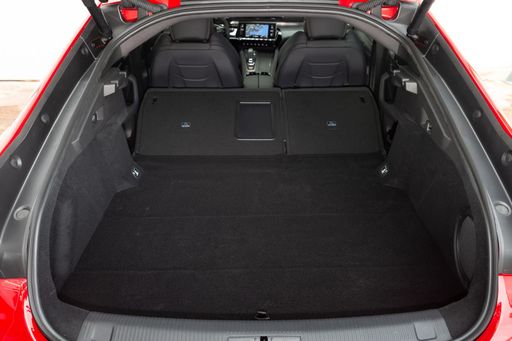
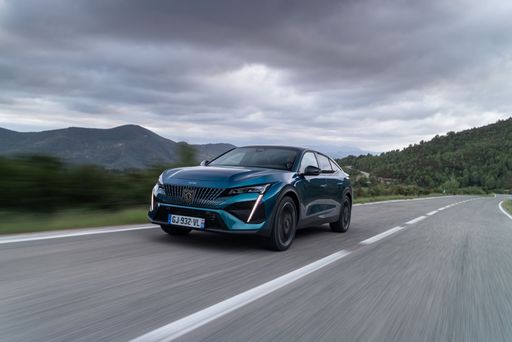
The Peugeot 408, with its SUV styling, showcases a commanding presence on the road. It measures 4687 mm in length, 1848 mm in width, and 1478 mm in height, making it slightly shorter and taller compared to its hatchback sibling, the 508. The latter, at 4750 mm in length, 1859 mm in width, and 1403 mm in height, exudes a sporty and sleek profile. Both models offer a spacious interior with ample room for five passengers and a generous trunk capacity, the 408 offering 536 liters compared to the 508's 487 liters.

408

Under the Hood: Power and Performance

The engine lineup for the 408 includes petrol, plugin hybrid, and electric options, providing a range of power outputs from 136 HP to an impressive 225 HP. Its transmission options, including a dual-clutch automatic for the hybrids, ensure smooth shifts and efficient power delivery. The model year upgrades have also ensured that a 408 can accelerate from 0 to 100 km/h as swiftly as 7.2 seconds.

Conversely, the 508 comes exclusively with plugin hybrid drivetrains, boasting power figures ranging from 180 HP to a robust 360 HP for its high-performance variant. The 508's 8.2 seconds acceleration time to 100 km/h for its entry-level model speaks to its sporty pedigree, further underlined by a top speed of 250 km/h in its highest specification.

508

Efficiency and Range: Balancing Power with Eco-Friendliness

In terms of fuel and energy consumption, both the 408 and 508 demonstrate impressive efficiency thanks to their hybrid powertrains. The 408's plugin hybrid models can achieve as low as 1.4 L/100 km consumption, with an electric range stretching up to 63 km. In comparison, the 508 sips a mere 1.3 L/100 km and enjoys up to 55 km of electric range. Both models achieve remarkable CO2 emissions figures, with the 408 ranging from 116 g/km to a clean 0 g/km for its electric variant, while the 508 stays impressively low at 30-45 g/km.

408

Technological Innovations and Features

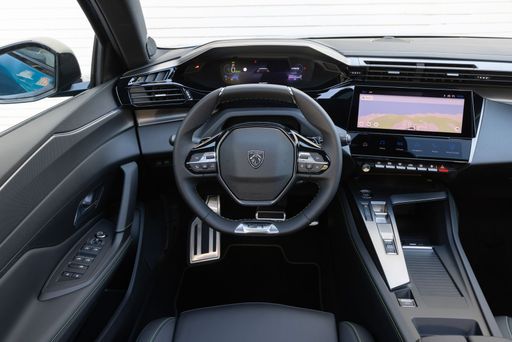
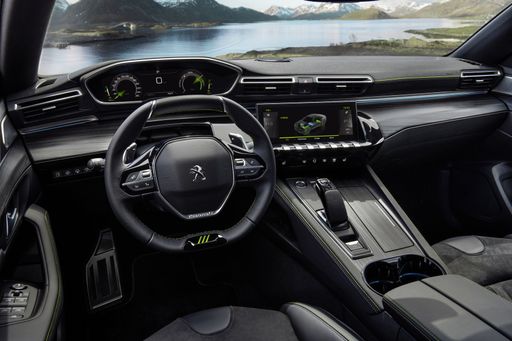
Peugeot's keen focus on innovation is evident in both models. The 408 and 508 are equipped with state-of-the-art connectivity and infotainment systems, offering seamless smartphone integration, advanced navigation systems, and a suite of safety features. This includes adaptive cruise control, lane-keeping assistance, and automated emergency braking, ensuring a safe and comfortable driving experience.

508

Conclusion: Tailoring to Your Needs

Choosing between the Peugeot 408 and 508 ultimately boils down to individual preferences. The 408 serves as a flexible, family-friendly SUV, with multiple powertrain options catering to a range of tastes. Meanwhile, the 508 appeals to those in pursuit of performance and elegance in a stylish hatchback form. With both models boasting unrivaled innovation and efficient drivetrains, there’s a Peugeot to meet every driver’s needs.

Here’s where it gets real: The technical differences in detail

408

Costs and Efficiency:

Looking at overall running costs, both models reveal some interesting differences in everyday economy.

Peugeot 408 is markedly cheaper – starting at 35,100 £ , while the Peugeot 508 costs 44,600 £ . That’s a price difference of around 9,454 £.

Fuel consumption also shows a difference: the Peugeot 508 uses 1.6 L/100km and is considerably more efficient than the Peugeot 408 with 2.7 L/100km. The difference is about 1.1 L/100km.

As for electric range, the Peugeot 408 offers substantially more range – reaching up to 455 km, about 400 km more than the Peugeot 508.

508

Engine and Performance:

Power, torque and acceleration are the classic benchmarks for car enthusiasts – and here, some clear differences start to show.

When it comes to engine power, the Peugeot 508 offers markedly more power – delivering 360 HP compared to 225 HP. That’s roughly 135 HP more horsepower.

When accelerating from 0 to 100 km/h, the Peugeot 508 is noticeably quicker – completing the sprint in 5.2 s, while the Peugeot 408 takes 7.2 s. That’s about 2 s quicker.

Looking at top speed, the Peugeot 508 is only slightly faster – reaching 250 km/h, while the Peugeot 408 tops out at 233 km/h. The difference is around 17 km/h.

There’s also a difference in torque: the Peugeot 508 delivers clearly more torque with 520 Nm compared to 360 Nm. That’s about 160 Nm more.

408

Space and Everyday Use:

Whether family car or daily driver – which one offers more room, flexibility and comfort?

Both vehicles offer seating for 5 people.

In terms of curb weight, Peugeot 408 is moderately lighter – 1,544 kg compared to 1,811 kg. The difference is around 267 kg.

Looking at boot space, the Peugeot 408 offers very slightly more boot space – 536 L compared to 487 L. That’s a difference of about 49 L.

For maximum load capacity, the Peugeot 408 offers very slightly more capacity – up to 1,583 L, about 46 L more than the Peugeot 508.

When it comes to payload, the Peugeot 508 carries marginally more – 469 kg compared to 456 kg. That’s a difference of about 13 kg.

Who wins the race in the data check?

The Peugeot 408 comes out modestly ahead in the objective data comparison.
This result only shows which model scores more points on paper – not which of the two cars feels right for you.

from £35,100
408

Peugeot 408

  • Engine Type : Electric, Petrol MHEV, Plugin Hybrid
  • Transmission : Automatic
  • Drive Type : Front-Wheel Drive
  • Power HP : 145 - 225 HP
  • Consumption L/100km : 2.7 - 5.1 L/100km
  • Consumption kWh/100km : 14.8 kWh/100km
  • Electric Range : 79 - 455 km
Peugeot 408
Peugeot 508

Costs and Consumption

View detailed analysis

Engine and Performance

View detailed analysis

Dimensions and Body

View detailed analysis

Peugeot 408

The Peugeot 408 blends a coupe-like roofline with practical sensibility, delivering striking looks and a surprisingly airy, premium-feeling cabin. On the road it prefers comfort and poise over manic thrills, making it a smart, stylish choice for buyers who want something a bit different from the usual family hatchback.

details

Peugeot 508

The Peugeot 508 turns heads with a low-slung, almost coupe-like silhouette and a cabin that feels grown-up and surprisingly premium for the money. On the road it balances comfort and poise with a playful edge, making it a convincing choice for buyers who want something stylish and sensible without shouting for attention.

details
Peugeot 408
Peugeot 508

Costs and Consumption

Price
35,100 - 48,000 £
Price
44,600 - 60,800 £
Consumption L/100km
2.7 - 5.1 L/100km
Consumption L/100km
1.6 - 2 L/100km
Consumption kWh/100km
14.8 kWh/100km
Consumption kWh/100km
-
Electric Range
79 - 455 km
Electric Range
46 - 55 km
Battery Capacity
58.2 kWh
Battery Capacity
-
co2
0 - 114 g/km
co2
36 - 45 g/km
Fuel tank capacity
42 - 52 L
Fuel tank capacity
43 L

Dimensions and Body

Body Type
SUV
Body Type
Hatchback
Seats
5
Seats
5
Doors
5
Doors
5
Curb weight
1,544 - 1,879 kg
Curb weight
1,811 - 1,941 kg
Trunk capacity
471 - 536 L
Trunk capacity
487 L
Length
4,687 mm
Length
4,750 mm
Width
1,848 mm
Width
1,859 mm
Height
1,478 mm
Height
1,403 mm
Max trunk capacity
1,528 - 1,583 L
Max trunk capacity
1,537 L
Payload
371 - 456 kg
Payload
379 - 469 kg

Engine and Performance

Engine Type
Electric, Petrol MHEV, Plugin Hybrid
Engine Type
Plugin Hybrid
Transmission
Automatic
Transmission
Automatic
Transmission Detail
Reduction Gearbox, Dual-Clutch Automatic
Transmission Detail
Automatic Gearbox
Drive Type
Front-Wheel Drive
Drive Type
Front-Wheel Drive, All-Wheel Drive
Power HP
145 - 225 HP
Power HP
180 - 360 HP
Acceleration 0-100km/h
7.2 - 9.4 s
Acceleration 0-100km/h
5.2 - 8.2 s
Max Speed
160 - 233 km/h
Max Speed
230 - 250 km/h
Torque
230 - 360 Nm
Torque
360 - 520 Nm
Number of Cylinders
4
Number of Cylinders
4
Power kW
107 - 165 kW
Power kW
133 - 265 kW
Engine capacity
1,199 - 1,598 cm3
Engine capacity
1,598 cm3

General

Model Year
2,024 - 2,025
Model Year
2,024
CO2 Efficiency Class
A, C, B
CO2 Efficiency Class
B
Brand
Peugeot
Brand
Peugeot
DriveDuel uses data analysis and artificial intelligence to evaluate vehicle data and create content. Content is regularly reviewed and improved. The displayed prices are estimates based on German list prices, adjusted to the respective country’s VAT. Country-specific registration taxes are not included. This information is not legally binding.