VS

Peugeot 408 vs Peugeot 5008 comparison

Compare performance (225 HP vs 325 HP), boot space and price (35,100 £ vs 37,600 £ ) at a glance. Find out which car is the better choice for you – Peugeot 408 or Peugeot 5008?

Peugeot 408 vs Peugeot 5008: Key differences

Peugeot 408

4.9 (1 Reviews)
rate
  • only slightly cheaper
  • noticeably more efficient
  • a bit lighter
  • clearly more trunk space

Peugeot 5008

4.7 (1 Reviews)
rate
  • markedly more power
  • markedly more electric range
  • a bit quicker 0–100 km/h

All details on performance, efficiency, range and trunk space can be found in the technical comparison below – including user reviews for both models.

408

Peugeot 408 vs Peugeot 5008: The Battle of the Innovative SUV Siblings

In 2024, Peugeot has introduced captivating entries into its SUV lineup, the Peugeot 408 and the 5008. These siblings offer a blend of stylish design, innovative technology, and eco-friendly options. This comparison delves into the technical aspects and standout features that differentiate these two models.
5008

Design and Dimensions

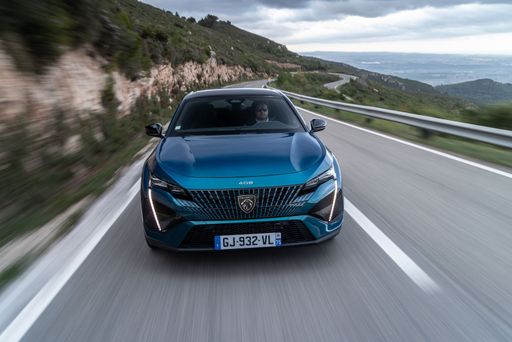
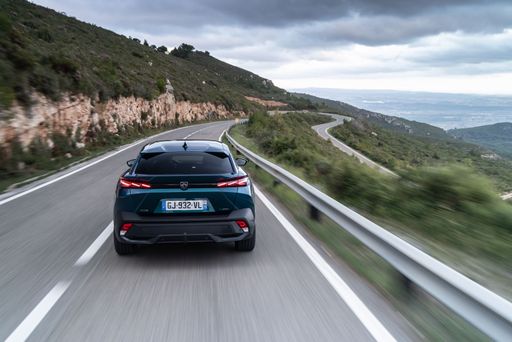
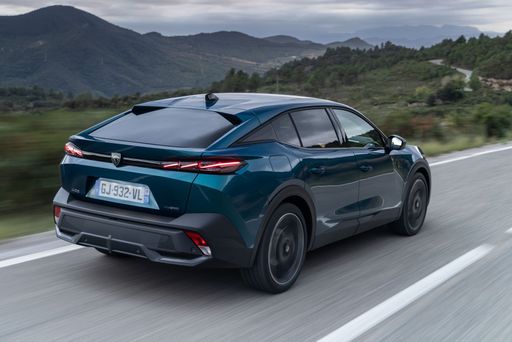
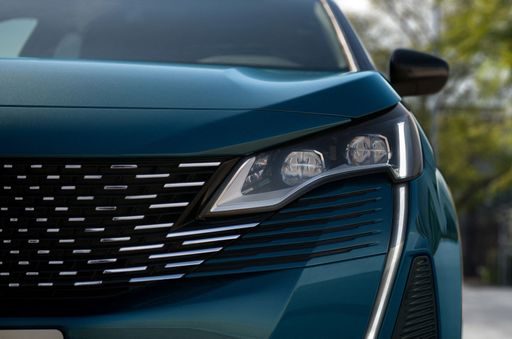
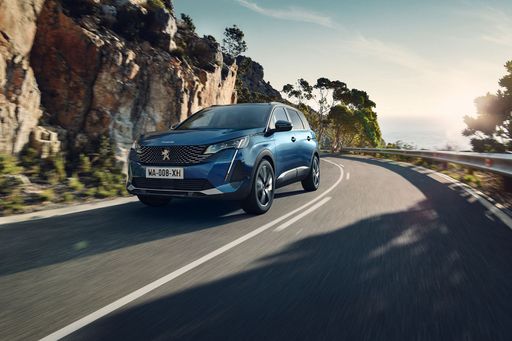
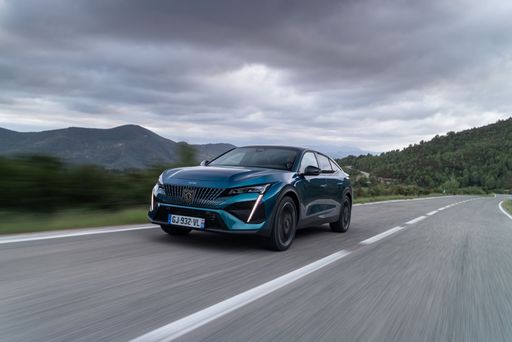
The Peugeot 408 embraces the sleek and aerodynamic design typical of modern SUVs. With a length of 4687 mm, width of 1848 mm, and height of 1478 mm, the 408 exhibits a more compact body while maintaining ample interior space. In contrast, the Peugeot 5008 presents a more traditional SUV stature with a larger footprint, measuring 4791 mm in length, 1895 mm in width, and 1694 mm in height.

408

Engine and Powertrain Options

Both models offer diverse powertrains, showcasing Peugeot's commitment to eco-friendly innovations. The 408 comes equipped with options for Petrol MHEV, Plugin Hybrid, and Electric engines. This includes a peak power output ranging from 136 HP to 225 HP, and an electric variant with an impressive range of up to 453 km.

The 5008 follows suit with Petrol MHEV, Plugin Hybrid, and Electric engine options, offering slightly higher output variations with a range of 136 HP to 231 HP. Notably, its electric variant achieves an extended range of up to 664 km, appealing to eco-conscious consumers looking for longer road trips.

5008

Performance and Efficiency

When it comes to speed and agility, the agile Peugeot 408 achieves a brisk acceleration with the fastest electric variant going from 0-100 km/h in 7.2 seconds. It also boasts a competitive fuel efficiency with consumption as low as 1.4 L/100km or 15.1 kWh/100km for the electric model.

The 5008, while larger, still competes well in terms of performance with its top-tier model accelerating from 0-100 km/h in 8.8 seconds. Its fuel efficiency is commendable as well, with consumption levels reaching as low as 1 L/100km or 17.8 kWh/100km for its electric variant.

408

Practicality and Interior Space

The Peugeot 408's practical design accommodates five passengers comfortably, with a trunk capacity up to 536 liters, making it ideal for small families or active individuals. On the other hand, the 5008 offers seating for seven passengers along with a vast trunk capacity of 748 liters, catering to larger families with additional space needs.

5008

Innovative Features

Peugeot's innovations are richly manifested in both SUVs. The notable reduction gearbox in the 5008's electric model provides smoother transitions and improved efficiency. Meanwhile, the 408 leverages a dual-clutch automatic transmission that promises a seamless driving experience across its powertrains.

408

Verdict

Both the Peugeot 408 and 5008 present impressive options for anyone in the market for a capable SUV. The 408 is more suited for those who prioritize agility and compact design, while the 5008 caters to families needing additional space without sacrificing style or efficiency. Peugeot's commitment to innovation and efficiency is evident in both models, positioning them as strong contenders in the competitive SUV market of 2024.

Here’s where it gets real: The technical differences in detail

408

Costs and Efficiency:

Looking at overall running costs, both models reveal some interesting differences in everyday economy.

Peugeot 408 is only slightly cheaper – starting at 35,100 £ , while the Peugeot 5008 costs 37,600 £ . That’s a price difference of around 2,477 £.

Both cars consume an average of 2.7 L/100km – no difference here.

In terms of energy consumption, the Peugeot 408 is noticeably more efficient: consuming 14.8 kWh/100km compared to 17.8 kWh/100km for the Peugeot 5008. That’s a difference of about 3 kWh/100km.

As for electric range, the Peugeot 5008 offers markedly more range – reaching up to 669 km, about 214 km more than the Peugeot 408.

5008

Engine and Performance:

Under the bonnet, it becomes clear which model is tuned for sportiness and which one takes the lead when you hit the accelerator.

When it comes to engine power, the Peugeot 5008 offers markedly more power – delivering 325 HP compared to 225 HP. That’s roughly 100 HP more horsepower.

When accelerating from 0 to 100 km/h, the Peugeot 5008 is a bit quicker – completing the sprint in 6.5 s, while the Peugeot 408 takes 7.2 s. That’s about 0.7 s quicker.

Looking at top speed, the Peugeot 408 is somewhat faster – reaching 233 km/h, while the Peugeot 5008 tops out at 198 km/h. The difference is around 35 km/h.

There’s also a difference in torque: the Peugeot 5008 delivers visibly more torque with 511 Nm compared to 360 Nm. That’s about 151 Nm more.

408

Space and Everyday Use:

Whether family car or daily driver – which one offers more room, flexibility and comfort?

Seats: Peugeot 5008 offers more seats – 7 vs 5.

In terms of curb weight, Peugeot 408 is a bit lighter – 1,544 kg compared to 1,700 kg. The difference is around 156 kg.

Looking at boot space, the Peugeot 408 offers clearly more boot space – 536 L compared to 348 L. That’s a difference of about 188 L.

For maximum load capacity, the Peugeot 5008 offers clearly more capacity – up to 2,232 L, about 649 L more than the Peugeot 408.

When it comes to payload, the Peugeot 5008 carries noticeably more – 640 kg compared to 456 kg. That’s a difference of about 184 kg.

Who wins the race in the data check?

The Peugeot 5008 is clearly superior overall in the objective data comparison.
This result only shows which model scores more points on paper – not which of the two cars feels right for you.

from £37,600
5008

Peugeot 5008

  • Engine Type : Electric, Petrol MHEV, Plugin Hybrid
  • Transmission : Automatic
  • Drive Type : Front-Wheel Drive, All-Wheel Drive
  • Power HP : 145 - 325 HP
  • Consumption L/100km : 2.7 - 5.6 L/100km
  • Consumption kWh/100km : 17.8 - 18.6 kWh/100km
  • Electric Range : 78 - 669 km
Peugeot 408
Peugeot 5008

Costs and Consumption

View detailed analysis

Engine and Performance

View detailed analysis

Dimensions and Body

View detailed analysis

Peugeot 408

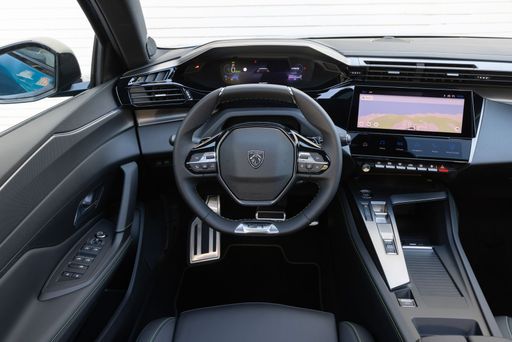
The Peugeot 408 blends a coupe-like roofline with practical sensibility, delivering striking looks and a surprisingly airy, premium-feeling cabin. On the road it prefers comfort and poise over manic thrills, making it a smart, stylish choice for buyers who want something a bit different from the usual family hatchback.

details

Peugeot 5008

The Peugeot 5008 blends Peugeot's sharp design with the space and versatility families actually need, wrapping clever packaging and a premium-feeling cabin in a crisp, SUV-like silhouette. It drives with more poise than you'd expect from a people carrier, serves up practical touches and flexible seating for everyday chaos, and still looks good when parked outside the school gates.

details
Peugeot 408
Peugeot 5008

Costs and Consumption

Price
35,100 - 48,000 £
Price
37,600 - 54,200 £
Consumption L/100km
2.7 - 5.1 L/100km
Consumption L/100km
2.7 - 5.6 L/100km
Consumption kWh/100km
14.8 kWh/100km
Consumption kWh/100km
17.8 - 18.6 kWh/100km
Electric Range
79 - 455 km
Electric Range
78 - 669 km
Battery Capacity
58.2 kWh
Battery Capacity
0.4 - 96.9 kWh
co2
0 - 114 g/km
co2
0 - 127 g/km
Fuel tank capacity
42 - 52 L
Fuel tank capacity
55 L

Dimensions and Body

Body Type
SUV
Body Type
SUV
Seats
5
Seats
7
Doors
5
Doors
5
Curb weight
1,544 - 1,879 kg
Curb weight
1,700 - 2,344 kg
Trunk capacity
471 - 536 L
Trunk capacity
294 - 348 L
Length
4,687 mm
Length
4,791 mm
Width
1,848 mm
Width
1,895 mm
Height
1,478 mm
Height
1,694 mm
Max trunk capacity
1,528 - 1,583 L
Max trunk capacity
2,178 - 2,232 L
Payload
371 - 456 kg
Payload
596 - 640 kg

Engine and Performance

Engine Type
Electric, Petrol MHEV, Plugin Hybrid
Engine Type
Electric, Petrol MHEV, Plugin Hybrid
Transmission
Automatic
Transmission
Automatic
Transmission Detail
Reduction Gearbox, Dual-Clutch Automatic
Transmission Detail
Reduction Gearbox, Dual-Clutch Automatic
Drive Type
Front-Wheel Drive
Drive Type
Front-Wheel Drive, All-Wheel Drive
Power HP
145 - 225 HP
Power HP
145 - 325 HP
Acceleration 0-100km/h
7.2 - 9.4 s
Acceleration 0-100km/h
6.5 - 10.2 s
Max Speed
160 - 233 km/h
Max Speed
170 - 198 km/h
Torque
230 - 360 Nm
Torque
230 - 511 Nm
Number of Cylinders
4
Number of Cylinders
3 - 4
Power kW
107 - 165 kW
Power kW
107 - 239 kW
Engine capacity
1,199 - 1,598 cm3
Engine capacity
1,199 - 1,598 cm3

General

Model Year
2,024 - 2,025
Model Year
2,024 - 2,026
CO2 Efficiency Class
A, C, B
CO2 Efficiency Class
A, D, B
Brand
Peugeot
Brand
Peugeot
DriveDuel uses data analysis and artificial intelligence to evaluate vehicle data and create content. Content is regularly reviewed and improved. The displayed prices are estimates based on German list prices, adjusted to the respective country’s VAT. Country-specific registration taxes are not included. This information is not legally binding.