VS

DS Automobiles DS 7 vs Skoda Kodiaq comparison

Compare performance (130 HP vs 265 HP), boot space and price (41,900 £ vs 37,900 £ ) at a glance. Find out which car is the better choice for you – DS Automobiles DS 7 or Skoda Kodiaq?

DS Automobiles DS 7 vs Skoda Kodiaq: Key differences

DS Automobiles DS 7

5 (1 Reviews)
rate
  • barely lighter

Skoda Kodiaq

5 (4 Reviews)
rate
  • a bit cheaper
  • significantly more power
  • clearly more efficient
  • substantially quicker 0–100 km/h
  • clearly more trunk space

All details on performance, efficiency, range and trunk space can be found in the technical comparison below – including user reviews for both models.

DS 7

DS 7 Crossback vs Skoda Kodiaq: A Showdown of European Elegance and Practicality

The SUV segment continues to be fiercely contested with numerous contenders vying for attention in the market. Today, we pit two European masterpieces against each other: the DS 7 Crossback from DS Automobiles and the ever-popular Skoda Kodiaq. Both vehicles have distinctive characteristics that cater to a variety of tastes and preferences. Let's delve into their technical specifications, innovations, and what sets them apart in this crowded segment.
Kodiaq

Design and Dimensions

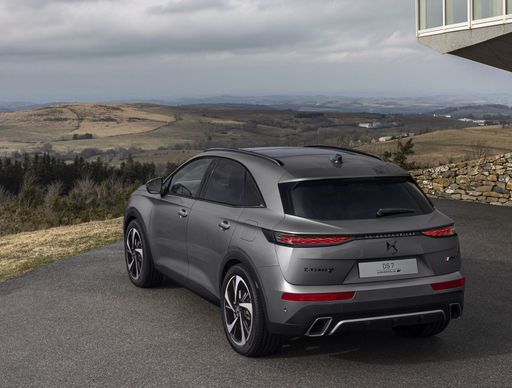
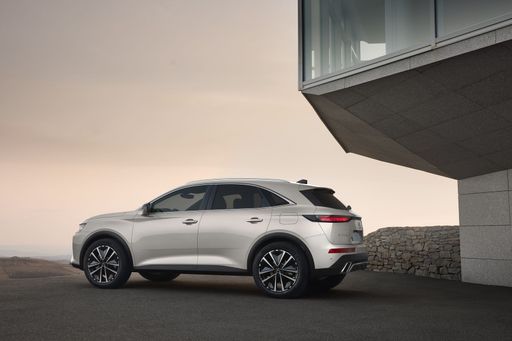
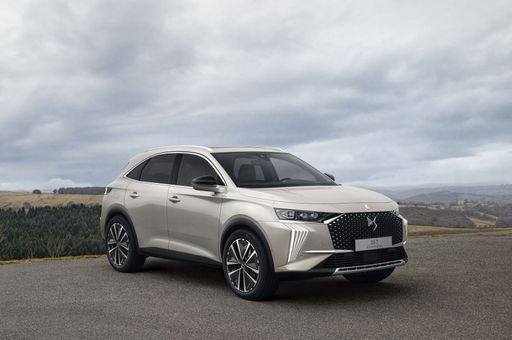
At first glance, both the DS 7 Crossback and the Skoda Kodiaq exude an aura of sophistication, though each carries a distinct design philosophy. The DS 7 Crossback offers a blend of Parisian flair with its bold lines and intricate detailing, cut in an SUV body style. It measures 4593 mm in length, 1891 mm in width, and 1625 mm in height, encapsulating a sense of compact luxury.

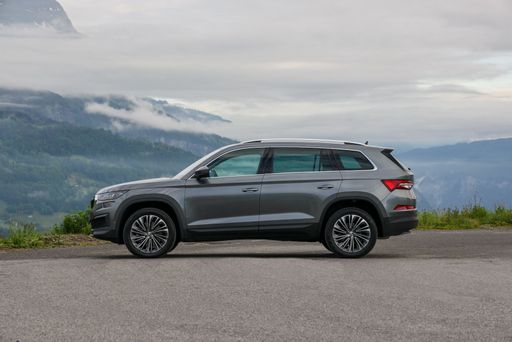
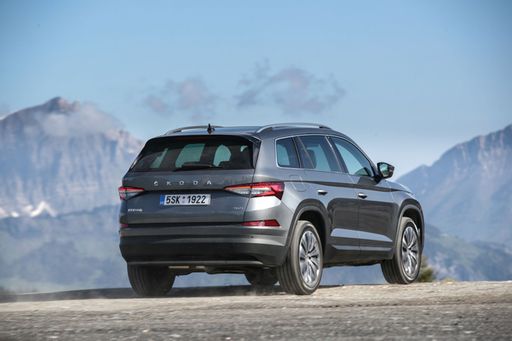
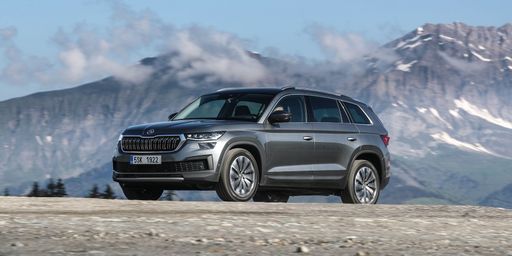
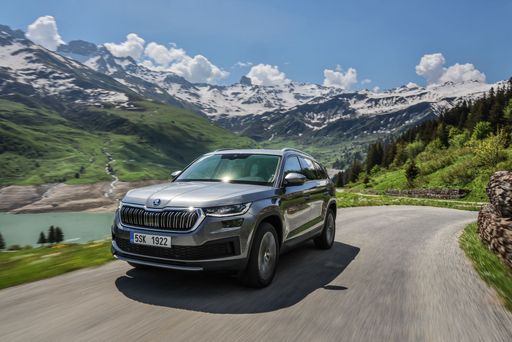
On the other hand, the Skoda Kodiaq presents a more utilitarian and robust design. With its practicality-first approach, this SUV stands taller at 1679-1683 mm and stretches longer at 4758-4761 mm. This additional dimension provides a spacious interior and larger trunk capacity of up to 910 liters, making it a versatile choice for families.

DS 7

Performance and Efficiency

When it comes to powertrain options, both SUVs offer a variety of choices. The DS 7 Crossback is available with diesel and plug-in hybrid engines, delivering power outputs ranging from 130 to an impressive 360 HP. Notably, the plug-in hybrid options provide excellent fuel efficiency with consumption as low as 1.3-1.9 L/100km and an electric-only range of up to 65 km thanks to its 12.9 kWh battery.

The Kodiaq also offers diverse engine options, including plug-in hybrid, petrol MHEV, diesel, and conventional petrol engines, with power ratings from 150 to 265 HP. The Kodiaq's plug-in hybrid variant stands out with an ultra-low consumption of 0.4 L/100km and an electric range of up to 123 km, thanks to a larger 19.7 kWh battery.

Kodiaq

Driving Dynamics and Comfort

The DS 7 Crossback promises a refined driving experience with its well-tuned suspension and advanced technology. Acceleration times vary; the SUV can sprint from 0-100 km/h in as little as 5.7 seconds in its higher-powered models, complemented by a luxury interior that ensures comfort and serenity.

Conversely, the Skoda Kodiaq provides a more practical driving experience, focusing on comfort and space. With acceleration from 0-100 km/h as fast as 6.3 seconds, the Kodiaq is no slouch, but its strength lies in its roominess and dynamic handling, making long journeys a pleasure.

DS 7

Innovations and Technology

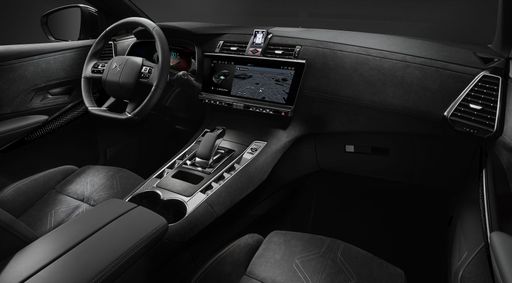
Both SUVs integrate cutting-edge technology to enhance the driving experience. The DS 7 Crossback features advanced driver assistance systems, and its infotainment system is replete with modern connectivity options, underscoring DS Automobiles' commitment to innovation.

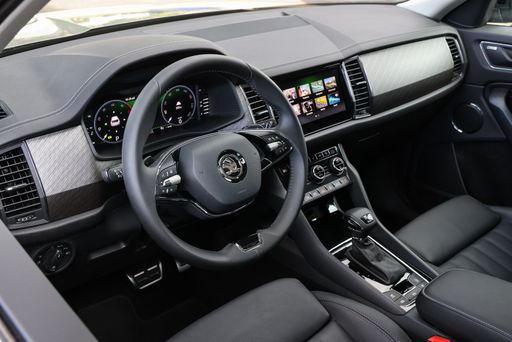
Meanwhile, the Skoda Kodiaq is not left behind in the tech department, offering a comprehensive suite of safety features and a user-friendly infotainment system. The Kodiaq's "Simply Clever" solutions, like integrated umbrellas and adjustable rear seats, showcase Skoda's focus on practicality.

Kodiaq

The Verdict

The decision between the DS 7 Crossback and the Skoda Kodiaq ultimately depends on individual preferences. The DS 7 Crossback appeals to those who appreciate luxury, design, and innovation, while the Skoda Kodiaq attracts buyers seeking practicality, space, and efficiency, especially for family needs.

Both models are compelling choices in their rights, combining European elegance with cutting-edge technology to meet the needs of modern SUV drivers. Whether you value the charms of French design or the pragmatism of Czech engineering, both SUVs deliver unmatched experiences in their unique ways.

Here’s where it gets real: The technical differences in detail

DS 7

Costs and Efficiency:

When it comes to price and running costs, the biggest differences usually appear. This is often where you see which car fits your budget better in the long run.

Skoda Kodiaq is a bit cheaper – starting at 37,900 £ , while the DS Automobiles DS 7 costs 41,900 £ . That’s a price difference of around 4,045 £.

Fuel consumption also shows a difference: the Skoda Kodiaq uses 1.5 L/100km and is clearly more efficient than the DS Automobiles DS 7 with 5.5 L/100km. The difference is about 4 L/100km.

Kodiaq

Engine and Performance:

Power, torque and acceleration are the classic benchmarks for car enthusiasts – and here, some clear differences start to show.

When it comes to engine power, the Skoda Kodiaq offers significantly more power – delivering 265 HP compared to 130 HP. That’s roughly 135 HP more horsepower.

When accelerating from 0 to 100 km/h, the Skoda Kodiaq is substantially quicker – completing the sprint in 6.3 s, while the DS Automobiles DS 7 takes 11.9 s. That’s about 5.6 s quicker.

There’s also a difference in torque: the Skoda Kodiaq delivers noticeably more torque with 400 Nm compared to 300 Nm. That’s about 100 Nm more.

DS 7

Space and Everyday Use:

Whether family car or daily driver – which one offers more room, flexibility and comfort?

Both vehicles offer seating for 5 people.

In terms of curb weight, DS Automobiles DS 7 is barely lighter – 1,651 kg compared to 1,684 kg. The difference is around 33 kg.

Looking at boot space, the Skoda Kodiaq offers clearly more boot space – 910 L compared to 555 L. That’s a difference of about 355 L.

When it comes to payload, the Skoda Kodiaq carries noticeably more – 563 kg compared to 399 kg. That’s a difference of about 164 kg.

Who wins the race in the data check?

The Skoda Kodiaq stands well ahead of its rival in the objective data comparison.
This result only shows which model scores more points on paper – not which of the two cars feels right for you.

from £37,900
Kodiaq

Skoda Kodiaq

  • Engine Type : Petrol, Petrol MHEV, Diesel, Plugin Hybrid
  • Transmission : Automatic
  • Drive Type : All-Wheel Drive, Front-Wheel Drive
  • Power HP : 150 - 265 HP
  • Consumption L/100km : 1.5 - 8.2 L/100km
  • Electric Range : 119 - 122 km
DS Automobiles DS 7
Skoda Kodiaq

Costs and Consumption

View detailed analysis

Engine and Performance

View detailed analysis

Dimensions and Body

View detailed analysis

DS Automobiles DS 7

The DS 7 wraps Parisian elegance into SUV practicality, with sculpted surfaces, a jewel-like grille and an interior that feels more boutique lounge than family transporter. It appeals to buyers who want style and comfort without shouting, delivering a refined ride and clever tech that make daily driving feel a little more special — and yes, it’ll turn heads in the school run.

details

Skoda Kodiaq

The Skoda Kodiaq blends sensible practicality with surprising style, so families and weekend adventurers get roomy comfort without looking like a moving van. It feels calm and composed on the road, packs clever storage and user-friendly tech, and manages to deliver a near-premium vibe without the pretension.

details
DS Automobiles DS 7
Skoda Kodiaq

Costs and Consumption

Price
41,900 - 46,100 £
Price
37,900 - 50,600 £
Consumption L/100km
5.5 L/100km
Consumption L/100km
1.5 - 8.2 L/100km
Consumption kWh/100km
-
Consumption kWh/100km
-
Electric Range
-
Electric Range
119 - 122 km
Battery Capacity
-
Battery Capacity
-
co2
145 g/km
co2
35 - 186 g/km
Fuel tank capacity
-
Fuel tank capacity
58 L

Dimensions and Body

Body Type
SUV
Body Type
SUV
Seats
5
Seats
5
Doors
-
Doors
5
Curb weight
1,651 kg
Curb weight
1,684 - 1,970 kg
Trunk capacity
555 L
Trunk capacity
745 - 910 L
Length
-
Length
4,758 mm
Width
1,891 mm
Width
1,864 mm
Height
-
Height
1,679 - 1,683 mm
Max trunk capacity
-
Max trunk capacity
2,105 L
Payload
399 kg
Payload
460 - 563 kg

Engine and Performance

Engine Type
Diesel
Engine Type
Petrol, Petrol MHEV, Diesel, Plugin Hybrid
Transmission
Automatic
Transmission
Automatic
Transmission Detail
Automatic Gearbox
Transmission Detail
Dual-Clutch Automatic
Drive Type
Front-Wheel Drive
Drive Type
All-Wheel Drive, Front-Wheel Drive
Power HP
130 HP
Power HP
150 - 265 HP
Acceleration 0-100km/h
11.9 s
Acceleration 0-100km/h
6.3 - 9.7 s
Max Speed
-
Max Speed
226 km/h
Torque
300 Nm
Torque
250 - 400 Nm
Number of Cylinders
4
Number of Cylinders
4
Power kW
96 kW
Power kW
110 - 195 kW
Engine capacity
1,499 cm3
Engine capacity
1,498 - 1,984 cm3

General

Model Year
2,025
Model Year
2,024 - 2,025
CO2 Efficiency Class
E
CO2 Efficiency Class
F, G, E, B
Brand
DS Automobiles
Brand
Skoda
DriveDuel uses data analysis and artificial intelligence to evaluate vehicle data and create content. Content is regularly reviewed and improved. The displayed prices are estimates based on German list prices, adjusted to the respective country’s VAT. Country-specific registration taxes are not included. This information is not legally binding.