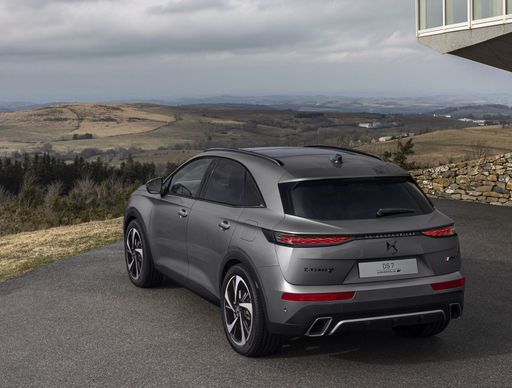
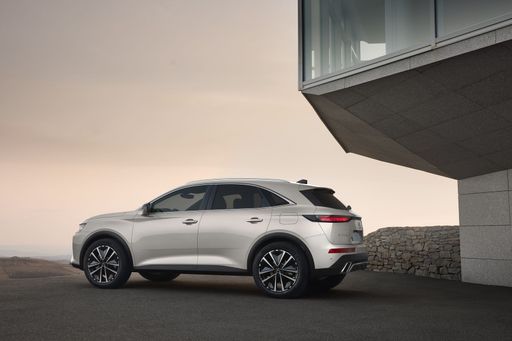
@ DS Automobiles / Stellantis Media
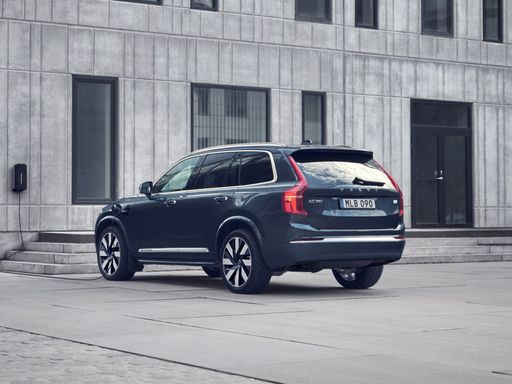
@ Volvo Cars
VS

DS Automobiles DS 7 vs Volvo XC90 – Which model is better for everyday use?

Two cars, one duel: DS Automobiles DS 7 meets Volvo XC90.
Which one wins in performance, efficiency and value for money? Find out now!

DS 7 @ DS Automobiles / Stellantis Media

In the realm of luxury SUVs, the DS 7 Crossback and Volvo XC90 stand out as two captivating options entailing sophistication, performance, and cutting-edge technology. In this article, we delve into a comprehensive comparison of these two esteemed models, examining their technical aspects and innovative features.
XC90 @ Volvo Cars

Design and Dimensions

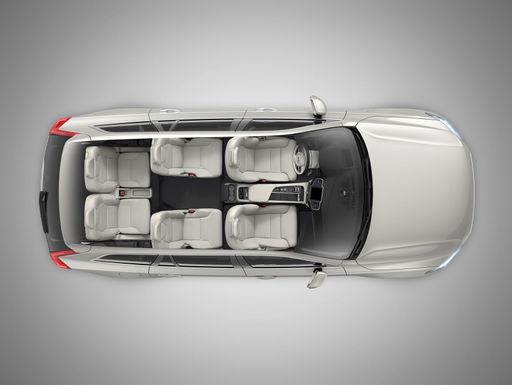
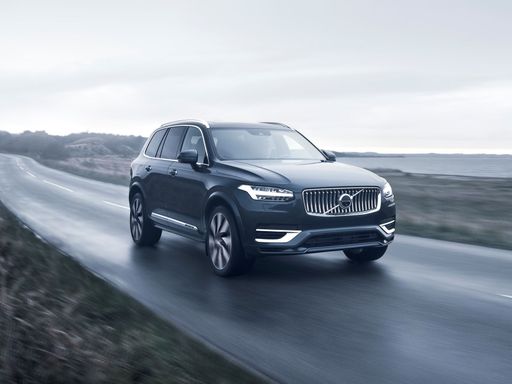
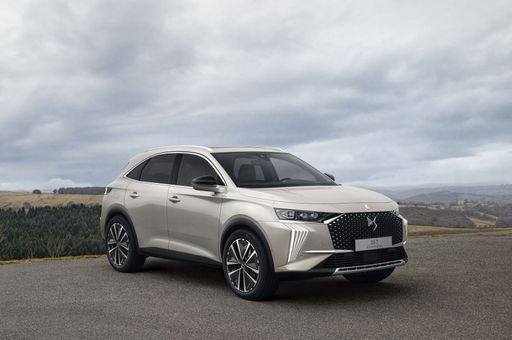
The DS 7 Crossback exudes a distinctive French elegance, characterized by its sleek silhouette and bold styling. Measuring 4593 mm in length, 1891 mm in width, and 1625 mm in height, this SUV is designed for urban flair while maintaining practicality. On the other hand, the Volvo XC90 presents a more robust presence, with dimensions of 4953 mm in length, 1923 mm in width, and 1771 mm in height. This makes the XC90 not only larger in size but also a fitting choice for families, offering a spacious interior that accommodates up to seven passengers.

DS 7 @ DS Automobiles / Stellantis Media

Powertrains and Performance

When it comes to performance, both models offer an array of powertrains to suit various driving preferences. The DS 7 Crossback comes with a choice of engines, including diesel and plug-in hybrid variants, with power outputs ranging from 130 HP to a muscular 360 HP. The plug-in hybrid configurations showcase impressive acceleration, reaching 0-100 km/h in as little as 5.7 seconds. This model also presents an excellent electric range of up to 65 km, making it a viable option for eco-conscious drivers.

In contrast, the Volvo XC90 is powered by petrol MHEV and plug-in hybrid systems, delivering between 250 HP and an astonishing 455 HP. The XC90’s plug-in hybrid arrives with a more potent electric range of 71 km and can accelerate from 0-100 km/h in just 5.4 seconds, showcasing its thrilling performance metrics.

XC90 @ Volvo Cars

Fuel Efficiency

Fuel efficiency is a crucial aspect for many buyers, and here, the DS 7 Crossback impresses with its consumption rates. The diesel variant boasts consumption figures around 5.5 L/100km, while its plug-in options provide extreme efficiency at as low as 1.3 L/100km. In comparison, the XC90’s petrol MHEV variant sees consumption figures closer to 8.5 L/100km, while its plug-in hybrid version achieves an impressive 1.2 L/100km, albeit not as economical as its rival.

DS 7 @ DS Automobiles / Stellantis Media

Safety and Technology

Volvo has always been synonymous with safety, and the XC90 is no exception. It comes equipped with a suite of advanced safety features, including automatic emergency braking, adaptive cruise control, and a robust suite of airbags. Meanwhile, the DS 7 Crossback introduces the innovative DS Active Scan Suspension, which utilizes a camera to detect road conditions and adjust the suspension accordingly, offering a seamless ride.

XC90 @ Volvo Cars

Interior and Comfort

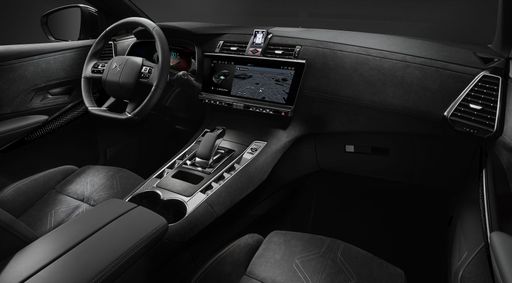
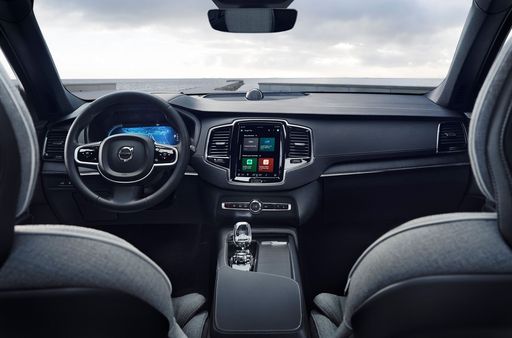
Inside, the DS 7 Crossback fascinates with its luxurious materials and attention to detail. The cabin offers an attractive blend of comfort and technology, featuring a customizable 12-inch touchscreen and quality upholstery. With a trunk capacity of 555 liters, it ensures ample storage space for everyday needs.

The Volvo XC90, renowned for its spacious and minimalist interior design, focuses on functionality without compromising luxury. The layout prioritizes ergonomic comfort and intuitive controls, making every drive a pleasant experience. However, trunk space is lower at 302 liters for the five-seat configuration and 262 liters when all seven seats are in use.

DS 7 @ DS Automobiles / Stellantis Media

Conclusion

In the competition of luxury SUVs, the DS 7 Crossback and Volvo XC90 each bring unique strengths to the table. The former excels in design, efficiency, and innovative suspension technology, making it an excellent choice for style-centric buyers. The latter, however, offers unparalleled safety features, spaciousness, and potent performance, catering perfectly to families seeking luxury and comfort. Ultimately, the decision between the two will boil down to individual preferences in style, performance, and space.

Here’s where it gets real: The technical differences in detail

XC90 @ Volvo Cars

Costs and Efficiency:

When it comes to price and running costs, the biggest differences usually appear. This is often where you see which car fits your budget better in the long run.

DS Automobiles DS 7 has a significantly advantage in terms of price – it starts at 41900 £, while the Volvo XC90 costs 69800 £. That’s a price difference of around 27882 £.

Fuel consumption also shows a difference: DS Automobiles DS 7 manages with 1.30 L and is therefore significantly more efficient than the Volvo XC90 with 3.50 L. The difference is about 2.20 L per 100 km.

As for range, the Volvo XC90 performs barely noticeable better – achieving up to 71 km, about 6 km more than the DS Automobiles DS 7.

Engine and Performance:

Under the bonnet, it becomes clear which model is tuned for sportiness and which one takes the lead when you hit the accelerator.

When it comes to engine power, the Volvo XC90 has a noticeable edge – offering 455 HP compared to 360 HP. That’s roughly 95 HP more horsepower.

In acceleration from 0 to 100 km/h, the Volvo XC90 is slight quicker – completing the sprint in 5.40 s, while the DS Automobiles DS 7 takes 5.70 s. That’s about 0.30 s faster.

In terms of top speed, the DS Automobiles DS 7 performs clearly perceptible better – reaching 235 km/h, while the Volvo XC90 tops out at 180 km/h. The difference is around 55 km/h.

There’s also a difference in torque: Volvo XC90 pulls noticeable stronger with 709 Nm compared to 520 Nm. That’s about 189 Nm difference.

Space and Everyday Use:

Whether family car or daily driver – which one offers more room, flexibility and comfort?

Seats: Volvo XC90 offers distinct more seating capacity – 7 vs 5.

In curb weight, DS Automobiles DS 7 is distinct lighter – 1651 kg compared to 2080 kg. The difference is around 429 kg.

In terms of boot space, the DS Automobiles DS 7 offers significantly more room – 555 L compared to 302 L. That’s a difference of about 253 L.

In maximum load capacity, the Volvo XC90 performs barely noticeable better – up to 1856 L, which is about 106 L more than the DS Automobiles DS 7.

When it comes to payload, Volvo XC90 decisively takes the win – 710 kg compared to 424 kg. That’s a difference of about 286 kg.

Who comes out on top?

Overall, the DS Automobiles DS 7 shows itself to be is largely superior and secures the title of DriveDuel Champion.
It convinces with the more balanced overall package and proves to be the more versatile choice for everyday use.

from about £41,900
DS 7 @ DS Automobiles / Stellantis Media

DS Automobiles DS 7

  • Engine Type : Diesel, Plugin Hybrid
  • Transmission : Automatic
  • Drive Type : Front-Wheel Drive, All-Wheel Drive
  • Power HP : 130 - 360 HP
  • Consumption L/100km : 1.3 - 5.5 L
  • Electric Range : 50 - 65 km

DS Automobiles DS 7

5 (1)
rate

The DS 7 wraps Parisian elegance into SUV practicality, with sculpted surfaces, a jewel-like grille and an interior that feels more boutique lounge than family transporter. It appeals to buyers who want style and comfort without shouting, delivering a refined ride and clever tech that make daily driving feel a little more special — and yes, it’ll turn heads in the school run.

details

Volvo XC90

5 (1)
rate

The Volvo XC90 is a serene Scandinavian SUV that mixes minimalist luxury with a composed, confidence-inspiring presence — ideal for buyers who want family practicality without sacrificing style. Inside it serves up a calm, well-crafted cabin and user-friendly tech that keeps long journeys pleasant and tantrums to a minimum, making the XC90 a smart, stylish pick for sensible drivers.

details
DS Automobiles DS 7
Volvo XC90
DS 7 @ DS Automobiles / Stellantis Media
XC90 @ Volvo Cars

Costs and Consumption

Price
41900 - 59300 £
Price
69800 - 84600 £
Consumption L/100km
1.3 - 5.5 L
Consumption L/100km
3.5 - 8.5 L
Consumption kWh/100km
-
Consumption kWh/100km
-
Electric Range
50 - 65 km
Electric Range
71 km
Battery Capacity
12.90 kWh
Battery Capacity
14.70 kWh
co2
30 - 145 g/km
co2
79 - 191 g/km
Fuel tank capacity
43 - 55 L
Fuel tank capacity
71 L

Dimensions and Body

Body Type
SUV
Body Type
SUV
Seats
5
Seats
7
Doors
5
Doors
5
Curb weight
1651 - 2002 kg
Curb weight
2080 - 2297 kg
Trunk capacity
555 L
Trunk capacity
262 - 302 L
Length
4593 mm
Length
4953 mm
Width
1891 mm
Width
1923 mm
Height
1625 mm
Height
1771 mm
Max trunk capacity
1750 L
Max trunk capacity
1816 - 1856 L
Payload
398 - 424 kg
Payload
653 - 710 kg

Engine and Performance

Engine Type
Diesel, Plugin Hybrid
Engine Type
Petrol MHEV, Plugin Hybrid
Transmission
Automatic
Transmission
Automatic
Transmission Detail
Automatic Gearbox
Transmission Detail
Automatic Gearbox
Drive Type
Front-Wheel Drive, All-Wheel Drive
Drive Type
All-Wheel Drive
Power HP
130 - 360 HP
Power HP
250 - 455 HP
Acceleration 0-100km/h
5.7 - 11.9 s
Acceleration 0-100km/h
5.4 - 7.7 s
Max Speed
195 - 235 km/h
Max Speed
180 km/h
Torque
300 - 520 Nm
Torque
360 - 709 Nm
Number of Cylinders
4
Number of Cylinders
4
Power kW
96 - 265 kW
Power kW
184 - 335 kW
Engine capacity
1499 - 1598 cm3
Engine capacity
1969 cm3

General

Model Year
2024 - 2025
Model Year
2024 - 2025
CO2 Efficiency Class
E, B
CO2 Efficiency Class
G, B
Brand
DS Automobiles
Brand
Volvo
What drive types are available for the DS Automobiles DS 7?

The DS Automobiles DS 7 is available as Front-Wheel Drive or All-Wheel Drive.

The prices and data displayed are estimates based on German list prices and may vary by country. This information is not legally binding.