VS

Ferrari Purosangue vs Lotus Emira comparison

Compare performance (725 HP vs 406 HP), boot space and price (324,700 £ vs 83,600 £ ) at a glance. Find out which car is the better choice for you – Ferrari Purosangue or Lotus Emira?

Ferrari Purosangue vs Lotus Emira: Key differences

Ferrari Purosangue

4.4 (1 Reviews)
rate
  • significantly more power
  • visibly quicker 0–100 km/h
  • significantly more trunk space

Lotus Emira

  • considerably cheaper
  • clearly more efficient
  • markedly lighter
Purosangue

The Battle of Italian Luxury and British Precision: Ferrari Purosangue vs. Lotus Emira

In the ever-evolving world of supercars, two models emerge with distinctive charm and finesse: the Ferrari Purosangue and the Lotus Emira. As you delve into this comparison, you'll see how each vehicle stands out with unique technical aspects and innovations that define their brands. Join us as we explore the remarkable features of these two extraordinary machines.
Emira

Design and Aesthetics

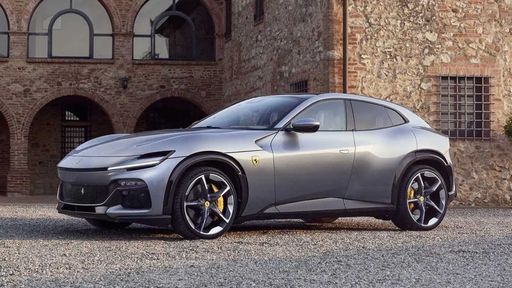
The Ferrari Purosangue is a bold interpretation of an SUV, exuding luxury and power with its expansive dimensions of 4973 mm in length, 2028 mm in width, and 1589 mm in height. With its five-door design, it maintains Ferrari's hallmark sporty ethos while offering practicality.

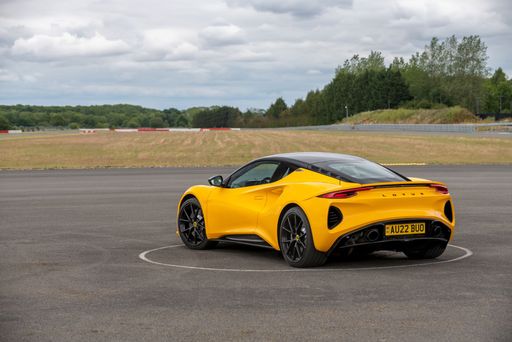
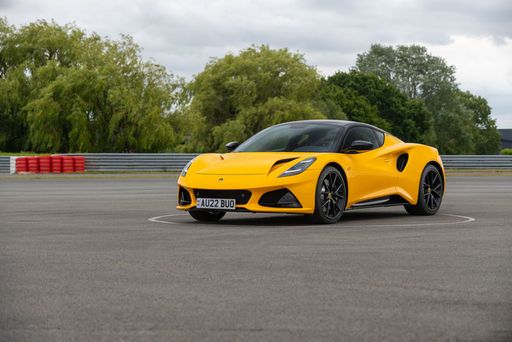
On the contrary, the Lotus Emira captivates with its compact coupe charm, measuring 4413 mm in length, 1895 mm in width, and just 1226 mm in height. The Emira's streamlined silhouette is designed for aerodynamics, highlighting Lotus's commitment to precision engineering.

Performance Powerhouses

Under the hood, the Ferrari Purosangue houses a 6496 cm3 petrol engine delivering a staggering 830 HP (533 kW) and 692 Nm of torque. This all-wheel-drive SUV accelerates from 0 to 100 km/h in a mere 3.3 seconds, with an exhilarating top speed of 312 km/h.

The Lotus Emira, available with two engine variations—a 4-cylinder and a V6—offers power outputs of 365 HP or 405 HP (298 kW) depending on the configuration. The Emira boasts a rear-wheel-drive system, with acceleration from 0 to 100 km/h at 4.5 and 4.3 seconds, respectively, and maximum speeds ranging between 283 and 290 km/h.

Transmission and Driving Experience

The Ferrari Purosangue comes with a sophisticated dual-clutch automatic transmission, ensuring seamless power delivery and enhanced driving pleasure. Its all-wheel-drive system provides exceptional handling even at high speeds.

In comparison, the Lotus Emira offers both a dual-clutch automatic and a manual gearbox, catering to driving purists who crave hands-on control. Its rear-wheel-drive provides an authentic sports car experience with a focus on precision and agility.

Fuel Efficiency and Environmental Considerations

Fuel efficiency often contrasts starkly between SUVs and coupes. The Ferrari Purosangue's high-performance engine consumes 17.1 L/100 km, emitting 389 g/km of CO2. This places it in the G CO2 efficiency class, the same as the Lotus Emira.

The Lotus Emira, being lighter and more compact, consumes a lower 11.3 L/100 km. It emits between 208 and 258 g/km of CO2, reflecting its relative environmental advantage over its Italian competitor.

Comfort and Convenience

Despite their performance focus, both models provide notable comfort features. The Ferrari Purosangue, with a seating capacity for four and a trunk space of 473 L, combines luxury with practicality, ideal for those prioritizing convenience in their supercar experience.

The Lotus Emira, geared more towards the driving purist, accommodates two passengers and offers 208 L of trunk space, emphasizing a sportier, driver-focused ambiance.

Conclusion

Choosing between the Ferrari Purosangue and the Lotus Emira is a testament to one's preference for luxury SUV versatility or the precision of a sports coupe. Ferrari's Purosangue blends elite performance with versatility, while the Lotus Emira prioritizes precision and purist driving pleasure. Both vehicles embody their brands' heritage and push the boundaries of innovation.

Here’s where it gets real: The technical differences in detail

Purosangue

Costs and Efficiency:

Price and efficiency are often the first things buyers look at. Here it becomes clear which model has the long-term edge – whether at the pump, the plug, or in purchase price.

Lotus Emira is considerably cheaper – starting at 83,600 £ , while the Ferrari Purosangue costs 324,700 £ . That’s a price difference of around 241,177 £.

Fuel consumption also shows a difference: the Lotus Emira uses 9.2 L/100km and is clearly more efficient than the Ferrari Purosangue with 17.1 L/100km. The difference is about 7.9 L/100km.

Emira

Engine and Performance:

Power, torque and acceleration say a lot about how a car feels on the road. This is where you see which model delivers more driving dynamics.

When it comes to engine power, the Ferrari Purosangue offers significantly more power – delivering 725 HP compared to 406 HP. That’s roughly 319 HP more horsepower.

When accelerating from 0 to 100 km/h, the Ferrari Purosangue is visibly quicker – completing the sprint in 3.3 s, while the Lotus Emira takes 4 s. That’s about 0.7 s quicker.

Looking at top speed, the Ferrari Purosangue is only slightly faster – reaching 312 km/h, while the Lotus Emira tops out at 291 km/h. The difference is around 21 km/h.

There’s also a difference in torque: the Ferrari Purosangue delivers clearly more torque with 692 Nm compared to 480 Nm. That’s about 212 Nm more.

Space and Everyday Use:

Cabin size, boot volume and payload all play a role in everyday practicality. Here, comfort and flexibility make the difference.

Seats: Ferrari Purosangue offers more seats – 4 vs 2.

In terms of curb weight, Lotus Emira is markedly lighter – 1,455 kg compared to 2,033 kg. The difference is around 578 kg.

Looking at boot space, the Ferrari Purosangue offers significantly more boot space – 473 L compared to 151 L. That’s a difference of about 322 L.

Who wins the race in the data check?

The Lotus Emira stands well ahead of its rival in the objective data comparison.
This result only shows which model scores more points on paper – not which of the two cars feels right for you.

from £83,600
Emira

Lotus Emira

  • Engine Type : Petrol
  • Transmission : Automatic, Manuel
  • Drive Type : Rear-Wheel Drive
  • Power HP : 365 - 406 HP
  • Consumption L/100km : 9.2 - 11.3 L/100km
Ferrari Purosangue
Lotus Emira

Costs and Consumption

View detailed analysis

Engine and Performance

View detailed analysis

Dimensions and Body

View detailed analysis

Ferrari Purosangue

Ferrari Purosangue flips the script on what a Ferrari can be, marrying the brand's savage performance and intoxicating exhaust note with the space and practicality of a usable grand tourer. For buyers who crave supercar drama without sacrificing everyday comfort, the Purosangue offers theatrical driving thrills and enough presence to stop traffic at the valet.

details

Lotus Emira

The Lotus Emira is a supremely alive sports coupe that blends razor‑sharp handling with enough everyday comfort to make it usable beyond the track. It looks gorgeous, sounds eager and delivers a focused, smile-inducing drive that will seduce enthusiasts and tempt sensible buyers alike.

details
Ferrari Purosangue
Lotus Emira

Costs and Consumption

Price
324,700 £
Price
83,600 - 106,000 £
Consumption L/100km
17.1 L/100km
Consumption L/100km
9.2 - 11.3 L/100km
Consumption kWh/100km
-
Consumption kWh/100km
-
Electric Range
-
Electric Range
-
Battery Capacity
-
Battery Capacity
-
co2
389 g/km
co2
208 - 245 g/km
Fuel tank capacity
100 L
Fuel tank capacity
58 L

Dimensions and Body

Body Type
SUV
Body Type
Coupe
Seats
4
Seats
2
Doors
5
Doors
2
Curb weight
2,033 kg
Curb weight
1,455 - 1,533 kg
Trunk capacity
473 L
Trunk capacity
151 L
Length
4,973 mm
Length
4,413 mm
Width
2,028 mm
Width
1,895 - 1,896 mm
Height
1,589 mm
Height
1,235 mm
Max trunk capacity
-
Max trunk capacity
-
Payload
-
Payload
213 - 290 kg

Engine and Performance

Engine Type
Petrol
Engine Type
Petrol
Transmission
Automatic
Transmission
Automatic, Manuel
Transmission Detail
Dual-Clutch Automatic
Transmission Detail
Dual-Clutch Automatic, Manual Gearbox, Automatic Gearbox
Drive Type
All-Wheel Drive
Drive Type
Rear-Wheel Drive
Power HP
725 HP
Power HP
365 - 406 HP
Acceleration 0-100km/h
3.3 s
Acceleration 0-100km/h
4 - 4.8 s
Max Speed
312 km/h
Max Speed
290 - 291 km/h
Torque
692 Nm
Torque
420 - 480 Nm
Number of Cylinders
12
Number of Cylinders
4 - 6
Power kW
533 kW
Power kW
268 - 298 kW
Engine capacity
6,496 cm3
Engine capacity
1,991 - 3,456 cm3

General

Model Year
2,023
Model Year
2,023 - 2,025
CO2 Efficiency Class
G
CO2 Efficiency Class
G
Brand
Ferrari
Brand
Lotus
DriveDuel uses data analysis and artificial intelligence to evaluate vehicle data and create content. Content is regularly reviewed and improved. The displayed prices are estimates based on German list prices, adjusted to the respective country’s VAT. Country-specific registration taxes are not included. This information is not legally binding.