VS

Fiat 600 vs Alfa Romeo Junior comparison

Compare performance (156 HP vs 280 HP), boot space and price (21,000 £ vs 26,100 £ ) at a glance. Find out which car is the better choice for you – Fiat 600 or Alfa Romeo Junior?

Fiat 600 vs Alfa Romeo Junior: Key differences

Fiat 600

4.8 (3 Reviews)
rate
  • visibly cheaper
  • very slightly lighter
details

Alfa Romeo Junior

5 (1 Reviews)
rate
  • significantly more power
  • marginally more electric range
  • substantially quicker 0–100 km/h
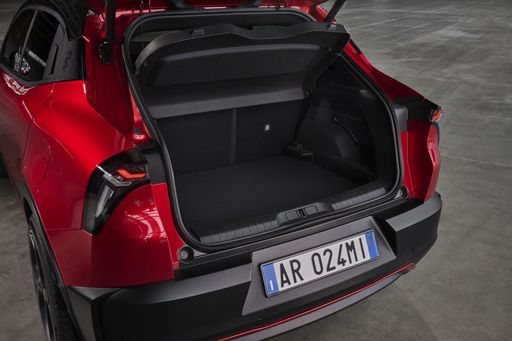
  • marginally more trunk space
details

All details on performance, efficiency, range and trunk space can be found in the technical comparison below – including user reviews for both models.

By Achim Sedelmaier

600

The Showdown: Alfa Romeo Junior vs. Fiat 600

In the increasingly competitive world of compact SUVs, the Alfa Romeo Junior and the Fiat 600 are two standout models that bring a mix of Italian flair, innovative technology, and robust performance to the table. This comparison delves into the technical aspects, innovations, and key features that distinguish these two intriguing choices for potential buyers.

Junior

Engine and Performance

Under the hood, both the Alfa Romeo Junior and Fiat 600 share similarities, particularly in engine capacity, with both models boasting a 1.2L 3-cylinder engine. The Junior offers an impressive power range from 136 HP to 280 HP, embracing both electric and petrol MHEV options. The Fiat 600, while slightly less powerful, has a maximum output of 156 HP, providing reliability and efficiency for urban driving.

Acceleration is another area where these two models differ significantly. The Junior achieves a remarkable 0-100 km/h time in as little as 5.9 seconds, making it one of the quickest in its class. Meanwhile, the Fiat 600 takes 8.5 to 10.5 seconds, depending on the variant, still adequate for a compact SUV but highlighting the Junior’s sportier character.

600

Efficiency and Consumption

Fuel efficiency is a critical consideration for many buyers, and both models excel in this area. The Junior achieves a fuel consumption rate of 4.5 L/100 km and an electric consumption of 15.2 kWh/100 km, reflecting its blend of performance and efficiency. In comparison, the Fiat 600 offers slightly higher consumption at 4.8 L/100 km and 15.1 kWh/100 km, showcasing its practicality as a daily driver.

When it comes to electric range, both models hold their own, with the Junior capable of driving up to 410 km on a single charge, and the Fiat 600 closely following with an electric range of 409 km, making them suitable for the eco-conscious driver.

Junior

Dimensions and Space

Space and comfort are often key criteria for SUV buyers. The Alfa Romeo Junior measures 4173 mm in length with a width of 1781 mm and a height of 1533 mm, while the Fiat 600 is marginally longer at 4178 mm and provides a bit less width at 1779 mm. Both vehicles comfortably seat five passengers and boast a similar trunk capacity, with the Junior offering 400 L and the Fiat providing 385 L.

Curb weight is another pertinent figure: the Junior weighs in at around 1620 kg, while the Fiat 600's weight ranges from 1355 kg to 1595 kg, showcasing that the Fiat is a lighter and potentially more nimble drive option.

Advanced Technology and Features

When it comes to technology, both the Alfa Romeo Junior and Fiat 600 are equipped with modern amenities that enhance the driving experience. The Junior features an automatic transmission with a double-clutch system, allowing for smooth gear shifts and improved responsiveness on the road. The Fiat 600 follows suit with a similar dual-clutch setup for efficient power delivery.

Both vehicles also offer a high level of safety and driving assistance technologies. The Junior includes advanced driver assistance features, making it a reliable choice for safety-conscious buyers. The Fiat 600, while slightly behind in power, compensates with its user-friendly technology interface and practical safety systems.

Conclusion: Choosing the Right Fit

Ultimately, the choice between the Alfa Romeo Junior and the Fiat 600 will depend on what the buyer values most in a compact SUV. The Junior stands out with its superior performance and sporty design, catering to those who prioritize driving excitement. Conversely, the Fiat 600 offers practicality and efficiency, making it a great option for everyday use.

Both models have their strengths and are equipped with the latest innovations. It’s a matter of personal preference: whether it’s the allure of the Alfa’s performance or the dependable charm of the Fiat, there’s a perfect Italian SUV waiting for you.

Here’s where it gets real: The technical differences in detail

600

Costs and Efficiency:

Price and efficiency are often the first things buyers look at. Here it becomes clear which model has the long-term edge – whether at the pump, the plug, or in purchase price.

Fiat 600 is visibly cheaper – starting at 21,000 £ , while the Alfa Romeo Junior costs 26,100 £ . That’s a price difference of around 5,109 £.

Both cars consume an average of 4.8 L/100km – no difference here.

When it comes to electricity consumption, both models perform equally – each averaging 15.1 kWh/100km.

As for electric range, the Alfa Romeo Junior offers marginally more range – reaching up to 410 km, about 1 km more than the Fiat 600.

Junior

Engine and Performance:

Power, torque and acceleration say a lot about how a car feels on the road. This is where you see which model delivers more driving dynamics.

When it comes to engine power, the Alfa Romeo Junior offers significantly more power – delivering 280 HP compared to 156 HP. That’s roughly 124 HP more horsepower.

When accelerating from 0 to 100 km/h, the Alfa Romeo Junior is substantially quicker – completing the sprint in 5.9 s, while the Fiat 600 takes 8.5 s. That’s about 2.6 s quicker.

There’s also a difference in torque: the Alfa Romeo Junior delivers noticeably more torque with 345 Nm compared to 260 Nm. That’s about 85 Nm more.

600

Space and Everyday Use:

Beyond pure performance, interior space and usability matter most in daily life. This is where you see which car is more practical and versatile.

Both vehicles offer seating for 5 people.

In terms of curb weight, Fiat 600 is very slightly lighter – 1,265 kg compared to 1,380 kg. The difference is around 115 kg.

Looking at boot space, the Alfa Romeo Junior offers marginally more boot space – 415 L compared to 385 L. That’s a difference of about 30 L.

When it comes to payload, the Fiat 600 carries moderately more – 517 kg compared to 420 kg. That’s a difference of about 97 kg.

Who wins the race in the data check?

The Alfa Romeo Junior holds a decisive overall lead in the objective data comparison.
This result only shows which model scores more points on paper – not which of the two cars feels right for you.

from £26,100
Junior

Alfa Romeo Junior

  • Engine Type : Electric, Petrol MHEV
  • Transmission : Automatic
  • Drive Type : Front-Wheel Drive, All-Wheel Drive
  • Power HP : 136 - 280 HP
  • Consumption L/100km : 4.8 - 5.4 L/100km
  • Consumption kWh/100km : 15.1 - 17.5 kWh/100km
  • Electric Range : 344 - 410 km
Fiat 600
Alfa Romeo Junior

Costs and Consumption

View detailed analysis

Engine and Performance

View detailed analysis

Dimensions and Body

View detailed analysis

Fiat 600

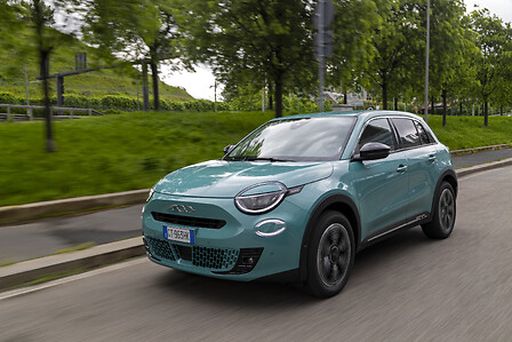
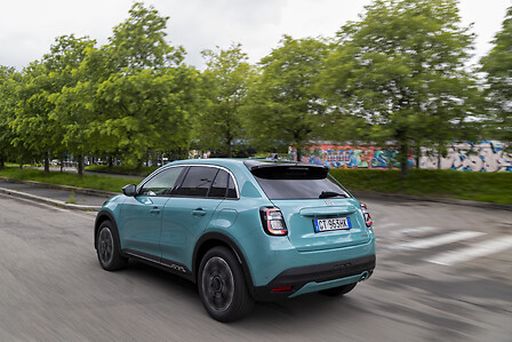
The Fiat 600 is small, cheeky and utterly charming, a pocket-sized Italian that packs more personality than its size suggests. Ideal for city buyers who want fuss-free motoring with a playful driving character, it puts smiles ahead of spreadsheets.

details

Alfa Romeo Junior

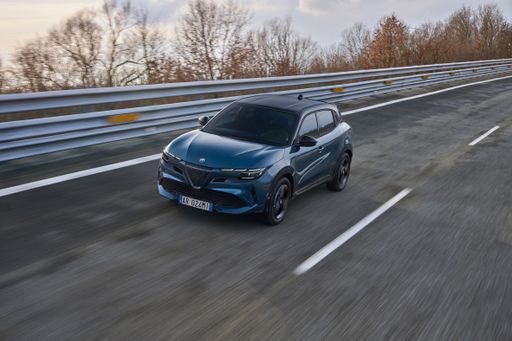
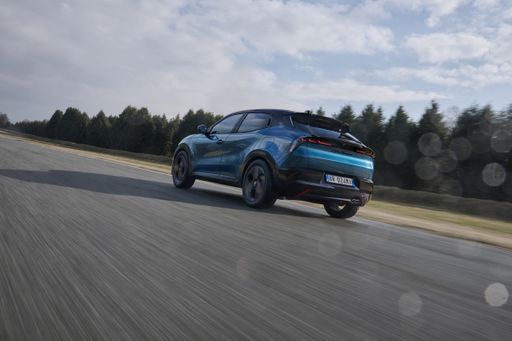
The Alfa Romeo Junior captures the essence of Italian design with its sleek lines and compact dimensions, making it an icon of elegance and performance. With a spirited driving experience and a charming retro aesthetic, it appeals to enthusiasts and casual drivers alike. This delightful car embodies the brand's rich heritage while remaining a fun and engaging option for those seeking a unique automotive experience.

details
Fiat 600
Alfa Romeo Junior

Costs and Consumption

Price
21,000 - 31,300 £
Price
26,100 - 41,600 £
Consumption L/100km
4.8 - 5.7 L/100km
Consumption L/100km
4.8 - 5.4 L/100km
Consumption kWh/100km
15.1 kWh/100km
Consumption kWh/100km
15.1 - 17.5 kWh/100km
Electric Range
409 km
Electric Range
344 - 410 km
Battery Capacity
-
Battery Capacity
0.4 - 51 kWh
co2
0 - 129 g/km
co2
0 - 119 g/km
Fuel tank capacity
-
Fuel tank capacity
44 - 45 L

Dimensions and Body

Body Type
SUV
Body Type
SUV
Seats
5
Seats
5
Doors
-
Doors
5
Curb weight
1,265 - 1,595 kg
Curb weight
1,380 - 1,689 kg
Trunk capacity
360 - 385 L
Trunk capacity
340 - 415 L
Length
-
Length
4,173 mm
Width
1,779 mm
Width
1,781 mm
Height
-
Height
1,505 - 1,538 mm
Max trunk capacity
-
Max trunk capacity
1,205 - 1,280 L
Payload
427 - 517 kg
Payload
390 - 420 kg

Engine and Performance

Engine Type
Petrol MHEV, Electric, Petrol
Engine Type
Electric, Petrol MHEV
Transmission
Automatic, Manuel
Transmission
Automatic
Transmission Detail
Dual-Clutch Automatic, Reduction Gearbox, Manual Gearbox
Transmission Detail
Reduction Gearbox, Dual-Clutch Automatic
Drive Type
Front-Wheel Drive
Drive Type
Front-Wheel Drive, All-Wheel Drive
Power HP
100 - 156 HP
Power HP
136 - 280 HP
Acceleration 0-100km/h
8.5 - 10.6 s
Acceleration 0-100km/h
5.9 - 9.1 s
Max Speed
-
Max Speed
150 - 206 km/h
Torque
205 - 260 Nm
Torque
230 - 345 Nm
Number of Cylinders
3
Number of Cylinders
3
Power kW
74 - 115 kW
Power kW
107 - 207 kW
Engine capacity
1,199 cm3
Engine capacity
1,199 cm3

General

Model Year
2,025 - 2,026
Model Year
2,024 - 2,025
CO2 Efficiency Class
C, A, D
CO2 Efficiency Class
A, C, D
Brand
Fiat
Brand
Alfa Romeo
DriveDuel uses data analysis and artificial intelligence to evaluate vehicle data and create content. Content is regularly reviewed and improved. The displayed prices are estimates based on German list prices, adjusted to the respective country’s VAT. Country-specific registration taxes are not included. This information is not legally binding.