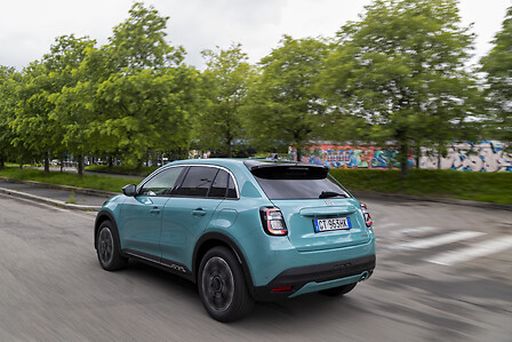
@ Fiat / Stellantis Media
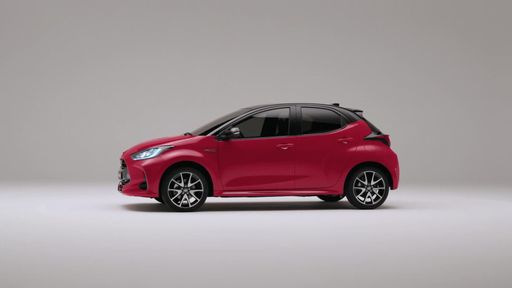
@ Toyota Motor Corporation
VS

Fiat 600 vs Toyota Yaris – Which model is better for everyday use?

Everyday use, family trips or long-distance drives – here’s where the differences show.
Discover whether Fiat 600 or Toyota Yaris fits your lifestyle better.

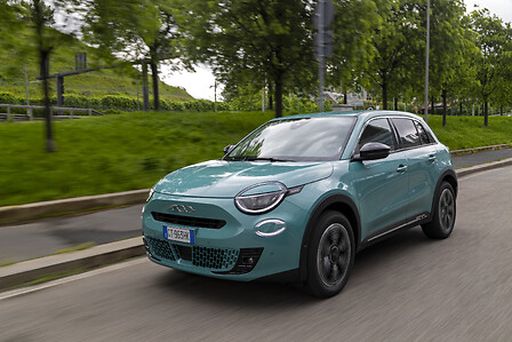
600 @ Fiat / Stellantis Media

The Battle of Cities: Fiat 600 vs. Toyota Yaris

In the ever-evolving world of urban transportation, compact vehicles take center stage, offering a perfect blend of maneuverability and practicality. Today, we delve into a comparison between two popular city navigators—the Fiat 600 and the Toyota Yaris. Each car brings unique virtues to the table, distinguishing itself in style, technical prowess, and innovative features.
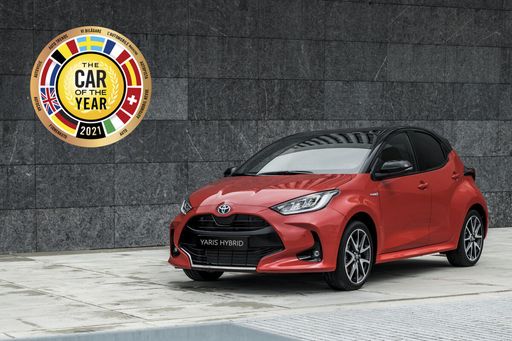
Yaris @ Toyota Motor Corporation

Design and Dimensions: Compact Yet Commanding

The Fiat 600, a compact SUV, stretches 4178 mm in length, 1779 mm in width, and stands at a height of 1525 mm. This slightly taller stance compared to a typical hatchback gives it a commanding road presence without sacrificing urban agility. It offers five doors, making it convenient for passengers.

On the other hand, the Toyota Yaris, a hatchback, offers a more traditional city car silhouette. With a length ranging between 3940 mm and 3995 mm, a width of 1745 mm to 1805 mm, and a height ranging from 1455 mm to 1500 mm, it is slightly more compact, which aids in parking and negotiating tight spots.

600 @ Fiat / Stellantis Media

Powertrain and Efficiency: Under the Hood

Fiat 600 presents a versatile approach with options for both petrol mild hybrid engines and a fully electric variant. The petrol MHEV optimizes fuel consumption, achieving 4.8 L/100km, while its electric counterpart boasts a consumption rate of 15.1 kWh/100km and a commendable range of 409 km. Power figures range from 100 HP to 156 HP, with torque figures between 205 Nm to 260 Nm, ensuring robust urban performance.

Conversely, the Toyota Yaris offers a choice of a full hybrid and traditional petrol engines. The full hybrid system is highly efficient, consuming as little as 3.8 L/100km, though the petrol variants can be a bit thirstier. Power output varies from 116 HP up to a turbocharged 280 HP for performance enthusiasts, with a maximum torque of 390 Nm, making the Yaris a nimble contender in cityscapes.

Yaris @ Toyota Motor Corporation

Transmission and Drivability: Effortless Urban Navigation

The Fiat 600 ensures a smooth driving experience with its dual-clutch automatic or reduction gearbox—both designed for efficiency and ease during urban commutes. Coupled with front-wheel drive, it offers predictable handling and a natural feel for navigating city streets.

In contrast, the Toyota Yaris provides flexibility with its CVT for the hybrids or a more engaging manual or automatic gearbox for the petrol variants. The availability of all-wheel drive in certain configurations gives it an edge in versatility, especially in diverse weather conditions.

Interior and Cargo: Space and Comfort

Both vehicles prioritize occupant comfort with room for five passengers. The Fiat 600 offers a trunk capacity ranging from 360 L to 385 L, while payload capacity varies from 405 kg to 430 kg, catering well to family needs or weekend getaways.

The Yaris, though offering a more compact trunk space at 286 L, its lighter curb weight and higher payload options, reaching up to 525 kg, enable it to excel in adaptability and transport capacity despite its size.

Conclusion: The Final Verdict

Choosing between the Fiat 600 and the Toyota Yaris largely comes down to personal preference and priority. The Fiat 600 impresses with its spacious layout, modern technological innovations, and eco-friendly electric options, coupled with SUV stylings for those preferring a taller vehicle.

The Toyota Yaris, however, captivates with its straightforward, compact design aimed for high efficiency and dynamic agility in city driving. It also offers a breadth of power options to satisfy drivers who may want more under the hood.

Both cars offer spectacular urban capabilities, each manifesting specific strengths, making them worthy contenders in the battle of city cars.

Here’s where it gets real: The technical differences in detail

Costs and Efficiency:

Price and efficiency are often the first things buyers look at. Here it becomes clear which model has the long-term edge – whether at the pump, the plug, or in purchase price.

Fiat 600 has a hardly perceptible advantage in terms of price – it starts at 21800 £, while the Toyota Yaris costs 21900 £. That’s a price difference of around 9 £.

Fuel consumption also shows a difference: Toyota Yaris manages with 3.80 L and is therefore evident more efficient than the Fiat 600 with 4.80 L. The difference is about 1 L per 100 km.

Engine and Performance:

Power, torque and acceleration are the classic benchmarks for car enthusiasts – and here, some clear differences start to show.

When it comes to engine power, the Toyota Yaris has a significantly edge – offering 280 HP compared to 156 HP. That’s roughly 124 HP more horsepower.

In acceleration from 0 to 100 km/h, the Toyota Yaris is decisively quicker – completing the sprint in 5.50 s, while the Fiat 600 takes 8.50 s. That’s about 3 s faster.

In terms of top speed, the Toyota Yaris performs somewhat better – reaching 230 km/h, while the Fiat 600 tops out at 200 km/h. The difference is around 30 km/h.

There’s also a difference in torque: Toyota Yaris pulls distinct stronger with 390 Nm compared to 260 Nm. That’s about 130 Nm difference.

Space and Everyday Use:

Cabin size, boot volume and payload all play a role in everyday practicality. Here, comfort and flexibility make the difference.

Both vehicles offer seating for 5 people.

In curb weight, Toyota Yaris is clearly perceptible lighter – 1090 kg compared to 1355 kg. The difference is around 265 kg.

In terms of boot space, the Fiat 600 offers distinct more room – 385 L compared to 286 L. That’s a difference of about 99 L.

In maximum load capacity, the Fiat 600 performs clearly perceptible better – up to 1256 L, which is about 321 L more than the Toyota Yaris.

When it comes to payload, Toyota Yaris a bit takes the win – 525 kg compared to 430 kg. That’s a difference of about 95 kg.

Who wins the race?

The Toyota Yaris proves to be dominates this comparison and therefore becomes our DriveDuel Champion!
Toyota Yaris is the better all-rounder in this comparison.

from about £21,900
Yaris @ Toyota Motor Corporation

Toyota Yaris

  • Engine Type : Full Hybrid, Petrol
  • Transmission : Automatic, Manuel
  • Drive Type : Front-Wheel Drive, All-Wheel Drive
  • Power HP : 116 - 280 HP
  • Consumption L/100km : 3.8 - 9.5 L

Fiat 600

The Fiat 600 is small, cheeky and utterly charming, a pocket-sized Italian that packs more personality than its size suggests. Ideal for city buyers who want fuss-free motoring with a playful driving character, it puts smiles ahead of spreadsheets.

details

Toyota Yaris

The Toyota Yaris is a sprightly city hatch that packs clever packaging, surprising comfort and fuel-sipping manners into a neat, easy-to-park package. It rewards sensible buyers with low running costs, friendly ergonomics and a forgiving drive, delivered with Japanese reliability and just enough personality to make errands feel a little less ordinary.

details
Fiat 600
Toyota Yaris
600 @ Fiat / Stellantis Media
Yaris @ Toyota Motor Corporation

Costs and Consumption

Price
21800 - 31300 £
Price
21900 - 46700 £
Consumption L/100km
4.80 L
Consumption L/100km
3.8 - 9.5 L
Consumption kWh/100km
15.10 kWh
Consumption kWh/100km
-
Electric Range
409 km
Electric Range
-
Battery Capacity
51 - 52 kWh
Battery Capacity
-
co2
0 - 109 g/km
co2
87 - 215 g/km
Fuel tank capacity
44 L
Fuel tank capacity
36 - 50 L

Dimensions and Body

Body Type
SUV
Body Type
Hatchback
Seats
5
Seats
4 - 5
Doors
5
Doors
3 - 5
Curb weight
1355 - 1595 kg
Curb weight
1090 - 1356 kg
Trunk capacity
360 - 385 L
Trunk capacity
141 - 286 L
Length
4178 mm
Length
3940 - 3995 mm
Width
1779 mm
Width
1745 - 1805 mm
Height
1523 - 1525 mm
Height
1455 - 1500 mm
Max trunk capacity
1231 - 1256 L
Max trunk capacity
935 L
Payload
427 - 430 kg
Payload
289 - 525 kg

Engine and Performance

Engine Type
Electric, Petrol MHEV
Engine Type
Full Hybrid, Petrol
Transmission
Automatic
Transmission
Automatic, Manuel
Transmission Detail
Reduction Gearbox, Dual-Clutch Automatic
Transmission Detail
CVT, Manual Gearbox, Automatic Gearbox
Drive Type
Front-Wheel Drive
Drive Type
Front-Wheel Drive, All-Wheel Drive
Power HP
110 - 156 HP
Power HP
116 - 280 HP
Acceleration 0-100km/h
8.5 - 10.5 s
Acceleration 0-100km/h
5.5 - 9.7 s
Max Speed
150 - 200 km/h
Max Speed
175 - 230 km/h
Torque
205 - 260 Nm
Torque
390 Nm
Number of Cylinders
3
Number of Cylinders
3
Power kW
81 - 115 kW
Power kW
85 - 206 kW
Engine capacity
1199 cm3
Engine capacity
1490 - 1618 cm3

General

Model Year
2023 - 2025
Model Year
2024 - 2025
CO2 Efficiency Class
A, C
CO2 Efficiency Class
B, G
Brand
Fiat
Brand
Toyota
What drive types are available for the Fiat 600?

The Fiat 600 is available as Front-Wheel Drive.

The prices and data displayed are estimates based on German list prices and may vary by country. This information is not legally binding.