VS

Fiat Grande Panda vs Dacia Sandero comparison

Compare performance (113 HP vs 122 HP), boot space and price (16,300 £ vs 11,000 £ ) at a glance. Find out which car is the better choice for you – Fiat Grande Panda or Dacia Sandero?

Fiat Grande Panda vs Dacia Sandero: Key differences

Fiat Grande Panda

4.1 (2 Reviews)
rate
  • only slightly more efficient
  • marginally more trunk space
details

Dacia Sandero

3.6 (8 Reviews)
rate
  • clearly cheaper
  • very slightly more power
  • somewhat quicker 0–100 km/h
  • moderately lighter
details

All details on performance, efficiency, range and trunk space can be found in the technical comparison below – including user reviews for both models.

By Achim Sedelmaier

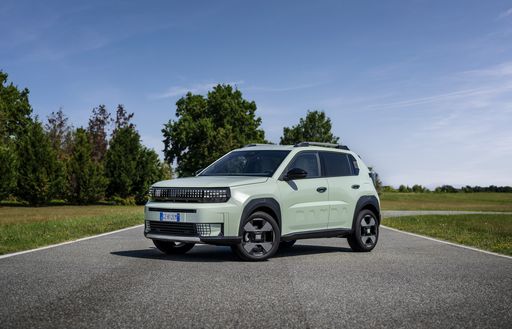
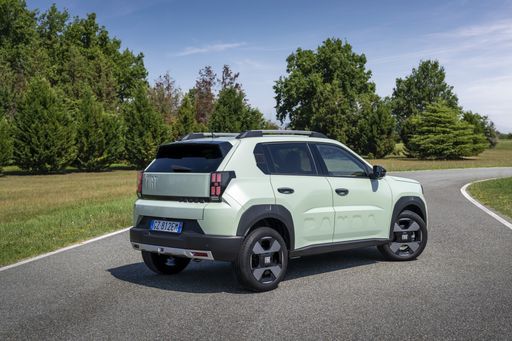
Grande Panda

Head-to-head: Dacia Sandero VS Fiat Grande Panda — which small car suits your life?

Dacia Sandero VS Fiat Grande Panda pits two very different takes on affordable small cars against each other: one relentlessly value-focused, the other clever with space and city comfort. The Dacia Sandero arrives as the pragmatic choice — simple, roomy up front and hard to beat on price — while the Fiat Grande Panda leans into urban usability, characterful touches and smart packaging. Readers should expect the Sandero to feel like a sensible tool that does the job with few frills, and the Grande Panda to feel more like a thoughtfully arranged apartment on wheels. This page will highlight the real-world trade-offs you’ll notice every day, from noise and seats to loading and motorway manners.
Sandero

Driving character and real-world performance

The Dacia Sandero drives like a basic, honest small car: light steering, brisk enough off the line and aimed at efficiency rather than thrills. The Fiat Grande Panda steers with a softer, more composed city focus — it soaks up urban bumps and feels easier to hustle through traffic without fuss. Where the Sandero shows a livelier push in normal driving, the Grande Panda’s powertrains (including hybrid/electric options) trade off outright pep for smoother, quieter urban progress until you demand sustained motorway pace. In short, choose the Sandero if you want straightforward responsiveness and value, choose the Grande Panda if you prioritise relaxed city manners and everyday civility.

Grande Panda

Comfort and long-distance behavior

Up close, the Dacia Sandero offers a comfortable, upright driving position and good space for the front passengers, but long motorway runs reveal wind and tyre noise that remind you of its budget focus. The Fiat Grande Panda tends to feel more refined on town streets and handles longer trips with a touch more composure, although its electric and hybrid variants can feel strained or noisier at higher sustained speeds. Both cars have modest rear-seat comfort compared with larger family cars, yet the Sandero’s rear can feel a touch tighter while the Panda’s rear is roomier headroom-wise but often more upright. For regular long-distance commuters the Panda nudges ahead for comfort; for mostly urban users the Sandero remains perfectly acceptable and simpler to live with.

Sandero

Practicality, cargo and family usability

Practicality is a strength for both, but expressed differently: the Dacia Sandero gives you straightforward boot space and generous front packaging that makes everyday loading and two-up travel easy, albeit with a high loading lip that can be annoying. The Fiat Grande Panda is cleverer with space — surprising boot flexibility for its length and small but useful details like hooks and handy compartments — which makes it feel more versatile for grocery runs and family stints. Both cars can accept two child seats across the rear in a pinch, though access and ISOFIX ergonomics can be fiddly on either model. If you prioritise pure cargo practicality and the lowest initial cost, the Sandero is compelling; if you want smarter small-car packaging and day-to-day convenience, the Grande Panda is more persuasive.

Grande Panda

Cabin feel, materials and daily usability

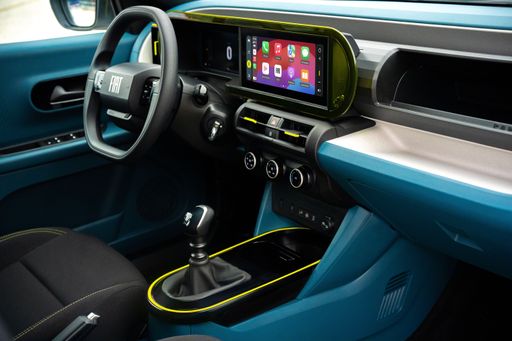
Neither the Dacia Sandero nor the Fiat Grande Panda aim to impress with luxury — expect hard plastics and plainly finished switchgear in both cabins — but the mood differs: the Sandero is utilitarian and pared back, with physical buttons and obvious cost-saving details that make it easy to use. The Grande Panda introduces more personality in its trims and layout, with a slightly more considered dashboard design and occasional softer touches that lift the cabin atmosphere. Infotainment is basic on low trims of both cars and can feel dated; the Sandero’s simplicity is an advantage for buyers who want tactile controls, while the Panda’s nicer trims reward buyers prepared to step up the options. If tactile minimalism and no-nonsense operation matter, Sandero; if a touch of character and nicer optional finishes appeal, Panda.

Sandero

Who should buy which car — buyer-fit and the next step

If your priority is getting the most car for the least money and you favour low running costs, simple maintenance and a roomy, no-frills layout, the Dacia Sandero is clearly aimed at you. If you spend most of your time in town, value clever storage, slightly better urban comfort and the option of hybrid/electric variants with practical charging details, the Fiat Grande Panda fits better. Both have compromises — noise and restraint on long trips for Sandero, and extra complexity or higher real-world costs on certain Panda drivetrains — so match the car to your daily routine rather than specs alone. With those differences in mind, you’ll be better placed to dive into the technical comparison and decide which trade-offs you can live with.

Here’s where it gets real: The technical differences in detail

Grande Panda

Costs and Efficiency:

When it comes to price and running costs, the biggest differences usually appear. This is often where you see which car fits your budget better in the long run.

Dacia Sandero is clearly cheaper – starting at 11,000 £ , while the Fiat Grande Panda costs 16,300 £ . That’s a price difference of around 5,315 £.

Fuel consumption also shows a difference: the Fiat Grande Panda uses 5.1 L/100km and is only slightly more efficient than the Dacia Sandero with 5.3 L/100km. The difference is about 0.2 L/100km.

Sandero

Engine and Performance:

Under the bonnet, it becomes clear which model is tuned for sportiness and which one takes the lead when you hit the accelerator.

When it comes to engine power, the Dacia Sandero offers very slightly more power – delivering 122 HP compared to 113 HP. That’s roughly 9 HP more horsepower.

When accelerating from 0 to 100 km/h, the Dacia Sandero is somewhat quicker – completing the sprint in 9.7 s, while the Fiat Grande Panda takes 11.2 s. That’s about 1.5 s quicker.

There’s also a difference in torque: the Fiat Grande Panda delivers barely more torque with 205 Nm compared to 200 Nm. That’s about 5 Nm more.

Grande Panda

Space and Everyday Use:

Whether family car or daily driver – which one offers more room, flexibility and comfort?

Both vehicles offer seating for 5 people.

In terms of curb weight, Dacia Sandero is moderately lighter – 1,100 kg compared to 1,295 kg. The difference is around 195 kg.

Looking at boot space, the Fiat Grande Panda offers marginally more boot space – 412 L compared to 372 L. That’s a difference of about 40 L.

When it comes to payload, the Fiat Grande Panda carries barely more – 453 kg compared to 436 kg. That’s a difference of about 17 kg.

Who wins the race in the data check?

The Fiat Grande Panda has the upper hand in the objective data comparison.
This result only shows which model scores more points on paper – not which of the two cars feels right for you.

from £16,300
Grande Panda

Fiat Grande Panda

  • Engine Type Electric, Petrol MHEV, Petrol
  • Transmission Automatic, Manuel
  • Drive Type Front-Wheel Drive
  • Power HP 100 - 113 HP
  • Consumption L/100km 5.1 - 5.7 L/100km
  • Consumption kWh/100km 16.8 kWh/100km
  • Electric Range 320 km
Fiat Grande Panda
Dacia Sandero

Costs and Consumption

View detailed analysis

Engine and Performance

View detailed analysis

Dimensions and Body

View detailed analysis

Fiat Grande Panda

The Grande Panda is a delightful blend of practicality and charm, making it a popular choice for urban dwellers and families alike. With its compact design, the car navigates city streets effortlessly while providing ample interior space for passengers and cargo. Its quirky styling and user-friendly features make the Grande Panda not just a mode of transport, but a fun driving experience.

details

Dacia Sandero

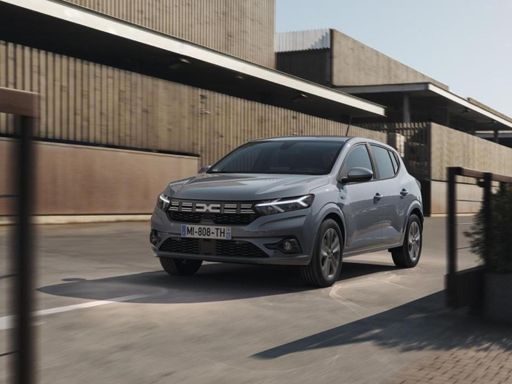
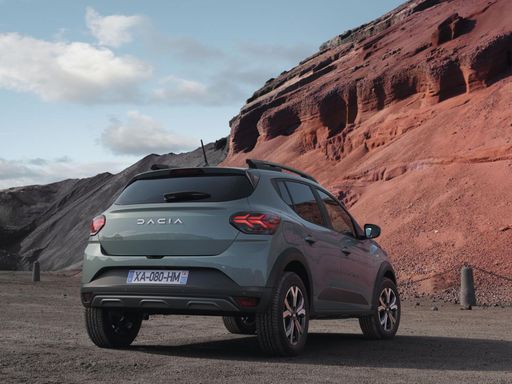
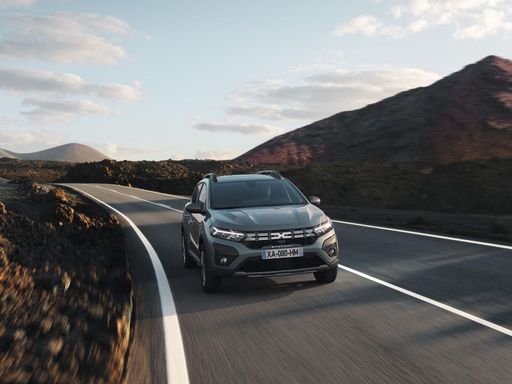
The Sandero is a no-nonsense hatchback that prioritises practicality and low running costs, making it a smart choice for budget-minded buyers. It delivers a surprisingly roomy interior and straightforward, useful equipment so you get everyday usability without paying for unnecessary frills.

details
Fiat Grande Panda
Dacia Sandero

Costs and Consumption

Price
16,300 - 25,700 £
Price
11,000 - 16,300 £
Consumption L/100km
5.1 - 5.7 L/100km
Consumption L/100km
5.3 - 7.2 L/100km
Consumption kWh/100km
16.8 kWh/100km
Consumption kWh/100km
-
Electric Range
320 km
Electric Range
-
Battery Capacity
-
Battery Capacity
-
co2
0 - 131 g/km
co2
111 - 131 g/km
Fuel tank capacity
-
Fuel tank capacity
-

Dimensions and Body

Body Type
SUV
Body Type
Hatchback
Seats
5
Seats
5
Doors
-
Doors
-
Curb weight
1,295 - 1,554 kg
Curb weight
1,100 - 1,297 kg
Trunk capacity
361 - 412 L
Trunk capacity
328 - 372 L
Length
-
Length
-
Width
1,763 mm
Width
1,853 mm
Height
-
Height
-
Max trunk capacity
-
Max trunk capacity
-
Payload
353 - 453 kg
Payload
385 - 436 kg

Engine and Performance

Engine Type
Electric, Petrol MHEV, Petrol
Engine Type
Petrol, LPG
Transmission
Automatic, Manuel
Transmission
Manuel, Automatic
Transmission Detail
Reduction Gearbox, Dual-Clutch Automatic, Manual Gearbox
Transmission Detail
Manual Gearbox, Dual-Clutch Automatic
Drive Type
Front-Wheel Drive
Drive Type
Front-Wheel Drive
Power HP
100 - 113 HP
Power HP
67 - 122 HP
Acceleration 0-100km/h
11.2 - 11.5 s
Acceleration 0-100km/h
9.7 - 16.7 s
Max Speed
-
Max Speed
-
Torque
122 - 205 Nm
Torque
95 - 200 Nm
Number of Cylinders
3
Number of Cylinders
3
Power kW
74 - 83 kW
Power kW
49 - 90 kW
Engine capacity
1,199 cm3
Engine capacity
999 - 1,199 cm3

General

Model Year
2025
Model Year
2025
CO2 Efficiency Class
A, D
CO2 Efficiency Class
D, C
Brand
Fiat
Brand
Dacia
DriveDuel uses data analysis and artificial intelligence to evaluate vehicle data and create content. Content is regularly reviewed and improved. The displayed prices are estimates based on German list prices, adjusted to the respective country’s VAT. Country-specific registration taxes are not included. This information is not legally binding.