VS

Fiat Panda vs Fiat 500 comparison

Compare performance (70 HP vs 118 HP), boot space and price (14,100 £ vs 17,100 £ ) at a glance. Find out which car is the better choice for you – Fiat Panda or Fiat 500?

Fiat Panda vs Fiat 500: Key differences

Fiat Panda

4.5 (2 Reviews)
rate
  • visibly cheaper
  • marginally more efficient
  • marginally lighter
  • slightly more trunk space

Fiat 500

3.7 (1 Reviews)
rate
  • significantly more power
  • clearly quicker 0–100 km/h

All details on performance, efficiency, range and trunk space can be found in the technical comparison below – including user reviews for both models.

Panda

City Charisma vs Practical Grit

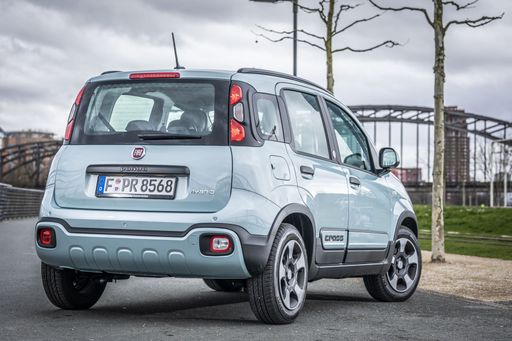
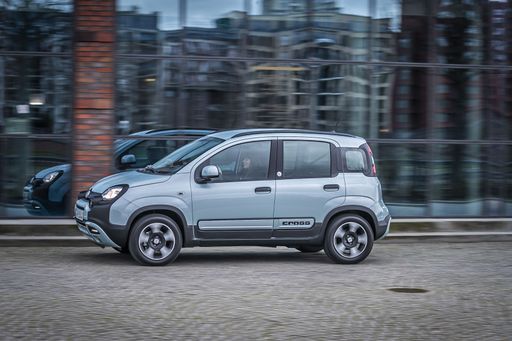
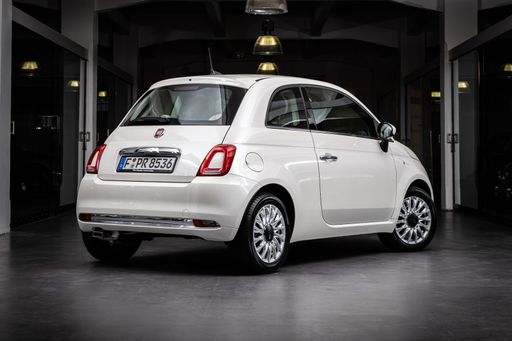
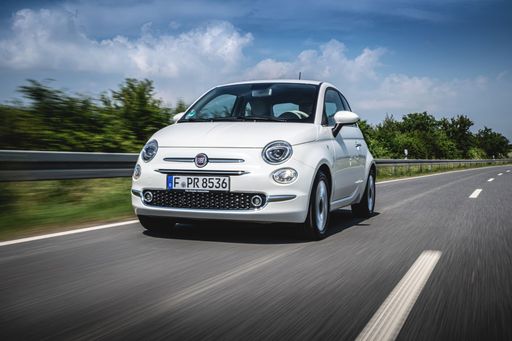
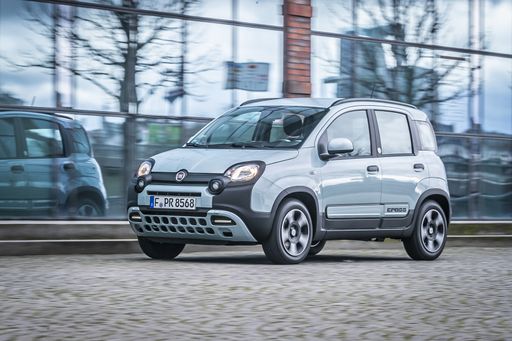
The tiny curvy icon and the more boxy workhorse couldn’t be more different in attitude: the Fiat 500 arrives like a fashionable city accessory, the kind of car that turns heads and sparks conversations, while the Fiat Panda feels deliberately wholesome and ready for chores. One channels retro charm and lifestyle appeal, the other trades glamour for straightforward usefulness and no-nonsense resilience. Buyers looking for personality will be drawn to the former, while those after everyday reliability will appreciate the latter’s pragmatic honesty.
500

Cornering the Tight Spots

In town both feel at home, but they approach urban life from opposite directions: the smaller, snappier character offers playfulness and quick direction changes, making stop-start traffic less tedious, whereas the boxier companion focuses on visibility and confidence, so you’ll feel composed even on cluttered streets. Steering and suspension tuning give each a distinct driving mood — flirtatious and light versus steady and surefooted. Both earn points for ease of parking, it’s just a matter of whether you prefer to flirt with the kerb or plan your moves with a practical mindset.

Panda

Cabin Mood and Everyday Comfort

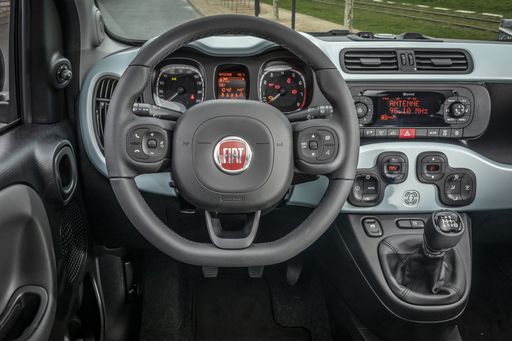
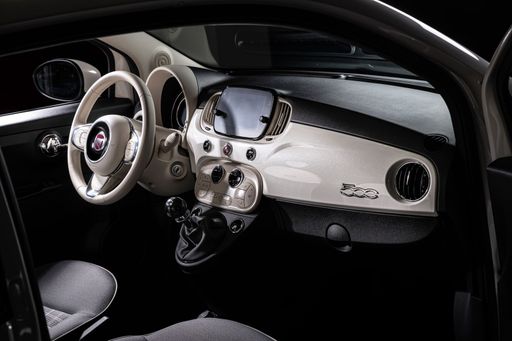
Step inside the rounded cabin and you get charm-first design with cheerful surfaces and a playful layout, while the other’s interior prioritises space and sensible ergonomics over frills, with easy-to-use switches and a practical vibe. Neither goes for plush limousine luxury; instead they aim to make daily trips pleasant and straightforward, though the sensation of room and posture is noticeably different between them. If tactile materials and a boutique feel matter, one nudges ahead; if clever packaging and unassuming comfort matter more, the other answers the call.

500

Boots, Bags and Weekend Plans

For grocery runs, DIY trips and the odd weekend escape the two diverge: the urbane model keeps luggage handling neat and stylish, whereas the more utilitarian friend gives you flexible loadspace and a no-fuss approach to hauling odd-shaped items. Practical touches and seat versatility make life easier when plans change at the last minute, and the pragmatic layout feels engineered to cope rather than to impress. Choose according to whether your life leans toward coordinated shopping or unpredictable projects.

Panda

Fashion Sense vs Functional Soul

Design is where personality speaks loudest: the fashion-forward option markets a lifestyle as much as transport, pairing retro references with modern touches that match well with city wardrobes and café culture. The alternative wears its utilitarian soul on its sleeve, appearing rugged in a discreet, everyday way that quietly promises durability and low fuss. Both look right in their element — one in trendy streets, the other on routes where practicality is a virtue.

500

Who Will Park It at Your Place?

If your daily life revolves around style, short hops and occasional indulgence, the chic choice scratches that itch and makes the commute part of the experience; if you’re packing active kids, tools or weekend gear, the sensible option will likely pay dividends in practicality and peace of mind. Commuters who value flair will lean one way, families and doers will likely prefer the other, and long-distance comfort seekers should consider which driving mood suits their miles. In the end it’s about matching temperament to tasks rather than chasing headlines.

Panda

Stick Around for the Final Call

We’ve walked the streets, packed the boots and lived with both personalities long enough to know their strengths and quirks — now it’s time to see how that translates into DriveDuel judgement. Keep reading to find out which model earns the DriveDuel Champion title; the full verdict is just ahead, and it’s worth the wait.

Here’s where it gets real: The technical differences in detail

Panda

Costs and Efficiency:

Looking at overall running costs, both models reveal some interesting differences in everyday economy.

Fiat Panda is visibly cheaper – starting at 14,100 £ , while the Fiat 500 costs 17,100 £ . That’s a price difference of around 3,000 £.

Fuel consumption also shows a difference: the Fiat Panda uses 5 L/100km and is marginally more efficient than the Fiat 500 with 5.2 L/100km. The difference is about 0.2 L/100km.

500

Engine and Performance:

Power, torque and acceleration say a lot about how a car feels on the road. This is where you see which model delivers more driving dynamics.

When it comes to engine power, the Fiat 500 offers significantly more power – delivering 118 HP compared to 70 HP. That’s roughly 48 HP more horsepower.

When accelerating from 0 to 100 km/h, the Fiat 500 is clearly quicker – completing the sprint in 9 s, while the Fiat Panda takes 13.9 s. That’s about 4.9 s quicker.

Looking at top speed, the Fiat Panda is only slightly faster – reaching 164 km/h, while the Fiat 500 tops out at 155 km/h. The difference is around 9 km/h.

There’s also a difference in torque: the Fiat 500 delivers substantially more torque with 220 Nm compared to 92 Nm. That’s about 128 Nm more.

Panda

Space and Everyday Use:

Beyond pure performance, interior space and usability matter most in daily life. This is where you see which car is more practical and versatile.

Both vehicles offer seating for 4 people.

In terms of curb weight, Fiat Panda is marginally lighter – 1,055 kg compared to 1,130 kg. The difference is around 75 kg.

Looking at boot space, the Fiat Panda offers slightly more boot space – 225 L compared to 185 L. That’s a difference of about 40 L.

For maximum load capacity, the Fiat Panda offers visibly more capacity – up to 870 L, about 320 L more than the Fiat 500.

When it comes to payload, the Fiat Panda carries moderately more – 365 kg compared to 325 kg. That’s a difference of about 40 kg.

Who wins the race in the data check?

The Fiat 500 is decisively ahead in the objective data comparison.
This result only shows which model scores more points on paper – not which of the two cars feels right for you.

from £17,100
500

Fiat 500

  • Engine Type : Electric, Petrol MHEV
  • Transmission : Automatic, Manuel
  • Drive Type : Front-Wheel Drive
  • Power HP : 65 - 118 HP
  • Consumption L/100km : 5.2 - 5.3 L/100km
  • Consumption kWh/100km : 13 - 14.7 kWh/100km
  • Electric Range : 190 - 331 km
Fiat Panda
Fiat 500

Costs and Consumption

View detailed analysis

Engine and Performance

View detailed analysis

Dimensions and Body

View detailed analysis

Fiat Panda

The Panda is a charming, no-nonsense city companion that mixes cheerful Italian flair with genuinely useful practicality, making tight streets and daily errands feel less of a chore. Its honest simplicity, clever packaging and a dash of cheeky character make it a smart, low-stress buy for people who prefer sensible perks over showroom flash.

details

Fiat 500

The Fiat 500 is a cheeky, retro‑styled city car that turns heads with its iconic looks and playful personality. Perfect for weaving through tight streets and easing into tiny parking spots, it’s aimed at buyers who want style and character more than grand touring prowess.

details
Fiat Panda
Fiat 500

Costs and Consumption

Price
14,100 £
Price
17,100 - 30,800 £
Consumption L/100km
5 L/100km
Consumption L/100km
5.2 - 5.3 L/100km
Consumption kWh/100km
-
Consumption kWh/100km
13 - 14.7 kWh/100km
Electric Range
-
Electric Range
190 - 331 km
Battery Capacity
-
Battery Capacity
21.3 - 37.3 kWh
co2
113 g/km
co2
0 - 121 g/km
Fuel tank capacity
38 L
Fuel tank capacity
-

Dimensions and Body

Body Type
Hatchback
Body Type
Hatchback
Seats
4
Seats
4
Doors
5
Doors
3 - 4
Curb weight
1,055 kg
Curb weight
1,130 - 1,475 kg
Trunk capacity
225 L
Trunk capacity
183 - 185 L
Length
3,635 mm
Length
3,631 - 3,632 mm
Width
1,643 mm
Width
1,683 - 1,684 mm
Height
1,551 mm
Height
1,527 - 1,532 mm
Max trunk capacity
870 L
Max trunk capacity
440 - 550 L
Payload
365 kg
Payload
250 - 325 kg

Engine and Performance

Engine Type
Petrol MHEV
Engine Type
Electric, Petrol MHEV
Transmission
Manuel
Transmission
Automatic, Manuel
Transmission Detail
Manual Gearbox
Transmission Detail
Reduction Gearbox, Manual Gearbox
Drive Type
Front-Wheel Drive
Drive Type
Front-Wheel Drive
Power HP
70 HP
Power HP
65 - 118 HP
Acceleration 0-100km/h
13.9 s
Acceleration 0-100km/h
9 - 16.2 s
Max Speed
164 km/h
Max Speed
135 - 155 km/h
Torque
92 Nm
Torque
92 - 220 Nm
Number of Cylinders
3
Number of Cylinders
3
Power kW
51 kW
Power kW
48 - 87 kW
Engine capacity
999 cm3
Engine capacity
999 cm3

General

Model Year
2,024
Model Year
2,023 - 2,025
CO2 Efficiency Class
C
CO2 Efficiency Class
A, D
Brand
Fiat
Brand
Fiat
DriveDuel uses data analysis and artificial intelligence to evaluate vehicle data and create content. Content is regularly reviewed and improved. The displayed prices are estimates based on German list prices, adjusted to the respective country’s VAT. Country-specific registration taxes are not included. This information is not legally binding.