VS

Fiat Panda vs Renault R5 comparison

Compare performance (70 HP vs 150 HP), boot space and price (14,100 £ vs 24,000 £ ) at a glance. Find out which car is the better choice for you – Fiat Panda or Renault R5?

Fiat Panda vs Renault R5: Key differences

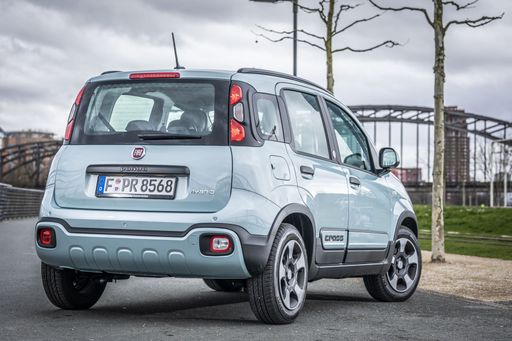
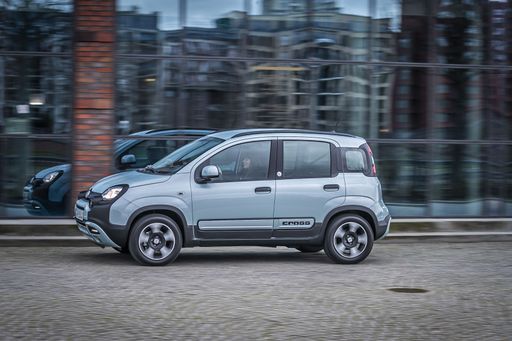
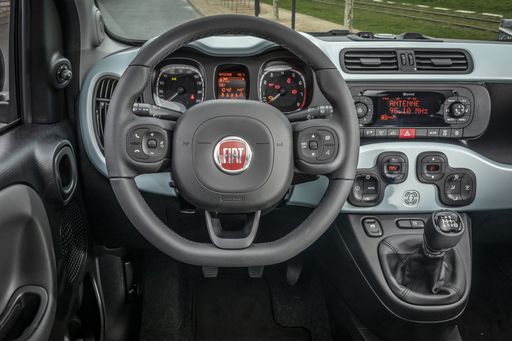
Fiat Panda

4.5 (3 Reviews)
rate
  • clearly cheaper
  • clearly lighter
details

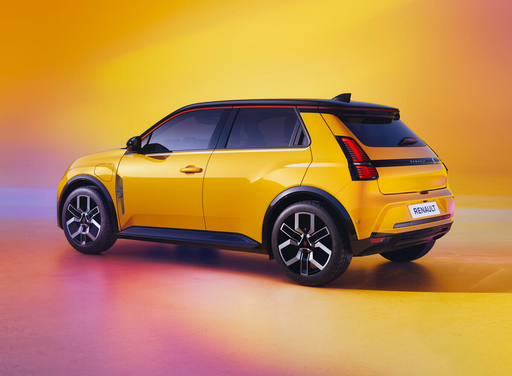
Renault R5

5 (1 Reviews)
rate
  • clearly more power
  • significantly quicker 0–100 km/h
  • noticeably more trunk space
details

All details on performance, efficiency, range and trunk space can be found in the technical comparison below – including user reviews for both models.

By Achim Sedelmaier

Panda

In the bustling world of automotive innovation, compact hatchbacks have consistently attracted city dwellers and small family buyers looking for efficiency, practicality, and fun. Today, we put two exciting contenders head-to-head: the Fiat Panda and the Renault R5. With distinct powertrains and a focus on different aspects of driving experience, both vehicles showcase the evolution of compact cars in 2024 and 2025.
R5

Overview of the Fiat Panda

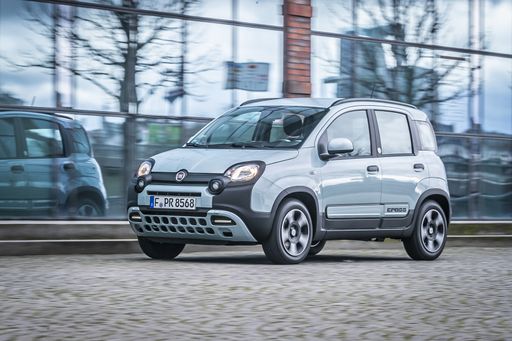
The Fiat Panda, a classic in the compact segment, carries on into 2024 with modern enhancements while preserving its charmingly quirky character. Sporting a petrol MHEV (Mild Hybrid Electric Vehicle) engine that produces up to 70 HP from its 999 cm³ three-cylinder engine, this hatchback is built for both versatility and efficiency.

Panda

Performance and Technical Aspects

The Fiat Panda's performance is characterized by a healthy torque of 92 Nm, allowing it to accelerate from 0 to 100 km/h in around 13.9 seconds (14.7 seconds for some variants). This modest acceleration is complemented by a top speed of 164 km/h, making it suitable for both city driving and occasional highway jaunts. The vehicle's fuel consumption ranges between 5 and 5.1 L/100km, translating to CO2 emissions of 113 to 116 g/km. This positions the Panda within C and D efficiency classes, thus offering a reasonable balance for cost-conscious buyers.

R5

Interior and Space Considerations

With seating for up to five, the Fiat Panda accommodates both family trips and grocery runs. Practicality shines through with a trunk capacity of 225 liters. Moreover, its compact dimensions (length of 3653 mm, width of 1643 mm, and height of 1551 mm) make it an ideal urban vehicle, where parking can be a challenge.

Panda

Introducing the Renault R5

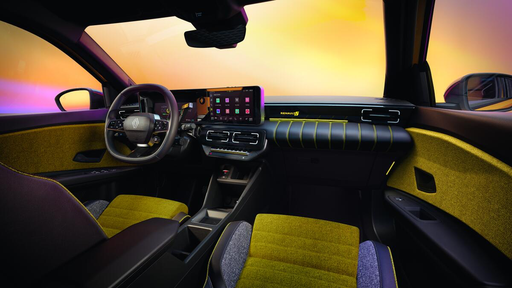
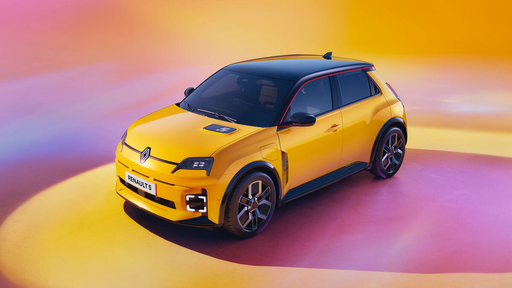
The Renault R5 boldly steps into the spotlight as an electric hatchback with a futuristic allure set to debut in 2025. With its sleek design and innovative technology, it's designed to appeal to the environmentally conscious driver. The R5 is equipped with a powerful electric motor that can generate up to 150 HP, drawing from an impressive 40 kWh battery pack.

R5

Electric Performance and Technical Innovation

Acceleration is one of the standout features of the R5. It can sprint from 0 to 100 km/h in as quick as 8 seconds, due to its torque of up to 245 Nm. Though the top speed is capped at 150 km/h, the electric driving range is particularly remarkable, boasting figures from 300 km up to 405 km on a single charge. Additionally, the R5 operates at a consumption rate of just 14.8 kWh/100km, ensuring minimal carbon footprint with zero emissions (CO2 = 0 g/km).

Panda

Interior and Usability

The Renault R5 also excels in practicality, notably with a trunk capacity that exceeds the Panda's at 326 liters. The space can comfortably seat five passengers, amplifying its appeal as a family car. It comes with modern technological enhancements, aligning with consumer expectations of connectivity and convenience in contemporary vehicles.

Comparative Analysis

When comparing these two hatchbacks, it is essential to consider driving preferences and lifestyle. The Fiat Panda remains appealing to those who prefer traditional petrol engines with a mild hybrid option for better fuel efficiency. Its practicality and quaint design are suited for urban living.

On the other hand, the Renault R5 positions itself as a progressive choice, carving a niche for electric vehicle enthusiasts looking for efficient alternatives without sacrificing performance. Its advanced electric capabilities and revolving ecosystem surrounding EVs can enrich the driving experience for users inclined towards sustainability.

Conclusion

Both the Fiat Panda and Renault R5 stand strong in their respective corners. The Panda champions conventional driving and practical design, while the R5 leads with electric innovation and dynamic performance. Ultimately, the choice between these two is reflected in the buyer’s predisposition towards either traditional or electric mobility. Each model has its own set of followers, ensuring that both will continue to thrive in the automotive market.

Here’s where it gets real: The technical differences in detail

Panda

Costs and Efficiency:

When it comes to price and running costs, the biggest differences usually appear. This is often where you see which car fits your budget better in the long run.

Fiat Panda is clearly cheaper – starting at 14,100 £ , while the Renault R5 costs 24,000 £ . That’s a price difference of around 9,866 £.

R5

Engine and Performance:

Power, torque and acceleration say a lot about how a car feels on the road. This is where you see which model delivers more driving dynamics.

When it comes to engine power, the Renault R5 offers clearly more power – delivering 150 HP compared to 70 HP. That’s roughly 80 HP more horsepower.

When accelerating from 0 to 100 km/h, the Renault R5 is significantly quicker – completing the sprint in 8 s, while the Fiat Panda takes 13.9 s. That’s about 5.9 s quicker.

There’s also a difference in torque: the Renault R5 delivers significantly more torque with 245 Nm compared to 92 Nm. That’s about 153 Nm more.

Panda

Space and Everyday Use:

Beyond pure performance, interior space and usability matter most in daily life. This is where you see which car is more practical and versatile.

Seats: Renault R5 offers more seats – 5 vs 4.

In terms of curb weight, Fiat Panda is clearly lighter – 1,055 kg compared to 1,447 kg. The difference is around 392 kg.

Looking at boot space, the Renault R5 offers noticeably more boot space – 326 L compared to 225 L. That’s a difference of about 101 L.

When it comes to payload, the Renault R5 carries slightly more – 418 kg compared to 365 kg. That’s a difference of about 53 kg.

Who wins the race in the data check?

The Renault R5 is decisively ahead in the objective data comparison.
This result only shows which model scores more points on paper – not which of the two cars feels right for you.

from £24,000
R5

Renault R5

  • Engine Type Electric
  • Transmission Automatic
  • Drive Type Front-Wheel Drive
  • Power HP 122 - 150 HP
  • Consumption kWh/100km 14.8 - 15.2 kWh/100km
  • Electric Range 307 - 405 km
Fiat Panda
Renault R5

Costs and Consumption

View detailed analysis

Engine and Performance

View detailed analysis

Dimensions and Body

View detailed analysis

Fiat Panda

The Panda is a charming, no-nonsense city companion that mixes cheerful Italian flair with genuinely useful practicality, making tight streets and daily errands feel less of a chore. Its honest simplicity, clever packaging and a dash of cheeky character make it a smart, low-stress buy for people who prefer sensible perks over showroom flash.

details

Renault R5

The Renault 5 blends classic styling cues with contemporary design, giving it a playful and characterful presence on the road. It’s a city-focused hatchback that feels nimble and cleverly packaged, ideal for drivers who want personality and practicality.

details
Fiat Panda
Renault R5

Costs and Consumption

Price
14,100 £
Price
24,000 - 27,000 £
Consumption L/100km
5 L/100km
Consumption L/100km
-
Consumption kWh/100km
-
Consumption kWh/100km
14.8 - 15.2 kWh/100km
Electric Range
-
Electric Range
307 - 405 km
Battery Capacity
-
Battery Capacity
-
co2
113 g/km
co2
0 g/km
Fuel tank capacity
38 L
Fuel tank capacity
-

Dimensions and Body

Body Type
Hatchback
Body Type
Hatchback
Seats
4
Seats
5
Doors
5
Doors
-
Curb weight
1,055 kg
Curb weight
1,447 - 1,524 kg
Trunk capacity
225 L
Trunk capacity
326 L
Length
3,635 mm
Length
-
Width
1,643 mm
Width
1,744 mm
Height
1,551 mm
Height
-
Max trunk capacity
870 L
Max trunk capacity
-
Payload
365 kg
Payload
396 - 418 kg

Engine and Performance

Engine Type
Petrol MHEV
Engine Type
Electric
Transmission
Manuel
Transmission
Automatic
Transmission Detail
Manual Gearbox
Transmission Detail
Reduction Gearbox
Drive Type
Front-Wheel Drive
Drive Type
Front-Wheel Drive
Power HP
70 HP
Power HP
122 - 150 HP
Acceleration 0-100km/h
13.9 s
Acceleration 0-100km/h
8 - 9 s
Max Speed
164 km/h
Max Speed
-
Torque
92 Nm
Torque
225 - 245 Nm
Number of Cylinders
3
Number of Cylinders
-
Power kW
51 kW
Power kW
90 - 110 kW
Engine capacity
999 cm3
Engine capacity
-

General

Model Year
2024
Model Year
2025
CO2 Efficiency Class
C
CO2 Efficiency Class
A
Brand
Fiat
Brand
Renault
DriveDuel uses data analysis and artificial intelligence to evaluate vehicle data and create content. Content is regularly reviewed and improved. The displayed prices are estimates based on German list prices, adjusted to the respective country’s VAT. Country-specific registration taxes are not included. This information is not legally binding.