VS

Renault R5 vs Toyota Yaris comparison

Compare performance (150 HP vs 280 HP), boot space and price (24,000 £ vs 21,900 £ ) at a glance. Find out which car is the better choice for you – Renault R5 or Toyota Yaris?

Renault R5 vs Toyota Yaris: Key differences

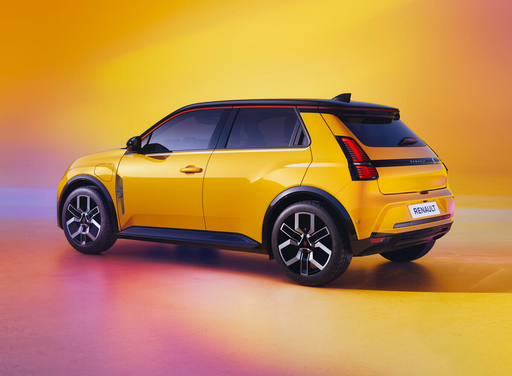
Renault R5

4.5 (3 Reviews)
rate
  • a bit more trunk space
details

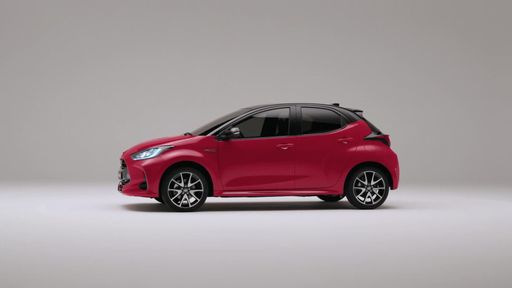
Toyota Yaris

4 (7 Reviews)
rate
  • very slightly cheaper
  • considerably more power
  • substantially quicker 0–100 km/h
  • visibly lighter
details

All details on performance, efficiency, range and trunk space can be found in the technical comparison below – including user reviews for both models.

R5

Renault R5 VS Toyota Yaris: a quick head-to-head for city buyers

Renault R5 and Toyota Yaris sit in the same compact bracket but aim at different buyers: the R5 sells personality and modern EV tech, the Yaris sells economy and fuss-free hybrid simplicity. The R5 feels like a design statement you can live with every day, while the Yaris is quietly competent and relentlessly economical. That contrast — charm versus pragmatism — is the headline you need before digging into numbers. Read on to see how that trade-off plays out in driving character, comfort, practicality and long-term ownership. The technical comparison following this editorial will make those practical differences measurable and actionable for your needs.
Yaris

Driving character: playful EV vs. steady hybrid

The Renault R5 drives with a light, playful touch that makes city streets feel smaller and fun; steering is eager and the chassis rewards quick direction changes. The Toyota Yaris, by contrast, prioritizes calm efficiency — it masks effort and keeps things predictable rather than exciting. If you want a car that puts a smile on your face between lights, the R5 leans more emotional; if you want a sensible commuter that just gets low consumption day after day, the Yaris is the composed choice. On motorway runs the R5’s electric limitations are felt sooner, while the Yaris’s hybrid setup keeps momentum without charging stops but can sound strained under sustained hard acceleration. Both are easy to live with in town, but they offer fundamentally different driving moods.

R5

Comfort and long-distance behavior: supple in town, different compromises on the road

In town the Renault R5 soaks up potholes and feels pleasantly refined for its size, which makes daily commutes nice even on rough streets. Over longer trips the R5’s cabin calm remains, but you’ll notice efficiency and range drop faster, so motorway stints become a planning exercise. The Toyota Yaris behaves steadily on longer runs and rewards smooth, economical driving with excellent fuel figures, yet under full throttle the engine becomes noticeably vocal and the ride can feel firmer. For long-distance comfort the Yaris is less emotional but more predictable; for short-to-medium trips the R5’s damping and serenity make the miles more pleasant — provided you accept its range quirks.

Yaris

Practicality and everyday usability: boot, rear space and daily chores

The Renault R5 surprises with a practical boot and clever underfloor storage that make grocery runs and weekend bags easier despite compact exterior dimensions. However, the R5’s high load sill and limited rear footroom are real-world annoyances when loading heavy items or seating tall passengers in the back. The Toyota Yaris offers a sensible, no-nonsense layout and very low running complexity — you don’t need to think about charging — but its boot is taller and tighter, and the back seats feel narrower for adult passengers. Both cars ask compromises of families: choose the R5 if cargo versatility and an oversized boot for the class matter, pick the Yaris if you prefer effortless day-to-day running and the convenience of a hybrid that won’t need a cable.

R5

Cabin feel, infotainment and perceived quality: personality versus solidity

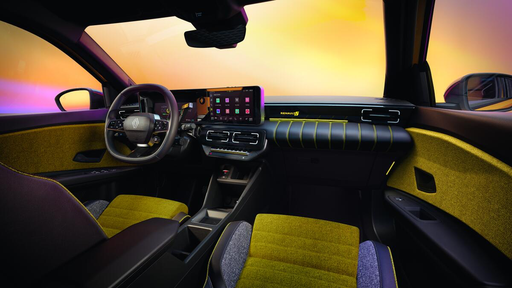
The Renault R5’s cabin leans into charm: a modern Google-based infotainment system, friendly graphics and tactile controls give a contemporary, even premium-feeling tech experience. Toyota Yaris answers with a more conservative interior that focuses on robustness, improved screens after its update, and a comprehensive suite of driver aids that feels reassuringly mature. Materials in the R5 often feel more characterful, while the Yaris shows the Toyota habit of prioritising durability over flair with more hard plastics in lower areas. If cabin tech and a lively interior lift your day, the R5 has the edge; if you want clarity, proven ergonomics and long-term durability, the Yaris settles nerves better.

Buyer fit: who should choose which car before the technical details

If you’re a design‑minded urban driver with a home charger who values a roomy boot, playful handling and modern EV features like two‑way charging, the Renault R5 is aimed squarely at you. If your priority is the lowest possible running cost, minimal fuss, long dealer network support and steady economy without having to plug in, the Toyota Yaris is the easier, more conservative pick. Families who regularly carry tall passengers or large loads will find neither perfect, but the R5 leans toward luggage versatility while the Yaris leans toward predictable operating costs. Use the technical comparison next to check range, acceleration, charging or fuel figures against your typical routes to decide which trade-off matches your life.

Here’s where it gets real: The technical differences in detail

R5

Costs and Efficiency:

Price and efficiency are key factors when choosing a car – and this is often where the real differences emerge.

Toyota Yaris is very slightly cheaper – starting at 21,900 £ , while the Renault R5 costs 24,000 £ . That’s a price difference of around 2,143 £.

Yaris

Engine and Performance:

Power, torque and acceleration are the classic benchmarks for car enthusiasts – and here, some clear differences start to show.

When it comes to engine power, the Toyota Yaris offers considerably more power – delivering 280 HP compared to 150 HP. That’s roughly 130 HP more horsepower.

When accelerating from 0 to 100 km/h, the Toyota Yaris is substantially quicker – completing the sprint in 5.5 s, while the Renault R5 takes 8 s. That’s about 2.5 s quicker.

There’s also a difference in torque: the Toyota Yaris delivers noticeably more torque with 390 Nm compared to 245 Nm. That’s about 145 Nm more.

R5

Space and Everyday Use:

Whether family car or daily driver – which one offers more room, flexibility and comfort?

Both vehicles offer seating for 5 people.

In terms of curb weight, Toyota Yaris is visibly lighter – 1,090 kg compared to 1,447 kg. The difference is around 357 kg.

Looking at boot space, the Renault R5 offers a bit more boot space – 326 L compared to 286 L. That’s a difference of about 40 L.

When it comes to payload, the Toyota Yaris carries markedly more – 525 kg compared to 418 kg. That’s a difference of about 107 kg.

Who wins the race in the data check?

The Toyota Yaris is clearly superior overall in the objective data comparison.
This result only shows which model scores more points on paper – not which of the two cars feels right for you.

from £21,900
Yaris

Toyota Yaris

  • Engine Type Full Hybrid, Petrol
  • Transmission Automatic, Manual
  • Drive Type Front-Wheel Drive, All-Wheel Drive
  • Power HP 116 - 280 HP
  • Consumption L/100km 3.8 - 8.7 L/100km
Renault R5
Toyota Yaris

Costs and Consumption

View detailed analysis

Engine and Performance

View detailed analysis

Dimensions and Body

View detailed analysis

Renault R5

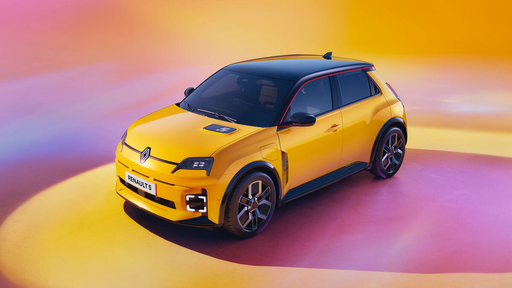
The Renault 5 blends classic styling cues with contemporary design, giving it a playful and characterful presence on the road. It’s a city-focused hatchback that feels nimble and cleverly packaged, ideal for drivers who want personality and practicality.

details

Toyota Yaris

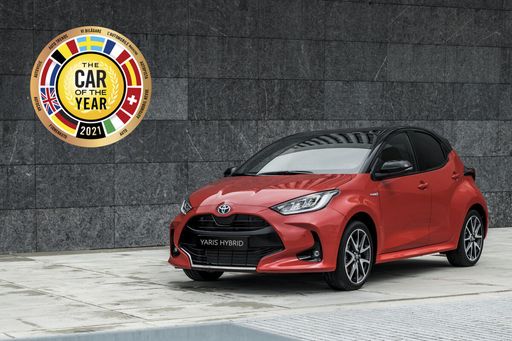
The Yaris is a compact hatchback that blends everyday practicality with Toyota’s long-standing reputation for reliability, making it easy to live with in city traffic. Its nimble handling and sensible interior make the Yaris a smart choice for drivers who want straightforward, fuss-free transport.

details
Renault R5
Toyota Yaris

Costs and Consumption

Price
24,000 - 27,000 £
Price
21,900 - 40,800 £
Consumption L/100km
-
Consumption L/100km
3.8 - 8.7 L/100km
Consumption kWh/100km
14.8 - 15.2 kWh/100km
Consumption kWh/100km
-
Electric Range
307 - 405 km
Electric Range
-
Battery Capacity
-
Battery Capacity
-
co2
0 g/km
co2
87 - 197 g/km
Fuel tank capacity
-
Fuel tank capacity
-

Dimensions and Body

Body Type
Hatchback
Body Type
Hatchback
Seats
5
Seats
4 - 5
Doors
-
Doors
-
Curb weight
1,447 - 1,524 kg
Curb weight
1,090 - 1,356 kg
Trunk capacity
326 L
Trunk capacity
141 - 286 L
Length
-
Length
-
Width
1,744 mm
Width
1,745 - 1,805 mm
Height
-
Height
-
Max trunk capacity
-
Max trunk capacity
-
Payload
396 - 418 kg
Payload
289 - 525 kg

Engine and Performance

Engine Type
Electric
Engine Type
Full Hybrid, Petrol
Transmission
Automatic
Transmission
Automatic, Manual
Transmission Detail
Reduction Gearbox
Transmission Detail
CVT, Manual Gearbox
Drive Type
Front-Wheel Drive
Drive Type
Front-Wheel Drive, All-Wheel Drive
Power HP
122 - 150 HP
Power HP
116 - 280 HP
Acceleration 0-100km/h
8 - 9 s
Acceleration 0-100km/h
5.5 - 9.7 s
Max Speed
-
Max Speed
-
Torque
225 - 245 Nm
Torque
390 Nm
Number of Cylinders
-
Number of Cylinders
3
Power kW
90 - 110 kW
Power kW
85 - 206 kW
Engine capacity
-
Engine capacity
1,490 - 1,618 cm3

General

Model Year
2025
Model Year
2026
CO2 Efficiency Class
A
CO2 Efficiency Class
B, G
Brand
Renault
Brand
Toyota
DriveDuel uses data analysis and artificial intelligence to evaluate vehicle data and create content. Content is regularly reviewed and improved. The displayed prices are estimates based on German list prices, adjusted to the respective country’s VAT. Country-specific registration taxes are not included. This information is not legally binding.