VS

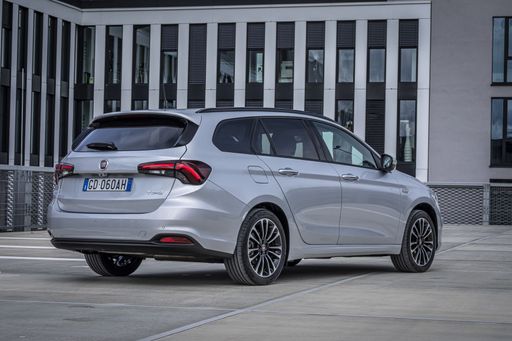
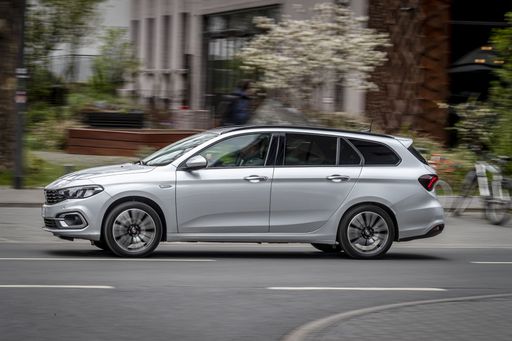
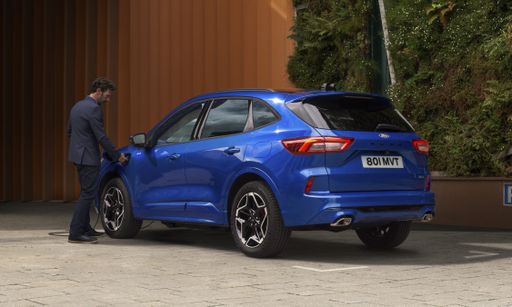
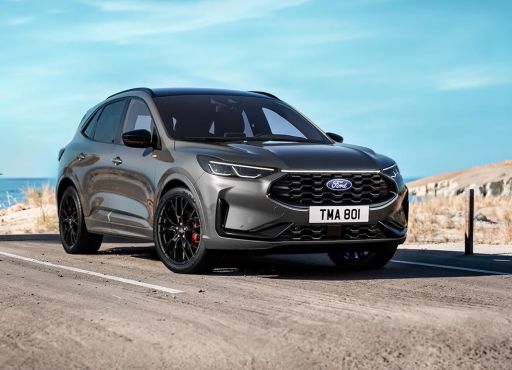
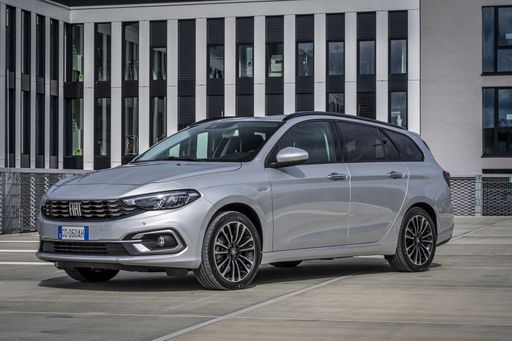
Fiat Tipo Wagon vs Ford Kuga comparison

Compare performance (130 HP vs 243 HP), boot space and price (21,000 £ vs 34,200 £ ) at a glance. Find out which car is the better choice for you – Fiat Tipo Wagon or Ford Kuga?

Fiat Tipo Wagon vs Ford Kuga: Key differences

Fiat Tipo Wagon

4.3 (2 Reviews)
rate
  • significantly cheaper
  • marginally lighter
details

Ford Kuga

4.2 (6 Reviews)
rate
  • significantly more power
  • considerably more efficient
  • markedly quicker 0–100 km/h
details

All details on performance, efficiency, range and trunk space can be found in the technical comparison below – including user reviews for both models.

By Achim Sedelmaier

Tipo Wagon

Fiat Tipo Station Wagon vs. Ford Kuga: The Ultimate Showdown

In the ever-evolving automotive landscape, the choice between a practical station wagon and a versatile SUV has never been more engaging. Here, we pit the 2024 Fiat Tipo Station Wagon against the 2024 Ford Kuga to uncover which vehicle best fits your driving needs.
Kuga

Engine Options and Performance

The Fiat Tipo Station Wagon offers a choice between petrol mild hybrid electric vehicle (MHEV) and diesel engines. Sporting a four-cylinder engine with a capacity ranging from 1469 to 1598 cm³, it's available in both automatic and manual transmissions. Producing 130 HP and achieving a top speed of up to 207 km/h, the Tipo can accelerate from 0 to 100 km/h in just 9.1 seconds, making it a compelling choice for those prioritizing performance in their wagon.

Conversely, the Ford Kuga offers a diversified engine lineup, including petrol, full hybrid, and plug-in hybrid options. Equipped with both three and four-cylinder engines and a capacity of up to 2488 cm³, it offers varying power outputs from 150 HP to 243 HP. The Kuga reaches speeds of up to 200 km/h and promises a brisk 0 to 100 km/h acceleration in as little as 7.3 seconds. Versatility is the Kuga's hallmark, catering to both front-wheel and all-wheel drive preferences.

Tipo Wagon

Fuel Efficiency and Environmental Impact

The Fiat Tipo demonstrates commendable fuel efficiency, with consumption rates between 4.7 and 5.4 L/100 km and CO2 emissions averaging around 122 to 125 g/km, attaining a D efficiency class. For those conscious of fuel costs and environmental footprint, the Tipo offers a balanced package.

On the other hand, the Ford Kuga's hybrid and plug-in hybrid models shine with outstanding eco-friendliness. With consumption as low as 0.9 L/100 km and emissions slashed to 20 g/km, it presents efficiency classes ranging from B to E. The plug-in hybrid variant also delivers an electric range of up to 69 km. This setup is perfect for those looking to significantly reduce their carbon footprint.

Kuga

Size, Space, and Practicality

Measuring 4571 mm long, the Fiat Tipo Station Wagon offers generous cargo space, boasting a trunk capacity of 550 liters. It's designed for families and adventurers who prioritize ample storage without compromising on passenger space.

The Ford Kuga is slightly longer at up to 4645 mm, offering a trunk capacity of 412 liters. It compensates for the reduced cargo volume with heightened versatility and an elevated driving position typical of an SUV. The Kuga's larger physique supports a payload capacity of up to 550 kg, perfect for carrying extensive gear or luggage.

Tipo Wagon

Technological and Safety Innovations

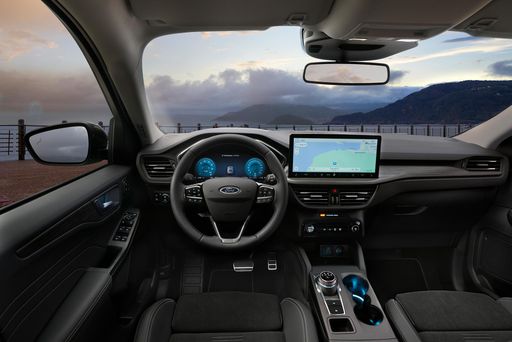
Both the Fiat Tipo Station Wagon and Ford Kuga come equipped with a host of modern features. The Tipo integrates user-friendly infotainment systems paired with robust safety mechanisms to ensure a secure driving experience.

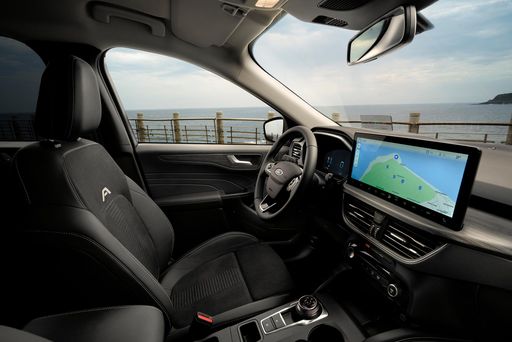
The Kuga, characterized by its advanced hybrid technologies, also impresses with state-of-the-art driving aids and connectivity solutions. These innovations provide enhanced driving comfort and operational efficiency, ensuring that technology enthusiasts remain satisfied.

Kuga

Conclusion: Which One to Choose?

In conclusion, the choice between the Fiat Tipo Station Wagon and Ford Kuga depends largely on your priorities. For those in search of a reliable, fuel-efficient, and spacious wagon for daily city and countryside treks, the Tipo stands out as a dependable choice. Meanwhile, the Kuga's advanced hybrid options, technological advancements, and flexibility make it ideal for those seeking an eco-conscious yet powerful SUV for various terrains and long journeys.

Ultimately, both vehicles present compelling arguments based on individual needs, lifestyle, and driving aspirations, promising satisfaction whether you lean towards the practicality of a wagon or the versatility of an SUV.

Here’s where it gets real: The technical differences in detail

Tipo Wagon

Costs and Efficiency:

Looking at overall running costs, both models reveal some interesting differences in everyday economy.

Fiat Tipo Wagon is significantly cheaper – starting at 21,000 £ , while the Ford Kuga costs 34,200 £ . That’s a price difference of around 13,251 £.

Fuel consumption also shows a difference: the Ford Kuga uses 2.8 L/100km and is considerably more efficient than the Fiat Tipo Wagon with 4.7 L/100km. The difference is about 1.9 L/100km.

Kuga

Engine and Performance:

Power, torque and acceleration say a lot about how a car feels on the road. This is where you see which model delivers more driving dynamics.

When it comes to engine power, the Ford Kuga offers significantly more power – delivering 243 HP compared to 130 HP. That’s roughly 113 HP more horsepower.

When accelerating from 0 to 100 km/h, the Ford Kuga is markedly quicker – completing the sprint in 7.3 s, while the Fiat Tipo Wagon takes 9.1 s. That’s about 1.8 s quicker.

There’s also a difference in torque: the Fiat Tipo Wagon delivers clearly more torque with 320 Nm compared to 240 Nm. That’s about 80 Nm more.

Tipo Wagon

Space and Everyday Use:

Beyond pure performance, interior space and usability matter most in daily life. This is where you see which car is more practical and versatile.

Both vehicles offer seating for 5 people.

In terms of curb weight, Fiat Tipo Wagon is marginally lighter – 1,455 kg compared to 1,526 kg. The difference is around 71 kg.

When it comes to payload, the Ford Kuga carries a bit more – 550 kg compared to 475 kg. That’s a difference of about 75 kg.

Who wins the race in the data check?

The Ford Kuga holds a decisive overall lead in the objective data comparison.
This result only shows which model scores more points on paper – not which of the two cars feels right for you.

from £34,200
Kuga

Ford Kuga

  • Engine Type : Petrol, Full Hybrid, Plugin Hybrid
  • Transmission : Manuel, Automatic
  • Drive Type : Front-Wheel Drive, All-Wheel Drive
  • Power HP : 150 - 243 HP
  • Consumption L/100km : 2.8 - 6.8 L/100km
  • Electric Range : 68 km
Fiat Tipo Wagon
Ford Kuga

Costs and Consumption

View detailed analysis

Engine and Performance

View detailed analysis

Dimensions and Body

View detailed analysis

Fiat Tipo Wagon

The Fiat Tipo Estate is a no-nonsense family wagon that focuses on practicality and value, with surprisingly generous load space and comfortable seats for long trips. It won't win style awards, but its sensible kit, simple controls and low running costs make it a smart, unfussy choice for buyers who want function over flash.

details

Ford Kuga

The Kuga is Ford’s adaptable family SUV that blends usable space with a surprisingly lively driving character, making daily commutes and weekend escapes equally enjoyable. With smart interior packaging, an easy-to-use infotainment setup and composed road manners, it’s a sensible choice for buyers who want a bit of fun without the fuss.

details
Fiat Tipo Wagon
Ford Kuga

Costs and Consumption

Price
21,000 - 27,000 £
Price
34,200 - 46,300 £
Consumption L/100km
4.7 - 5.4 L/100km
Consumption L/100km
2.8 - 6.8 L/100km
Consumption kWh/100km
-
Consumption kWh/100km
-
Electric Range
-
Electric Range
68 km
Battery Capacity
-
Battery Capacity
-
co2
122 - 125 g/km
co2
55 - 154 g/km
Fuel tank capacity
50 L
Fuel tank capacity
-

Dimensions and Body

Body Type
Estate
Body Type
SUV
Seats
5
Seats
5
Doors
5
Doors
-
Curb weight
1,455 - 1,470 kg
Curb weight
1,526 - 1,859 kg
Trunk capacity
550 L
Trunk capacity
-
Length
4,571 mm
Length
-
Width
1,792 mm
Width
1,882 mm
Height
1,514 mm
Height
-
Max trunk capacity
-
Max trunk capacity
-
Payload
475 kg
Payload
541 - 550 kg

Engine and Performance

Engine Type
Petrol MHEV, Diesel
Engine Type
Petrol, Full Hybrid, Plugin Hybrid
Transmission
Automatic, Manuel
Transmission
Manuel, Automatic
Transmission Detail
Dual-Clutch Automatic, Manual Gearbox
Transmission Detail
Manual Gearbox, CVT, Automatic Gearbox
Drive Type
Front-Wheel Drive
Drive Type
Front-Wheel Drive, All-Wheel Drive
Power HP
130 HP
Power HP
150 - 243 HP
Acceleration 0-100km/h
9.1 - 10.1 s
Acceleration 0-100km/h
7.3 - 9.9 s
Max Speed
206 - 207 km/h
Max Speed
-
Torque
240 - 320 Nm
Torque
240 Nm
Number of Cylinders
4
Number of Cylinders
3 - 4
Power kW
96 kW
Power kW
111 - 178 kW
Engine capacity
1,469 - 1,598 cm3
Engine capacity
1,496 - 2,488 cm3

General

Model Year
2024
Model Year
2025
CO2 Efficiency Class
D
CO2 Efficiency Class
E, D, B
Brand
Fiat
Brand
Ford
DriveDuel uses data analysis and artificial intelligence to evaluate vehicle data and create content. Content is regularly reviewed and improved. The displayed prices are estimates based on German list prices, adjusted to the respective country’s VAT. Country-specific registration taxes are not included. This information is not legally binding.