VS

Ford Capri vs BYD Sealion 7 comparison

Compare performance (340 HP vs 530 HP), boot space and price (36,300 £ vs 42,800 £ ) at a glance. Find out which car is the better choice for you – Ford Capri or BYD Sealion 7?

Ford Capri vs BYD Sealion 7: Key differences

Ford Capri

5 (3 Reviews)
rate
  • moderately cheaper
  • considerably more efficient
  • moderately more electric range
  • a bit lighter
  • only slightly more trunk space

BYD Sealion 7

5 (2 Reviews)
rate
  • noticeably more power
  • a bit quicker 0–100 km/h

All details on performance, efficiency, range and trunk space can be found in the technical comparison below – including user reviews for both models.

By Achim Sedelmaier

Capri

Electrifying Rivals: Ford Capri vs BYD Sealion 7

The automotive market is witnessing a surge in electric SUVs, blending innovation with sustainability. Today, we dive into a detailed comparison between two noteworthy contenders: the Ford Capri and the BYD Sealion 7. Both offer exciting features catering to modern drivers' needs, but they do so in distinct manners. Let's explore how these electrifying vehicles stack up against each other in terms of performance, efficiency, and cutting-edge technology.

Sealion 7

Performance and Power Output

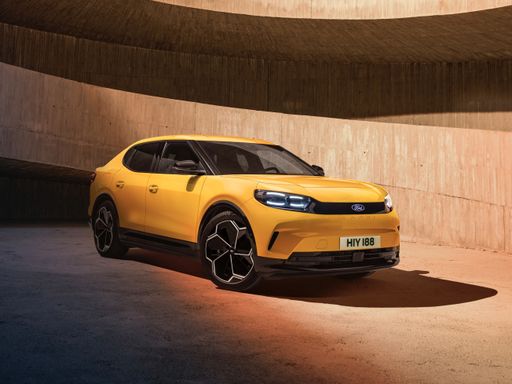
Power and performance have always been pivotal in differentiating car models, and the electric SUV segment is no exception. The Ford Capri comes with a choice between two powertrains offering different horsepower outputs, ranging from 286 to 340 HP. It's paired with an impressive torque of up to 679 Nm, ensuring a robust driving experience. Acceleration from 0 to 100 km/h can be achieved in as swift as 5.3 seconds, with a top speed of 180 km/h.

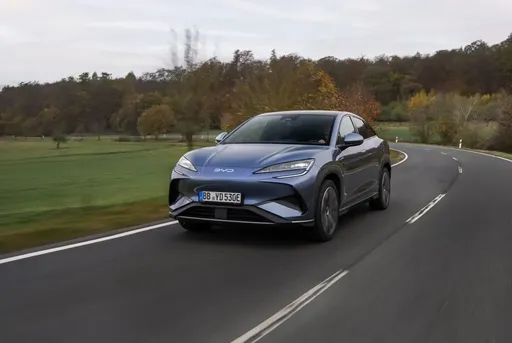
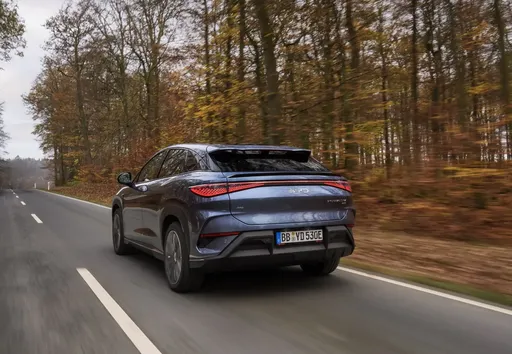
Meanwhile, the BYD Sealion 7 offers more potent options with power figures ranging up to 530 HP and a peak torque of 690 Nm. The acceleration prowess of the Sealion 7 is remarkable, reaching 0 to 100 km/h in just 4.5 seconds, and it hits a higher top speed of 215 km/h, reflecting its sporty aspirations.

Capri

Efficiency and Range

When it comes to efficiency and electric range, the Ford Capri holds a slight edge. With an impressive range reaching up to 627 km on a full charge, it efficiently meets long-distance travel needs while consuming as low as 13.3 kWh/100 km.

The BYD Sealion 7, while delivering considerable power, sacrifices some efficiency with an electric range of up to 502 km and consumption starting at 19.9 kWh/100 km. Despite its higher consumption, these figures are commendable for its performance class.

Sealion 7

Interior and Comfort

Both models cater to comfort with spacious interiors and innovative features. The Ford Capri seats five passengers comfortably, providing 572 liters of trunk space, ideal for family trips. Its curb weight ranges from 2098 to 2174 kg, offering a balanced ride.

The BYD Sealion 7 also accommodates five passengers, though slightly less spacious in storage with 520 liters of trunk capacity. It has a heavier build, with curb weights ranging from 2225 to 2435 kg, which may contribute to its stability on the road.

Design and Dimensions

Design is at the heart of the buyer's decision-making process. The Ford Capri has dimensions of 4634 mm in length, 1872 mm in width, and 1626 mm in height, delivering a sleek and modern aesthetic combined with practicality.

The BYD Sealion 7 is more extended and broader, measuring 4830 mm in length, 1925 mm in width, and 1620 mm in height, which adds to its commanding road presence.

Conclusion: Choice of Preferences

In choosing between the Ford Capri and the BYD Sealion 7, potential buyers are spoiled for choice based on their preferences. The Ford Capri is ideal for those prioritizing efficiency and range, while the BYD Sealion 7 will appeal to drivers seeking pure performance and higher speed capabilities.

Both SUVs embody the future of sustainable driving, offering a blend of technology, design, and innovation. The final decision rests in what drivers value more — efficiency or performance ? — as both vehicles promise an exhilarating electric journey.

Here’s where it gets real: The technical differences in detail

Capri

Costs and Efficiency:

When it comes to price and running costs, the biggest differences usually appear. This is often where you see which car fits your budget better in the long run.

Ford Capri is moderately cheaper – starting at 36,300 £ , while the BYD Sealion 7 costs 42,800 £ . That’s a price difference of around 6,506 £.

In terms of energy consumption, the Ford Capri is considerably more efficient: consuming 13.8 kWh/100km compared to 19.9 kWh/100km for the BYD Sealion 7. That’s a difference of about 6.1 kWh/100km.

As for electric range, the Ford Capri offers moderately more range – reaching up to 627 km, about 125 km more than the BYD Sealion 7.

Sealion 7

Engine and Performance:

Power, torque and acceleration say a lot about how a car feels on the road. This is where you see which model delivers more driving dynamics.

When it comes to engine power, the BYD Sealion 7 offers noticeably more power – delivering 530 HP compared to 340 HP. That’s roughly 190 HP more horsepower.

When accelerating from 0 to 100 km/h, the BYD Sealion 7 is a bit quicker – completing the sprint in 4.5 s, while the Ford Capri takes 5.3 s. That’s about 0.8 s quicker.

There’s also a difference in torque: the BYD Sealion 7 delivers very slightly more torque with 690 Nm compared to 679 Nm. That’s about 11 Nm more.

Capri

Space and Everyday Use:

Beyond pure performance, interior space and usability matter most in daily life. This is where you see which car is more practical and versatile.

Both vehicles offer seating for 5 people.

In terms of curb weight, Ford Capri is a bit lighter – 2,001 kg compared to 2,225 kg. The difference is around 224 kg.

Looking at boot space, the Ford Capri offers only slightly more boot space – 572 L compared to 520 L. That’s a difference of about 52 L.

When it comes to payload, the Ford Capri carries noticeably more – 587 kg compared to 410 kg. That’s a difference of about 177 kg.

Who wins the race in the data check?

The Ford Capri is clearly ahead overall in the objective data comparison.
This result only shows which model scores more points on paper – not which of the two cars feels right for you.

from £36,300
Capri

Ford Capri

  • Engine Type : Electric
  • Transmission : Automatic
  • Drive Type : Rear-Wheel Drive, All-Wheel Drive
  • Power HP : 190 - 340 HP
  • Consumption kWh/100km : 13.8 - 16.5 kWh/100km
  • Electric Range : 439 - 627 km
Ford Capri
BYD Sealion 7

Costs and Consumption

View detailed analysis

Engine and Performance

View detailed analysis

Dimensions and Body

View detailed analysis

Ford Capri

The Ford Capri turned the family car into something cheekily sporty, with a long, rakish profile that still promises fun at a glance. Today it lives on as a lovable classic — easy to tinker with, enjoyable to drive and guaranteed to raise smiles at any meet.

details

BYD Sealion 7

The Sealion 7 captivates with its striking design and impressive performance that appeals to both enthusiasts and casual drivers alike. With a focus on comfort and advanced technology, this model redefines the driving experience, making every journey enjoyable. Its sleek silhouette coupled with an innovative interior showcases the perfect blend of style and functionality.

details
Ford Capri
BYD Sealion 7

Costs and Consumption

Price
36,300 - 50,900 £
Price
42,800 - 52,300 £
Consumption L/100km
-
Consumption L/100km
-
Consumption kWh/100km
13.8 - 16.5 kWh/100km
Consumption kWh/100km
19.9 - 21.9 kWh/100km
Electric Range
439 - 627 km
Electric Range
456 - 502 km
Battery Capacity
-
Battery Capacity
-
co2
0 g/km
co2
0 g/km
Fuel tank capacity
-
Fuel tank capacity
-

Dimensions and Body

Body Type
SUV
Body Type
SUV
Seats
5
Seats
5
Doors
-
Doors
-
Curb weight
2,001 - 2,175 kg
Curb weight
2,225 - 2,435 kg
Trunk capacity
572 L
Trunk capacity
520 L
Length
-
Length
-
Width
1,872 mm
Width
1,925 mm
Height
-
Height
-
Max trunk capacity
-
Max trunk capacity
-
Payload
559 - 587 kg
Payload
410 kg

Engine and Performance

Engine Type
Electric
Engine Type
Electric
Transmission
Automatic
Transmission
Automatic
Transmission Detail
Reduction Gearbox
Transmission Detail
Reduction Gearbox
Drive Type
Rear-Wheel Drive, All-Wheel Drive
Drive Type
Rear-Wheel Drive, All-Wheel Drive
Power HP
190 - 340 HP
Power HP
313 - 530 HP
Acceleration 0-100km/h
5.3 - 8 s
Acceleration 0-100km/h
4.5 - 6.7 s
Max Speed
-
Max Speed
-
Torque
350 - 679 Nm
Torque
380 - 690 Nm
Number of Cylinders
-
Number of Cylinders
-
Power kW
140 - 250 kW
Power kW
230 - 390 kW
Engine capacity
-
Engine capacity
-

General

Model Year
2,026
Model Year
2,024
CO2 Efficiency Class
A
CO2 Efficiency Class
A
Brand
Ford
Brand
BYD
DriveDuel uses data analysis and artificial intelligence to evaluate vehicle data and create content. Content is regularly reviewed and improved. The displayed prices are estimates based on German list prices, adjusted to the respective country’s VAT. Country-specific registration taxes are not included. This information is not legally binding.