VS

Ford Capri vs Toyota bZ4X comparison

Compare performance (340 HP vs 380 HP), boot space and price (36300 £ vs 36800 £ ) at a glance. Find out which car is the better choice for you – Ford Capri or Toyota bZ4X?

Ford Capri vs Toyota bZ4X: Key differences

Ford Capri

5 (2 Reviews)
rate
  • barely noticeable cheaper
  • hardly perceptible more electric range
  • distinct more trunk space

Toyota bZ4X

4.7 (4 Reviews)
rate
  • slightly more power
  • slight more efficient
  • noticeable quicker from 0–100 km/h
  • hardly perceptible lighter

All details on performance, efficiency, range and trunk space can be found in the technical comparison below – including user reviews for both models.

Here’s where it gets real: The technical differences in detail

Capri

Costs and Efficiency:

When it comes to price and running costs, the biggest differences usually appear. This is often where you see which car fits your budget better in the long run.

Ford Capri has a barely noticeable advantage in terms of price – it starts at 36300 £ , while the Toyota bZ4X costs 36800 £ . That’s a price difference of around 506 £.

In terms of energy consumption, the advantage goes to the Toyota bZ4X: with 13.50 kWh per 100 km, it’s slight more efficient than the Ford Capri with 13.80 kWh. That’s a difference of about 0.30 kWh.

As for electric range, the Ford Capri performs hardly perceptible better – achieving up to 627 km, about 36 km more than the Toyota bZ4X.

bZ4X

Engine and Performance:

Power, torque and acceleration are the classic benchmarks for car enthusiasts – and here, some clear differences start to show.

When it comes to engine power, the Toyota bZ4X has a slightly edge – offering 380 HP compared to 340 HP. That’s roughly 40 HP more horsepower.

In acceleration from 0 to 100 km/h, the Toyota bZ4X is noticeable quicker – completing the sprint in 4.40 s, while the Ford Capri takes 5.30 s. That’s about 0.90 s faster.

There’s also a difference in torque: Ford Capri pulls convincingly stronger with 679 Nm compared to 338 Nm. That’s about 341 Nm difference.

Capri

Space and Everyday Use:

Cabin size, boot volume and payload all play a role in everyday practicality. Here, comfort and flexibility make the difference.

Both vehicles offer seating for 5 people.

In curb weight, Toyota bZ4X is hardly perceptible lighter – 1900 kg compared to 2001 kg. The difference is around 101 kg.

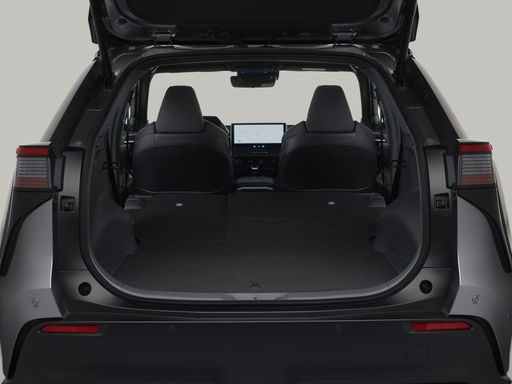
In terms of boot space, the Ford Capri offers distinct more room – 572 L compared to 452 L. That’s a difference of about 120 L.

When it comes to payload, Ford Capri minimal takes the win – 587 kg compared to 565 kg. That’s a difference of about 22 kg.

Who wins the race in the data check?

The Ford Capri holds a narrow overall lead in the objective data comparison.
This result only shows which model scores more points on paper – not which of the two cars feels right for you.

Ford Capri
Toyota bZ4X

Costs and Consumption

View detailed analysis

Engine and Performance

View detailed analysis

Dimensions and Body

View detailed analysis
from about £36,300
Capri

Ford Capri

  • Engine Type : Electric
  • Transmission : Automatic
  • Drive Type : Rear-Wheel Drive, All-Wheel Drive
  • Power HP : 190 - 340 HP
  • Consumption kWh/100km : 13.8 - 16.5 kWh
  • Electric Range : 439 - 627 km

Ford Capri

5 (2 Reviews)
rate

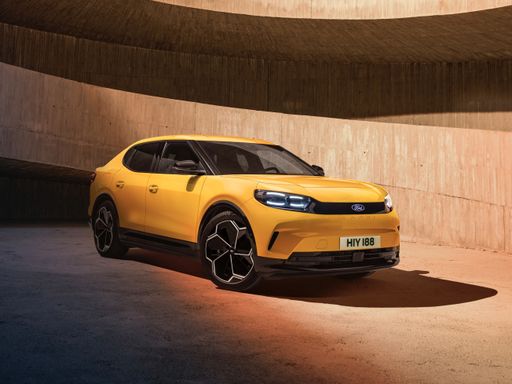
The Ford Capri turned the family car into something cheekily sporty, with a long, rakish profile that still promises fun at a glance. Today it lives on as a lovable classic — easy to tinker with, enjoyable to drive and guaranteed to raise smiles at any meet.

details

Toyota bZ4X

4.7 (4 Reviews)
rate

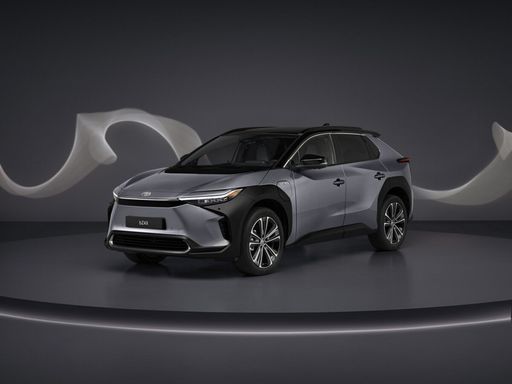
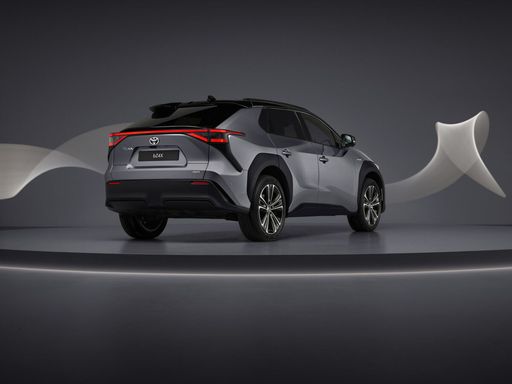
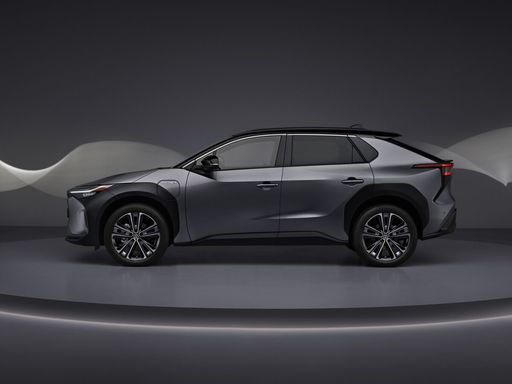
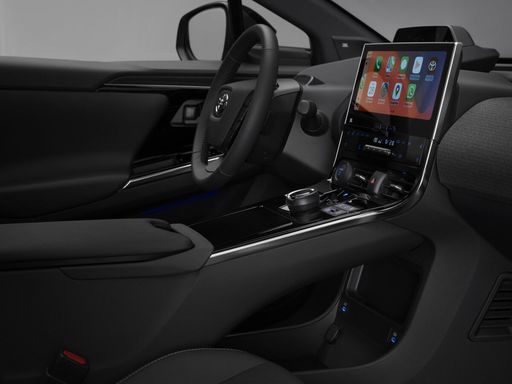
The Toyota bZ4X is a fresh, roomy electric crossover that pairs Toyota’s trademark reliability with bold, angular styling and a cabin designed for everyday comfort. It may not chase headlines like some flashier rivals, but for buyers who want sensible electric motoring with practical packaging and a relaxed, confident ride, it’s an easy, pleasant choice.

details
Ford Capri
Toyota bZ4X

Costs and Consumption

Price
36300 - 50900 £
Price
36800 - 51000 £
Consumption L/100km
-
Consumption L/100km
-
Consumption kWh/100km
13.8 - 16.5 kWh
Consumption kWh/100km
13.5 - 16.6 kWh
Electric Range
439 - 627 km
Electric Range
444 - 591 km
Battery Capacity
-
Battery Capacity
-
co2
0 g/km
co2
0 g/km
Fuel tank capacity
-
Fuel tank capacity
-

Dimensions and Body

Body Type
SUV
Body Type
SUV
Seats
5
Seats
5
Doors
-
Doors
-
Curb weight
2001 - 2175 kg
Curb weight
1900 - 2180 kg
Trunk capacity
572 L
Trunk capacity
452 L
Length
-
Length
-
Width
1872 mm
Width
1860 mm
Height
-
Height
-
Max trunk capacity
-
Max trunk capacity
-
Payload
559 - 587 kg
Payload
375 - 565 kg

Engine and Performance

Engine Type
Electric
Engine Type
Electric
Transmission
Automatic
Transmission
Automatic
Transmission Detail
Reduction Gearbox
Transmission Detail
Reduction Gearbox
Drive Type
Rear-Wheel Drive, All-Wheel Drive
Drive Type
Front-Wheel Drive, All-Wheel Drive
Power HP
190 - 340 HP
Power HP
167 - 380 HP
Acceleration 0-100km/h
5.3 - 8 s
Acceleration 0-100km/h
4.4 - 8.6 s
Max Speed
-
Max Speed
-
Torque
350 - 679 Nm
Torque
268 - 338 Nm
Number of Cylinders
-
Number of Cylinders
-
Power kW
140 - 250 kW
Power kW
123 - 280 kW
Engine capacity
-
Engine capacity
-

General

Model Year
2026
Model Year
2025 - 2026
CO2 Efficiency Class
A
CO2 Efficiency Class
A
Brand
Ford
Brand
Toyota
Is the Ford Capri offered with different drivetrains?

The Ford Capri is offered with Rear-Wheel Drive or All-Wheel Drive.

The prices shown are estimates based on German list prices, adjusted for local VAT. Local registration taxes (e.g. NoVA, BPM or CO2 malus) are not included. This information is not legally binding.