@ Ford Motor Company / Ford Media Center
@ Volkswagen AG / VW Media
VS

Ford Explorer EV vs VW Tayron – Which car suits you better?

Both models have their strengths – but which one suits you more?
Compare performance, efficiency, price and space directly: Ford Explorer EV or VW Tayron?

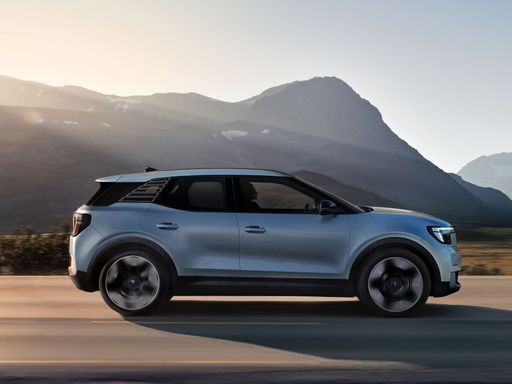
Explorer EV @ Ford Motor Company / Ford Media Center

Ford Explorer EV vs. VW Tayron: A Clash of Electric and Hybrid Technology

As the automotive industry continues its shift toward electrification, the competition between electric vehicles (EV) and hybrid options has intensified. Two noteworthy contenders in the SUV market are the Ford Explorer EV and the VW Tayron. Each vehicle possesses unique features and advantages, making them appealing for different types of drivers. This comparison delves into the technical aspects, performance, and innovations that set these models apart in the rapidly evolving automotive landscape.
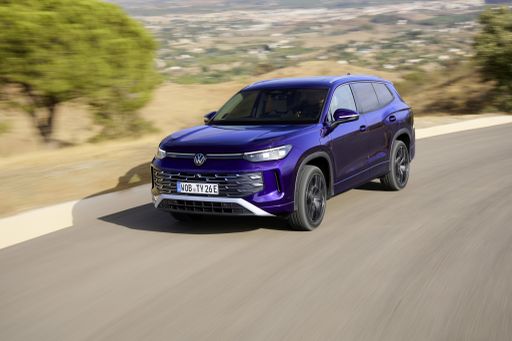
Tayron @ Volkswagen AG / VW Media

Powertrain and Performance

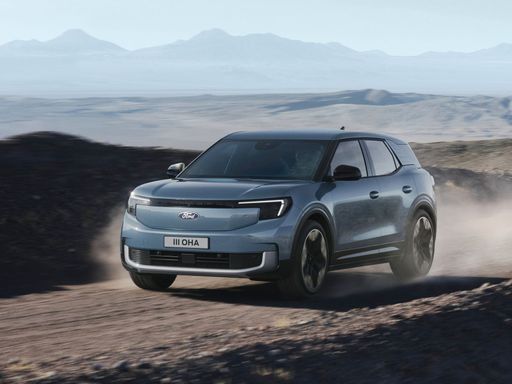
The Ford Explorer EV is powered entirely by electricity, offering both rear-wheel and all-wheel drive configurations. With power options ranging from 170 HP to 340 HP, consumers can select a model that suits their performance preferences. The EV boasts impressive torque figures, with up to 679 Nm, ensuring swift acceleration. The Explorer EV accelerates from 0 to 100 km/h in as little as 5.3 seconds and can reach a top speed of 180 km/h.

On the other hand, the VW Tayron presents a diverse array of powertrains, including petrol MHEV, plug-in hybrid, and diesel options. The Tayron's power ranges from 150 HP to 272 HP, providing ample choices for buyers looking for performance. The hybrid variants offer electric-only ranges of up to 126 km, making them a versatile choice for both eco-conscious drivers and those who prefer traditional petrol engines.

Explorer EV @ Ford Motor Company / Ford Media Center

Electric Range and Efficiency

When it comes to electric range, the Ford Explorer EV outshines the Tayron significantly. Its electric-only range extends up to 602 km, allowing for longer journeys without the anxiety of frequent recharging. With a battery capacity of up to 79 kWh, efficiency is a hallmark of this model, achieving consumption figures between 13.9 and 16.6 kWh/100 km.

The VW Tayron, while not purely electric, integrates hybrid technology effectively. Its electrification allows for short commutes in electric mode, though the overall electric range of 126 km is less impressive compared to the Explorer. The Tayron's fuel consumption ranges from 5.4 to 7.8 L/100 km, depending on the engine variant chosen, indicating respectable efficiency for a hybrid SUV.

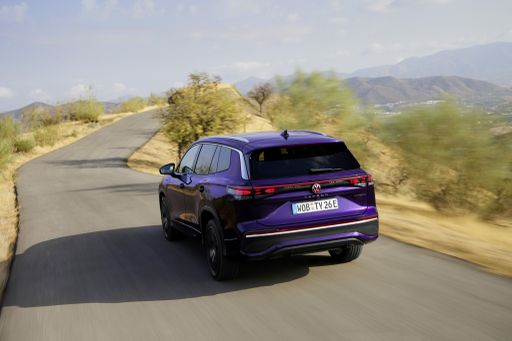
Tayron @ Volkswagen AG / VW Media

Interior and Cargo Space

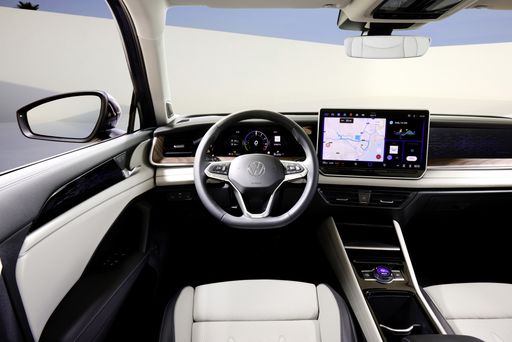
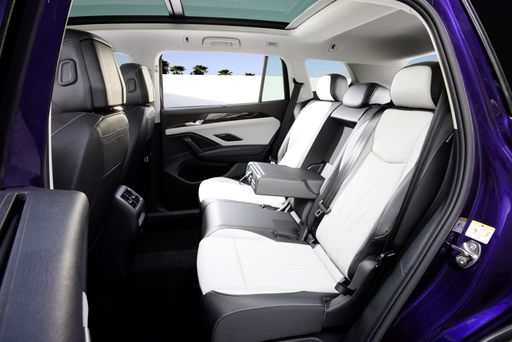
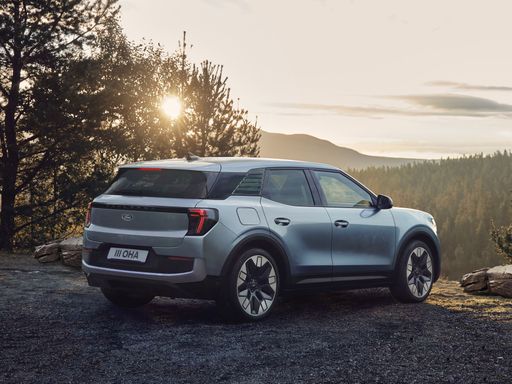
Both models accommodate five passengers comfortably, but their interior designs cater to different needs. The Ford Explorer EV offers a modern touch with a focus on digital interfaces and tech features. Its trunk capacity of 450 liters provides ample room for everyday essentials.

In contrast, the VW Tayron excels in cargo space, boasting up to 885 liters. The Tayron also presents a well-crafted interior with high-quality materials, suitable for families or drivers requiring extra storage for their adventures. The additional space makes the Tayron an appealing option for those prioritizing practicality.

Explorer EV @ Ford Motor Company / Ford Media Center

Innovative Features and Technology

The Ford Explorer EV incorporates cutting-edge technology, such as advanced driver-assistance systems and a state-of-the-art infotainment setup. Its hybrid and electric configurations include features that enhance safety and ease of use, establishing the Explorer as a technology leader in the EV space.

The VW Tayron also emphasizes innovation with its driver-assistance capabilities and excellent connectivity features. Integrating various hybrid technologies, the Tayron showcases VW's commitment to sustainable mobility while maintaining its traditional strengths in performance and reliability.

Tayron @ Volkswagen AG / VW Media

Conclusion: Choosing the Right Fit

Deciding between the Ford Explorer EV and the VW Tayron ultimately comes down to the individual driver's priorities. The Explorer EV represents a robust entry into the electric SUV market, boasting impressive range, performance, and technological integration. Meanwhile, the VW Tayron stands out with its diverse powertrain options and superior cargo capacity, appealing to those who appreciate hybrid versatility.

As both models continue to shape the landscape of the SUV segment, the choice will depend on your specific needs, whether that's a fully electric experience with the Explorer or a hybrid solution with the Tayron. Regardless of your choice, both vehicles embody the future of automotive technology and aim to meet the diverse demands of modern drivers.

Here’s where it gets real: The technical differences in detail

Costs and Efficiency:

Price and efficiency are often the first things buyers look at. Here it becomes clear which model has the long-term edge – whether at the pump, the plug, or in purchase price.

Ford Explorer EV has a slightly advantage in terms of price – it starts at 34200 £, while the VW Tayron costs 39600 £. That’s a price difference of around 5412 £.

As for range, the Ford Explorer EV performs decisively better – achieving up to 602 km, about 479 km more than the VW Tayron.

Engine and Performance:

Power, torque and acceleration say a lot about how a car feels on the road. This is where you see which model delivers more driving dynamics.

When it comes to engine power, the Ford Explorer EV has a a bit edge – offering 340 HP compared to 272 HP. That’s roughly 68 HP more horsepower.

In acceleration from 0 to 100 km/h, the Ford Explorer EV is to a small extent quicker – completing the sprint in 5.30 s, while the VW Tayron takes 6.10 s. That’s about 0.80 s faster.

In terms of top speed, the VW Tayron performs noticeable better – reaching 240 km/h, while the Ford Explorer EV tops out at 180 km/h. The difference is around 60 km/h.

There’s also a difference in torque: Ford Explorer EV pulls clearly stronger with 679 Nm compared to 400 Nm. That’s about 279 Nm difference.

Space and Everyday Use:

Whether family car or daily driver – which one offers more room, flexibility and comfort?

Both vehicles offer seating for 5 people.

In curb weight, VW Tayron is to a small extent lighter – 1682 kg compared to 1908 kg. The difference is around 226 kg.

In terms of boot space, the VW Tayron offers decisively more room – 885 L compared to 450 L. That’s a difference of about 435 L.

In maximum load capacity, the VW Tayron performs clearly perceptible better – up to 2090 L, which is about 668 L more than the Ford Explorer EV.

When it comes to payload, Ford Explorer EV barely noticeable takes the win – 585 kg compared to 566 kg. That’s a difference of about 19 kg.

Who comes out on top?

Overall, the Ford Explorer EV shows itself to be is largely superior and secures the title of DriveDuel Champion.
It convinces with the more balanced overall package and proves to be the more versatile choice for everyday use.

from about £34,200
Explorer EV @ Ford Motor Company / Ford Media Center

Ford Explorer EV

  • Engine Type : Electric
  • Transmission : Automatic
  • Drive Type : Rear-Wheel Drive, All-Wheel Drive
  • Power HP : 170 - 340 HP
  • Consumption kWh/100km : 14.5 - 17.2 kWh
  • Electric Range : 360 - 602 km

Ford Explorer EV

5 (2)
rate

The Ford Explorer EV translates the familiar big‑American SUV presence into whisper‑quiet electric motoring, offering roomy seating and a tech‑forward cabin that will please families and road‑trippers alike. It drives with more composure than its boxy looks suggest, blending a comfortable ride and eager acceleration while undercutting the guilt of gas stops — a practical, modern alternative for buyers who want Explorer space with electric charm.

details

VW Tayron

The VW Tayron is Volkswagen's roomy, no-nonsense SUV that pairs clean, familiar styling with a practical cabin built for families and everyday use. It rides comfortably, packs sensible tech and creature comforts, and feels like the sensible sweater of SUVs for buyers who prefer steady value over headline-grabbing drama.

details
Ford Explorer EV
VW Tayron
Explorer EV @ Ford Motor Company / Ford Media Center
Tayron @ Volkswagen AG / VW Media

Costs and Consumption

Price
34200 - 48800 £
Price
39600 - 53300 £
Consumption L/100km
-
Consumption L/100km
1.5 - 8.5 L
Consumption kWh/100km
14.5 - 17.2 kWh
Consumption kWh/100km
-
Electric Range
360 - 602 km
Electric Range
116 - 123 km
Battery Capacity
52 - 79 kWh
Battery Capacity
19.70 kWh
co2
0 g/km
co2
33 - 192 g/km
Fuel tank capacity
-
Fuel tank capacity
45 - 58 L

Dimensions and Body

Body Type
SUV
Body Type
SUV
Seats
5
Seats
5
Doors
5
Doors
5
Curb weight
1908 - 2179 kg
Curb weight
1682 - 1948 kg
Trunk capacity
445 - 450 L
Trunk capacity
705 - 885 L
Length
4468 mm
Length
4792 mm
Width
1871 mm
Width
1853 - 1866 mm
Height
1630 - 1639 mm
Height
1666 - 1668 mm
Max trunk capacity
1417 - 1422 L
Max trunk capacity
1915 - 2090 L
Payload
561 - 585 kg
Payload
489 - 566 kg

Engine and Performance

Engine Type
Electric
Engine Type
Petrol MHEV, Diesel, Petrol, Plugin Hybrid
Transmission
Automatic
Transmission
Automatic
Transmission Detail
Reduction Gearbox
Transmission Detail
Dual-Clutch Automatic
Drive Type
Rear-Wheel Drive, All-Wheel Drive
Drive Type
Front-Wheel Drive, All-Wheel Drive
Power HP
170 - 340 HP
Power HP
150 - 272 HP
Acceleration 0-100km/h
5.3 - 8.7 s
Acceleration 0-100km/h
6.1 - 9.7 s
Max Speed
160 - 180 km/h
Max Speed
204 - 240 km/h
Torque
310 - 679 Nm
Torque
250 - 400 Nm
Number of Cylinders
-
Number of Cylinders
4
Power kW
125 - 250 kW
Power kW
110 - 200 kW
Engine capacity
-
Engine capacity
1498 - 1984 cm3

General

Model Year
2024 - 2025
Model Year
2025
CO2 Efficiency Class
A
CO2 Efficiency Class
E, F, G, B
Brand
Ford
Brand
VW
What drive types are available for the Ford Explorer EV?

The Ford Explorer EV is available as Rear-Wheel Drive or All-Wheel Drive.

The prices and data displayed are estimates based on German list prices and may vary by country. This information is not legally binding.