@ Ford Motor Company / Ford Media Center
@ Opel / Stellantis Media
VS

Ford Focus vs Vauxhall Grandland – Which car suits you better?

Both models have their strengths – but which one suits you more?
Compare performance, efficiency, price and space directly: Ford Focus or Vauxhall Grandland?

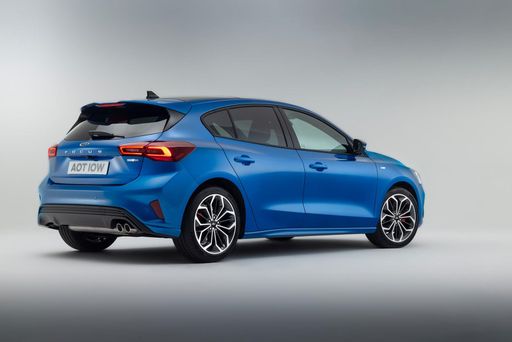
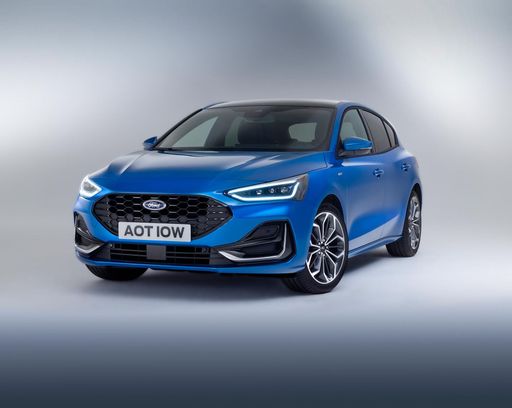
Focus @ Ford Motor Company / Ford Media Center

A Clash of Styles: The Ford Focus vs. Vauxhall Grandland

In the realm of popular European automobiles, the Ford Focus and Vauxhall Grandland stand out as two leading contenders. The Ford Focus, renowned for its dynamic performance and compact design, goes head-to-head with the Vauxhall Grandland, an SUV that combines efficiency with spaciousness. Join us as we dive into a comprehensive comparison of these models, evaluating their technical prowess and innovations.
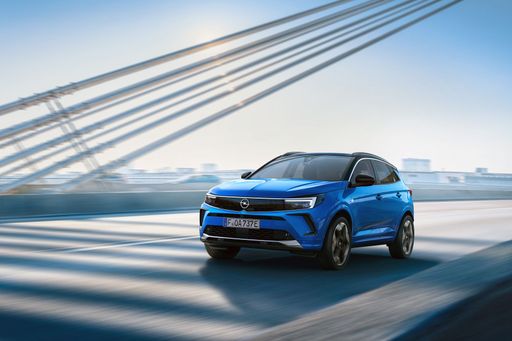
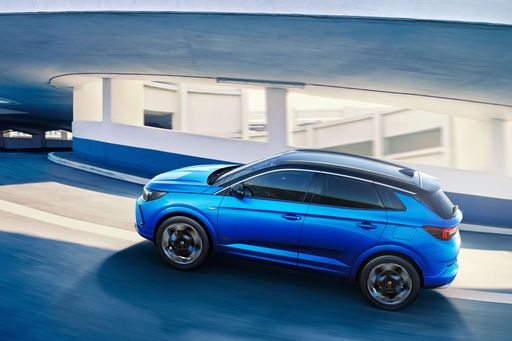
Grandland @ Opel / Stellantis Media

Body Type and Design

The Ford Focus is classified as a hatchback, appealing to those who favor a nimble and urban-friendly vehicle. It boasts a length that varies slightly among model years, hovering around 4,392 mm, with a width and height of 1,825 mm and 1,440 mm respectively. The Focus's sleek design is perfectly tailored for city driving and suburban commutes.

In contrast, the Vauxhall Grandland is an SUV, designed with a broader and more commanding presence. Its dimensions further accentuate this with a length of 4,650 mm, a width of 1,934 mm, and a height of 1,665 mm. The Grandland is perfect for those who value extra interior space and a commanding view of the road.

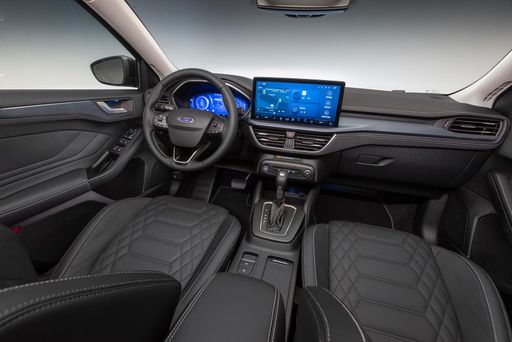
Focus @ Ford Motor Company / Ford Media Center

Engine and Performance

Both vehicles present diverse engine offerings. The Ford Focus offers a range of engines, including petrol MHEV, diesel, and petrol variants with power outputs between 115 and 280 HP. For enthusiasts of speed, the Focus can accelerate from 0 to 100 km/h in as little as 5.7 seconds, epitomizing its nimble and sporty character.

The Vauxhall Grandland, on the other hand, provides petrol MHEV, plugin hybrid, and electric configurations. With power ranging from 136 to 213 HP, the Grandland positions itself as a versatile choice. The plugin hybrid variant achieves an impressive acceleration time of 7.8 seconds for a 0 to 100 km/h dash, solidifying its appeal to the environmentally conscious seeking performance.

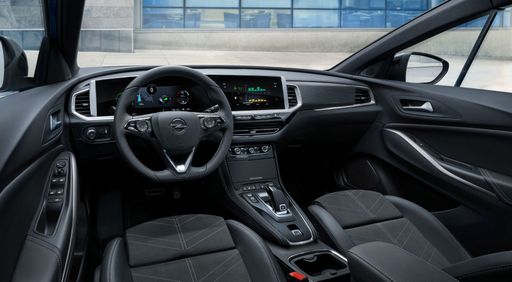
Grandland @ Opel / Stellantis Media

Transmission and Drive Dynamics

The Ford Focus offers a choice between manual and dual-clutch automatic transmissions, matched with front-wheel drive. This setup provides a balanced drive experience, catering to drivers who favor control and economy.

For the Vauxhall Grandland, an automatic transmission comes as standard with a reduction gearbox for its hybrid and electric models. Front-wheel drive further complements its urban and family-oriented design, ensuring ease of driving and practicality.

Focus @ Ford Motor Company / Ford Media Center

Innovations and Efficiency

Innovation and efficiency are at the forefront of both models. The Ford Focus exhibits commendable fuel consumption rates, as low as 4.9 L/100 km, with its hybrid engines marking significant advances in mileage and CO2 emission reductions.

The Grandland impresses with its commitment to sustainability, especially with the plugin hybrid and electric variants. It achieves a consumption of a mere 0.8 L/100 km and boasts an all-electric range of up to 585 km, showcasing Opel's endeavor towards a greener future.

Grandland @ Opel / Stellantis Media

Interior and Practicality

Inside, the Ford Focus offers a trunk capacity of 392 L, and comfortably seats five passengers, making it an ideal choice for smaller families or individuals who prioritize practicality without excessive space.

The Vauxhall Grandland provides a spacious interior, featuring a trunk capacity of 550 L, delivering significant versatility for luggage and gear, attractive to those with a lifestyle that demands adaptability and roominess.

Conclusion

The choice between the Ford Focus and Vauxhall Grandland ultimately comes down to personal needs and preferences. If compact agility and sportiness are paramount, the Ford Focus remains a stellar choice. However, if space, versatility, and eco-friendliness weigh heavily in your consideration, the Vauxhall Grandland delivers a remarkable package. Both models continue to uphold their brand's legacy of quality and innovation, evolving to meet the diverse demands of today's drivers.

Here’s where it gets real: The technical differences in detail

Costs and Efficiency:

Price and efficiency are key factors when choosing a car – and this is often where the real differences emerge.

Ford Focus has a to a small extent advantage in terms of price – it starts at 27500 £, while the Vauxhall Grandland costs 32600 £. That’s a price difference of around 5048 £.

Fuel consumption also shows a difference: Vauxhall Grandland manages with 2.60 L and is therefore clearly more efficient than the Ford Focus with 4.90 L. The difference is about 2.30 L per 100 km.

Engine and Performance:

Power, torque and acceleration say a lot about how a car feels on the road. This is where you see which model delivers more driving dynamics.

When it comes to engine power, the Vauxhall Grandland has a to a small extent edge – offering 325 HP compared to 280 HP. That’s roughly 45 HP more horsepower.

In acceleration from 0 to 100 km/h, the Ford Focus is minimal quicker – completing the sprint in 5.70 s, while the Vauxhall Grandland takes 6.10 s. That’s about 0.40 s faster.

In terms of top speed, the Ford Focus performs somewhat better – reaching 250 km/h, while the Vauxhall Grandland tops out at 220 km/h. The difference is around 30 km/h.

There’s also a difference in torque: Vauxhall Grandland pulls somewhat stronger with 509 Nm compared to 420 Nm. That’s about 89 Nm difference.

Space and Everyday Use:

Whether family car or daily driver – which one offers more room, flexibility and comfort?

Both vehicles offer seating for 5 people.

In curb weight, Ford Focus is noticeable lighter – 1330 kg compared to 1675 kg. The difference is around 345 kg.

In terms of boot space, the Vauxhall Grandland offers noticeable more room – 550 L compared to 392 L. That’s a difference of about 158 L.

In maximum load capacity, the Vauxhall Grandland performs slightly better – up to 1645 L, which is about 291 L more than the Ford Focus.

When it comes to payload, Ford Focus somewhat takes the win – 560 kg compared to 495 kg. That’s a difference of about 65 kg.

Who comes out on top?

Overall, the Vauxhall Grandland shows itself to be outperforms in nearly all aspects and secures the title of DriveDuel Champion.
It convinces with the more balanced overall package and proves to be the more versatile choice for everyday use.

from about £32,600
Grandland @ Opel / Stellantis Media

Vauxhall Grandland

  • Engine Type : Electric, Petrol MHEV, Plugin Hybrid
  • Transmission : Automatic
  • Drive Type : Front-Wheel Drive, All-Wheel Drive
  • Power HP : 145 - 325 HP
  • Consumption L/100km : 2.6 - 5.6 L
  • Consumption kWh/100km : 17.8 - 18.6 kWh
  • Electric Range : 82 - 694 km

Ford Focus

The Ford Focus remains a clever all‑rounder that balances sharp handling with everyday comfort, making it a strong choice whether your commute is city streets or country lanes. Its practical cabin and sensible running costs mean you’ll spend more time enjoying the drive and less time worrying about ownership, with a playful streak underfoot that keeps things interesting.

details

Vauxhall Grandland

5 (1)
rate

The Opel Grandland feels like a sensible, well-rounded SUV — neat styling, a spacious cabin and a composed ride that turns daily driving into a quietly pleasant experience. It’s a smart choice for buyers who want modern tech, good economy and a dash of German practicality without shouting for attention.

details
Ford Focus
Vauxhall Grandland
Focus @ Ford Motor Company / Ford Media Center
Grandland @ Opel / Stellantis Media

Costs and Consumption

Price
27500 - 42700 £
Price
32600 - 51400 £
Consumption L/100km
4.9 - 8 L
Consumption L/100km
2.6 - 5.6 L
Consumption kWh/100km
-
Consumption kWh/100km
17.8 - 18.6 kWh
Electric Range
-
Electric Range
82 - 694 km
Battery Capacity
-
Battery Capacity
-
co2
117 - 183 g/km
co2
0 - 126 g/km
Fuel tank capacity
52 L
Fuel tank capacity
55 L

Dimensions and Body

Body Type
Hatchback
Body Type
SUV
Seats
5
Seats
5
Doors
5
Doors
5
Curb weight
1330 - 1529 kg
Curb weight
1675 - 2325 kg
Trunk capacity
392 L
Trunk capacity
485 - 550 L
Length
4382 - 4397 mm
Length
4650 mm
Width
1825 - 1844 mm
Width
1905 - 1934 mm
Height
1438 - 1482 mm
Height
1665 mm
Max trunk capacity
1354 L
Max trunk capacity
1580 - 1645 L
Payload
495 - 560 kg
Payload
425 - 495 kg

Engine and Performance

Engine Type
Petrol MHEV, Diesel, Petrol
Engine Type
Electric, Petrol MHEV, Plugin Hybrid
Transmission
Manuel, Automatic
Transmission
Automatic
Transmission Detail
Manual Gearbox, Dual-Clutch Automatic, Automatic Gearbox
Transmission Detail
Reduction Gearbox, Dual-Clutch Automatic
Drive Type
Front-Wheel Drive
Drive Type
Front-Wheel Drive, All-Wheel Drive
Power HP
115 - 280 HP
Power HP
145 - 325 HP
Acceleration 0-100km/h
5.7 - 11.8 s
Acceleration 0-100km/h
6.1 - 10.2 s
Max Speed
186 - 250 km/h
Max Speed
170 - 220 km/h
Torque
170 - 420 Nm
Torque
230 - 509 Nm
Number of Cylinders
3 - 4
Number of Cylinders
3 - 4
Power kW
85 - 206 kW
Power kW
107 - 239 kW
Engine capacity
999 - 2261 cm3
Engine capacity
1199 - 1598 cm3

General

Model Year
2022 - 2024
Model Year
2024 - 2025
CO2 Efficiency Class
D, G
CO2 Efficiency Class
A, D, B
Brand
Ford
Brand
Vauxhall
What drive types are available for the Ford Focus?

Available configurations include Front-Wheel Drive.

The prices and data displayed are estimates based on German list prices and may vary by country. This information is not legally binding.