VS

Ford Focus vs Peugeot 508 SW comparison

Compare performance (280 HP vs 360 HP), boot space and price (27,500 £ vs 45,600 £ ) at a glance. Find out which car is the better choice for you – Ford Focus or Peugeot 508 SW?

Ford Focus vs Peugeot 508 SW: Key differences

Ford Focus

4.6 (1 Reviews)
rate
  • considerably cheaper
  • noticeably lighter

Peugeot 508 SW

4.7 (1 Reviews)
rate
  • clearly more power
  • significantly more efficient
  • only slightly quicker 0–100 km/h
  • visibly more trunk space

All details on performance, efficiency, range and trunk space can be found in the technical comparison below – including user reviews for both models.

Focus

Unveiling the Titans: Ford Focus vs. Peugeot 508 SW

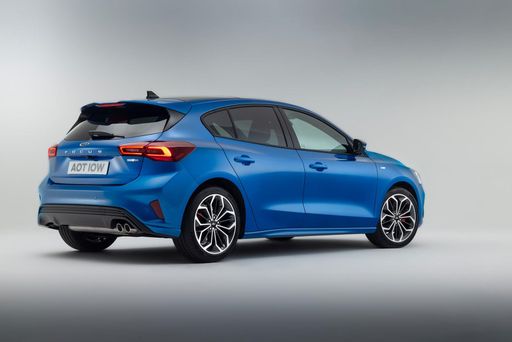
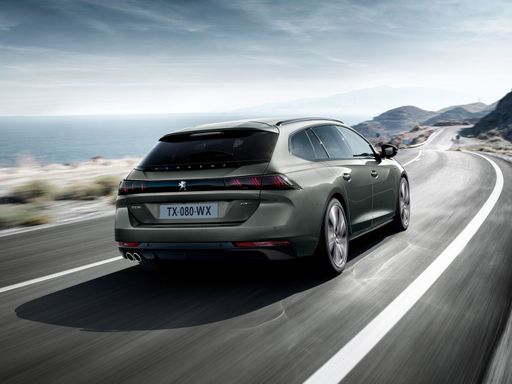
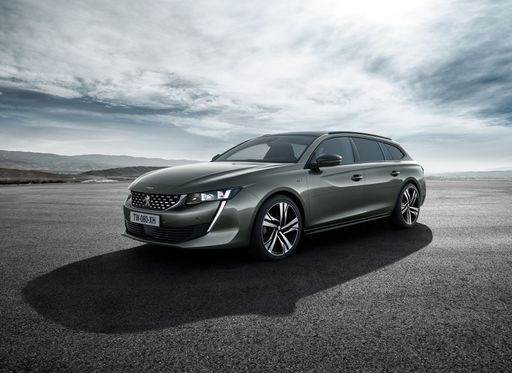
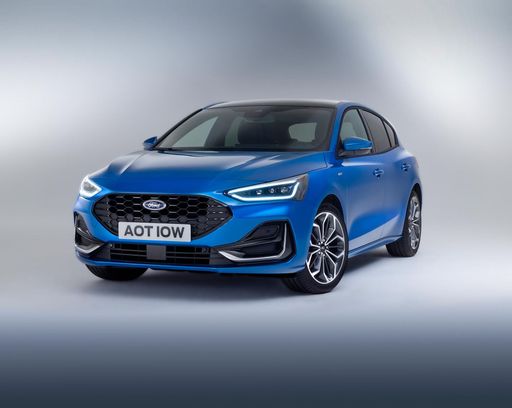
The automotive landscape is ever-evolving, offering enthusiasts a wealth of choices across different segments. Today, we delve into a thrilling comparison between two remarkable contenders in their respective categories: the Ford Focus and the Peugeot 508 SW. While the Focus epitomizes the hatchback spirit that many city dwellers love, the 508 SW stands as a representation of modern wagon styling with a plug-in hybrid powertrain. Let’s see how these two stack up against each other.
508 SW

Technical Marvels: Under the Hood

When it comes to engine variety, the Ford Focus offers an extensive range of powertrains. Petrol Mild Hybrid Electric Vehicles (MHEV), diesel, and petrol variants provide power outputs spanning from 115 HP to an impressive 280 HP. The Focus can satisfy various driver preferences, whether it's daily commuting or seeking exhilarating performance with its 2.3-liter EcoBoost engine.

On the other hand, the Peugeot 508 SW offers a more avant-garde approach with its plug-in hybrid variants. Delivering between 180 HP and a robust 360 HP, this wagon illustrates Peugeot’s commitment to electrification, ensuring lower emissions, economic fuel consumption between 1.4-2 L/100km, and substantial electric-only ranges up to 52 km.

Focus

Performance and Efficiency

The Focus emphasizes outstanding balance with its sleek hatchback design. Its top speed ranges from 186 km/h to a racing-level 250 km/h, and it offers users a varied range of acceleration times between 5.7 and 11.8 seconds for the 0-100 km/h sprint, making it versatile for different driving needs. This model's CO2 emissions readings are feasible, with figures between 117 and 183 g/km, reflecting its class D and G efficiency ratings.

In contrast, the Peugeot 508 SW shines with advanced efficiency technologies and all-wheel-drive capabilities in its higher-end hybrid setup. This allows not only for assured traction and handling but also for remarkably low CO2 emissions between 33 and 45 g/km. The 508 SW merges performance with ecological sensibility, achieving speeds up to 250 km/h and completing the 0-100 km/h challenge in as little as 5.2 seconds.

508 SW

Innovations and Comfort

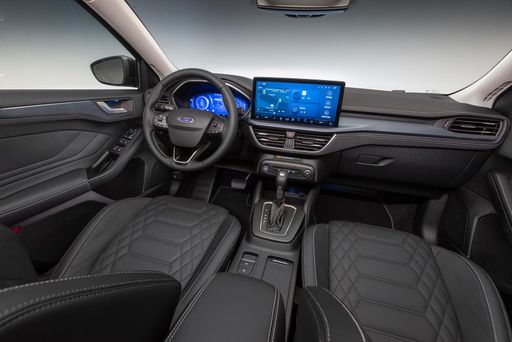
Inside the Focus, drivers find a cockpit designed with functionality in mind, equipped with advanced infotainment systems that integrate seamlessly with smart technology. With a practical trunk capacity of 392 liters and seating for up to five, the Focus is both a pleasure to drive and a handy companion for daily errands.

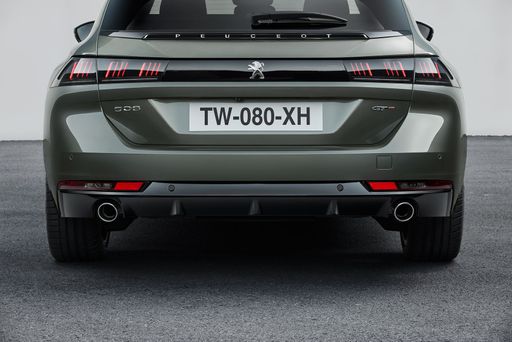
The Peugeot 508 SW doesn’t just stop at innovative hybrid technology; it further extends its luxury quotient with upscale comfort and a cavernous 530-liter trunk. Its interior finishings and digital integrations are cutting-edge, catering to drivers who appreciate modernity and style paired with a focus on sustainability.

Focus

Deciding the Future Road

Both the Ford Focus and the Peugeot 508 SW present stellar offerings that appeal to distinct preferences. The Focus is ideal for those who relish versatility and spirited drives in a compact form. Conversely, the 508 SW addresses the needs of the environmentally conscious driver seeking opulence without compromising efficiency. Your choice rests on your personal driving ethos and lifestyle needs as these two automotive marvels expertly demonstrate the diverse paths forward in the ever-compelling world of cars.

Here’s where it gets real: The technical differences in detail

Focus

Costs and Efficiency:

Price and efficiency are often the first things buyers look at. Here it becomes clear which model has the long-term edge – whether at the pump, the plug, or in purchase price.

Ford Focus is considerably cheaper – starting at 27,500 £ , while the Peugeot 508 SW costs 45,600 £ . That’s a price difference of around 18,086 £.

Fuel consumption also shows a difference: the Peugeot 508 SW uses 1.7 L/100km and is significantly more efficient than the Ford Focus with 4.9 L/100km. The difference is about 3.2 L/100km.

508 SW

Engine and Performance:

Power, torque and acceleration are the classic benchmarks for car enthusiasts – and here, some clear differences start to show.

When it comes to engine power, the Peugeot 508 SW offers clearly more power – delivering 360 HP compared to 280 HP. That’s roughly 80 HP more horsepower.

When accelerating from 0 to 100 km/h, the Peugeot 508 SW is only slightly quicker – completing the sprint in 5.2 s, while the Ford Focus takes 5.7 s. That’s about 0.5 s quicker.

There’s no difference in top speed – both reach 250 km/h.

There’s also a difference in torque: the Peugeot 508 SW delivers slightly more torque with 520 Nm compared to 420 Nm. That’s about 100 Nm more.

Focus

Space and Everyday Use:

Beyond pure performance, interior space and usability matter most in daily life. This is where you see which car is more practical and versatile.

Both vehicles offer seating for 5 people.

In terms of curb weight, Ford Focus is noticeably lighter – 1,330 kg compared to 1,846 kg. The difference is around 516 kg.

Looking at boot space, the Peugeot 508 SW offers visibly more boot space – 530 L compared to 392 L. That’s a difference of about 138 L.

For maximum load capacity, the Peugeot 508 SW offers visibly more capacity – up to 1,780 L, about 426 L more than the Ford Focus.

When it comes to payload, the Ford Focus carries moderately more – 560 kg compared to 454 kg. That’s a difference of about 106 kg.

Who wins the race in the data check?

The Peugeot 508 SW stands well ahead of its rival in the objective data comparison.
This result only shows which model scores more points on paper – not which of the two cars feels right for you.

from £45,600
508 SW

Peugeot 508 SW

  • Engine Type : Plugin Hybrid
  • Transmission : Automatic
  • Drive Type : Front-Wheel Drive, All-Wheel Drive
  • Power HP : 180 - 360 HP
  • Consumption L/100km : 1.7 - 2 L/100km
  • Electric Range : 46 - 52 km
Ford Focus
Peugeot 508 SW

Costs and Consumption

View detailed analysis

Engine and Performance

View detailed analysis

Dimensions and Body

View detailed analysis

Ford Focus

The Ford Focus remains a clever all‑rounder that balances sharp handling with everyday comfort, making it a strong choice whether your commute is city streets or country lanes. Its practical cabin and sensible running costs mean you’ll spend more time enjoying the drive and less time worrying about ownership, with a playful streak underfoot that keeps things interesting.

details

Peugeot 508 SW

The Peugeot 508 SW dresses up as a sleek estate, blending Parisian flair with usable loadspace so you don't have to choose between style and weekend practicality. Inside it's a driver-focused cabin with quality materials and clever packaging that makes it a sensible, slightly mischievous choice for buyers who want an executive feel without the buttoned-up seriousness.

details
Ford Focus
Peugeot 508 SW

Costs and Consumption

Price
27,500 - 42,700 £
Price
45,600 - 61,800 £
Consumption L/100km
4.9 - 8 L/100km
Consumption L/100km
1.7 - 2 L/100km
Consumption kWh/100km
-
Consumption kWh/100km
-
Electric Range
-
Electric Range
46 - 52 km
Battery Capacity
-
Battery Capacity
-
co2
117 - 183 g/km
co2
38 - 45 g/km
Fuel tank capacity
52 L
Fuel tank capacity
43 L

Dimensions and Body

Body Type
Hatchback
Body Type
Estate
Seats
5
Seats
5
Doors
5
Doors
5
Curb weight
1,330 - 1,529 kg
Curb weight
1,846 - 1,967 kg
Trunk capacity
392 L
Trunk capacity
530 L
Length
4,382 - 4,397 mm
Length
4,778 mm
Width
1,825 - 1,844 mm
Width
1,859 mm
Height
1,438 - 1,482 mm
Height
1,420 mm
Max trunk capacity
1,354 L
Max trunk capacity
1,780 L
Payload
495 - 560 kg
Payload
373 - 454 kg

Engine and Performance

Engine Type
Petrol MHEV, Diesel, Petrol
Engine Type
Plugin Hybrid
Transmission
Manuel, Automatic
Transmission
Automatic
Transmission Detail
Manual Gearbox, Dual-Clutch Automatic, Automatic Gearbox
Transmission Detail
Automatic Gearbox
Drive Type
Front-Wheel Drive
Drive Type
Front-Wheel Drive, All-Wheel Drive
Power HP
115 - 280 HP
Power HP
180 - 360 HP
Acceleration 0-100km/h
5.7 - 11.8 s
Acceleration 0-100km/h
5.2 - 8.3 s
Max Speed
186 - 250 km/h
Max Speed
230 - 250 km/h
Torque
170 - 420 Nm
Torque
360 - 520 Nm
Number of Cylinders
3 - 4
Number of Cylinders
4
Power kW
85 - 206 kW
Power kW
133 - 265 kW
Engine capacity
999 - 2,261 cm3
Engine capacity
1,598 cm3

General

Model Year
2,022 - 2,024
Model Year
2,024
CO2 Efficiency Class
D, G
CO2 Efficiency Class
B
Brand
Ford
Brand
Peugeot
DriveDuel uses data analysis and artificial intelligence to evaluate vehicle data and create content. Content is regularly reviewed and improved. The displayed prices are estimates based on German list prices, adjusted to the respective country’s VAT. Country-specific registration taxes are not included. This information is not legally binding.