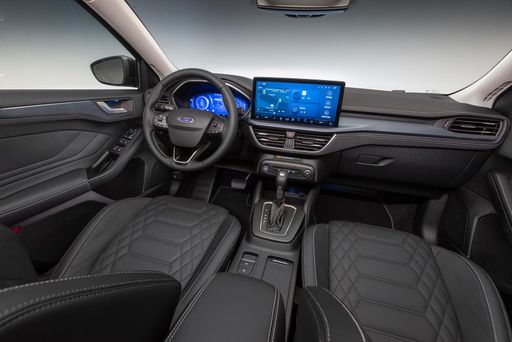
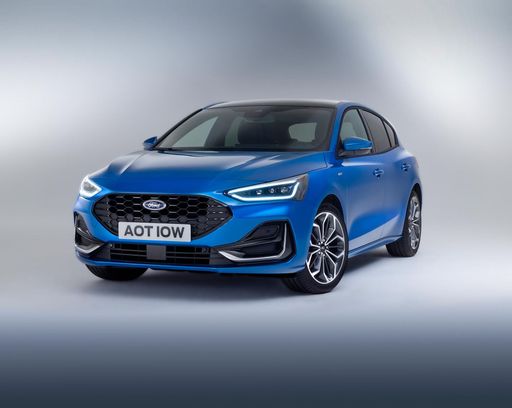
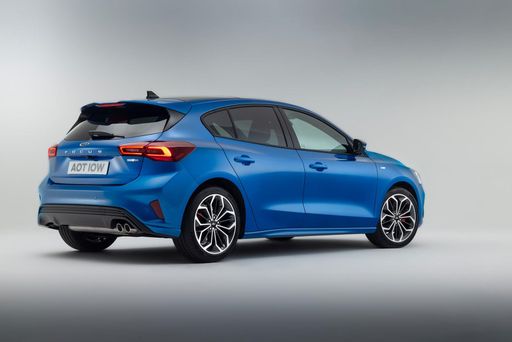
@ Ford Motor Company / Ford Media Center
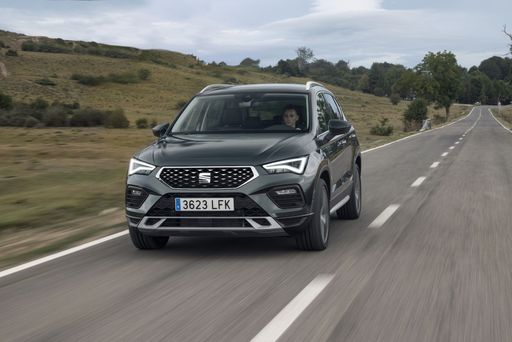
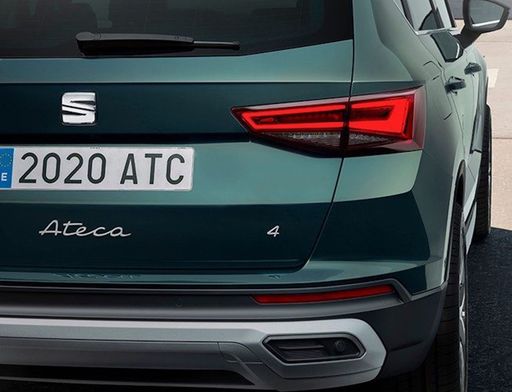
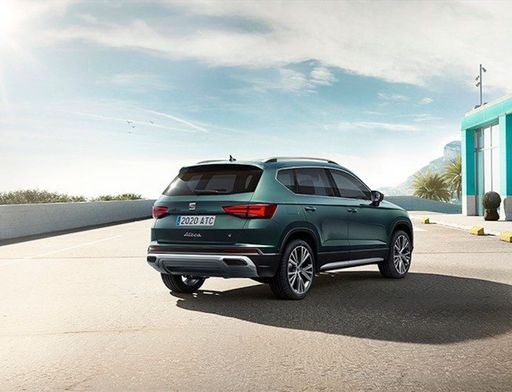
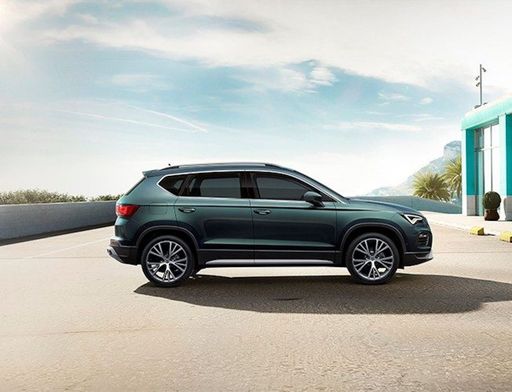
@ SEAT S.A. / SEAT Media Center
VS

Ford Focus vs SEAT Ateca – Which model is better for everyday use?

Everyday use, family trips or long-distance drives – here’s where the differences show.
Discover whether Ford Focus or SEAT Ateca fits your lifestyle better.

Focus @ Ford Motor Company / Ford Media Center

Introduction

In the competitive world of compact cars and SUVs, the Ford Focus and SEAT Ateca represent two contrasting philosophies in automobile engineering. The Focus brings traditional hatchback dynamics, while the Ateca appeals to those craving the practicality of an SUV. This article delves into a detailed comparison of these two models, focusing on technical aspects and innovations that set them apart.
Ateca @ SEAT S.A. / SEAT Media Center

Design and Dimensions

The Ford Focus measures 4392 mm in length, 1825 mm in width, and 1440 mm in height, making it an agile hatchback with a compact form. Its sleek design emphasizes aerodynamics, which enhances fuel efficiency and performance. In contrast, the SEAT Ateca stands taller at 1601 mm, with a width of 1841 mm and a length of 4381 mm. The SUV layout offers a more commanding view of the road and greater interior space for passengers and cargo.

Focus @ Ford Motor Company / Ford Media Center

Engine Options and Performance

The Ford Focus boasts a variety of engine options that cater to different preferences. It includes petrol, diesel, and MHEV (Mild Hybrid Electric Vehicle) powertrains, with outputs ranging from 115 HP to a thrilling 280 HP. The Focus also provides a choice between manual and automatic transmissions, including a dual-clutch option for swift gear changes. Acceleration times are impressive, with the top engine capable of reaching 0-100 km/h in just 5.7 seconds.

On the other hand, the SEAT Ateca offers petrol and diesel engines with outputs of 116 HP to 150 HP. Like the Focus, it features manual and dual-clutch automatic transmission options. While it does not have the outright performance numbers of the Focus, with a 0-100 km/h acceleration time of 9 seconds for the petrol variant, its lower curb weight (starting at 1345 kg) contributes to a responsive driving experience.

Ateca @ SEAT S.A. / SEAT Media Center

Fuel Efficiency

In terms of fuel efficiency, the Ford Focus shines with a combined consumption rate as low as 4.9 L/100 km, thanks to its hybrid technology and well-tuned engines. The Focus also features a respectable trunk capacity of 392 liters, making it practical for everyday use.

The SEAT Ateca, while slightly less efficient with consumption figures starting at 6.0 L/100 km, compensates with a more substantial trunk capacity of 510 liters, ideal for families or those with active lifestyles. This difference in fuel efficiency reflects the distinct roles these vehicles play in the market.

Focus @ Ford Motor Company / Ford Media Center

Technological Innovations

Ford has infused the Focus with advanced technology, including the latest Ford SYNC infotainment system that supports smartphone integration and voice commands. Safety features such as adaptive cruise control, lane-keeping assistance, and automated emergency braking enhance the driving experience and provide peace of mind.

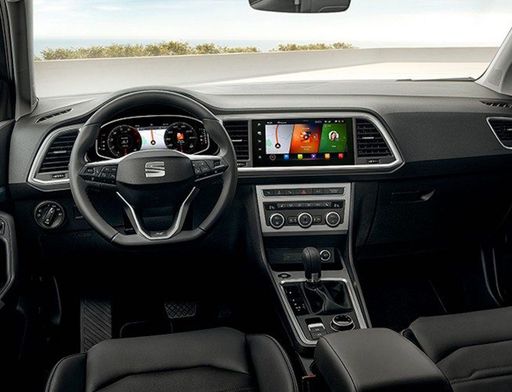
The SEAT Ateca doesn’t fall short in the technology department either, offering its own suite of tech features, including a user-friendly infotainment system and a range of driver assistance options like traffic sign recognition and adaptive cruise control. Notable is the Ateca’s panoramic sunroof and customizable ambient lighting, which add a touch of sophistication to its interior.

Ateca @ SEAT S.A. / SEAT Media Center

Conclusion

Choosing between the Ford Focus and SEAT Ateca ultimately comes down to personal preferences and lifestyle. For those who prioritize performance and driving dynamics in a compact package, the Focus emerges as the clear winner. Its broad engine range and remarkable efficiency balance the needs of both city and sport driving.

However, for buyers seeking the practicality of an SUV without sacrificing style, the Ateca stands out with its larger trunk space and elevated driving position. Both vehicles showcase significant innovations and offer distinctive features, ensuring that there is something for everyone in this lively segment of the automotive market.

Here’s where it gets real: The technical differences in detail

Costs and Efficiency:

When it comes to price and running costs, the biggest differences usually appear. This is often where you see which car fits your budget better in the long run.

SEAT Ateca has a slight advantage in terms of price – it starts at 25100 £, while the Ford Focus costs 27500 £. That’s a price difference of around 2409 £.

Both cars consume an average of 4.90 L per 100 km – no difference here.

Engine and Performance:

Power, torque and acceleration say a lot about how a car feels on the road. This is where you see which model delivers more driving dynamics.

When it comes to engine power, the Ford Focus has a significantly edge – offering 280 HP compared to 150 HP. That’s roughly 130 HP more horsepower.

In acceleration from 0 to 100 km/h, the Ford Focus is clearly quicker – completing the sprint in 5.70 s, while the SEAT Ateca takes 9 s. That’s about 3.30 s faster.

In terms of top speed, the Ford Focus performs somewhat better – reaching 250 km/h, while the SEAT Ateca tops out at 202 km/h. The difference is around 48 km/h.

There’s also a difference in torque: Ford Focus pulls a bit stronger with 420 Nm compared to 360 Nm. That’s about 60 Nm difference.

Space and Everyday Use:

Beyond pure performance, interior space and usability matter most in daily life. This is where you see which car is more practical and versatile.

Both vehicles offer seating for 5 people.

In curb weight, Ford Focus is slight lighter – 1330 kg compared to 1345 kg. The difference is around 15 kg.

In terms of boot space, the SEAT Ateca offers clearly perceptible more room – 510 L compared to 392 L. That’s a difference of about 118 L.

In maximum load capacity, the SEAT Ateca performs somewhat better – up to 1604 L, which is about 250 L more than the Ford Focus.

When it comes to payload, Ford Focus hardly perceptible takes the win – 560 kg compared to 525 kg. That’s a difference of about 35 kg.

Who wins the race?

The Ford Focus proves to be is largely superior and therefore becomes our DriveDuel Champion!
Ford Focus is the better all-rounder in this comparison.

from about £27,500
Focus @ Ford Motor Company / Ford Media Center

Ford Focus

  • Engine Type : Petrol MHEV, Diesel, Petrol
  • Transmission : Manuel, Automatic
  • Drive Type : Front-Wheel Drive
  • Power HP : 115 - 280 HP
  • Consumption L/100km : 4.9 - 8 L

Ford Focus

The Ford Focus remains a clever all‑rounder that balances sharp handling with everyday comfort, making it a strong choice whether your commute is city streets or country lanes. Its practical cabin and sensible running costs mean you’ll spend more time enjoying the drive and less time worrying about ownership, with a playful streak underfoot that keeps things interesting.

details

SEAT Ateca

5 (1)
rate

The SEAT Ateca blends sharp, purposeful styling with practical space that turns everyday errands into something a bit more enjoyable. It’s poised and engaging to drive for its segment, offers solid value, and has just enough personality to make you smile on the school run.

details
Ford Focus
SEAT Ateca
Focus @ Ford Motor Company / Ford Media Center
Ateca @ SEAT S.A. / SEAT Media Center

Costs and Consumption

Price
27500 - 42700 £
Price
25100 - 36900 £
Consumption L/100km
4.9 - 8 L
Consumption L/100km
4.9 - 6.4 L
Consumption kWh/100km
-
Consumption kWh/100km
-
Electric Range
-
Electric Range
-
Battery Capacity
-
Battery Capacity
-
co2
117 - 183 g/km
co2
129 - 144 g/km
Fuel tank capacity
52 L
Fuel tank capacity
50 L

Dimensions and Body

Body Type
Hatchback
Body Type
SUV
Seats
5
Seats
5
Doors
5
Doors
5
Curb weight
1330 - 1529 kg
Curb weight
1345 - 1514 kg
Trunk capacity
392 L
Trunk capacity
510 L
Length
4382 - 4397 mm
Length
4381 mm
Width
1825 - 1844 mm
Width
1841 mm
Height
1438 - 1482 mm
Height
1601 mm
Max trunk capacity
1354 L
Max trunk capacity
1604 L
Payload
495 - 560 kg
Payload
516 - 525 kg

Engine and Performance

Engine Type
Petrol MHEV, Diesel, Petrol
Engine Type
Petrol, Diesel
Transmission
Manuel, Automatic
Transmission
Manuel, Automatic
Transmission Detail
Manual Gearbox, Dual-Clutch Automatic, Automatic Gearbox
Transmission Detail
Manual Gearbox, Dual-Clutch Automatic
Drive Type
Front-Wheel Drive
Drive Type
Front-Wheel Drive
Power HP
115 - 280 HP
Power HP
116 - 150 HP
Acceleration 0-100km/h
5.7 - 11.8 s
Acceleration 0-100km/h
9 - 11 s
Max Speed
186 - 250 km/h
Max Speed
183 - 202 km/h
Torque
170 - 420 Nm
Torque
200 - 360 Nm
Number of Cylinders
3 - 4
Number of Cylinders
3 - 4
Power kW
85 - 206 kW
Power kW
85 - 110 kW
Engine capacity
999 - 2261 cm3
Engine capacity
999 - 1968 cm3

General

Model Year
2022 - 2024
Model Year
2024 - 2025
CO2 Efficiency Class
D, G
CO2 Efficiency Class
E, D
Brand
Ford
Brand
SEAT
What drive types are available for the Ford Focus?

Available configurations include Front-Wheel Drive.

The prices and data displayed are estimates based on German list prices and may vary by country. This information is not legally binding.