VS

Ford Focus vs Suzuki Swace comparison

Compare performance (280 HP vs 140 HP), boot space and price (27,500 £ vs 31,900 £ ) at a glance. Find out which car is the better choice for you – Ford Focus or Suzuki Swace?

Ford Focus vs Suzuki Swace: Key differences

Ford Focus

4.6 (1 Reviews)
rate
  • somewhat cheaper
  • substantially more power
  • clearly quicker 0–100 km/h
  • moderately lighter
details

Suzuki Swace

4.3 (2 Reviews)
rate
  • marginally more efficient
  • noticeably more trunk space
details

All details on performance, efficiency, range and trunk space can be found in the technical comparison below – including user reviews for both models.

By Achim Sedelmaier

Focus

Compact Contenders: Ford Focus vs. Suzuki Swace

When it comes to choosing a compact vehicle that balances performance, efficiency, and practicality, two names stand out in the market: the Ford Focus and the Suzuki Swace. Let's dive into how these two models compare on various fronts, from design and technical specifications to innovative features.
Swace

Design and Dimensions

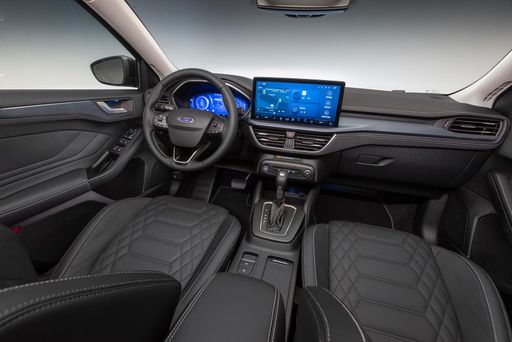
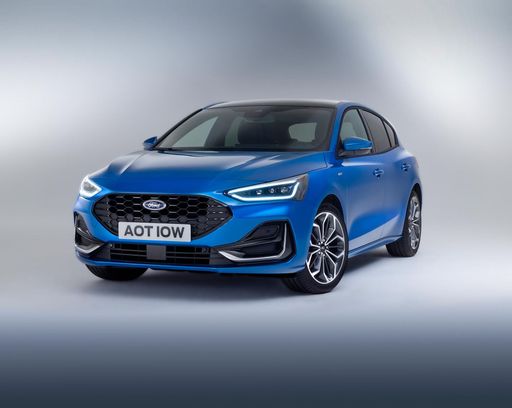
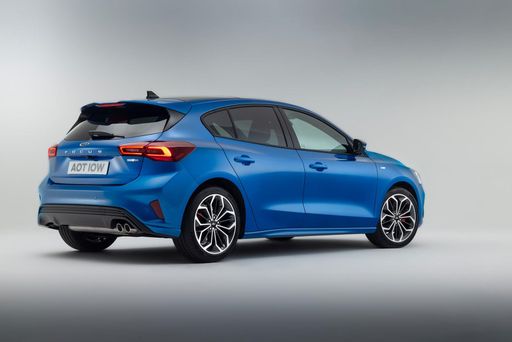
The Ford Focus, available in a sleek hatchback form, presents a modern, compact design with attention to aerodynamics. Its dimensions hover around 4392 mm in length, 1825 mm in width, and a height range of 1440 to 1482 mm, providing a compact yet sporty appearance that is instantly recognizable on the road.

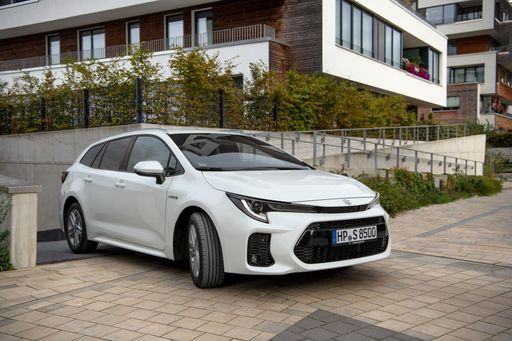
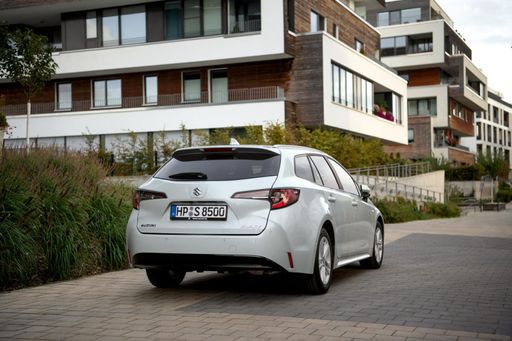
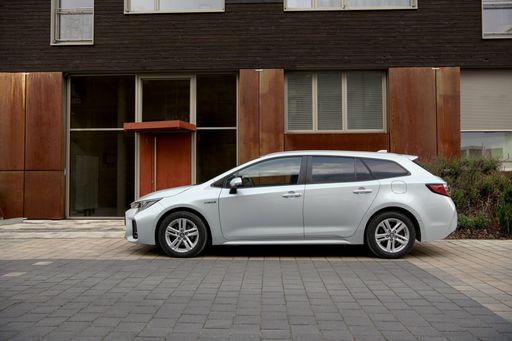
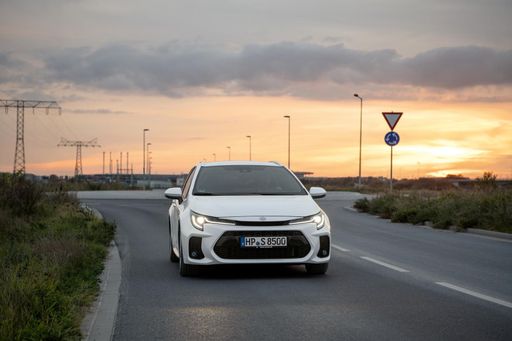
On the other hand, the Suzuki Swace is offered as a wagon, boasting a more elongated form with 4655 mm in length. It measures 1790 mm in width and 1460 mm in height, ensuring a spacious interior. The Swace emphasizes practicality with its larger trunk capacity of 596 liters, compared to the Focus's 392 liters, catering to families and those needing extra cargo space.

Focus

Engine and Performance

The Ford Focus offers a range of engines tailored to different driving needs, including petrol, diesel, and mild hybrid electric vehicle (MHEV) options. Engine power varies from an efficient 115 HP to a more robust 280 HP, providing acceleration as fierce as 5.7 seconds from 0 to 100 km/h. Most models are equipped with a front-wheel-drive system, supported by either a manual gearbox, dual-clutch automatic, or a standard automatic transmission.

Contrastingly, the Suzuki Swace is designed with a focus on efficiency, featuring a full hybrid engine. It delivers 140 HP and offers a smooth driving experience thanks to its Continuously Variable Transmission (CVT). Its fuel consumption is impressively economical at 4.5 L/100km, making it an ideal choice for eco-conscious drivers.

Swace

Environmental Efficiency

When it comes to emissions, the Suzuki Swace takes the lead with a CO2 efficiency class of C and emissions of just 102 g/km. This makes it an attractive option for those looking to reduce their carbon footprint. Meanwhile, the Ford Focus, depending on the option chosen, varies between D and G classes, with emissions ranging from 117 to 183 g/km.

Focus

Interior and Comfort

Both vehicles comfortably seat five, offering ample comfort for driver and passengers. The Swace, with its wagon configuration, excels in providing additional space, which, combined with a comfortable ride quality, makes it a great choice for long journeys. The Focus, with a slightly sportier edge, offers a dynamic driving experience, making daily commutes enjoyable.

Swace

Innovation and Features

In terms of technological innovations, the Focus comes equipped with modern, driver-assist features and connectivity options that cater to tech-savvy users. Its variety in engines and transmissions allows customization to personal driving preferences, especially for those who enjoy a hands-on driving experience.

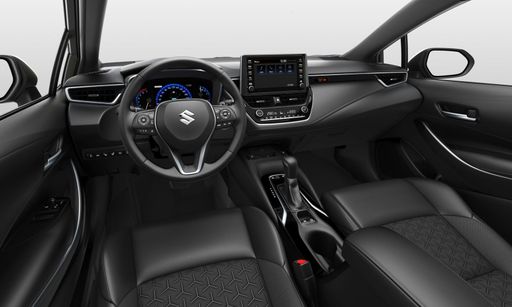
The Swace focuses on delivering consistency and ease, with its hybrid engine and CVT ensuring a seamless drive. Its emphasis on eco-friendliness and low consumption is complemented by user-friendly interior tech, aiming to create a stress-free driving environment.

Final Thoughts

The choice between the Ford Focus and the Suzuki Swace ultimately hinges on individual priorities. The Focus appeals to those seeking performance versatility and a sporty drive, while the Swace attracts those favoring practicality, efficiency, and eco-sustainability. Both stand as formidable options in the compact car segment, promising reliable performance tailored to varying preferences.

Here’s where it gets real: The technical differences in detail

Focus

Costs and Efficiency:

Price and efficiency are often the first things buyers look at. Here it becomes clear which model has the long-term edge – whether at the pump, the plug, or in purchase price.

Ford Focus is somewhat cheaper – starting at 27,500 £ , while the Suzuki Swace costs 31,900 £ . That’s a price difference of around 4,363 £.

Fuel consumption also shows a difference: the Suzuki Swace uses 4.5 L/100km and is marginally more efficient than the Ford Focus with 4.9 L/100km. The difference is about 0.4 L/100km.

Swace

Engine and Performance:

Power, torque and acceleration are the classic benchmarks for car enthusiasts – and here, some clear differences start to show.

When it comes to engine power, the Ford Focus offers substantially more power – delivering 280 HP compared to 140 HP. That’s roughly 140 HP more horsepower.

When accelerating from 0 to 100 km/h, the Ford Focus is clearly quicker – completing the sprint in 5.7 s, while the Suzuki Swace takes 9.4 s. That’s about 3.7 s quicker.

Looking at top speed, the Ford Focus is markedly faster – reaching 250 km/h, while the Suzuki Swace tops out at 180 km/h. The difference is around 70 km/h.

Focus

Space and Everyday Use:

Whether family car or daily driver – which one offers more room, flexibility and comfort?

Both vehicles offer seating for 5 people.

In terms of curb weight, Ford Focus is moderately lighter – 1,330 kg compared to 1,475 kg. The difference is around 145 kg.

Looking at boot space, the Suzuki Swace offers noticeably more boot space – 596 L compared to 392 L. That’s a difference of about 204 L.

For maximum load capacity, the Suzuki Swace offers slightly more capacity – up to 1,606 L, about 252 L more than the Ford Focus.

When it comes to payload, the Ford Focus carries clearly more – 560 kg compared to 360 kg. That’s a difference of about 200 kg.

Who wins the race in the data check?

The Ford Focus is decisively ahead in the objective data comparison.
This result only shows which model scores more points on paper – not which of the two cars feels right for you.

from £27,500
Focus

Ford Focus

  • Engine Type : Petrol MHEV, Diesel, Petrol
  • Transmission : Manuel, Automatic
  • Drive Type : Front-Wheel Drive
  • Power HP : 115 - 280 HP
  • Consumption L/100km : 4.9 - 8 L/100km
Ford Focus
Suzuki Swace

Costs and Consumption

View detailed analysis

Engine and Performance

View detailed analysis

Dimensions and Body

View detailed analysis

Ford Focus

The Ford Focus remains a clever all‑rounder that balances sharp handling with everyday comfort, making it a strong choice whether your commute is city streets or country lanes. Its practical cabin and sensible running costs mean you’ll spend more time enjoying the drive and less time worrying about ownership, with a playful streak underfoot that keeps things interesting.

details

Suzuki Swace

The Suzuki Swace is a pragmatic estate that swaps showy design for roomy practicality and a quiet, comfortable ride that suits everyday family life. It won't thrill the enthusiast, but its sensible charm, dependable build and clever packaging make it a smart pick for buyers who want fuss-free usability rather than headline-grabbing performance.

details
Ford Focus
Suzuki Swace

Costs and Consumption

Price
27,500 - 42,700 £
Price
31,900 £
Consumption L/100km
4.9 - 8 L/100km
Consumption L/100km
4.5 L/100km
Consumption kWh/100km
-
Consumption kWh/100km
-
Electric Range
-
Electric Range
-
Battery Capacity
-
Battery Capacity
-
co2
117 - 183 g/km
co2
102 g/km
Fuel tank capacity
52 L
Fuel tank capacity
43 L

Dimensions and Body

Body Type
Hatchback
Body Type
Estate
Seats
5
Seats
5
Doors
5
Doors
5
Curb weight
1,330 - 1,529 kg
Curb weight
1,475 kg
Trunk capacity
392 L
Trunk capacity
596 L
Length
4,382 - 4,397 mm
Length
4,655 mm
Width
1,825 - 1,844 mm
Width
1,790 mm
Height
1,438 - 1,482 mm
Height
1,460 mm
Max trunk capacity
1,354 L
Max trunk capacity
1,606 L
Payload
495 - 560 kg
Payload
360 kg

Engine and Performance

Engine Type
Petrol MHEV, Diesel, Petrol
Engine Type
Full Hybrid
Transmission
Manuel, Automatic
Transmission
Automatic
Transmission Detail
Manual Gearbox, Dual-Clutch Automatic, Automatic Gearbox
Transmission Detail
CVT
Drive Type
Front-Wheel Drive
Drive Type
Front-Wheel Drive
Power HP
115 - 280 HP
Power HP
140 HP
Acceleration 0-100km/h
5.7 - 11.8 s
Acceleration 0-100km/h
9.4 s
Max Speed
186 - 250 km/h
Max Speed
180 km/h
Torque
170 - 420 Nm
Torque
-
Number of Cylinders
3 - 4
Number of Cylinders
4
Power kW
85 - 206 kW
Power kW
103 kW
Engine capacity
999 - 2,261 cm3
Engine capacity
1,798 cm3

General

Model Year
2,022 - 2,024
Model Year
2024
CO2 Efficiency Class
D, G
CO2 Efficiency Class
C
Brand
Ford
Brand
Suzuki
DriveDuel uses data analysis and artificial intelligence to evaluate vehicle data and create content. Content is regularly reviewed and improved. The displayed prices are estimates based on German list prices, adjusted to the respective country’s VAT. Country-specific registration taxes are not included. This information is not legally binding.