VS

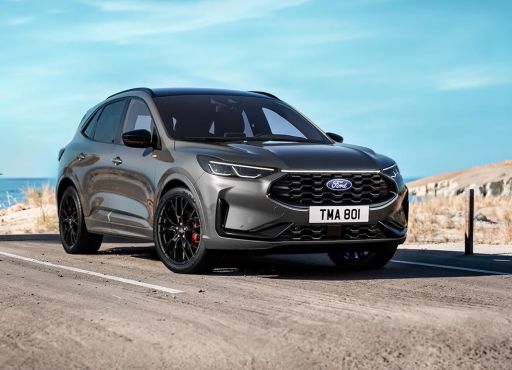
Ford Kuga vs Audi Q3 comparison

Compare performance (243 HP vs 272 HP), boot space and price (34,200 £ vs 38,200 £ ) at a glance. Find out which car is the better choice for you – Ford Kuga or Audi Q3?

Ford Kuga vs Audi Q3: Key differences

Ford Kuga

4.3 (7 Reviews)
rate
  • moderately cheaper
  • only slightly lighter
details

Audi Q3

4.2 (3 Reviews)
rate
  • moderately more power
  • significantly more efficient
  • substantially more electric range
  • markedly quicker 0–100 km/h
details

All details on performance, efficiency, range and trunk space can be found in the technical comparison below – including user reviews for both models.

By Achim Sedelmaier

Kuga

Audi Q3 vs Ford Kuga: A Comprehensive Comparison

As the SUV market continues to expand, two prominent contenders—the Audi Q3 and the Ford Kuga—stand out. Both vehicles bring their unique features and innovations to the table, catering to a diverse set of drivers. In this article, we will delve into the technical aspects, performance, and features of each model to help you decide which SUV suits your needs best.
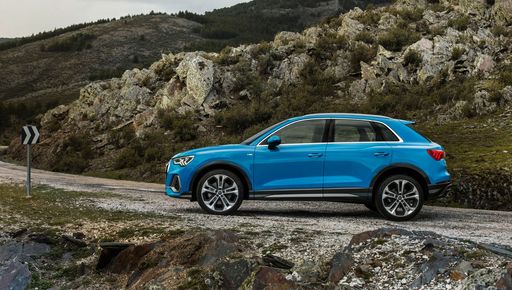
Q3

Engine Options and Performance

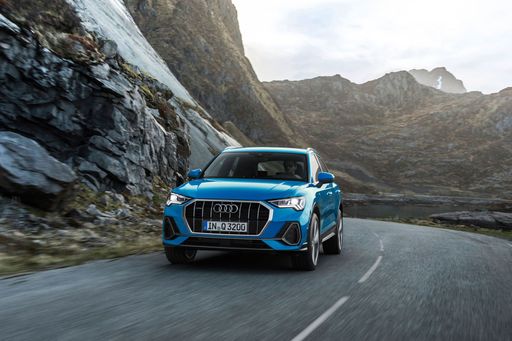
The Audi Q3 presents a versatile array of engine choices, with options ranging from efficient petrol and diesel engines. Power output varies from 150 HP in the base model to an impressive 245 HP in the sporty variants. The Q3 offers a 0-100 km/h acceleration time that can be as quick as 5.8 seconds, combined with a top speed of 237 km/h.

In contrast, the Ford Kuga also boasts a variety of engine choices, including petrol engines along with full hybrid and plug-in hybrid options. The power range starts at 150 HP but can go up to 243 HP, with the top-performing model achieving 0-100 km/h in just 7.3 seconds. However, the Kuga's maximum speed is slightly lower, capped at 200 km/h.

Kuga

Fuel Efficiency and Eco-Friendly Options

When it comes to fuel efficiency, both models impress with their competitive consumption ratings. The Audi Q3 shows a consumption range between 5.5 to 8.5 L/100 km depending on the engine variant. The hybrid performance options keep CO2 emissions between 143 and 192 g/km.

The Ford Kuga takes a step further in terms of eco-friendliness, especially with its hybrid and plug-in hybrid variants. The Kuga can achieve a remarkable consumption figure as low as 0.9 L/100 km in electric-only mode, with CO2 emissions for the hybrid variants dropping as low as 20 g/km. For those keen on reducing their carbon footprint, the Kuga's electric range of up to 69 km is notable.

Q3

Interior and Comfort

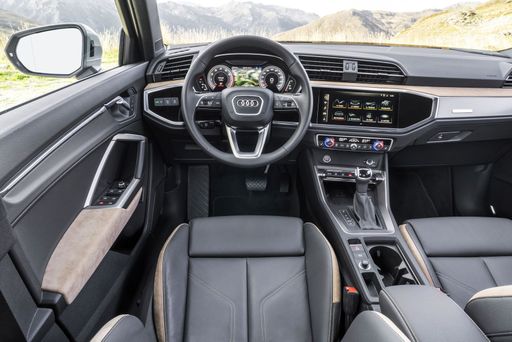
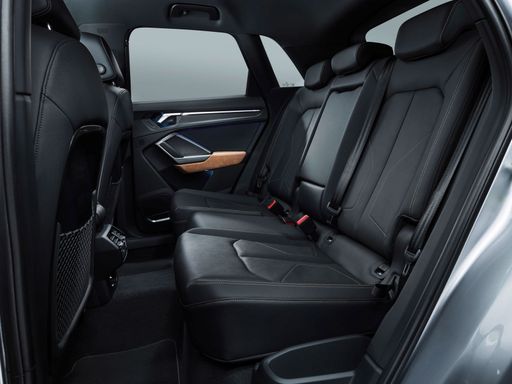
Both the Audi Q3 and Ford Kuga are designed with a focus on passenger comfort and modern aesthetics. The Q3's interior is characterized by high-quality materials, spacious seating for five, and a trunk capacity of 530 liters, making it a practical choice for families or long trips.

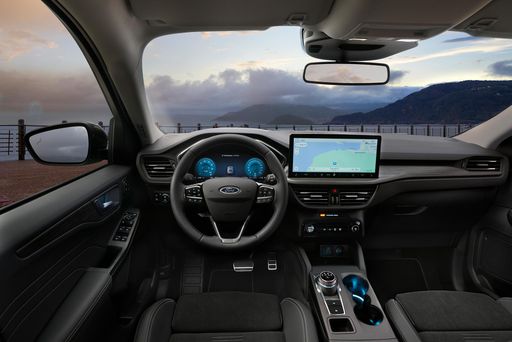
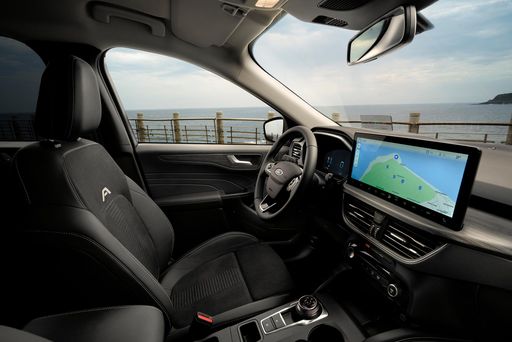
The Ford Kuga, while slightly less spacious with a trunk capacity of 412 liters, offers a modern and tech-savvy interior. The Kuga is equipped with Ford's SYNC infotainment system and can also be outfitted with a panoramic sunroof for an enhanced driving experience.

Kuga

Safety Features and Technology

Safety is paramount in both vehicles. The Audi Q3 is equipped with an array of advanced safety features, including adaptive cruise control, lane departure warning, and a comprehensive airbag system. Its precise build quality adds an extra layer of reassurance on the road.

On the other hand, the Ford Kuga also emphasizes safety, integrating technologies such as automatic emergency braking, blind-spot monitoring, and a host of driver-assist systems. Both models have received favorable safety ratings, making them suitable choices for families.

Q3

Conclusion: Which SUV is Right for You?

Choosing between the Audi Q3 and Ford Kuga ultimately comes down to personal preference and priorities. The Audi Q3 leans towards luxury, sporty performance, and stellar interior quality, while the Ford Kuga distinguishes itself with eco-friendly options, practicality, and advanced driver-assistance technologies. Both vehicles provide a significant value proposition and are well-suited for contemporary drivers seeking an SUV that meets their lifestyle needs.

Here’s where it gets real: The technical differences in detail

Kuga

Costs and Efficiency:

Looking at overall running costs, both models reveal some interesting differences in everyday economy.

Ford Kuga is moderately cheaper – starting at 34,200 £ , while the Audi Q3 costs 38,200 £ . That’s a price difference of around 3,986 £.

Fuel consumption also shows a difference: the Audi Q3 uses 1.7 L/100km and is significantly more efficient than the Ford Kuga with 2.8 L/100km. The difference is about 1.1 L/100km.

As for electric range, the Audi Q3 offers substantially more range – reaching up to 119 km, about 51 km more than the Ford Kuga.

Q3

Engine and Performance:

Under the bonnet, it becomes clear which model is tuned for sportiness and which one takes the lead when you hit the accelerator.

When it comes to engine power, the Audi Q3 offers moderately more power – delivering 272 HP compared to 243 HP. That’s roughly 29 HP more horsepower.

When accelerating from 0 to 100 km/h, the Audi Q3 is markedly quicker – completing the sprint in 5.7 s, while the Ford Kuga takes 7.3 s. That’s about 1.6 s quicker.

There’s also a difference in torque: the Audi Q3 delivers markedly more torque with 400 Nm compared to 240 Nm. That’s about 160 Nm more.

Kuga

Space and Everyday Use:

Beyond pure performance, interior space and usability matter most in daily life. This is where you see which car is more practical and versatile.

Both vehicles offer seating for 5 people.

In terms of curb weight, Ford Kuga is only slightly lighter – 1,526 kg compared to 1,635 kg. The difference is around 109 kg.

When it comes to payload, the Ford Kuga carries only slightly more – 550 kg compared to 535 kg. That’s a difference of about 15 kg.

Who wins the race in the data check?

The Audi Q3 stands well ahead of its rival in the objective data comparison.
This result only shows which model scores more points on paper – not which of the two cars feels right for you.

from £38,200
Q3

Audi Q3

  • Engine Type Petrol MHEV, Petrol, Plugin Hybrid, Diesel
  • Transmission Automatic
  • Drive Type Front-Wheel Drive, All-Wheel Drive
  • Power HP 150 - 272 HP
  • Consumption L/100km 1.7 - 8.6 L/100km
  • Electric Range 118 - 119 km
Ford Kuga
Audi Q3

Costs and Consumption

View detailed analysis

Engine and Performance

View detailed analysis

Dimensions and Body

View detailed analysis

Ford Kuga

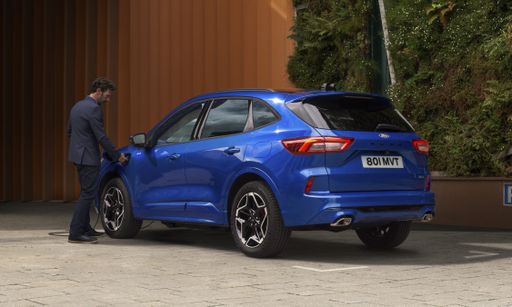
The Ford Kuga is a practical and comfortable compact SUV that balances everyday usability with a composed ride and adaptable interior. It offers sensible tech and safety features, making it a solid choice for families or anyone seeking a versatile, easy-to-live-with crossover.

details

Audi Q3

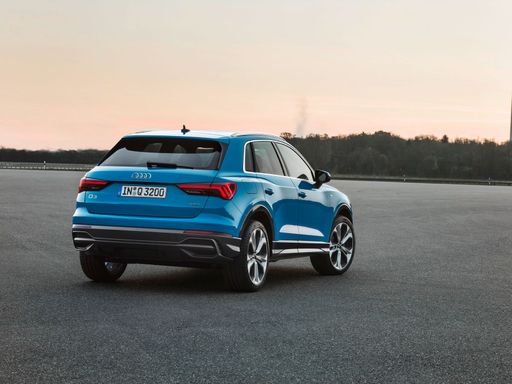
The Audi Q3 is a compact premium crossover that blends sharp styling with a well-crafted interior, making it an appealing choice for urban drivers who want a touch of luxury. It delivers a composed ride, intuitive tech features and a practical cabin, so it works well as a comfortable daily driver with an upscale feel.

details
Ford Kuga
Audi Q3

Costs and Consumption

Price
34,200 - 46,300 £
Price
38,200 - 52,900 £
Consumption L/100km
2.8 - 6.8 L/100km
Consumption L/100km
1.7 - 8.6 L/100km
Consumption kWh/100km
-
Consumption kWh/100km
-
Electric Range
68 km
Electric Range
118 - 119 km
Battery Capacity
-
Battery Capacity
-
co2
55 - 154 g/km
co2
39 - 195 g/km
Fuel tank capacity
-
Fuel tank capacity
-

Dimensions and Body

Body Type
SUV
Body Type
SUV
Seats
5
Seats
5
Doors
-
Doors
-
Curb weight
1,526 - 1,859 kg
Curb weight
1,635 - 1,900 kg
Trunk capacity
-
Trunk capacity
375 - 488 L
Length
-
Length
-
Width
1,882 mm
Width
1,859 mm
Height
-
Height
-
Max trunk capacity
-
Max trunk capacity
-
Payload
541 - 550 kg
Payload
505 - 535 kg

Engine and Performance

Engine Type
Petrol, Full Hybrid, Plugin Hybrid
Engine Type
Petrol MHEV, Petrol, Plugin Hybrid, Diesel
Transmission
Manuel, Automatic
Transmission
Automatic
Transmission Detail
Manual Gearbox, CVT, Automatic Gearbox
Transmission Detail
Dual-Clutch Automatic
Drive Type
Front-Wheel Drive, All-Wheel Drive
Drive Type
Front-Wheel Drive, All-Wheel Drive
Power HP
150 - 243 HP
Power HP
150 - 272 HP
Acceleration 0-100km/h
7.3 - 9.9 s
Acceleration 0-100km/h
5.7 - 9.2 s
Max Speed
-
Max Speed
-
Torque
240 Nm
Torque
250 - 400 Nm
Number of Cylinders
3 - 4
Number of Cylinders
4
Power kW
111 - 178 kW
Power kW
110 - 200 kW
Engine capacity
1,496 - 2,488 cm3
Engine capacity
1,498 - 1,984 cm3

General

Model Year
2025
Model Year
2,025 - 2,026
CO2 Efficiency Class
E, D, B
CO2 Efficiency Class
E, G, B, F
Brand
Ford
Brand
Audi
DriveDuel uses data analysis and artificial intelligence to evaluate vehicle data and create content. Content is regularly reviewed and improved. The displayed prices are estimates based on German list prices, adjusted to the respective country’s VAT. Country-specific registration taxes are not included. This information is not legally binding.