VS

Ford Kuga vs Lynk & Co 01 comparison

Compare performance (243 HP vs 280 HP), boot space and price (34,200 £ vs 36,900 £ ) at a glance. Find out which car is the better choice for you – Ford Kuga or Lynk & Co 01?

Ford Kuga vs Lynk & Co 01: Key differences

Ford Kuga

4.2 (6 Reviews)
rate
  • only slightly cheaper
  • very slightly quicker 0–100 km/h
  • markedly lighter
details

Lynk & Co 01

4.8 (3 Reviews)
rate
  • a bit more power
  • significantly more efficient
  • marginally more electric range
details

All details on performance, efficiency, range and trunk space can be found in the technical comparison below – including user reviews for both models.

By Achim Sedelmaier

Kuga

Ford Kuga vs. Lynk & Co 01: An Electrifying Showdown

In the competitive realm of compact SUVs, the Ford Kuga and Lynk & Co 01 are two models that stand out, particularly in their innovative approach to hybrid technology. As automakers strive to embrace electrification, both vehicles offer distinct advantages ranging from engine performance to fuel efficiency, making them pivotal options for eco-conscious consumers and driving enthusiasts alike.
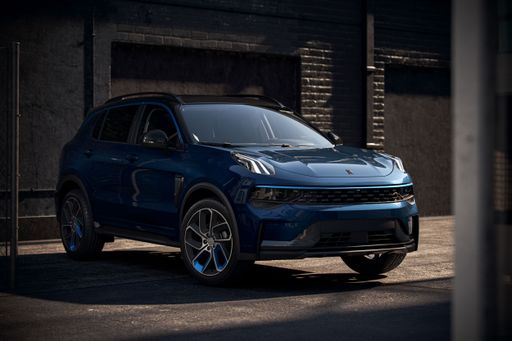
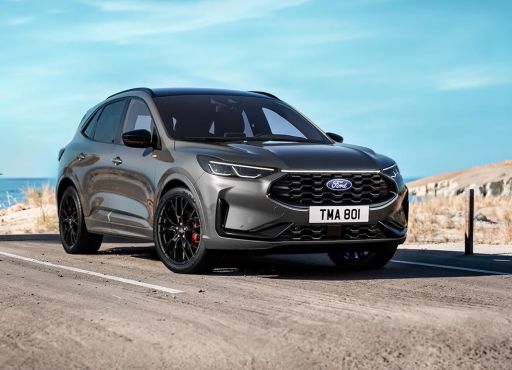
01

Powertrain and Performance

The Ford Kuga is available with a variety of engine types including petrol, full hybrid, and plug-in hybrid configurations. It offers a powerful line-up with power outputs ranging from 150 HP to an impressive 243 HP. With options for both front-wheel and all-wheel drive, and the choice between a manual gearbox and a continuously variable transmission (CVT), the Kuga caters to a wide array of driving preferences. When it comes to acceleration, the Kuga can go from 0 to 100 km/h in as little as 7.3 seconds, showcasing its sporty credentials.

On the other hand, the Lynk & Co 01 leans heavily into the electrified realm with its plug-in hybrid architecture. It boasts robust power options reaching up to 276 HP. The Lynk & Co 01 is equipped with a dual-clutch automatic transmission that enhances driving dynamics and efficiency. With an impressive 0-100 km/h time of just 7.7 seconds, it holds its own against the Kuga in the performance department while maintaining a tight focus on eco-friendly driving.

Kuga

Fuel Efficiency and Electric Range

The Ford Kuga demonstrates admirable fuel efficiency with consumption figures as low as 0.9 L/100 km in its hybrid variants. Its electric range can extend up to 69 km, supported by a battery capacity of 14.4 kWh, making it a practical choice for daily commutes with the ability to operate on electric-only power.

In comparison, the Lynk & Co 01 surpasses the Kuga in electric performance, offering an electric range of 75 km and even lower fuel consumption figures of just 0.9 L/100 km. With a slightly smaller battery capacity of 14.1 kWh, it still provides ample support for eco-conscious drivers looking to minimize fuel costs.

01

Interior Comfort and Technology

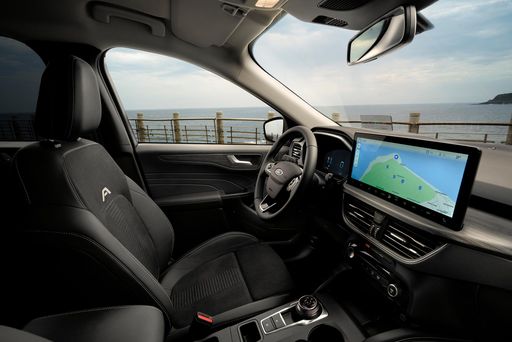
Both SUVs offer spacious interiors that comfortably accommodate five passengers, with the Ford Kuga featuring a trunk capacity of 412 liters compared to the Lynk & Co 01's slightly larger trunk at 466 liters. The cabin of the Kuga is lauded for its modern design and high-quality materials, ensuring a pleasant driving experience. Ford’s SYNC infotainment system is user-friendly, providing a seamless connection with smartphones and offering various driver-assistance features.

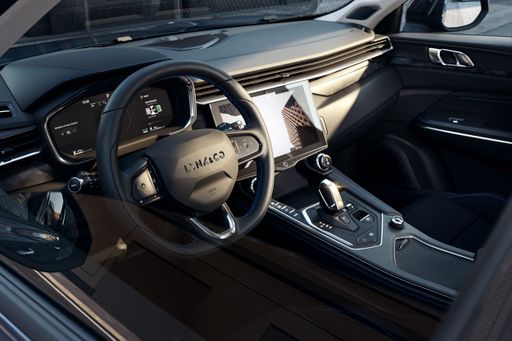
Meanwhile, the Lynk & Co 01 is designed with technology at the forefront. It boasts an intuitive digital dashboard and app connectivity features that integrate with users’ smartphones for a customized experience. The vehicle also emphasizes sustainability with eco-friendly materials in its interior, appealing to environmentally conscious consumers.

Kuga

Safety and Efficiency Ratings

In terms of safety, both models are built with a range of safety features sourced from their respective brands’ commitment to passenger protection. The Ford Kuga offers advanced driver-assist technologies, while the Lynk & Co 01 meets stringent safety standards with its suite of active and passive safety systems.

Efficiency wise, both vehicles are admirable contenders, with the Kuga achieving CO2 emissions as low as 20 g/km in its most efficient hybrid configurations, while the Lynk & Co 01 offers even lower emissions of 20 g/km. This positions both vehicles favorably among eco-conscious buyers aiming to reduce their carbon footprint.

01

Conclusion: Which SUV Comes Out on Top?

Choosing between the Ford Kuga and Lynk & Co 01 ultimately depends on what aspects are most important to you. If you prioritize a diverse engine lineup with excellent driving dynamics, the Kuga is a formidable option. Conversely, if you are leaning towards a high-tech, sustainable vehicle that excels in electric range and connectivity, the Lynk & Co 01 delivers a compelling argument for itself. Both options signify a step toward the future of automotive innovation, each bringing unique strengths to the table.

Here’s where it gets real: The technical differences in detail

Kuga

Costs and Efficiency:

When it comes to price and running costs, the biggest differences usually appear. This is often where you see which car fits your budget better in the long run.

Ford Kuga is only slightly cheaper – starting at 34,200 £ , while the Lynk & Co 01 costs 36,900 £ . That’s a price difference of around 2,610 £.

Fuel consumption also shows a difference: the Lynk & Co 01 uses 0.9 L/100km and is significantly more efficient than the Ford Kuga with 2.8 L/100km. The difference is about 1.9 L/100km.

As for electric range, the Lynk & Co 01 offers marginally more range – reaching up to 75 km, about 7 km more than the Ford Kuga.

01

Engine and Performance:

Under the bonnet, it becomes clear which model is tuned for sportiness and which one takes the lead when you hit the accelerator.

When it comes to engine power, the Lynk & Co 01 offers a bit more power – delivering 280 HP compared to 243 HP. That’s roughly 37 HP more horsepower.

When accelerating from 0 to 100 km/h, the Ford Kuga is very slightly quicker – completing the sprint in 7.3 s, while the Lynk & Co 01 takes 7.7 s. That’s about 0.4 s quicker.

There’s also a difference in torque: the Lynk & Co 01 delivers considerably more torque with 535 Nm compared to 240 Nm. That’s about 295 Nm more.

Kuga

Space and Everyday Use:

Beyond pure performance, interior space and usability matter most in daily life. This is where you see which car is more practical and versatile.

Both vehicles offer seating for 5 people.

In terms of curb weight, Ford Kuga is markedly lighter – 1,526 kg compared to 1,935 kg. The difference is around 409 kg.

When it comes to payload, the Ford Kuga carries clearly more – 550 kg compared to 415 kg. That’s a difference of about 135 kg.

Who wins the race in the data check?

The Lynk & Co 01 is far ahead overall in the objective data comparison.
This result only shows which model scores more points on paper – not which of the two cars feels right for you.

from £36,900
01

Lynk & Co 01

  • Engine Type : Plugin Hybrid
  • Transmission : Automatic
  • Drive Type : Front-Wheel Drive
  • Power HP : 280 HP
  • Consumption L/100km : 0.9 L/100km
  • Electric Range : 75 km
Ford Kuga
Lynk & Co 01

Costs and Consumption

View detailed analysis

Engine and Performance

View detailed analysis

Dimensions and Body

View detailed analysis

Ford Kuga

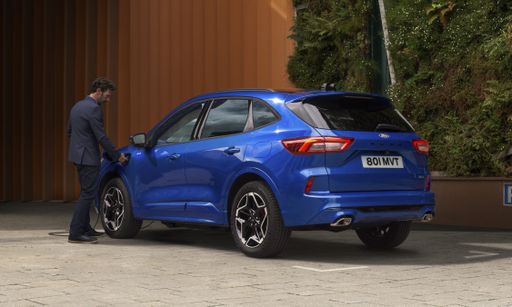
The Kuga is Ford’s adaptable family SUV that blends usable space with a surprisingly lively driving character, making daily commutes and weekend escapes equally enjoyable. With smart interior packaging, an easy-to-use infotainment setup and composed road manners, it’s a sensible choice for buyers who want a bit of fun without the fuss.

details

Lynk & Co 01

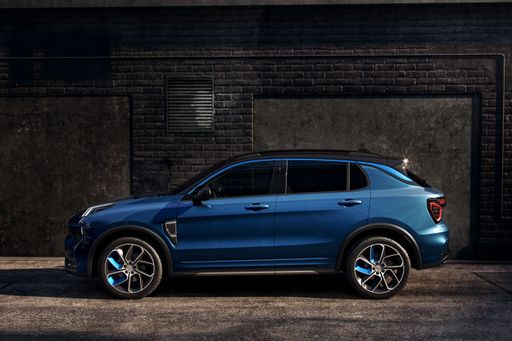
The Lynk & Co 01 marries bold, contemporary styling with a roomy, well-appointed cabin, striking a rare balance between fashionable flair and everyday practicality. With intuitive tech, flexible ownership ideas and a playful driving character, it’s the kind of crossover that turns heads at the lights and keeps owners grinning on the commute.

details
Ford Kuga
Lynk & Co 01

Costs and Consumption

Price
34,200 - 46,300 £
Price
36,900 - 40,300 £
Consumption L/100km
2.8 - 6.8 L/100km
Consumption L/100km
0.9 L/100km
Consumption kWh/100km
-
Consumption kWh/100km
-
Electric Range
68 km
Electric Range
75 km
Battery Capacity
-
Battery Capacity
-
co2
55 - 154 g/km
co2
20 g/km
Fuel tank capacity
-
Fuel tank capacity
-

Dimensions and Body

Body Type
SUV
Body Type
SUV
Seats
5
Seats
5
Doors
-
Doors
-
Curb weight
1,526 - 1,859 kg
Curb weight
1,935 kg
Trunk capacity
-
Trunk capacity
466 L
Length
-
Length
-
Width
1,882 mm
Width
1,860 mm
Height
-
Height
-
Max trunk capacity
-
Max trunk capacity
-
Payload
541 - 550 kg
Payload
415 kg

Engine and Performance

Engine Type
Petrol, Full Hybrid, Plugin Hybrid
Engine Type
Plugin Hybrid
Transmission
Manuel, Automatic
Transmission
Automatic
Transmission Detail
Manual Gearbox, CVT, Automatic Gearbox
Transmission Detail
Automatic Gearbox
Drive Type
Front-Wheel Drive, All-Wheel Drive
Drive Type
Front-Wheel Drive
Power HP
150 - 243 HP
Power HP
280 HP
Acceleration 0-100km/h
7.3 - 9.9 s
Acceleration 0-100km/h
7.7 s
Max Speed
-
Max Speed
-
Torque
240 Nm
Torque
535 Nm
Number of Cylinders
3 - 4
Number of Cylinders
4
Power kW
111 - 178 kW
Power kW
206 kW
Engine capacity
1,496 - 2,488 cm3
Engine capacity
1,499 cm3

General

Model Year
2025
Model Year
2024
CO2 Efficiency Class
E, D, B
CO2 Efficiency Class
B
Brand
Ford
Brand
Lynk & Co
DriveDuel uses data analysis and artificial intelligence to evaluate vehicle data and create content. Content is regularly reviewed and improved. The displayed prices are estimates based on German list prices, adjusted to the respective country’s VAT. Country-specific registration taxes are not included. This information is not legally binding.