VS

Ford Kuga vs Mercedes C Class Wagon comparison

Compare performance (243 HP vs 288 HP), boot space and price (34,200 £ vs 42,600 £ ) at a glance. Find out which car is the better choice for you – Ford Kuga or Mercedes C Class Wagon?

Ford Kuga vs Mercedes C Class Wagon: Key differences

Ford Kuga

4.2 (6 Reviews)
rate
  • clearly cheaper
  • substantially more efficient
  • a bit lighter
details

Mercedes C Class Wagon

3.6 (1 Reviews)
rate
  • somewhat more power
  • clearly quicker 0–100 km/h
details

All details on performance, efficiency, range and trunk space can be found in the technical comparison below – including user reviews for both models.

By Achim Sedelmaier

Kuga

The Battle of Versatility: Ford Kuga vs. Mercedes C-Klasse T-Modell

The automotive market today offers a plethora of choices, catering to various tastes and needs. Two such contenders are the Ford Kuga and the Mercedes C-Klasse T-Modell. Though they fall into different categories—SUV and Wagon, respectively—both claim to offer unparalleled versatility and innovation. Let’s delve into the technical details and innovations of these models to see how they stack up against each other.
C Class Wagon

Design and Body Type

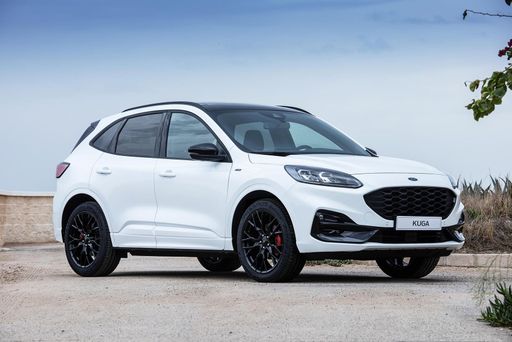
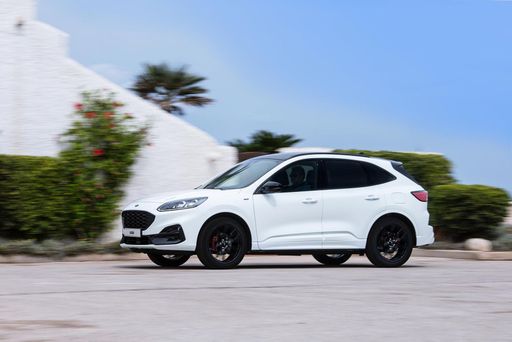
The Ford Kuga, an SUV with a body type synonymous with versatility and robustness, boasts a height range of 1673 to 1681 mm and a width of 1882 mm. Its design emphasizes a bold and rugged appearance, encouraging on-road adventures and ample cabin space.

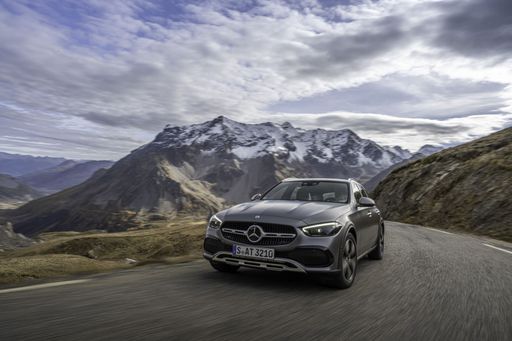
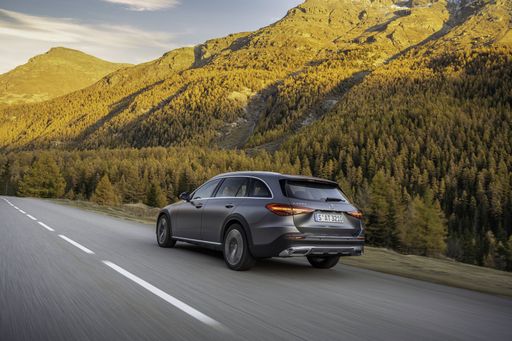
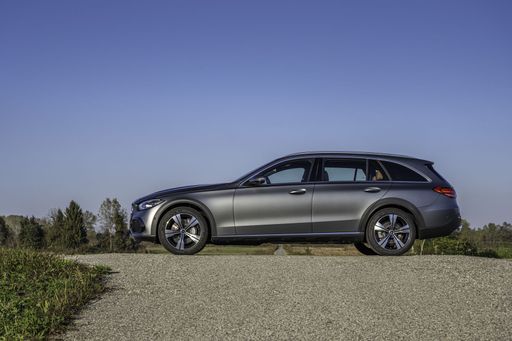
On the other hand, the Mercedes C-Klasse T-Modell, a Wagon, is structured for elegance and practicality. With a height range from 1454 to 1494 mm and a width stretching to 1900 mm, the C-Klasse combines luxury with utility, providing a sleek profile for urban driving and family journeys alike.

Kuga

Performance and Power

Ford Kuga’s performance is versatile, offering a range of engines from petrol to hybrid options, generating between 150 to 243 HP. With flexible driving configurations including Front-Wheel Drive and All-Wheel Drive, its acceleration from 0-100 km/h varies between a rapid 7.3 seconds to a moderate 9.5 seconds, depending on the model. The SUV’s maximum speed can reach up to 200 km/h, providing a spirited driving experience.

Mercedes' C-Klasse T-Modell provides a punchy performance with its range of petrol, diesel, and plug-in hybrid engines, producing between 193 to an impressive 680 HP. It impresses with acceleration figures as brisk as 3.4 seconds from 0-100 km/h, and max speeds touching up to 280 km/h. The wagon’s rear-wheel and all-wheel drive configurations enhance both handling and stability on the road.

C Class Wagon

Innovations in Hybrid Technology

The Ford Kuga dives into hybrid technology with both full hybrid and plug-in hybrid options. It offers an electric range of up to 69 km, supported by a battery capacity of 14.4 kWh, indicating its commitment to sustainability and reduced carbon footprint. These models can achieve a notably low consumption rate of 0.9 L/100km.

The Mercedes C-Klasse T-Modell showcases its commitment to efficiency with its mild hybrid electric vehicle (MHEV) and plug-in hybrid engines offering a remarkable electric range of up to 113 km, housed in a powerful 19.5 kWh battery. Its plug-in hybrids lead the charge with extraordinarily low fuel consumption figures, down to 0.4 L/100km, demonstrating Mercedes' dedication to green technology.

Kuga

Interior and Practicality

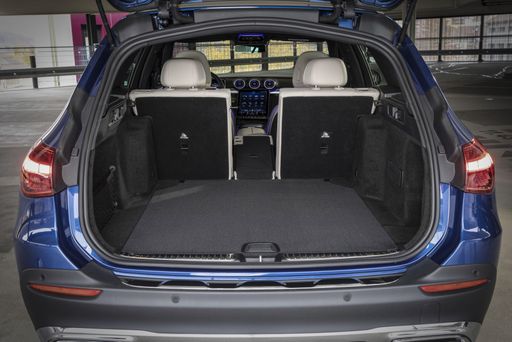
Inside, the Ford Kuga is spacious, accommodating up to five passengers comfortably with a 412-liter trunk capacity. It strikes a balance between functionality and comfort, making it suitable for both family-oriented tasks and solo escapades.

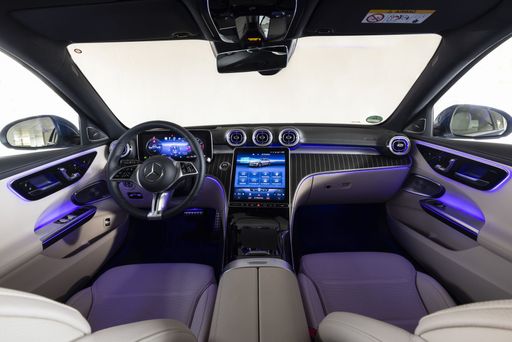
Similarly, the Mercedes C-Klasse T-Modell impresses with its premium interior that also seats five. However, it offers slightly more cargo space with a trunk capacity of up to 490 liters, enhancing its practicality for hauling larger loads.

C Class Wagon

Conclusion

Both the Ford Kuga and the Mercedes C-Klasse T-Modell stand out in their respective domains. The Ford Kuga exemplifies the rugged versatility and eco-friendly prowess that modern SUVs can offer, while the Mercedes C-Klasse T-Modell encapsulates luxury, performance, and innovation, consistently maintaining its premium image. Choosing between them would largely depend on individual needs—whether it’s the adventurous demeanor of an SUV or the refined practicality of a wagon.

Here’s where it gets real: The technical differences in detail

Kuga

Costs and Efficiency:

Looking at overall running costs, both models reveal some interesting differences in everyday economy.

Ford Kuga is clearly cheaper – starting at 34,200 £ , while the Mercedes C Class Wagon costs 42,600 £ . That’s a price difference of around 8,358 £.

Fuel consumption also shows a difference: the Ford Kuga uses 2.8 L/100km and is substantially more efficient than the Mercedes C Class Wagon with 4.7 L/100km. The difference is about 1.9 L/100km.

C Class Wagon

Engine and Performance:

Power, torque and acceleration say a lot about how a car feels on the road. This is where you see which model delivers more driving dynamics.

When it comes to engine power, the Mercedes C Class Wagon offers somewhat more power – delivering 288 HP compared to 243 HP. That’s roughly 45 HP more horsepower.

When accelerating from 0 to 100 km/h, the Mercedes C Class Wagon is clearly quicker – completing the sprint in 5.8 s, while the Ford Kuga takes 7.3 s. That’s about 1.5 s quicker.

There’s also a difference in torque: the Mercedes C Class Wagon delivers considerably more torque with 550 Nm compared to 240 Nm. That’s about 310 Nm more.

Kuga

Space and Everyday Use:

Cabin size, boot volume and payload all play a role in everyday practicality. Here, comfort and flexibility make the difference.

Both vehicles offer seating for 5 people.

In terms of curb weight, Ford Kuga is a bit lighter – 1,526 kg compared to 1,755 kg. The difference is around 229 kg.

When it comes to payload, the Mercedes C Class Wagon carries very slightly more – 565 kg compared to 550 kg. That’s a difference of about 15 kg.

Who wins the race in the data check?

The Ford Kuga is decisively ahead in the objective data comparison.
This result only shows which model scores more points on paper – not which of the two cars feels right for you.

from £34,200
Kuga

Ford Kuga

  • Engine Type : Petrol, Full Hybrid, Plugin Hybrid
  • Transmission : Manuel, Automatic
  • Drive Type : Front-Wheel Drive, All-Wheel Drive
  • Power HP : 150 - 243 HP
  • Consumption L/100km : 2.8 - 6.8 L/100km
  • Electric Range : 68 km
Ford Kuga
Mercedes C Class Wagon

Costs and Consumption

View detailed analysis

Engine and Performance

View detailed analysis

Dimensions and Body

View detailed analysis

Ford Kuga

The Kuga is Ford’s adaptable family SUV that blends usable space with a surprisingly lively driving character, making daily commutes and weekend escapes equally enjoyable. With smart interior packaging, an easy-to-use infotainment setup and composed road manners, it’s a sensible choice for buyers who want a bit of fun without the fuss.

details

Mercedes C Class Wagon

The Mercedes C-Class wagon dresses Mercedes refinement in a sensible, practical package, marrying a sleek estate silhouette with a plush, high-quality cabin that feels more premium than its badge implies. It quietly soaks up motorway miles and cartloads of family kit with composed handling and effortless comfort — a clever alternative to an SUV for buyers who still like to steer.

details
Ford Kuga
Mercedes C Class Wagon

Costs and Consumption

Price
34,200 - 46,300 £
Price
42,600 - 67,200 £
Consumption L/100km
2.8 - 6.8 L/100km
Consumption L/100km
4.7 - 6.9 L/100km
Consumption kWh/100km
-
Consumption kWh/100km
-
Electric Range
68 km
Electric Range
-
Battery Capacity
-
Battery Capacity
-
co2
55 - 154 g/km
co2
123 - 157 g/km
Fuel tank capacity
-
Fuel tank capacity
-

Dimensions and Body

Body Type
SUV
Body Type
Estate
Seats
5
Seats
5
Doors
-
Doors
-
Curb weight
1,526 - 1,859 kg
Curb weight
1,755 - 1,940 kg
Trunk capacity
-
Trunk capacity
490 L
Length
-
Length
-
Width
1,882 mm
Width
1,820 mm
Height
-
Height
-
Max trunk capacity
-
Max trunk capacity
-
Payload
541 - 550 kg
Payload
460 - 565 kg

Engine and Performance

Engine Type
Petrol, Full Hybrid, Plugin Hybrid
Engine Type
Petrol MHEV, Diesel MHEV
Transmission
Manuel, Automatic
Transmission
Automatic
Transmission Detail
Manual Gearbox, CVT, Automatic Gearbox
Transmission Detail
Automatic Gearbox
Drive Type
Front-Wheel Drive, All-Wheel Drive
Drive Type
Rear-Wheel Drive, All-Wheel Drive
Power HP
150 - 243 HP
Power HP
186 - 288 HP
Acceleration 0-100km/h
7.3 - 9.9 s
Acceleration 0-100km/h
5.8 - 8.8 s
Max Speed
-
Max Speed
-
Torque
240 Nm
Torque
250 - 550 Nm
Number of Cylinders
3 - 4
Number of Cylinders
4
Power kW
111 - 178 kW
Power kW
137 - 212 kW
Engine capacity
1,496 - 2,488 cm3
Engine capacity
1,496 - 1,999 cm3

General

Model Year
2025
Model Year
2,024 - 2,025
CO2 Efficiency Class
E, D, B
CO2 Efficiency Class
E, F, D
Brand
Ford
Brand
Mercedes-Benz
DriveDuel uses data analysis and artificial intelligence to evaluate vehicle data and create content. Content is regularly reviewed and improved. The displayed prices are estimates based on German list prices, adjusted to the respective country’s VAT. Country-specific registration taxes are not included. This information is not legally binding.