@ Ford Motor Company / Ford Media Center
@ Toyota Motor Corporation
VS

Ford Kuga vs Toyota Corolla – Performance, range & efficiency compared

Everyday use, family trips or long-distance drives – here’s where the differences show.
Discover whether Ford Kuga or Toyota Corolla fits your lifestyle better.

Kuga @ Ford Motor Company / Ford Media Center

Ford Kuga vs. Toyota Corolla: A Clash of Innovation and Efficiency

In the ever-evolving automotive market, the competition between SUVs and hatchbacks has become more pronounced, as consumers weigh the benefits of space and power against efficiency and maneuverability. This article delves into an intriguing comparison between the Ford Kuga, an SUV recognized for its muscular performance, and the Toyota Corolla, a hatchback icon known for its remarkable efficiency.
Corolla @ Toyota Motor Corporation

Design and Dimensions

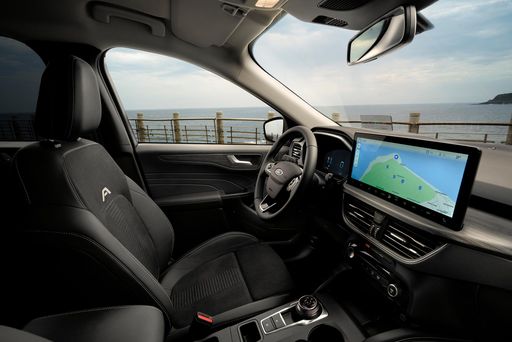
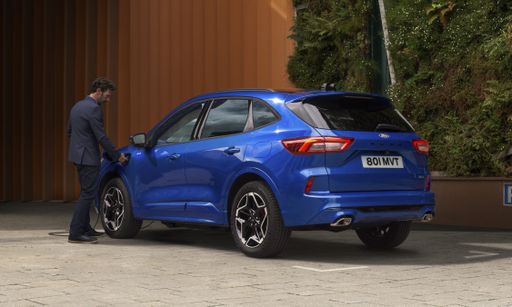
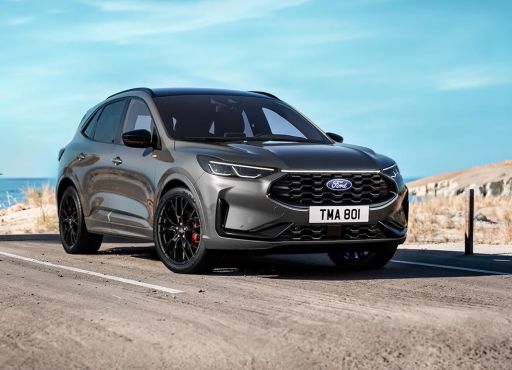
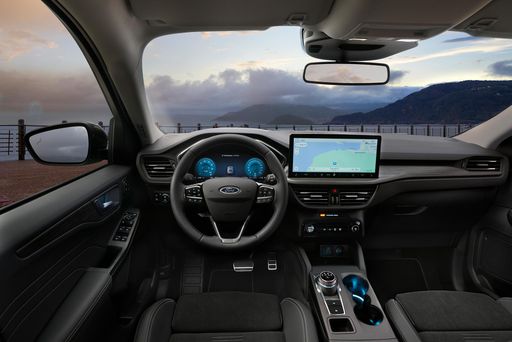
The Ford Kuga stands out with its commanding presence, characterized by its SUV body type. Measuring up to 4645 mm in length, 1882 mm in width, and 1681 mm in height, the Kuga commands the road with an imposing stance, offering a spacious interior with ample headroom and legroom, ideal for families or adventurers.

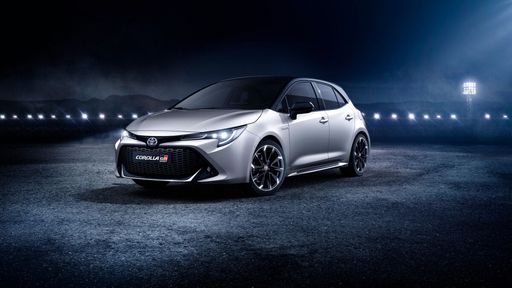
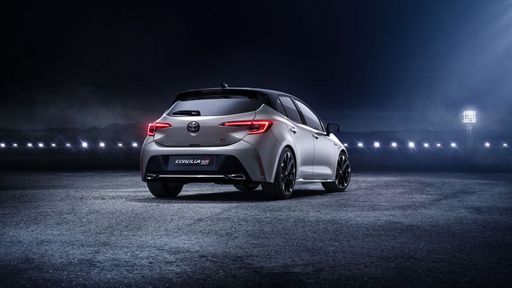
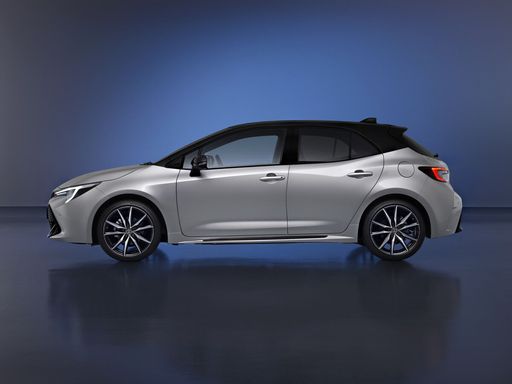
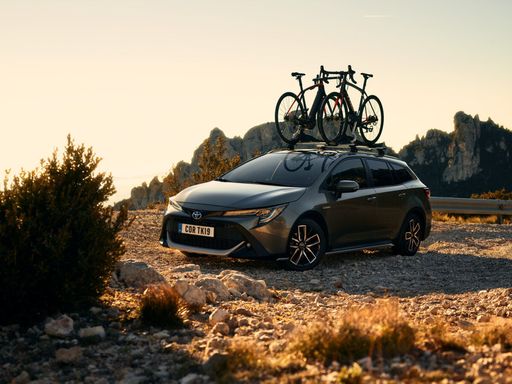
Conversely, the Toyota Corolla's hatchback design emphasizes compact efficiency, with dimensions of 4370 mm in length, 1790 mm in width, and 1435 mm in height. This makes the Corolla perfectly suited for urban environments, allowing for nimble handling and ease of parking while still comfortably seating five passengers.

Kuga @ Ford Motor Company / Ford Media Center

Performance and Efficiency

The Ford Kuga offers a variety of engine options, including petrol, full hybrid, and plug-in hybrid, catering to diverse driving preferences. With power outputs ranging from 150 to 243 HP and a maximum speed of up to 200 km/h, it provides a robust driving experience. For hybrid enthusiasts, the plug-in variant boasts an electric range of 69 km, supported by a 14.4 kWh battery, optimizing efficiency with consumption as low as 0.9 L/100 km.

On the flip side, the Toyota Corolla emphasizes eco-friendliness with its full hybrid engine providing power outputs of up to 196 HP. This model boasts a streamlined consumption of 4.4 L/100 km, paired with a CO2 efficiency class of C. Achieving a solid 180 km/h top speed, the Corolla balances spirited drives with environmental consciousness.

Corolla @ Toyota Motor Corporation

Technological Innovations

Both vehicles offer advancements in automotive technology, enhancing the driving experience. The Ford Kuga's hybrid models benefit from the selectable drive modes and intuitive infotainment systems, designed to cater to driver preferences while fostering an engaging ride. The seamless transition between petrol and electric power aligns with Kuga's ambition for optimal performance blended with efficiency.

Toyota's Corolla integrates a next-generation CVT transmission, ensuring smooth acceleration and deceleration. Known for its legendary reliability, the Corolla offers a cockpit that prioritizes driver interaction, featuring a user-friendly interface and connectivity options enhancing convenience on the road.

Kuga @ Ford Motor Company / Ford Media Center

Interior Comfort and Cargo Space

The Ford Kuga's interior mirrors its expansive exterior, boasting a trunk capacity of 412 L. The spacious cabin comfortably accommodates five passengers, supplemented by an array of storage solutions tailored for versatility in cargo handling.

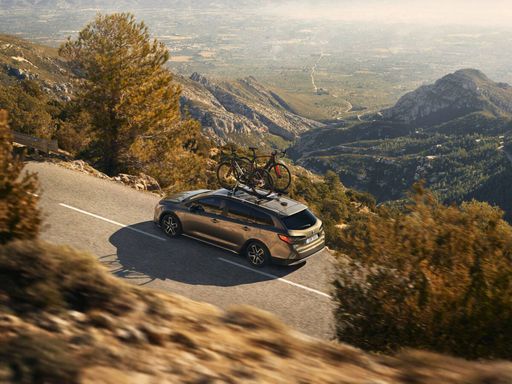
Meanwhile, the Toyota Corolla's design efficiently utilizes space within its compact frame, offering a trunk capacity ranging from 313 to 361 L. This configuration caters to daily commuting needs without compromising passenger comfort, making it a stellar choice for practical urban lifestyles.

Corolla @ Toyota Motor Corporation

Conclusion

In conclusion, the choice between the Ford Kuga and the Toyota Corolla hinges on individual priorities. The Kuga appeals to those desiring performance and spaciousness, making it an excellent option for adventurous families. Meanwhile, the Corolla stands out for its unmatched efficiency and urban agility, appealing to environmentally-conscious drivers who favor city commutes. Ultimately, both models exemplify excellence in their respective categories, making them compelling choices in the automotive landscape.

Here’s where it gets real: The technical differences in detail

Costs and Efficiency:

Price and efficiency are often the first things buyers look at. Here it becomes clear which model has the long-term edge – whether at the pump, the plug, or in purchase price.

Toyota Corolla has a slightly advantage in terms of price – it starts at 28600 £, while the Ford Kuga costs 34200 £. That’s a price difference of around 5665 £.

Fuel consumption also shows a difference: Ford Kuga manages with 2.80 L and is therefore significantly more efficient than the Toyota Corolla with 4.40 L. The difference is about 1.60 L per 100 km.

Engine and Performance:

Power, torque and acceleration say a lot about how a car feels on the road. This is where you see which model delivers more driving dynamics.

When it comes to engine power, the Ford Kuga has a clearly perceptible edge – offering 243 HP compared to 178 HP. That’s roughly 65 HP more horsepower.

In acceleration from 0 to 100 km/h, the Ford Kuga is hardly perceptible quicker – completing the sprint in 7.30 s, while the Toyota Corolla takes 7.50 s. That’s about 0.20 s faster.

In terms of top speed, the Ford Kuga performs minimal better – reaching 200 km/h, while the Toyota Corolla tops out at 180 km/h. The difference is around 20 km/h.

Space and Everyday Use:

Cabin size, boot volume and payload all play a role in everyday practicality. Here, comfort and flexibility make the difference.

Both vehicles offer seating for 5 people.

In curb weight, Toyota Corolla is slight lighter – 1420 kg compared to 1526 kg. The difference is around 106 kg.

In terms of boot space, the Ford Kuga offers a bit more room – 412 L compared to 361 L. That’s a difference of about 51 L.

In maximum load capacity, the Ford Kuga performs evident better – up to 1534 L, which is about 482 L more than the Toyota Corolla.

When it comes to payload, Ford Kuga slightly takes the win – 550 kg compared to 450 kg. That’s a difference of about 100 kg.

Who wins the race?

The Ford Kuga proves to be outperforms in nearly all aspects and therefore becomes our DriveDuel Champion!
Ford Kuga is the better all-rounder in this comparison.

from about £34,200
Kuga @ Ford Motor Company / Ford Media Center

Ford Kuga

  • Engine Type : Petrol, Full Hybrid, Plugin Hybrid
  • Transmission : Manuel, Automatic
  • Drive Type : Front-Wheel Drive, All-Wheel Drive
  • Power HP : 150 - 243 HP
  • Consumption L/100km : 2.8 - 6.8 L
  • Electric Range : 68 km

Ford Kuga

3.5 (2)
rate

The Kuga is Ford’s adaptable family SUV that blends usable space with a surprisingly lively driving character, making daily commutes and weekend escapes equally enjoyable. With smart interior packaging, an easy-to-use infotainment setup and composed road manners, it’s a sensible choice for buyers who want a bit of fun without the fuss.

details

Toyota Corolla

5 (1)
rate

The Toyota Corolla remains the steady, no-nonsense compact that puts reliability and low running costs at the top of your shopping list, with a comfortable, well-built interior that won't embarrass you at the supermarket. It won't set your pulse racing, but it's an honest, easy-to-live-with car that makes smart sense for buyers who want dependability and sensible value with a dash of modern tech.

details
Ford Kuga
Toyota Corolla
Kuga @ Ford Motor Company / Ford Media Center
Corolla @ Toyota Motor Corporation

Costs and Consumption

Price
34200 - 46300 £
Price
28600 - 34900 £
Consumption L/100km
2.8 - 6.8 L
Consumption L/100km
4.40 L
Consumption kWh/100km
-
Consumption kWh/100km
-
Electric Range
68 km
Electric Range
-
Battery Capacity
1.1 - 14.4 kWh
Battery Capacity
-
co2
55 - 154 g/km
co2
100 g/km
Fuel tank capacity
42 - 54 L
Fuel tank capacity
43 L

Dimensions and Body

Body Type
SUV
Body Type
Hatchback
Seats
5
Seats
5
Doors
5
Doors
5
Curb weight
1526 - 1859 kg
Curb weight
1420 - 1460 kg
Trunk capacity
412 L
Trunk capacity
313 - 361 L
Length
4604 - 4645 mm
Length
4370 mm
Width
1882 mm
Width
1790 mm
Height
1673 - 1681 mm
Height
1435 mm
Max trunk capacity
1534 L
Max trunk capacity
1004 - 1052 L
Payload
541 - 550 kg
Payload
400 - 450 kg

Engine and Performance

Engine Type
Petrol, Full Hybrid, Plugin Hybrid
Engine Type
Full Hybrid
Transmission
Manuel, Automatic
Transmission
Automatic
Transmission Detail
Manual Gearbox, CVT, Automatic Gearbox
Transmission Detail
CVT
Drive Type
Front-Wheel Drive, All-Wheel Drive
Drive Type
Front-Wheel Drive
Power HP
150 - 243 HP
Power HP
140 - 178 HP
Acceleration 0-100km/h
7.3 - 9.9 s
Acceleration 0-100km/h
7.5 - 9.2 s
Max Speed
195 - 200 km/h
Max Speed
180 km/h
Torque
240 Nm
Torque
-
Number of Cylinders
3 - 4
Number of Cylinders
4
Power kW
111 - 178 kW
Power kW
103 - 131 kW
Engine capacity
1496 - 2488 cm3
Engine capacity
1798 - 1987 cm3

General

Model Year
2025
Model Year
2025
CO2 Efficiency Class
E, D, B
CO2 Efficiency Class
C
Brand
Ford
Brand
Toyota
What drivetrain options does the Ford Kuga have?

The Ford Kuga is available as Front-Wheel Drive or All-Wheel Drive.

The prices and data displayed are estimates based on German list prices and may vary by country. This information is not legally binding.