VS

Ford Mustang Mach-E vs Renault Scénic comparison

Compare performance (487 HP vs 218 HP), boot space and price (48,400 £ vs 34,600 £ ) at a glance. Find out which car is the better choice for you – Ford Mustang Mach-E or Renault Scénic?

Ford Mustang Mach-E vs Renault Scénic: Key differences

Ford Mustang Mach-E

3.4 (3 Reviews)
rate
  • considerably more power
  • only slightly more electric range
  • significantly quicker 0–100 km/h
details

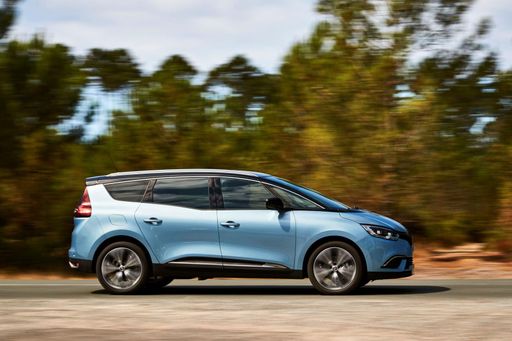
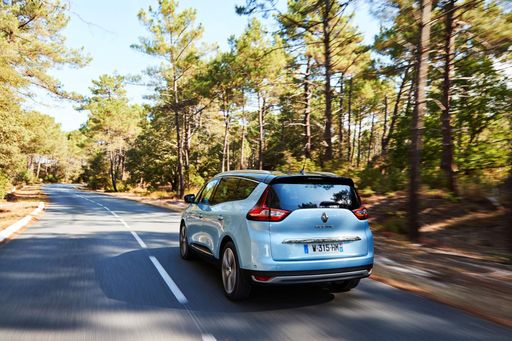
Renault Scénic

4.6 (3 Reviews)
rate
  • clearly cheaper
  • very slightly more efficient
  • somewhat lighter
  • marginally more trunk space
details

All details on performance, efficiency, range and trunk space can be found in the technical comparison below – including user reviews for both models.

By Achim Sedelmaier

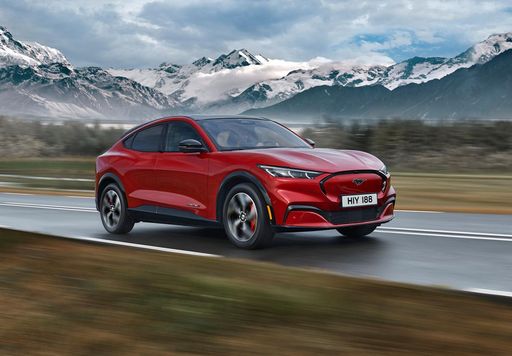
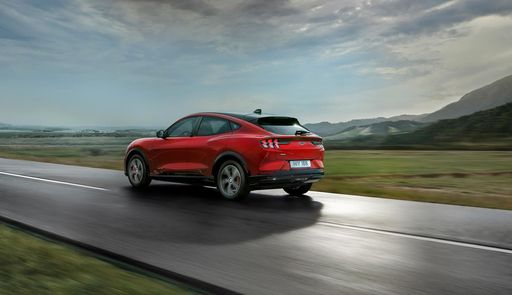
Mustang Mach-E

Battle of the Electric SUVs: Ford Mustang Mach-E vs. Renault Scénic

The automotive world is buzzing with excitement as two electric SUVs square off: the Ford Mustang Mach-E and the Renault Scénic. These vehicles promise eco-friendly driving paired with modern innovations and a focus on performance. Join us as we delve into the technical aspects and unique innovations offered by these two electric contenders.
Scénic

Power and Performance

The Ford Mustang Mach-E, with its diverse lineup of powertrains, offers a range of horsepower options from 269 HP to a powerful 487 HP. This translates to exhilarating acceleration, with the fastest Mach-E variant sprinting from 0 to 100 km/h in a mere 3.5 seconds. In contrast, the Scénic's power sits between 170 HP and 220 HP, with an acceleration time of 7.9 seconds at its peak. While the Mach-E aims to excite with rear-wheel and all-wheel-drive options, the Scénic focuses on practicality with its front-wheel-drive system.

Mustang Mach-E

Range and Efficiency

Electric range is a critical consideration for any electric vehicle. The Mustang Mach-E impresses with a potential range of up to 600 km, varying with model configurations. Its consumption figures hover between 17.3 and 21.3 kWh/100km. The Renault Scénic, meanwhile, offers a commendable range of up to 598 km, with efficiency figures between 16.7 and 17.6 kWh/100km. While both vehicles are designed to minimize carbon footprints, the Scénic makes a strong case for efficiency with its class-leading CO2 efficiency rating.

Scénic

Design and Dimensions

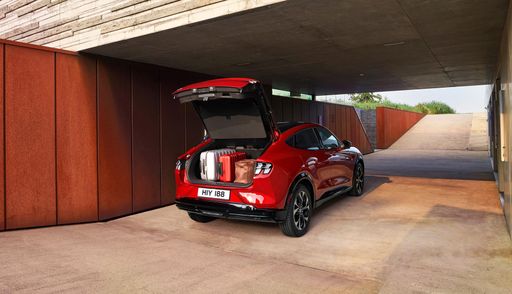
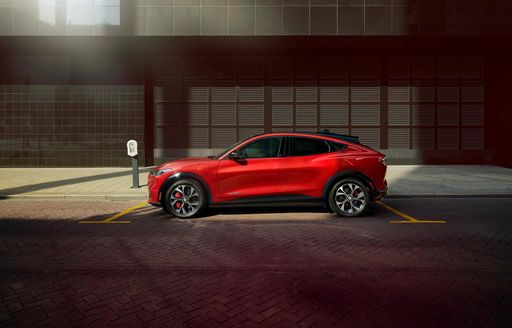
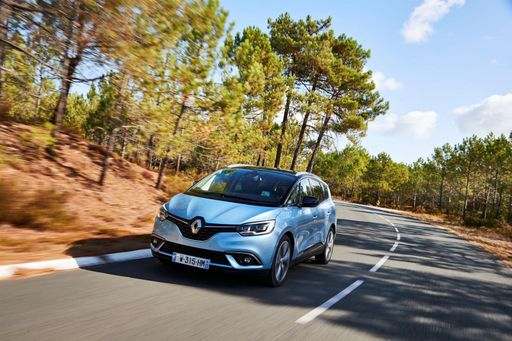
Both the Mach-E and Scénic sit proudly in the SUV category, but they take different approaches to design aesthetics and dimensions. The Ford Mustang Mach-E is slightly more imposing with a length of up to 4750 mm and a height of 1648 mm, offering a bold, muscular look. Meanwhile, the Renault Scénic is more compact, measuring 4470 mm in length and 1571 mm in height, catering to urban drivers seeking agility and convenience without sacrificing space.

Mustang Mach-E

Interior Comfort and Storage

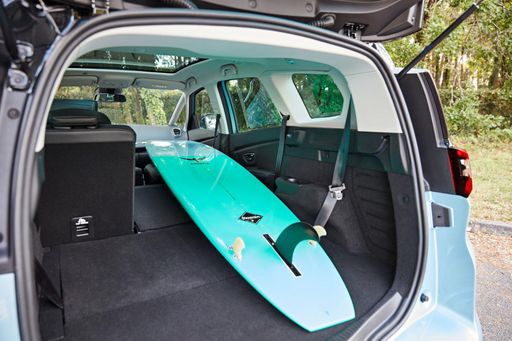
Comfort and practicality are essential attributes for an SUV, and both contenders recognize this with seating for five. The Mach-E provides a trunk capacity of 402 liters, which, while adequate, pales in comparison to the Scénic’s ample 545 liters – a notable advantage for families and adventurers needing extra storage space. The interior of both vehicles is modern and tech-savvy, designed to enhance driver and passenger experience with the latest connectivity features.

Scénic

Innovation and Technological Features

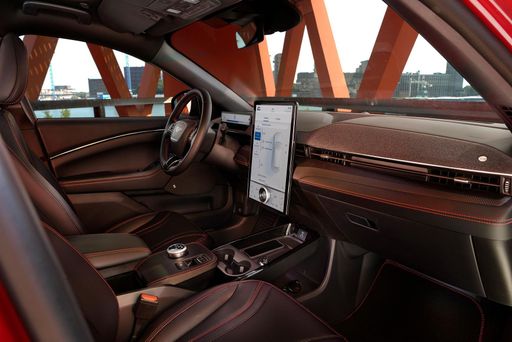
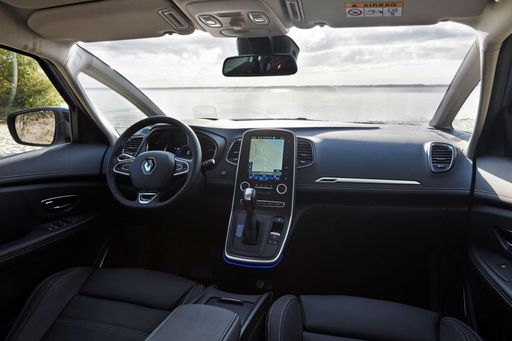
In terms of technology, the Mach-E boasts Ford’s cutting-edge driving aids and a user-friendly infotainment system, setting high standards for safety and connectivity. The Scénic, not to be outdone, incorporates Renault's innovative Easy Link system, ensuring drivers stay connected throughout their journey. With both vehicles embracing the era of digital dashboards and smart features, drivers can expect a seamless blend of technology and functionality.

Mustang Mach-E

Conclusion: Choose Your Champion

The Ford Mustang Mach-E and Renault Scénic both represent the exciting future of electric SUVs, each catering to different preferences. The Mach-E is ideal for those seeking high performance, with multiple power and drive configurations. In contrast, the Scénic focuses on practicality, efficiency, and spaciousness, making it a great choice for everyday driving and family needs. With both options bringing zero-emissions driving into the mainstream, the choice ultimately comes down to individual priorities and lifestyle.

Here’s where it gets real: The technical differences in detail

Mustang Mach-E

Costs and Efficiency:

Looking at overall running costs, both models reveal some interesting differences in everyday economy.

Renault Scénic is clearly cheaper – starting at 34,600 £ , while the Ford Mustang Mach-E costs 48,400 £ . That’s a price difference of around 13,800 £.

In terms of energy consumption, the Renault Scénic is very slightly more efficient: consuming 16.6 kWh/100km compared to 17.7 kWh/100km for the Ford Mustang Mach-E. That’s a difference of about 1.1 kWh/100km.

As for electric range, the Ford Mustang Mach-E offers only slightly more range – reaching up to 600 km, about 2 km more than the Renault Scénic.

Scénic

Engine and Performance:

Under the bonnet, it becomes clear which model is tuned for sportiness and which one takes the lead when you hit the accelerator.

When it comes to engine power, the Ford Mustang Mach-E offers considerably more power – delivering 487 HP compared to 218 HP. That’s roughly 269 HP more horsepower.

When accelerating from 0 to 100 km/h, the Ford Mustang Mach-E is significantly quicker – completing the sprint in 3.8 s, while the Renault Scénic takes 7.9 s. That’s about 4.1 s quicker.

There’s also a difference in torque: the Ford Mustang Mach-E delivers substantially more torque with 950 Nm compared to 300 Nm. That’s about 650 Nm more.

Mustang Mach-E

Space and Everyday Use:

Cabin size, boot volume and payload all play a role in everyday practicality. Here, comfort and flexibility make the difference.

Both vehicles offer seating for 5 people.

In terms of curb weight, Renault Scénic is somewhat lighter – 1,822 kg compared to 2,161 kg. The difference is around 339 kg.

Looking at boot space, the Renault Scénic offers marginally more boot space – 545 L compared to 519 L. That’s a difference of about 26 L.

When it comes to payload, the Renault Scénic carries a bit more – 518 kg compared to 450 kg. That’s a difference of about 68 kg.

Who wins the race in the data check?

The Ford Mustang Mach-E is far ahead overall in the objective data comparison.
This result only shows which model scores more points on paper – not which of the two cars feels right for you.

from £48,400
Mustang Mach-E

Ford Mustang Mach-E

  • Engine Type : Electric
  • Transmission : Automatic
  • Drive Type : Rear-Wheel Drive, All-Wheel Drive
  • Power HP : 268 - 487 HP
  • Consumption kWh/100km : 17.7 - 21 kWh/100km
  • Electric Range : 470 - 600 km
Ford Mustang Mach-E
Renault Scénic

Costs and Consumption

View detailed analysis

Engine and Performance

View detailed analysis

Dimensions and Body

View detailed analysis

Ford Mustang Mach-E

The Mustang Mach-E proves an electric SUV can be both playful and practical, with the Mustang name bringing muscle-car charisma to a family-friendly package. It delivers eager performance, a comfortable cabin, and a slick infotainment setup that keeps daily driving fun — and yes, you’ll still get admiring glances at the lights.

details

Renault Scénic

The Renault Scénic is a quietly clever family MPV that balances everyday practicality with unexpected flair, offering a roomy, flexible cabin that makes school runs and weekend escapes less of a chore. It won't dazzle like a sports car, but its composed ride, sensible tech and thoughtful storage solutions make it a superbly pragmatic choice for buyers who prefer substance with a wink.

details
Ford Mustang Mach-E
Renault Scénic

Costs and Consumption

Price
48,400 - 66,900 £
Price
34,600 - 44,000 £
Consumption L/100km
-
Consumption L/100km
-
Consumption kWh/100km
17.7 - 21 kWh/100km
Consumption kWh/100km
16.6 - 17.5 kWh/100km
Electric Range
470 - 600 km
Electric Range
420 - 598 km
Battery Capacity
-
Battery Capacity
-
co2
0 g/km
co2
0 g/km
Fuel tank capacity
-
Fuel tank capacity
-

Dimensions and Body

Body Type
SUV
Body Type
SUV
Seats
5
Seats
5
Doors
-
Doors
5
Curb weight
2,161 - 2,351 kg
Curb weight
1,822 - 1,927 kg
Trunk capacity
519 L
Trunk capacity
545 L
Length
-
Length
4,470 mm
Width
1,881 mm
Width
1,864 mm
Height
-
Height
1,571 mm
Max trunk capacity
-
Max trunk capacity
1,670 L
Payload
368 - 450 kg
Payload
514 - 518 kg

Engine and Performance

Engine Type
Electric
Engine Type
Electric
Transmission
Automatic
Transmission
Automatic
Transmission Detail
Reduction Gearbox
Transmission Detail
Reduction Gearbox
Drive Type
Rear-Wheel Drive, All-Wheel Drive
Drive Type
Front-Wheel Drive
Power HP
268 - 487 HP
Power HP
170 - 218 HP
Acceleration 0-100km/h
3.8 - 6.2 s
Acceleration 0-100km/h
7.9 - 8.6 s
Max Speed
-
Max Speed
150 - 170 km/h
Torque
525 - 950 Nm
Torque
280 - 300 Nm
Number of Cylinders
-
Number of Cylinders
-
Power kW
197 - 358 kW
Power kW
125 - 160 kW
Engine capacity
-
Engine capacity
-

General

Model Year
2025
Model Year
2025
CO2 Efficiency Class
A
CO2 Efficiency Class
A
Brand
Ford
Brand
Renault
DriveDuel uses data analysis and artificial intelligence to evaluate vehicle data and create content. Content is regularly reviewed and improved. The displayed prices are estimates based on German list prices, adjusted to the respective country’s VAT. Country-specific registration taxes are not included. This information is not legally binding.