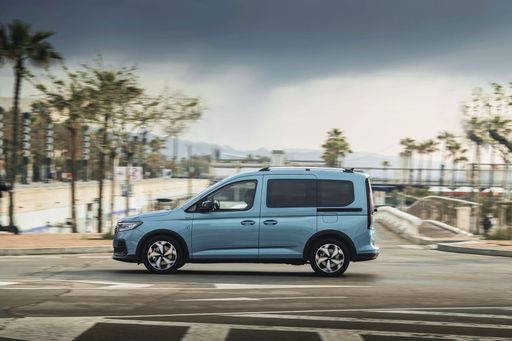
VS

Ford Tourneo Courier vs Ford Tourneo Connect comparison

Compare performance (136 HP vs 150 HP), boot space and price (21,800 £ vs 27,300 £ ) at a glance. Find out which car is the better choice for you – Ford Tourneo Courier or Ford Tourneo Connect?

Ford Tourneo Courier vs Ford Tourneo Connect: Key differences

Ford Tourneo Courier

4.7 (1 Reviews)
rate
  • noticeably cheaper
  • clearly more electric range
  • very slightly lighter
details

Ford Tourneo Connect

4.9 (1 Reviews)
rate
  • only slightly more power
  • clearly more efficient
  • substantially more trunk space
details

All details on performance, efficiency, range and trunk space can be found in the technical comparison below – including user reviews for both models.

By Achim Sedelmaier

Tourneo Courier

Ford Tourneo Connect VS Ford Tourneo Courier: which suits your everyday life?

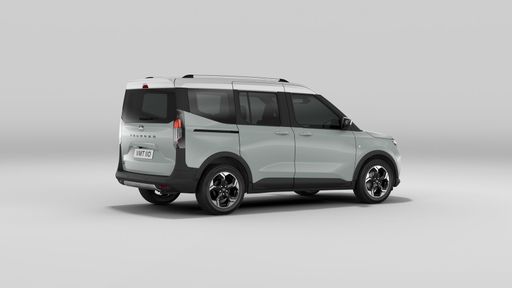
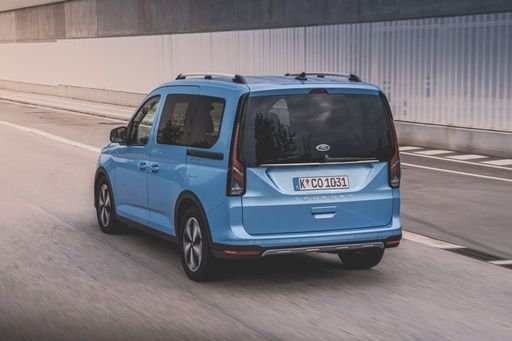
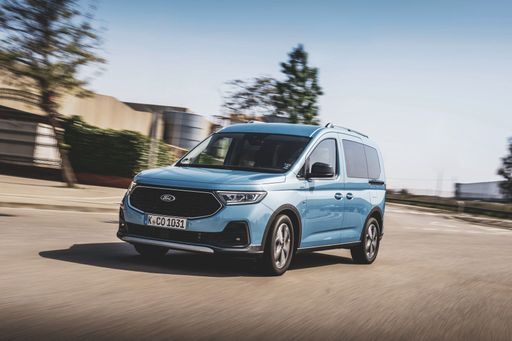
Ford Tourneo Connect VS Ford Tourneo Courier sets up a simple trade-off: the Tourneo Connect prioritises cargo capacity and flexibility, while the Tourneo Courier compresses much of that usefulness into a more city‑friendly footprint and a lower entry price. The Tourneo Connect feels like a small van dressed in family clothes — huge luggage room, wide rear bench and practical load solutions — whereas the Tourneo Courier feels like a compact people‑carrier that squeezes surprising interior volume into tight exterior dimensions. Buyers who need true utility and optional electrified driving will lean toward the Tourneo Connect; those who want easy parking, modern connectivity and value will find the Tourneo Courier more appealing. Below we break the differences down where they matter in everyday use, so you can see which compromises you’d live with every day.
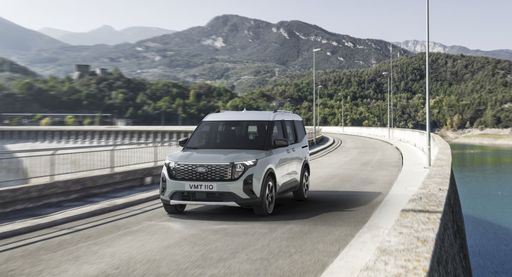
Tourneo Connect

Practical space and family usability

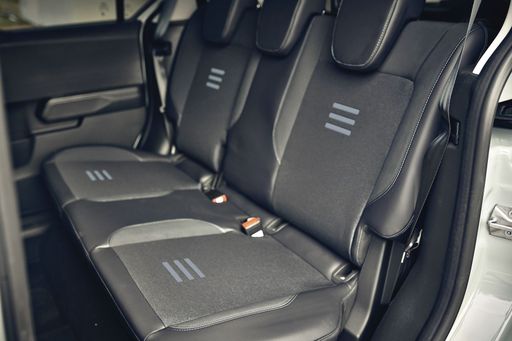
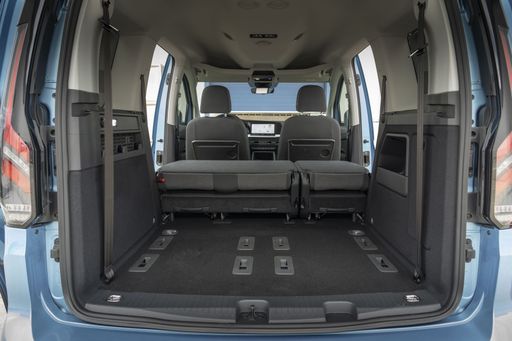
The Ford Tourneo Connect is the clear choice if you regularly juggle three child seats, large suitcases or a bike with minimal dismantling — its rear bench and load area are built around maximum usability. The Ford Tourneo Courier still offers an impressive boot for its size and two handy sliding doors, but the Courier’s middle rear seat is more of a compromise and three car‑seats side‑by‑side aren’t realistic. Tourneo Connect’s seats can be folded and reconfigured for long items and heavy payloads, while the Courier keeps things simpler and more fixed, which helps packaging but limits flexibility. For family buyers the decision is practical: choose the Connect for genuine space and modularity, choose the Courier if you prioritise compactness and don’t need full van‑level versatility.

Tourneo Courier

Driving character and long‑distance behaviour

On long runs the Ford Tourneo Connect feels more planted and can carry heavy loads without losing composure, and its plug‑in option makes long commutes quieter when driven electrically; that said, the Connect admits more wind and road noise than a car‑based MPV. The Ford Tourneo Courier surprises with composed motorway manners and lower measured cabin noise at steady speed, but it tends to drink more fuel under sustained high‑speed or heavy use. If you tow, haul or want a stronger engine feel the Tourneo Connect is the more capable companion; if you mostly cruise between towns and want a relaxed, quiet highway experience the lighter, compact Courier will feel more civilised. Both are not sporty cars — the Courier leans more towards relaxed refinement while the Connect trades refinement for utility and strength.

Tourneo Connect

City friendliness and everyday usability

In urban traffic the Ford Tourneo Courier’s shorter length and nimble turning circle make it noticeably easier to park and thread through narrow streets than the wider Ford Tourneo Connect. The Tourneo Connect’s twin sliding doors are a big advantage at crowded school gates and tight bays, but its overall width and large rear hatch demand more clearance when manoeuvring. Both models offer practical high seating positions and useful visibility up front, yet the Connect’s tall C‑pillars make rearward sightlines more obstructed, so cameras and sensors feel more like necessities. For inner‑city parents and apartment dwellers the Courier’s compact agility wins out; for buyers who need easy side access and bulk storage, the Connect still justifies its size.

Tourneo Courier

Comfort, cabin feel and perceived quality

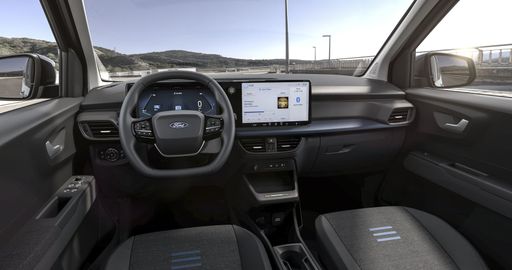
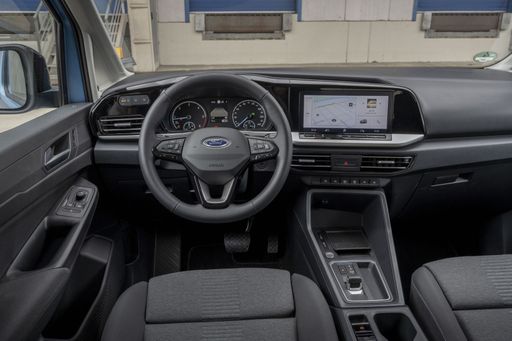
Step into either Ford Tourneo Connect or Ford Tourneo Courier and you’ll meet a functional interior built for purpose: hard plastics and sensible storage dominate rather than soft‑touch luxury. The Tourneo Connect leans toward a tougher, more utilitarian feel that matches its transporter roots and gives a robust impression, while the Tourneo Courier presents a cleaner, more modern infotainment experience with wireless smartphone integration that lifts perceived technology levels. Both cars have quirks in climate and audio controls — the Connect’s control layout can feel fussy and the Courier buries some functions in touch menus — so night‑time ergonomics and quick adjustments are areas to test in person. In short, the Connect trades ambient polish for durability and load‑oriented practicality; the Courier trades a bit of flexibility for a fresher, more user‑centric cabin.

Tourneo Connect

Running costs, ownership trade‑offs and who each car suits

Ownership finances are a real divider: the Ford Tourneo Courier starts lower and gives excellent space‑for‑the‑money, but its real‑world fuel appetite will punish high mileages and motorway commuting. The Ford Tourneo Connect typically costs more upfront, particularly with the plug‑in option, but that PHEV capability can dramatically cut running costs for short daily runs and reduce tailpipe emissions — provided you charge regularly. Reliability, parts and servicing will feel similar between the two, yet depreciation and insurance attitudes will differ because the Courier appeals to budget‑minded buyers and the Connect to those seeking capability. If you want a compact, affordable daily with sharp connectivity, the Courier is the smarter city‑first pick; if your priority is cargo space, load flexibility or electrified short‑trip economy, the Connect is the practical, longer‑term choice — and the technical comparison that follows will quantify those trade‑offs for the detail‑minded buyer.

Here’s where it gets real: The technical differences in detail

Tourneo Courier

Costs and Efficiency:

Price and efficiency are often the first things buyers look at. Here it becomes clear which model has the long-term edge – whether at the pump, the plug, or in purchase price.

Ford Tourneo Courier is noticeably cheaper – starting at 21,800 £ , while the Ford Tourneo Connect costs 27,300 £ . That’s a price difference of around 5,528 £.

Fuel consumption also shows a difference: the Ford Tourneo Connect uses 0.5 L/100km and is clearly more efficient than the Ford Tourneo Courier with 6.6 L/100km. The difference is about 6.1 L/100km.

As for electric range, the Ford Tourneo Courier offers clearly more range – reaching up to 320 km, about 201 km more than the Ford Tourneo Connect.

Tourneo Connect

Engine and Performance:

Under the bonnet, it becomes clear which model is tuned for sportiness and which one takes the lead when you hit the accelerator.

When it comes to engine power, the Ford Tourneo Connect offers only slightly more power – delivering 150 HP compared to 136 HP. That’s roughly 14 HP more horsepower.

There’s also a difference in torque: the Ford Tourneo Connect delivers moderately more torque with 350 Nm compared to 290 Nm. That’s about 60 Nm more.

Tourneo Courier

Space and Everyday Use:

Whether family car or daily driver – which one offers more room, flexibility and comfort?

Both vehicles offer seating for 5 people.

In terms of curb weight, Ford Tourneo Courier is very slightly lighter – 1,517 kg compared to 1,542 kg. The difference is around 25 kg.

Looking at boot space, the Ford Tourneo Connect offers substantially more boot space – 1,720 L compared to 570 L. That’s a difference of about 1,150 L.

When it comes to payload, the Ford Tourneo Connect carries considerably more – 818 kg compared to 483 kg. That’s a difference of about 335 kg.

Who wins the race in the data check?

The Ford Tourneo Connect is decisively ahead in the objective data comparison.
This result only shows which model scores more points on paper – not which of the two cars feels right for you.

from £27,300
Tourneo Connect

Ford Tourneo Connect

  • Engine Type Plugin Hybrid, Petrol, Diesel
  • Transmission Automatic, Manuel
  • Drive Type Front-Wheel Drive, All-Wheel Drive
  • Power HP 102 - 150 HP
  • Consumption L/100km 0.5 - 6.9 L/100km
  • Electric Range 116 - 119 km
Ford Tourneo Courier
Ford Tourneo Connect

Costs and Consumption

View detailed analysis

Engine and Performance

View detailed analysis

Dimensions and Body

View detailed analysis

Ford Tourneo Courier

The Ford Tourneo Courier is a cheeky, compact people carrier that turns urban errands into a pleasure, thanks to a spacious, cleverly packaged cabin and genuinely practical storage everywhere you look. It drives with reassuringly car-like manners, so the ride is comfy for school runs and shopping trips, and sensible touches like fold-flat seats, a high driving position and plentiful cubbies make it a smart, fuss-free choice for small families and weekend haulers.

details

Ford Tourneo Connect

The Ford Tourneo Connect is a practical, surprisingly polished people-mover that balances family-friendly flexibility with car-like driving manners. With clever storage, sliding doors and a bright, airy cabin it’s a smart choice for buyers who want sensible versatility without sacrificing everyday comfort — and it’s oddly enjoyable to drive for its size.

details
Ford Tourneo Courier
Ford Tourneo Connect

Costs and Consumption

Price
21,800 - 35,000 £
Price
27,300 - 41,900 £
Consumption L/100km
6.6 - 6.7 L/100km
Consumption L/100km
0.5 - 6.9 L/100km
Consumption kWh/100km
17.9 kWh/100km
Consumption kWh/100km
-
Electric Range
320 km
Electric Range
116 - 119 km
Battery Capacity
-
Battery Capacity
-
co2
0 - 151 g/km
co2
11 - 164 g/km
Fuel tank capacity
-
Fuel tank capacity
-

Dimensions and Body

Body Type
High Roof Estate
Body Type
High Roof Estate
Seats
5
Seats
5
Doors
-
Doors
-
Curb weight
1,517 - 1,545 kg
Curb weight
1,542 - 1,781 kg
Trunk capacity
570 L
Trunk capacity
1,213 - 1,720 L
Length
-
Length
-
Width
1,800 - 1,813 mm
Width
1,855 mm
Height
-
Height
-
Max trunk capacity
-
Max trunk capacity
-
Payload
480 - 483 kg
Payload
563 - 818 kg

Engine and Performance

Engine Type
Petrol, Electric
Engine Type
Plugin Hybrid, Petrol, Diesel
Transmission
Manuel, Automatic
Transmission
Automatic, Manuel
Transmission Detail
Manual Gearbox, Dual-Clutch Automatic, Reduction Gearbox
Transmission Detail
Dual-Clutch Automatic, Manual Gearbox
Drive Type
Front-Wheel Drive
Drive Type
Front-Wheel Drive, All-Wheel Drive
Power HP
125 - 136 HP
Power HP
102 - 150 HP
Acceleration 0-100km/h
-
Acceleration 0-100km/h
10.1 - 13.5 s
Max Speed
-
Max Speed
-
Torque
170 - 290 Nm
Torque
220 - 350 Nm
Number of Cylinders
3
Number of Cylinders
4
Power kW
92 - 100 kW
Power kW
75 - 110 kW
Engine capacity
998 cm3
Engine capacity
1,498 - 1,968 cm3

General

Model Year
2,024 - 2,026
Model Year
2,024 - 2,025
CO2 Efficiency Class
E, A
CO2 Efficiency Class
B, E, F
Brand
Ford
Brand
Ford
DriveDuel uses data analysis and artificial intelligence to evaluate vehicle data and create content. Content is regularly reviewed and improved. The displayed prices are estimates based on German list prices, adjusted to the respective country’s VAT. Country-specific registration taxes are not included. This information is not legally binding.