
 Deutschland
 France
 Nederland
 Great Britain
 Sverige
 Norge
Norge Danmark
 Suomi
Suomi Italia
 Polska
 España
VS
Ford Tourneo Courier vs Hyundai Staria – Differences & prices compared
Tourneo Courier
@ Ford Motor Company / Ford Media Center
Costs and Efficiency:
Price and efficiency are often the first things buyers look at. Here it becomes clear which model has the long-term edge – whether at the pump, the plug, or in purchase price.
Ford Tourneo Courier has a clearly advantage in terms of price – it starts at 21800 £, while the Hyundai Staria costs 42400 £. That’s a price difference of around 20614 £.
Fuel consumption also shows a difference: Ford Tourneo Courier manages with 6.60 L and is therefore to a small extent more efficient than the Hyundai Staria with 7.60 L. The difference is about 1 L per 100 km.
Staria
@ Hyundai Motor Company
Engine and Performance:
Power, torque and acceleration say a lot about how a car feels on the road. This is where you see which model delivers more driving dynamics.
When it comes to engine power, the Hyundai Staria has a distinct edge – offering 225 HP compared to 136 HP. That’s roughly 89 HP more horsepower.
In terms of top speed, the Ford Tourneo Courier performs hardly perceptible better – reaching 175 km/h, while the Hyundai Staria tops out at 167 km/h. The difference is around 8 km/h.
There’s also a difference in torque: Hyundai Staria pulls evident stronger with 367 Nm compared to 290 Nm. That’s about 77 Nm difference.
Tourneo Courier
@ Ford Motor Company / Ford Media Center
Space and Everyday Use:
Whether family car or daily driver – which one offers more room, flexibility and comfort?
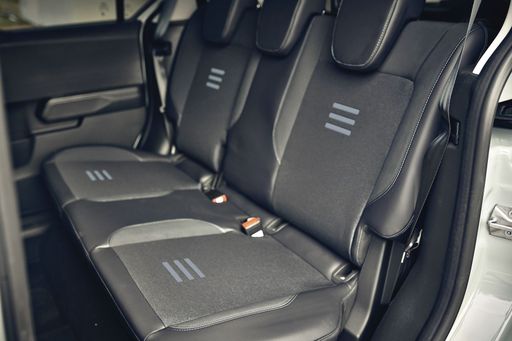
Seats: Hyundai Staria offers significantly more seating capacity – 9 vs 5.
In curb weight, Ford Tourneo Courier is convincingly lighter – 1517 kg compared to 2275 kg. The difference is around 758 kg.
In terms of boot space, the Hyundai Staria offers noticeable more room – 831 L compared to 570 L. That’s a difference of about 261 L.
In maximum load capacity, the Ford Tourneo Courier performs distinct better – up to 2162 L, which is about 859 L more than the Hyundai Staria.
When it comes to payload, Hyundai Staria distinct takes the win – 775 kg compared to 483 kg. That’s a difference of about 292 kg.
Who comes out on top?
Overall, the Hyundai Staria shows itself to be has a very small edge and secures the title of DriveDuel Champion.
It convinces with the more balanced overall package and proves to be the more versatile choice for everyday use.
Ford Tourneo Courier
Hyundai Staria
Costs and Consumption
View detailed analysis
View detailed analysis
Engine and Performance
View detailed analysis
View detailed analysis
Dimensions and Body
View detailed analysis
View detailed analysis
from about £42,400
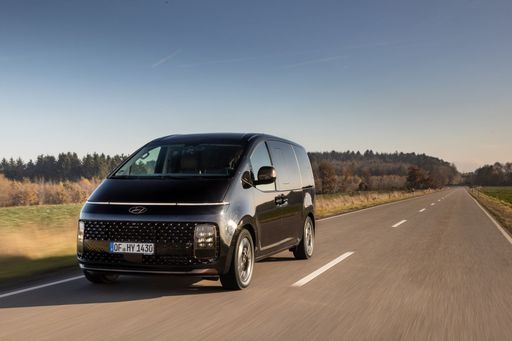 @ Hyundai Motor Company
Hyundai Staria
Ford Tourneo Courier
The Ford Tourneo Courier is a cheeky, compact people carrier that turns urban errands into a pleasure, thanks to a spacious, cleverly packaged cabin and genuinely practical storage everywhere you look. It drives with reassuringly car-like manners, so the ride is comfy for school runs and shopping trips, and sensible touches like fold-flat seats, a high driving position and plentiful cubbies make it a smart, fuss-free choice for small families and weekend haulers.
details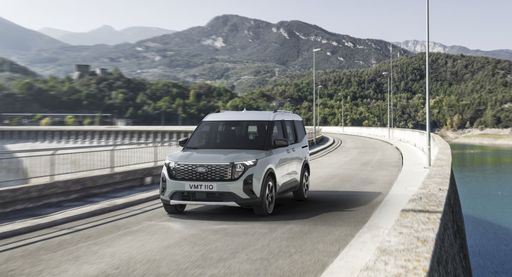 @ Ford Motor Company / Ford Media Center
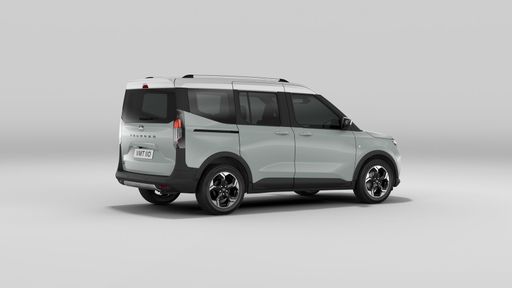 @ Ford Motor Company / Ford Media Center
 @ Ford Motor Company / Ford Media Center
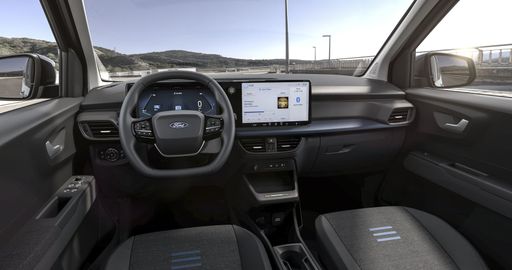 @ Ford Motor Company / Ford Media Center
 @ Ford Motor Company / Ford Media Center
Hyundai Staria
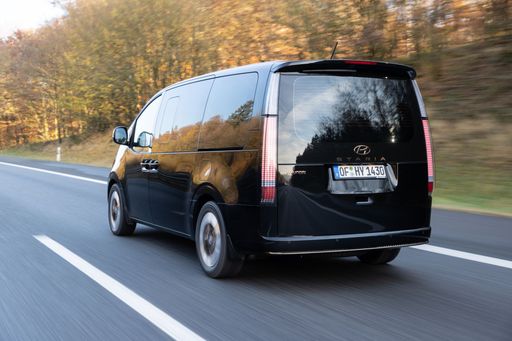
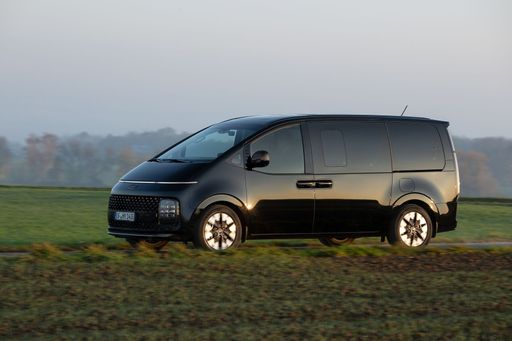
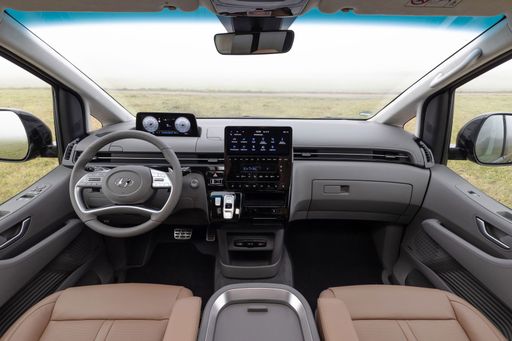
Hyundai Staria looks like a friendly spaceship, its sweeping glass and soft edges turning a people‑mover into a design statement that actually gets noticed. Inside it's airy and practical — perfect for families or anyone who likes travelling in comfort and style, with enough flexibility to swallow luggage and weekend plans without drama.
details
@ Hyundai Motor Company
 @ Hyundai Motor Company
 @ Hyundai Motor Company
 @ Hyundai Motor Company
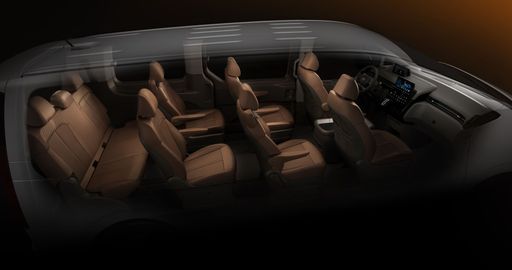 @ Hyundai Motor Company
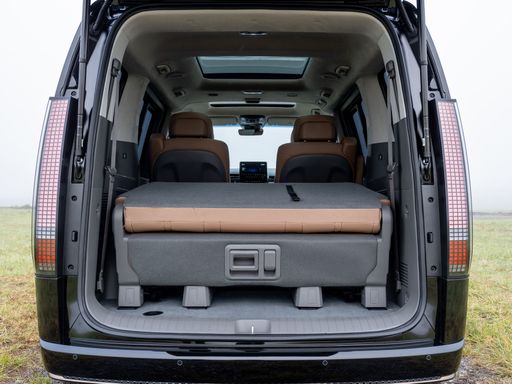 @ Hyundai Motor Company
Ford Tourneo Courier
Hyundai Staria
|
@ Ford Motor Company / Ford Media Center
|
@ Hyundai Motor Company
|
|
|
|
Costs and Consumption |
|
|---|---|
|
Price
21800 - 34300 £
|
Price
42400 - 50500 £
|
|
Consumption L/100km
6.6 - 6.7 L
|
Consumption L/100km
7.60 L
|
|
Consumption kWh/100km
17.30 kWh
|
Consumption kWh/100km
-
|
|
Electric Range
288 km
|
Electric Range
-
|
|
Battery Capacity
43.50 kWh
|
Battery Capacity
-
|
|
co2
0 - 151 g/km
|
co2
172 g/km
|
|
Fuel tank capacity
45 L
|
Fuel tank capacity
65 L
|
Dimensions and Body |
|
|---|---|
|
Body Type
High Roof Estate
|
Body Type
Bus
|
|
Seats
5
|
Seats
7 - 9
|
|
Doors
5
|
Doors
5
|
|
Curb weight
1517 - 1545 kg
|
Curb weight
2275 - 2345 kg
|
|
Trunk capacity
570 L
|
Trunk capacity
117 - 831 L
|
|
Length
4337 mm
|
Length
5253 mm
|
|
Width
1800 - 1813 mm
|
Width
1997 mm
|
|
Height
1817 - 1836 mm
|
Height
1990 mm
|
|
Max trunk capacity
2162 L
|
Max trunk capacity
431 - 1303 L
|
|
Payload
480 - 483 kg
|
Payload
605 - 775 kg
|
Engine and Performance |
|
|---|---|
|
Engine Type
Electric, Petrol
|
Engine Type
Full Hybrid
|
|
Transmission
Automatic, Manuel
|
Transmission
Automatic
|
|
Transmission Detail
Reduction Gearbox, Manual Gearbox, Dual-Clutch Automatic
|
Transmission Detail
Automatic Gearbox
|
|
Drive Type
Front-Wheel Drive
|
Drive Type
Front-Wheel Drive
|
|
Power HP
125 - 136 HP
|
Power HP
225 HP
|
|
Acceleration 0-100km/h
-
|
Acceleration 0-100km/h
10.20 s
|
|
Max Speed
175 km/h
|
Max Speed
167 km/h
|
|
Torque
170 - 290 Nm
|
Torque
367 Nm
|
|
Number of Cylinders
3
|
Number of Cylinders
4
|
|
Power kW
92 - 100 kW
|
Power kW
165 kW
|
|
Engine capacity
998 cm3
|
Engine capacity
1598 cm3
|
General |
|
|---|---|
|
Model Year
2024 - 2025
|
Model Year
2024
|
|
CO2 Efficiency Class
A, E
|
CO2 Efficiency Class
F
|
|
Brand
Ford
|
Brand
Hyundai
|
What drivetrain options does the Ford Tourneo Courier have?
The Ford Tourneo Courier is available as Front-Wheel Drive.
The prices and data displayed are estimates based on German list prices and may vary by country. This information is not legally binding.