VS

Ford Tourneo Custom vs Mercedes Sprinter Bus comparison

Compare performance (286 HP vs 190 HP), boot space and price (45,700 £ vs 41,400 £ ) at a glance. Find out which car is the better choice for you – Ford Tourneo Custom or Mercedes Sprinter Bus?

Ford Tourneo Custom vs Mercedes Sprinter Bus: Key differences

Ford Tourneo Custom

3.9 (1 Reviews)
rate
  • visibly more power
  • substantially more efficient

Mercedes Sprinter Bus

  • slightly cheaper
  • very slightly lighter

All details on performance, efficiency, range and trunk space can be found in the technical comparison below – including user reviews for both models.

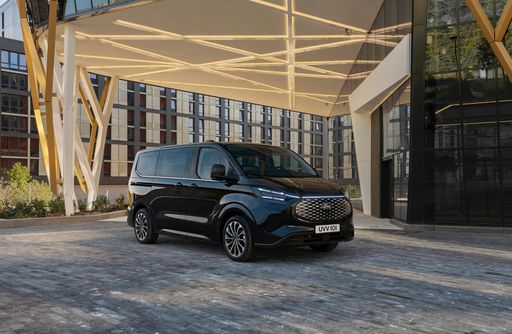
Tourneo Custom

Head-to-Head: Ford Tourneo Custom vs. Mercedes Sprinter Bus

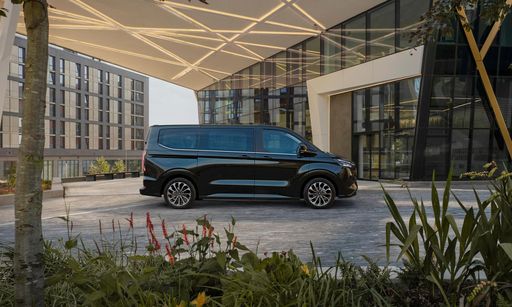
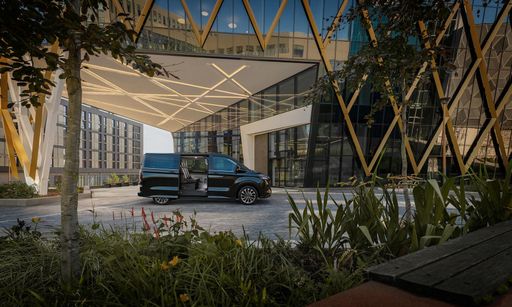
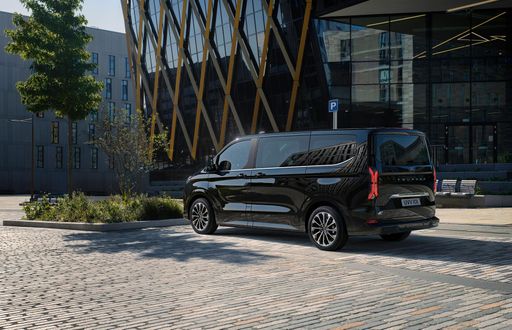
In the competitive landscape of passenger buses, the Ford Tourneo Custom and the Mercedes Sprinter Bus represent two distinct approaches to comfort, power, and innovation. While both vehicles offer robust features suited for different types of travel and transportation needs, they do have key differences in technical capabilities and innovation. Here, we take a closer look at both models to help you decide which one might best meet your needs.
Sprinter Bus

Performance and Powertrain

The Ford Tourneo Custom is available in a variety of engine types, including diesel, plug-in hybrid, and electric options. It offers an output range of 136 to 286 horsepower and various transmission types such as manual, automatic, CVT, and reduction gearboxes. Ford provides the flexibility of front-wheel, all-wheel, and rear-wheel drive variants, ensuring versatility for different driving conditions.

On the other hand, the Mercedes Sprinter Bus comes with a more traditional diesel engine lineup. It delivers between 114 to 190 horsepower, with rear-wheel and optional all-wheel drive, tailored for robust and enduring performance. It also offers both manual and automatic transmissions, aligning with its focus on straightforward and reliable power delivery.

Tourneo Custom

Fuel Efficiency and Emission

When it comes to fuel efficiency, the Tourneo Custom provides a range of consumption factors and prioritizes eco-friendliness with options like the plug-in hybrid and electric versions boasting CO2 emissions as low as 0 g/km. The vehicle's electric variants offer a decent range of up to 306 km on a full charge with a 64 kWh battery capacity.

In comparison, the Mercedes Sprinter Bus, while efficient in its diesel offerings with a range of 9.3 to 12.3 L/100km, focuses more on traditional energy without electric variants, reflecting in higher emissions with CO2 figures starting from 244 g/km. It maintains a high level of efficiency for its size but lacks the greener options provided by Ford.

Interior and Capacity

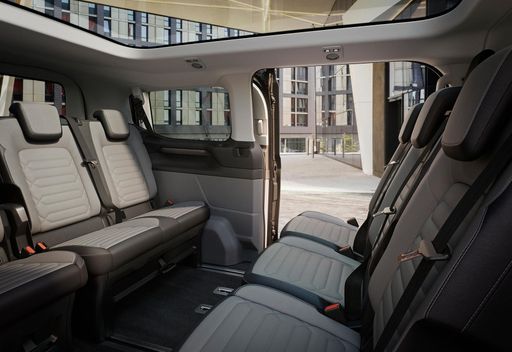
Both models offer spacious interiors, but the design approach differs. The Tourneo Custom seats eight passengers comfortably, balancing passenger comfort with cargo capacity. Its trunk capacity of up to 819 liters makes it ideal for group travel with luggage in tow.

The Mercedes Sprinter Bus offers a more utilitarian seating configuration with just two standard seats, emphasizing cargo space and customization potential for its interior layout. This could appeal to business users or those who prioritize cargo over passenger seating.

Dimensions and Practicality

The Tourneo Custom measures up to 5450 mm in length, with a height of 1959 mm, making it adept for urban navigation and compact parking. Its maximum speed is moderated at 150 km/h, aligning with its emphasis on a balanced performance.

Conversely, the Sprinter Bus offers a larger footprint, extending up to 6967 mm in length and a height of up to 2659 mm. Its design focuses on capacity and robust transport capabilities. With a higher top speed of 160 km/h, it provides a balance between size and speed.

Conclusion

The decision between the Ford Tourneo Custom and the Mercedes Sprinter Bus ultimately depends on your specific needs. If eco-friendliness, modern hybrid technology, and all-rounder versatility appeal to you, the Tourneo Custom stands out. However, if you prioritize traditional robust performance and customization potential for carrying cargo, the Mercedes Sprinter Bus presents a dependable option. Both vehicles have their strengths, offering tailored solutions for diverse transportation demands.

Here’s where it gets real: The technical differences in detail

Tourneo Custom

Costs and Efficiency:

Looking at overall running costs, both models reveal some interesting differences in everyday economy.

Mercedes Sprinter Bus is slightly cheaper – starting at 41,400 £ , while the Ford Tourneo Custom costs 45,700 £ . That’s a price difference of around 4,364 £.

Fuel consumption also shows a difference: the Ford Tourneo Custom uses 4.1 L/100km and is substantially more efficient than the Mercedes Sprinter Bus with 9.3 L/100km. The difference is about 5.2 L/100km.

Sprinter Bus

Engine and Performance:

Under the bonnet, it becomes clear which model is tuned for sportiness and which one takes the lead when you hit the accelerator.

When it comes to engine power, the Ford Tourneo Custom offers visibly more power – delivering 286 HP compared to 190 HP. That’s roughly 96 HP more horsepower.

There’s also a difference in torque: the Ford Tourneo Custom delivers visibly more torque with 630 Nm compared to 450 Nm. That’s about 180 Nm more.

Tourneo Custom

Space and Everyday Use:

Cabin size, boot volume and payload all play a role in everyday practicality. Here, comfort and flexibility make the difference.

Seats: Ford Tourneo Custom offers more seats – 8 vs 2.

In terms of curb weight, Mercedes Sprinter Bus is very slightly lighter – 2,356 kg compared to 2,453 kg. The difference is around 97 kg.

When it comes to payload, the Mercedes Sprinter Bus carries markedly more – 1,144 kg compared to 847 kg. That’s a difference of about 297 kg.

Who wins the race in the data check?

The Ford Tourneo Custom stands well ahead of its rival in the objective data comparison.
This result only shows which model scores more points on paper – not which of the two cars feels right for you.

from £45,700
Tourneo Custom

Ford Tourneo Custom

  • Engine Type : Diesel, Plugin Hybrid, Electric
  • Transmission : Manuel, Automatic
  • Drive Type : Front-Wheel Drive, All-Wheel Drive, Rear-Wheel Drive
  • Power HP : 136 - 286 HP
  • Consumption L/100km : 4.1 - 8.6 L/100km
  • Consumption kWh/100km : 24.1 - 26.6 kWh/100km
  • Electric Range : 49 - 339 km
Ford Tourneo Custom
Mercedes Sprinter Bus

Costs and Consumption

View detailed analysis

Engine and Performance

View detailed analysis

Dimensions and Body

View detailed analysis

Ford Tourneo Custom

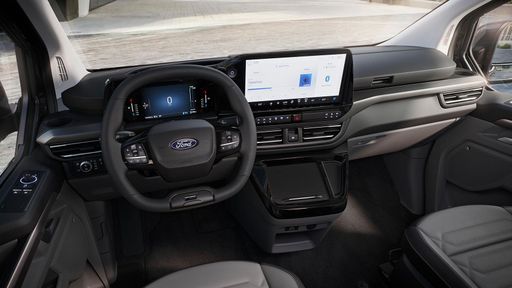
The Ford Tourneo Custom is a practical and polished people‑carrier that turns hauling crew and weekend kit into something surprisingly pleasant, with a composed ride and a cabin built for real life rather than showroom gloss. With clever storage, flexible seating and tech that keeps everyone happy on the road, it’s the sensible choice for families or businesses that want function without sacrificing a bit of style — the van that learnt how to be nice to live with.

details

Mercedes Sprinter Bus

The Mercedes Sprinter is the go-to people-mover for operators and families who want robust practicality wrapped in a premium feel, with a flexible interior that can be tailored from shuttle to mobile office without breaking a sweat. Sporting the three-pointed star and the driving manners of a tall estate, the Sprinter Bus is comfortable, dependable and refreshingly easy to live with day after day.

details
Ford Tourneo Custom
Mercedes Sprinter Bus

Costs and Consumption

Price
45,700 - 69,700 £
Price
41,400 - 55,900 £
Consumption L/100km
4.1 - 8.6 L/100km
Consumption L/100km
9.3 - 12.3 L/100km
Consumption kWh/100km
24.1 - 26.6 kWh/100km
Consumption kWh/100km
-
Electric Range
49 - 339 km
Electric Range
-
Battery Capacity
11.8 kWh
Battery Capacity
-
co2
0 - 226 g/km
co2
244 - 322 g/km
Fuel tank capacity
55 - 63 L
Fuel tank capacity
71 L

Dimensions and Body

Body Type
Bus
Body Type
Bus
Seats
8
Seats
2
Doors
4 - 5
Doors
4
Curb weight
2,453 - 2,707 kg
Curb weight
2,356 - 2,559 kg
Trunk capacity
672 - 819 L
Trunk capacity
-
Length
5,050 - 5,450 mm
Length
5,932 - 6,967 mm
Width
2,032 mm
Width
1,993 mm
Height
1,958 - 1,959 mm
Height
2,633 - 2,659 mm
Max trunk capacity
1,045 - 1,354 L
Max trunk capacity
-
Payload
620 - 847 kg
Payload
814 - 1,144 kg

Engine and Performance

Engine Type
Diesel, Plugin Hybrid, Electric
Engine Type
Diesel
Transmission
Manuel, Automatic
Transmission
Manuel, Automatic
Transmission Detail
Manual Gearbox, Automatic Gearbox, CVT, Reduction Gearbox
Transmission Detail
Manual Gearbox, Automatic Gearbox
Drive Type
Front-Wheel Drive, All-Wheel Drive, Rear-Wheel Drive
Drive Type
Rear-Wheel Drive, All-Wheel Drive
Power HP
136 - 286 HP
Power HP
114 - 190 HP
Acceleration 0-100km/h
-
Acceleration 0-100km/h
-
Max Speed
-
Max Speed
150 - 159 km/h
Torque
360 - 630 Nm
Torque
300 - 450 Nm
Number of Cylinders
4
Number of Cylinders
4
Power kW
100 - 210 kW
Power kW
84 - 140 kW
Engine capacity
1,996 - 2,488 cm3
Engine capacity
1,950 cm3

General

Model Year
2,023 - 2,025
Model Year
2,024 - 2,025
CO2 Efficiency Class
G, B, C, A
CO2 Efficiency Class
G
Brand
Ford
Brand
Mercedes-Benz
DriveDuel uses data analysis and artificial intelligence to evaluate vehicle data and create content. Content is regularly reviewed and improved. The displayed prices are estimates based on German list prices, adjusted to the respective country’s VAT. Country-specific registration taxes are not included. This information is not legally binding.