VS

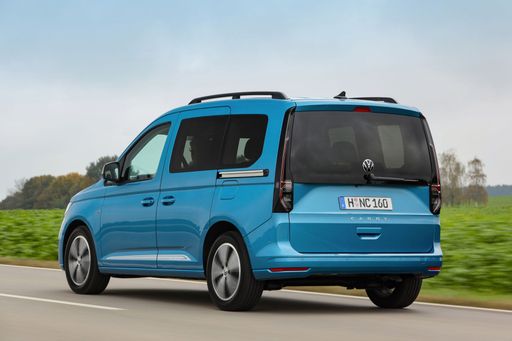
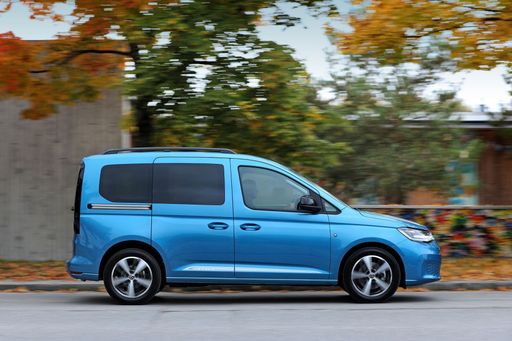
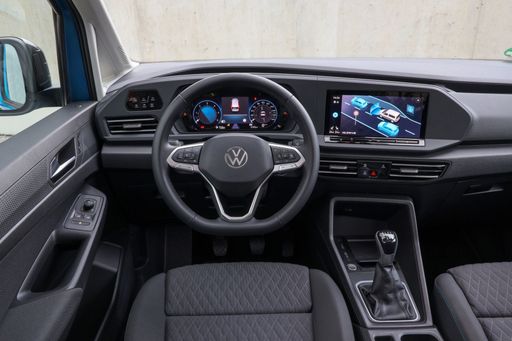
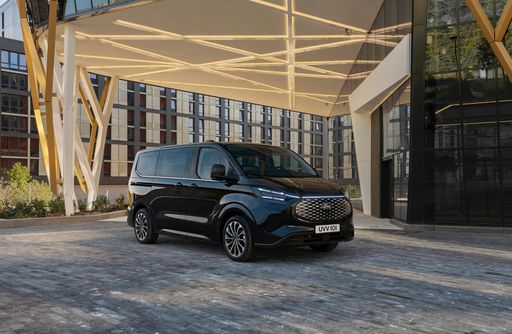
Ford Tourneo Custom vs VW Caddy Compact Van comparison

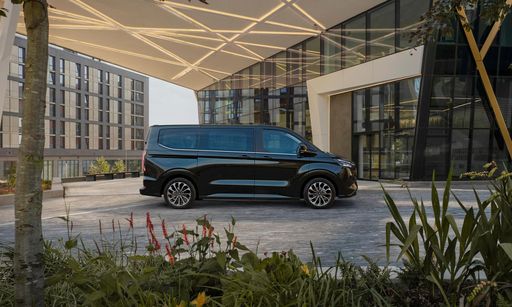
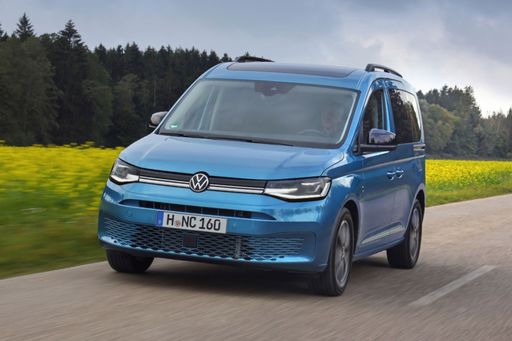
Compare performance (286 HP vs 150 HP), boot space and price (45,700 £ vs 25,800 £ ) at a glance. Find out which car is the better choice for you – Ford Tourneo Custom or VW Caddy Compact Van?

Ford Tourneo Custom vs VW Caddy Compact Van: Key differences

Ford Tourneo Custom

3.9 (1 Reviews)
rate
  • clearly more power
  • substantially more electric range

VW Caddy Compact Van

  • considerably cheaper
  • substantially more efficient
  • significantly lighter

All details on performance, efficiency, range and trunk space can be found in the technical comparison below – including user reviews for both models.

Tourneo Custom

Discover the Distinctive Features of the Ford Tourneo Custom and VW Caddy

In the bustling world of automotive innovation, two models stand out in the realm of versatile vans: the Ford Tourneo Custom and the VW Caddy. Each offers unique features engineered to meet various transportation needs. Here’s a comprehensive comparison of these standout models, showcasing their technical aspects, innovative features, and what makes them appealing to different users.
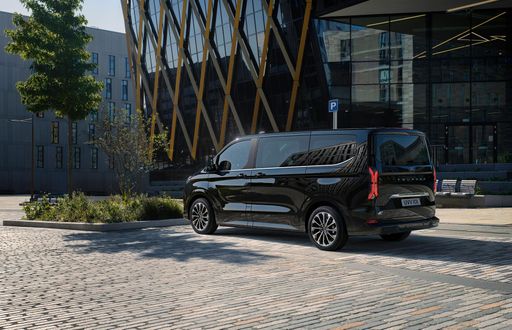
Caddy Compact Van

Engine and Performance: Power Meets Efficiency

The Ford Tourneo Custom provides an impressive range of engine options – Diesel, Plug-in Hybrid, and fully Electric variants. Its power output varies significantly, maxing out at 286 HP for the Diesel variant, which suits those requiring substantial towing power or frequent highway travel. Meanwhile, the hybrid model offers a blend of efficiency and power, boasting an electric range of up to 306 km, ideal for urban commuters looking to minimize their carbon footprint.

In contrast, the VW Caddy focuses heavily on efficiency without compromising too much on performance. Available in Petrol, Diesel, and Plug-in Hybrid versions, the Caddy manages a competitive 150 HP maximum output. The electric version offers a modest but efficient 119 km range, catered to shorter urban trips.

Tourneo Custom

Transmission and Drive Dynamics

Both the Tourneo Custom and the Caddy offer multiple transmission options to suit various driving preferences. The Ford features manual, automatic, CVS, and reduction gearboxes, with the choice of front-wheel, all-wheel, or rear-wheel drive systems. Such flexibility caters well to diverse driving conditions and customer needs.

VW Caddy, on the other hand, presents a straightforward automatic and manual gearbox range. Drivers have the option between front-wheel and all-wheel drive, offering a balanced compromise between simplicity and functionality – appealing to those who value straightforward, reliable handling.

Caddy Compact Van

Comfort and Space: Designed for the Modern User

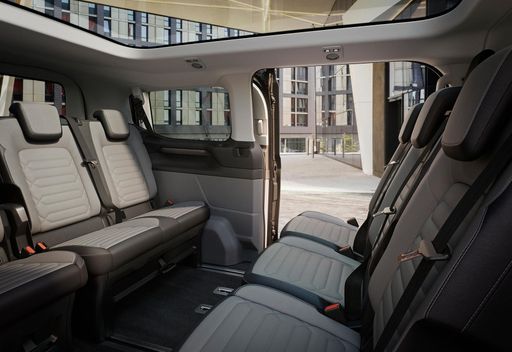
Ford's Tourneo Custom excels in seating, providing space for up to 8 passengers. For families or transport services, this is a notable advantage. Additionally, the vehicle’s generous trunk capacity ranging from 672 L to 819 L ensures ample space for luggage or gear.

While the VW Caddy is primarily a cargo van, its design does not fall short in utility. With a practical seating capacity for two and a focus on cargo versatility, it suits delivery services and tradespeople who prioritize load space and easy access over passenger seating. The Caddy’s payload limit peaks at 759 kg, ensuring it remains a robust choice for commercial purposes.

Tourneo Custom

Size and Design Considerations

Size can heavily influence buyer decisions based on intended use. The Tourneo Custom, with its length ranging from 5050 mm to 5450 mm and width of 2032 mm, is noticeably larger, providing an advantage for passenger transport or larger families.

The VW Caddy leans into its compactness with lengths between 4500 mm and 4853 mm, and a width of 1855 mm. It proves to be the better choice for navigating tight urban environments where maneuverability is crucial. Its height varies slightly from 1819 mm to 1823 mm, ensuring enough interior headroom without becoming cumbersome.

Caddy Compact Van

Efficiency and Environmental Impact

Fuel efficiency and environmental concerns are pivotal for modern consumers. The Tourneo Custom’s diesel engine demonstrates a consumption rate as low as 7.3 L/100km, while its plug-in hybrid model achieves an impressive 1.7 L/100km. Electric variants boast efficiency ranges between 24.3 kWh/100km to 25.6 kWh/100km, making it an environmentally conscious choice.

VW Caddy, known for its commendable efficiency, reports fuel consumption rates between 5.3 L/100km and 6.8 L/100km for diesel and petrol models. The plug-in hybrids are equally remarkable, showcasing minimal environmental impact with 0.5 L/100km fuel use.

Tourneo Custom

The Verdict: Choosing Between Two Distinctive Options

The decision between the Ford Tourneo Custom and VW Caddy inevitably depends on the buyer's specific needs. For those requiring a passenger-friendly vehicle with advanced engine options and significant cargo room, the Ford offers unmatched versatility. Conversely, the VW Caddy stands out for its compact efficiency, making it perfect for urban living and commercial use where cargo space takes precedence.

Both vehicles offer exceptional features and innovative additions, ensuring that buyers will find a model suitable for their unique demands.

Here’s where it gets real: The technical differences in detail

Tourneo Custom

Costs and Efficiency:

Price and efficiency are often the first things buyers look at. Here it becomes clear which model has the long-term edge – whether at the pump, the plug, or in purchase price.

VW Caddy Compact Van is considerably cheaper – starting at 25,800 £ , while the Ford Tourneo Custom costs 45,700 £ . That’s a price difference of around 19,926 £.

Fuel consumption also shows a difference: the VW Caddy Compact Van uses 0.5 L/100km and is substantially more efficient than the Ford Tourneo Custom with 4.1 L/100km. The difference is about 3.6 L/100km.

As for electric range, the Ford Tourneo Custom offers substantially more range – reaching up to 339 km, about 219 km more than the VW Caddy Compact Van.

Caddy Compact Van

Engine and Performance:

Power, torque and acceleration are the classic benchmarks for car enthusiasts – and here, some clear differences start to show.

When it comes to engine power, the Ford Tourneo Custom offers clearly more power – delivering 286 HP compared to 150 HP. That’s roughly 136 HP more horsepower.

There’s also a difference in torque: the Ford Tourneo Custom delivers considerably more torque with 630 Nm compared to 320 Nm. That’s about 310 Nm more.

Tourneo Custom

Space and Everyday Use:

Whether family car or daily driver – which one offers more room, flexibility and comfort?

Seats: Ford Tourneo Custom offers more seats – 8 vs 2.

In terms of curb weight, VW Caddy Compact Van is significantly lighter – 1,442 kg compared to 2,453 kg. The difference is around 1,011 kg.

For maximum load capacity, the VW Caddy Compact Van offers clearly more capacity – up to 3,700 L, about 2,346 L more than the Ford Tourneo Custom.

When it comes to payload, the Ford Tourneo Custom carries a bit more – 847 kg compared to 759 kg. That’s a difference of about 88 kg.

Who wins the race in the data check?

The VW Caddy Compact Van holds a decisive overall lead in the objective data comparison.
This result only shows which model scores more points on paper – not which of the two cars feels right for you.

from £25,800
Caddy Compact Van

VW Caddy Compact Van

  • Engine Type : Petrol, Diesel, Plugin Hybrid
  • Transmission : Manuel, Automatic
  • Drive Type : Front-Wheel Drive, All-Wheel Drive
  • Power HP : 102 - 150 HP
  • Consumption L/100km : 0.5 - 6.8 L/100km
  • Electric Range : 117 - 120 km
Ford Tourneo Custom
VW Caddy Compact Van

Costs and Consumption

View detailed analysis

Engine and Performance

View detailed analysis

Dimensions and Body

View detailed analysis

Ford Tourneo Custom

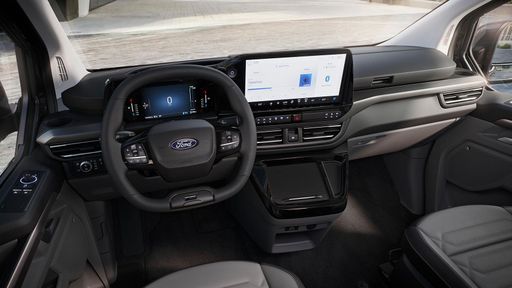
The Ford Tourneo Custom is a practical and polished people‑carrier that turns hauling crew and weekend kit into something surprisingly pleasant, with a composed ride and a cabin built for real life rather than showroom gloss. With clever storage, flexible seating and tech that keeps everyone happy on the road, it’s the sensible choice for families or businesses that want function without sacrificing a bit of style — the van that learnt how to be nice to live with.

details

VW Caddy Compact Van

The VW Caddy is a clever compact van that turns urban chores into something almost enjoyable, thanks to smart packaging and a cabin that refuses to feel like punishment. For buyers who want useful practicality without drama, the Caddy is a tidy, dependable choice that quietly gets the job done while remaining surprisingly pleasant to drive.

details
Ford Tourneo Custom
VW Caddy Compact Van

Costs and Consumption

Price
45,700 - 69,700 £
Price
25,800 - 42,300 £
Consumption L/100km
4.1 - 8.6 L/100km
Consumption L/100km
0.5 - 6.8 L/100km
Consumption kWh/100km
24.1 - 26.6 kWh/100km
Consumption kWh/100km
-
Electric Range
49 - 339 km
Electric Range
117 - 120 km
Battery Capacity
11.8 kWh
Battery Capacity
19.7 kWh
co2
0 - 226 g/km
co2
11 - 154 g/km
Fuel tank capacity
55 - 63 L
Fuel tank capacity
50 L

Dimensions and Body

Body Type
Bus
Body Type
Cargo Van
Seats
8
Seats
2
Doors
4 - 5
Doors
4 - 5
Curb weight
2,453 - 2,707 kg
Curb weight
1,442 - 1,818 kg
Trunk capacity
672 - 819 L
Trunk capacity
-
Length
5,050 - 5,450 mm
Length
4,500 - 4,853 mm
Width
2,032 mm
Width
1,855 mm
Height
1,958 - 1,959 mm
Height
1,819 - 1,823 mm
Max trunk capacity
1,045 - 1,354 L
Max trunk capacity
3,100 - 3,700 L
Payload
620 - 847 kg
Payload
628 - 759 kg

Engine and Performance

Engine Type
Diesel, Plugin Hybrid, Electric
Engine Type
Petrol, Diesel, Plugin Hybrid
Transmission
Manuel, Automatic
Transmission
Manuel, Automatic
Transmission Detail
Manual Gearbox, Automatic Gearbox, CVT, Reduction Gearbox
Transmission Detail
Manual Gearbox, Dual-Clutch Automatic
Drive Type
Front-Wheel Drive, All-Wheel Drive, Rear-Wheel Drive
Drive Type
Front-Wheel Drive, All-Wheel Drive
Power HP
136 - 286 HP
Power HP
102 - 150 HP
Acceleration 0-100km/h
-
Acceleration 0-100km/h
-
Max Speed
-
Max Speed
175 - 186 km/h
Torque
360 - 630 Nm
Torque
220 - 320 Nm
Number of Cylinders
4
Number of Cylinders
4
Power kW
100 - 210 kW
Power kW
75 - 110 kW
Engine capacity
1,996 - 2,488 cm3
Engine capacity
1,498 - 1,968 cm3

General

Model Year
2,023 - 2,025
Model Year
2,024
CO2 Efficiency Class
G, B, C, A
CO2 Efficiency Class
E, B
Brand
Ford
Brand
VW
DriveDuel uses data analysis and artificial intelligence to evaluate vehicle data and create content. Content is regularly reviewed and improved. The displayed prices are estimates based on German list prices, adjusted to the respective country’s VAT. Country-specific registration taxes are not included. This information is not legally binding.