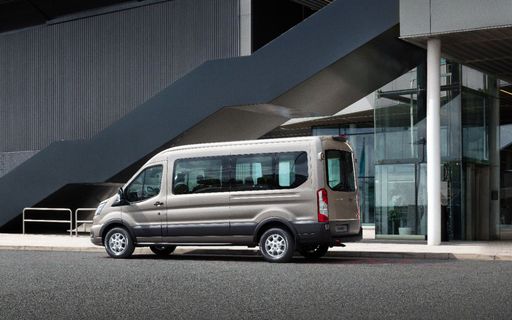
VS

Ford Transit Connect vs Fiat Scudo comparison

Compare performance (150 HP vs 180 HP), boot space and price (26,700 £ vs 30,900 £ ) at a glance. Find out which car is the better choice for you – Ford Transit Connect or Fiat Scudo?

Ford Transit Connect vs Fiat Scudo: Key differences

Ford Transit Connect

  • a bit cheaper
  • clearly more efficient
  • moderately lighter
details

Fiat Scudo

  • slightly more power
  • significantly more electric range
  • only slightly quicker 0–100 km/h
details

By Achim Sedelmaier

Transit Connect

Fiat Scudo vs. Ford Transit Connect: The Battle of the Utility Kings

In the world of cargo vans, the competition is fierce, and choosing the right vehicle to meet your business needs can be daunting. Here, we compare two popular options: the Fiat Scudo and Ford Transit Connect. Both offer an array of features tailored to different preferences and requirements, but how do they stack up against each other on a technical level?
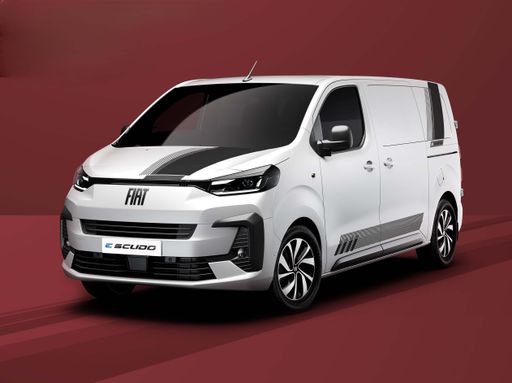
Scudo

Engine and Performance

The Fiat Scudo presents a versatile engine lineup including both diesel and all-electric options. Diesel engines deliver power ranging from 100 to 180 horsepower, with torque figures stretching from 260 to an impressive 400 Nm. The electric variant offers a power output of up to 177 HP, equating to about 132 kW. This diversity of power choices, combined with a manual, automatic, or reduction gearbox, caters to a wide range of operational needs.

In contrast, the Ford Transit Connect sticks with conventional diesel and plug-in hybrid engines. Power outputs range from 102 to 150 HP with torque between 280 to 350 Nm. The Transit Connect offers a dual-clutch automatic gearbox, promising smoother shifts and better performance efficiency. A notable feature is its 19.7 kWh battery capacity in the plug-in hybrid model, contributing to its appeal for those considering a move toward electrification.

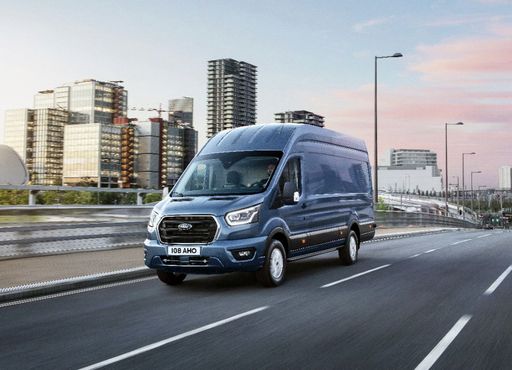
Transit Connect

Dimensions and Payload

The Fiat Scudo offers three lengths: 4609 mm, 4959 mm, and 5309 mm with a consistent width of 1920 mm. Heights range from 1881 mm to 1935 mm, catering to various cargo and space requirements. With a robust payload capacity ranging from 868 kg to 1805 kg, the Scudo is well-suited for transporting heavier loads comfortably.

The Ford Transit Connect presents slightly smaller dimensions, with lengths varying from 4500 mm to 4868 mm and a width of 1855 mm. Its height options stand at 1856 mm or 1860 mm. The payload for the Transit Connect is not as high as the Scudo, but its compact design can be more practical for urban environments where maneuverability is crucial.

Fuel Consumption and Efficiency

The Fiat Scudo diesel models provide fuel economies between 6.5 to 7.8 L/100km. For the electric variant, consumption is rated between 23.6 kWh and 27 kWh/100km, with an electric range that can go up to 352 km on a single charge—ideal for businesses reducing carbon footprints.

Ford's diesel options in the Transit Connect hover around similar figures with the added bonus of a plug-in hybrid offering a blend of fuel and electric efficiency, although precise fuel consumption figures require real-world testing to ascertain.

Innovation and Features

Fiat has armed the Scudo with modern features designed for utility, including multiple cargo area configurations and advanced driver-assistance technologies. The electric model is particularly groundbreaking with its zero-emission capabilities.

Ford balances its act with the Transit Connect by introducing smart connectivity options, which include a dual-clutch transmission enhancing power transitions, thus improving driving dynamics. Additionally, the plug-in hybrid model reflects Ford's commitment to sustainable mobility solutions.

The Verdict

Choosing between the Fiat Scudo and Ford Transit Connect ultimately depends on your business's specific needs. The Fiat Scudo offers more powertrain choices and greater payload capacity, making it suitable for heavier-duty tasks. Meanwhile, the Ford Transit Connect provides a practical size for city logistics and an exciting hybrid option for those dipping their toes into electric capabilities.

In conclusion, both vans stand as exceptional choices in the commercial vehicle market, each tailored to a niche of operators looking for reliability, efficiency, and a touch of modern innovation.

Here’s where it gets real: The technical differences in detail

Transit Connect

Costs and Efficiency:

When it comes to price and running costs, the biggest differences usually appear. This is often where you see which car fits your budget better in the long run.

Ford Transit Connect is a bit cheaper – starting at 26,700 £ , while the Fiat Scudo costs 30,900 £ . That’s a price difference of around 4,182 £.

Fuel consumption also shows a difference: the Ford Transit Connect uses 0.5 L/100km and is clearly more efficient than the Fiat Scudo with 6.2 L/100km. The difference is about 5.7 L/100km.

As for electric range, the Fiat Scudo offers significantly more range – reaching up to 352 km, about 234 km more than the Ford Transit Connect.

Scudo

Engine and Performance:

Power, torque and acceleration say a lot about how a car feels on the road. This is where you see which model delivers more driving dynamics.

When it comes to engine power, the Fiat Scudo offers slightly more power – delivering 180 HP compared to 150 HP. That’s roughly 30 HP more horsepower.

When accelerating from 0 to 100 km/h, the Fiat Scudo is only slightly quicker – completing the sprint in 10.5 s, while the Ford Transit Connect takes 11.4 s. That’s about 0.9 s quicker.

There’s also a difference in torque: the Fiat Scudo delivers a bit more torque with 400 Nm compared to 350 Nm. That’s about 50 Nm more.

Transit Connect

Space and Everyday Use:

Cabin size, boot volume and payload all play a role in everyday practicality. Here, comfort and flexibility make the difference.

Seats: Fiat Scudo offers more seats – 6 vs 5.

In terms of curb weight, Ford Transit Connect is moderately lighter – 1,477 kg compared to 1,722 kg. The difference is around 245 kg.

When it comes to payload, the Fiat Scudo carries substantially more – 1,805 kg compared to 792 kg. That’s a difference of about 1,013 kg.

Who wins the race in the data check?

The Ford Transit Connect holds a decisive overall lead in the objective data comparison.
This result only shows which model scores more points on paper – not which of the two cars feels right for you.

from £26,700
Transit Connect

Ford Transit Connect

  • Engine Type : Diesel, Plugin Hybrid
  • Transmission : Manuel, Automatic
  • Drive Type : Front-Wheel Drive, All-Wheel Drive
  • Power HP : 102 - 150 HP
  • Consumption L/100km : 0.5 - 5.8 L/100km
  • Electric Range : 118 km
Ford Transit Connect
Fiat Scudo

Costs and Consumption

View detailed analysis

Engine and Performance

View detailed analysis

Dimensions and Body

View detailed analysis

Ford Transit Connect

The Ford Transit Connect is the go-to compact workhorse for urban professionals who need cargo space without driving a full-size van. It balances practicality and everyday manners with clever storage ideas and a surprisingly comfortable ride, making it a sensible choice for small businesses and families who value function over flair.

details

Fiat Scudo

The Fiat Scudo is a practical and unpretentious van that balances hardworking utility with a surprisingly polished cabin, making it a sensible choice for tradespeople and families who need space without fuss. It doesn't pretend to be flashy, but its clever packaging, sensible driving manners and affordable running costs make the Scudo a dependable partner for the daily grind and weekend projects — and it even manages to look tidy in the car park.

details
Ford Transit Connect
Fiat Scudo

Costs and Consumption

Price
26,700 - 41,500 £
Price
30,900 - 51,300 £
Consumption L/100km
0.5 - 5.8 L/100km
Consumption L/100km
6.2 - 6.5 L/100km
Consumption kWh/100km
-
Consumption kWh/100km
23.6 - 24 kWh/100km
Electric Range
118 km
Electric Range
221 - 352 km
Battery Capacity
19.7 kWh
Battery Capacity
-
co2
11 - 153 g/km
co2
0 - 172 g/km
Fuel tank capacity
32 - 50 L
Fuel tank capacity
-

Dimensions and Body

Body Type
Cargo Van
Body Type
Cargo Van
Seats
2 - 5
Seats
2 - 6
Doors
4
Doors
-
Curb weight
1,477 - 1,866 kg
Curb weight
1,722 - 2,260 kg
Trunk capacity
-
Trunk capacity
-
Length
4,500 - 4,868 mm
Length
-
Width
1,855 mm
Width
1,920 mm
Height
1,856 - 1,860 mm
Height
-
Max trunk capacity
2,500 - 3,700 L
Max trunk capacity
-
Payload
602 - 792 kg
Payload
840 - 1,805 kg

Engine and Performance

Engine Type
Diesel, Plugin Hybrid
Engine Type
Electric, Diesel
Transmission
Manuel, Automatic
Transmission
Automatic, Manuel
Transmission Detail
Manual Gearbox, Dual-Clutch Automatic
Transmission Detail
Reduction Gearbox, Manual Gearbox, Automatic Gearbox
Drive Type
Front-Wheel Drive, All-Wheel Drive
Drive Type
Front-Wheel Drive
Power HP
102 - 150 HP
Power HP
120 - 180 HP
Acceleration 0-100km/h
11.4 - 13.5 s
Acceleration 0-100km/h
10.5 - 11.2 s
Max Speed
175 - 186 km/h
Max Speed
-
Torque
280 - 350 Nm
Torque
260 - 400 Nm
Number of Cylinders
4
Number of Cylinders
4
Power kW
75 - 110 kW
Power kW
88 - 132 kW
Engine capacity
1,498 - 1,968 cm3
Engine capacity
1,499 - 2,184 cm3

General

Model Year
2,024 - 2,025
Model Year
2,024 - 2,025
CO2 Efficiency Class
E, B
CO2 Efficiency Class
A, F
Brand
Ford
Brand
Fiat
DriveDuel uses data analysis and artificial intelligence to evaluate vehicle data and create content. Content is regularly reviewed and improved. The displayed prices are estimates based on German list prices, adjusted to the respective country’s VAT. Country-specific registration taxes are not included. This information is not legally binding.