VS

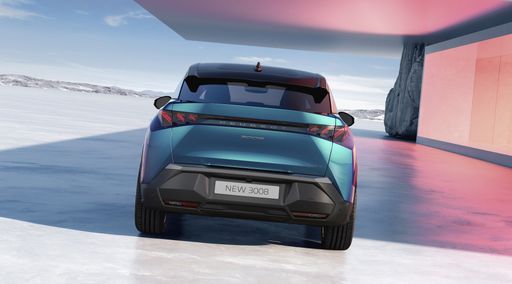
Honda Civic vs Peugeot 3008 comparison

Compare performance (184 HP vs 325 HP), boot space and price (32,500 £ vs 36,500 £ ) at a glance. Find out which car is the better choice for you – Honda Civic or Peugeot 3008?

Honda Civic vs Peugeot 3008: Key differences

Honda Civic

4.9 (1 Reviews)
rate
  • somewhat cheaper
  • barely lighter
details

Peugeot 3008

3.5 (6 Reviews)
rate
  • considerably more power
  • significantly more efficient
  • markedly quicker 0–100 km/h
details

All details on performance, efficiency, range and trunk space can be found in the technical comparison below – including user reviews for both models.

By Achim Sedelmaier

Civic

Introduction: A Clash of Icons

The automotive market is ever-evolving, and among the competing forces are the beloved Honda Civic and the innovative Peugeot 3008. Each model caters to distinct segments, offering unique advantages and a rich blend of technology and performance. Let’s delve into how these two vehicles stack up against each other across various parameters, focusing on specifications, performance, and cutting-edge innovations.

3008

Design and Body: Hatchback vs. SUV

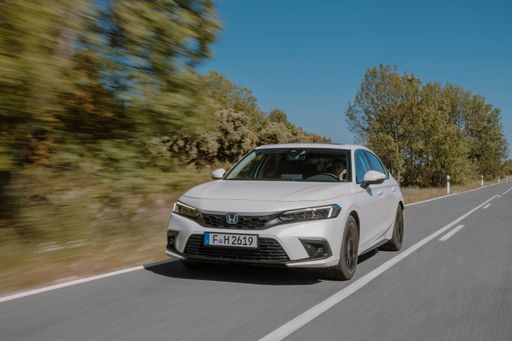
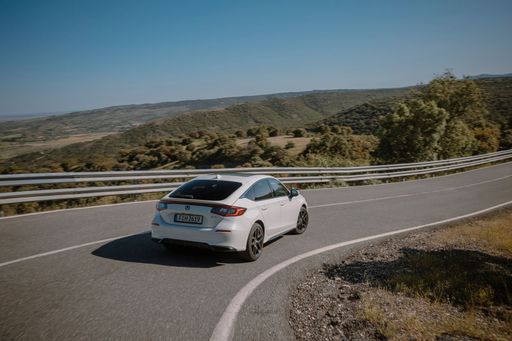
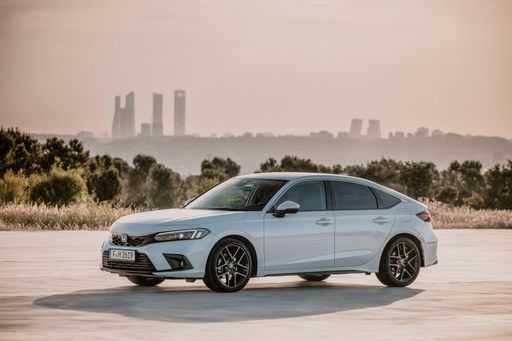
The Honda Civic, available in a sleek hatchback design, measures 4551mm in length and 1890mm in width, presenting a compact yet sporty appearance. The design is intentionally aerodynamic, contributing to its efficiency and performance. The Civic accommodates up to five passengers comfortably with a trunk capacity of 410 liters.

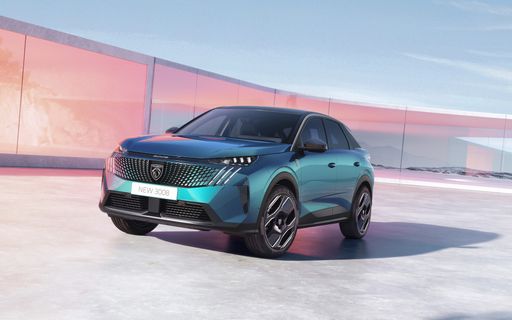
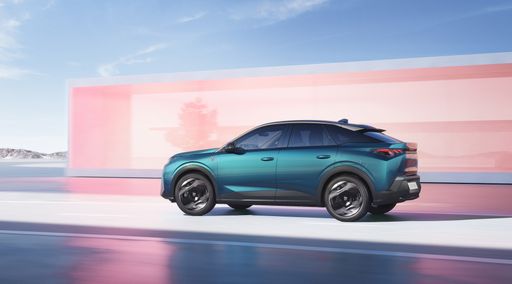
On the other hand, the Peugeot 3008, an SUV, takes a more robust stance with a slightly shorter length of 4542mm but a greater height of 1641mm. This SUV not only offers a commanding driving position but also more interior space with a generous trunk capacity of 520 liters. While both vehicles have five doors, the 3008 stands out with its bold and distinctive design aesthetic.

Civic

Performance: Power Under the Hood

The Honda Civic boasts a range of engine options, including a full hybrid and a petrol engine, delivering power outputs up to 184 HP. Its acceleration capabilities range from 5.4 seconds to 8.1 seconds for 0-100km/h, showcasing impressive agility. In terms of torque, the Civic offers a robust performance with a maximum of 420 Nm. Furthermore, the Civic’s fuel consumption ranges from 4.7 L/100km to 8.2 L/100km, combining efficiency with performance.

Conversely, the Peugeot 3008 provides a versatile lineup with petrol, mild-hybrid, and plugin hybrid options, producing power figures ranging from 136 HP to a potent 231 HP. The 3008 also excels in acceleration, with figures as low as 8.4 seconds for the 0-100km/h sprint. Its torque ranges from 230 Nm to 345 Nm, ensuring dynamic driving characteristics optimized for urban and highway driving alike. With a commendable fuel consumption of 0.9 L/100km in its electric variant, the 3008 significantly raises the bar for sustainability.


3008

Innovative Technologies and Features

In the realm of technology, both models branch out into innovative features designed to enhance the driving experience. The Honda Civic incorporates advanced safety features alongside its hybrid technology, making it both engaging and responsible. The integration of a CVT (Continuously Variable Transmission) adds to its smooth driving experience, adaptable across urban and highway conditions.

On the flip side, the Peugeot 3008 leads with its focus on smart technology, including a state-of-the-art infotainment system compatible with both Apple CarPlay and Android Auto, enhancing connectivity on the go. The 3008 also presents a standout electric range of up to 524 km in its hybrid version, emphasizing its commitment to eco-friendliness in urban settings.

Civic

Comfort and Interior: Passenger Experience

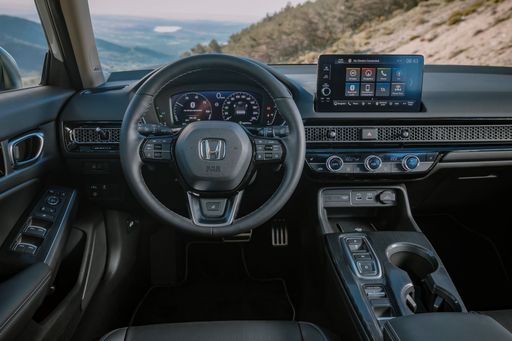
Inside the Honda Civic, the driver and passengers will find a thoughtfully designed cockpit that promotes comfort with adequately spacious legroom and high-quality materials. The minimalistic approach to its dashboard ensures ease of use while maintaining a modern appeal.

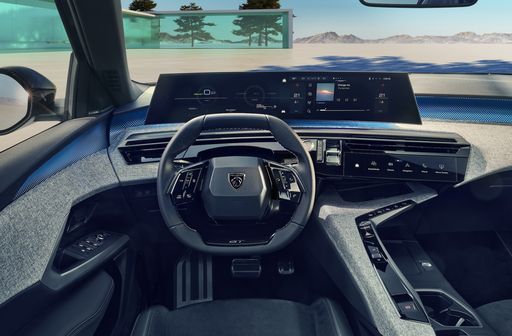
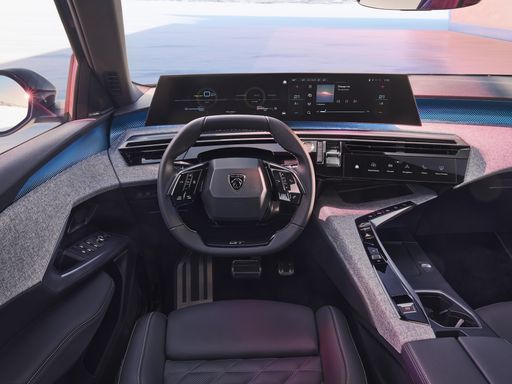
In comparison, the Peugeot 3008 offers a more luxurious and spacious interior, adorned with a futuristic design. The SUV's higher seating position not only enhances visibility but also provides an air of dominance on the road. Moreover, the plush seating and modern finishes elevate the overall passenger experience, making it ideal for longer journeys and family travels.

3008

Conclusion: Picking Your Winner

Choosing between the Honda Civic and the Peugeot 3008 ultimately boils down to individual needs and driving preferences. If you lean towards spirited driving and efficiency wrapped in a hatchback aesthetic, the Civic may be your vehicle of choice. Conversely, if versatility, space, and innovative technology in an SUV setting attract you, then the Peugeot 3008 stands as a compelling option. With both vehicles offering advanced features and strong performance, the right car will depend on what you value most in your driving experience.

Here’s where it gets real: The technical differences in detail

Civic

Costs and Efficiency:

Price and efficiency are key factors when choosing a car – and this is often where the real differences emerge.

Honda Civic is somewhat cheaper – starting at 32,500 £ , while the Peugeot 3008 costs 36,500 £ . That’s a price difference of around 4,029 £.

Fuel consumption also shows a difference: the Peugeot 3008 uses 2.4 L/100km and is significantly more efficient than the Honda Civic with 4.7 L/100km. The difference is about 2.3 L/100km.

3008

Engine and Performance:

Power, torque and acceleration are the classic benchmarks for car enthusiasts – and here, some clear differences start to show.

When it comes to engine power, the Peugeot 3008 offers considerably more power – delivering 325 HP compared to 184 HP. That’s roughly 141 HP more horsepower.

When accelerating from 0 to 100 km/h, the Peugeot 3008 is markedly quicker – completing the sprint in 6 s, while the Honda Civic takes 7.8 s. That’s about 1.8 s quicker.

There’s also a difference in torque: the Peugeot 3008 delivers markedly more torque with 511 Nm compared to 315 Nm. That’s about 196 Nm more.

Civic

Space and Everyday Use:

Whether family car or daily driver – which one offers more room, flexibility and comfort?

Both vehicles offer seating for 5 people.

In terms of curb weight, Honda Civic is barely lighter – 1,517 kg compared to 1,648 kg. The difference is around 131 kg.

When it comes to payload, the Peugeot 3008 carries slightly more – 467 kg compared to 397 kg. That’s a difference of about 70 kg.

Who wins the race in the data check?

The Peugeot 3008 holds a decisive overall lead in the objective data comparison.
This result only shows which model scores more points on paper – not which of the two cars feels right for you.

from £36,500
3008

Peugeot 3008

  • Engine Type : Electric, Petrol MHEV, Plugin Hybrid
  • Transmission : Automatic
  • Drive Type : Front-Wheel Drive, All-Wheel Drive
  • Power HP : 145 - 325 HP
  • Consumption L/100km : 2.4 - 5.3 L/100km
  • Consumption kWh/100km : 16.9 - 17.4 kWh/100km
  • Electric Range : 81 - 698 km
Honda Civic
Peugeot 3008

Costs and Consumption

View detailed analysis

Engine and Performance

View detailed analysis

Dimensions and Body

View detailed analysis

Honda Civic

The Honda Civic mixes practical daily usability with a surprisingly engaging driving character, wrapping clever interior design and dependable engineering in a tidy, modern package. It’s a smart buy for drivers who want sensible reliability, a bit of fun behind the wheel, and a shape that never looks like it’s trying too hard.

details

Peugeot 3008

The Peugeot 3008 blends bold French styling with a surprisingly grown-up interior that makes even dull commutes feel a little bit special. Practical enough for family life yet lively to drive, it’s a clever all‑rounder that stands out from the crossover crowd without shouting for attention.

details
Honda Civic
Peugeot 3008

Costs and Consumption

Price
32,500 - 35,500 £
Price
36,500 - 52,200 £
Consumption L/100km
4.7 - 5 L/100km
Consumption L/100km
2.4 - 5.3 L/100km
Consumption kWh/100km
-
Consumption kWh/100km
16.9 - 17.4 kWh/100km
Electric Range
-
Electric Range
81 - 698 km
Battery Capacity
-
Battery Capacity
96.9 kWh
co2
108 - 114 g/km
co2
0 - 121 g/km
Fuel tank capacity
-
Fuel tank capacity
-

Dimensions and Body

Body Type
Hatchback
Body Type
SUV
Seats
5
Seats
5
Doors
-
Doors
5
Curb weight
1,517 - 1,533 kg
Curb weight
1,648 - 2,266 kg
Trunk capacity
-
Trunk capacity
470 - 520 L
Length
-
Length
4,542 mm
Width
1,890 mm
Width
1,895 mm
Height
-
Height
1,641 mm
Max trunk capacity
-
Max trunk capacity
1,480 L
Payload
348 - 397 kg
Payload
432 - 467 kg

Engine and Performance

Engine Type
Full Hybrid
Engine Type
Electric, Petrol MHEV, Plugin Hybrid
Transmission
Automatic
Transmission
Automatic
Transmission Detail
CVT
Transmission Detail
Reduction Gearbox, Dual-Clutch Automatic
Drive Type
Front-Wheel Drive
Drive Type
Front-Wheel Drive, All-Wheel Drive
Power HP
184 HP
Power HP
145 - 325 HP
Acceleration 0-100km/h
7.8 - 8.1 s
Acceleration 0-100km/h
6 - 10.2 s
Max Speed
-
Max Speed
170 km/h
Torque
315 Nm
Torque
230 - 511 Nm
Number of Cylinders
4
Number of Cylinders
3 - 4
Power kW
135 kW
Power kW
107 - 239 kW
Engine capacity
1,993 cm3
Engine capacity
1,199 - 1,598 cm3

General

Model Year
2025
Model Year
2,024 - 2,026
CO2 Efficiency Class
C
CO2 Efficiency Class
A, D, B
Brand
Honda
Brand
Peugeot
DriveDuel uses data analysis and artificial intelligence to evaluate vehicle data and create content. Content is regularly reviewed and improved. The displayed prices are estimates based on German list prices, adjusted to the respective country’s VAT. Country-specific registration taxes are not included. This information is not legally binding.