@ Honda Motor Co., Ltd.
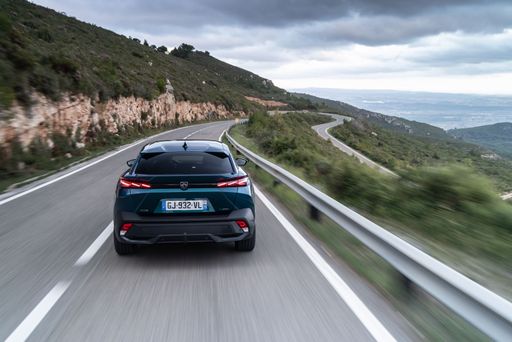
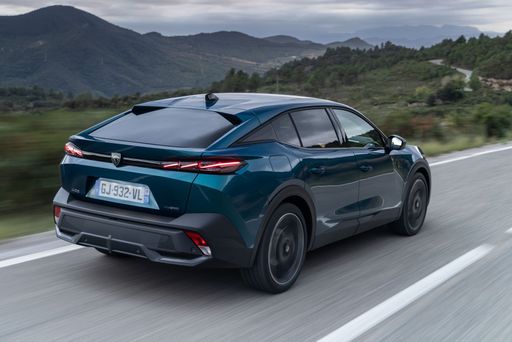
@ Peugeot / Stellantis Media
VS

Honda Civic vs Peugeot 408 – Differences & prices compared

Everyday use, family trips or long-distance drives – here’s where the differences show.
Discover whether Honda Civic or Peugeot 408 fits your lifestyle better.

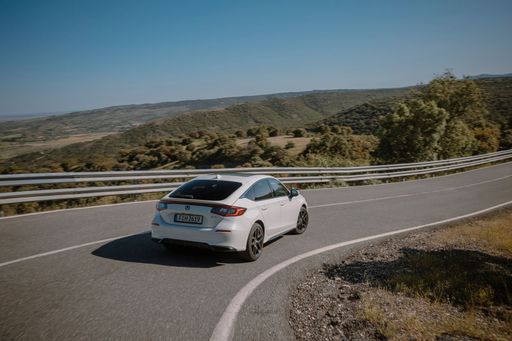
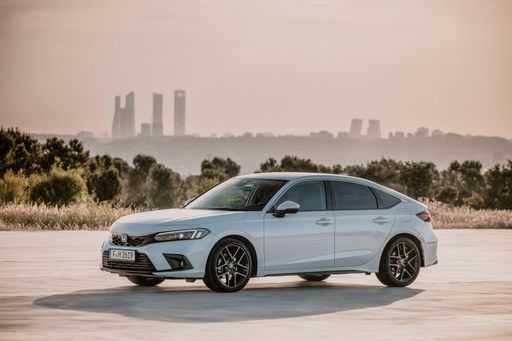
Civic @ Honda Motor Co., Ltd.

The Battle of the Modern Icons: Honda Civic vs. Peugeot 408

The automotive landscape continues to evolve with new and exciting models, but some names remain iconic. The Honda Civic and Peugeot 408 are two such stalwarts, each with its unique approach to capturing the modern driver’s heart. For this article, we're diving into the fascinating world of these two models, exploring their design, performance, and technological innovations.
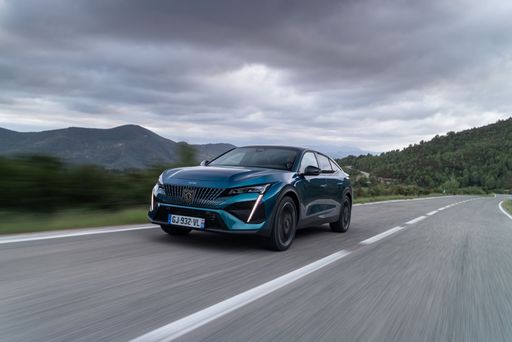
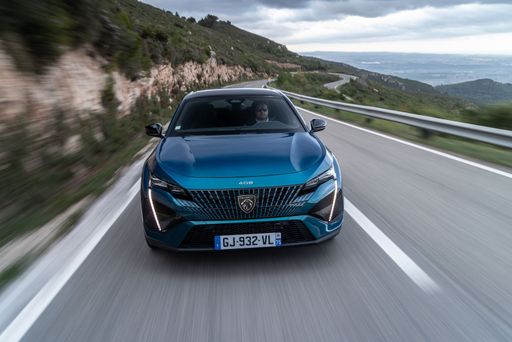
408 @ Peugeot / Stellantis Media

Design and Styling

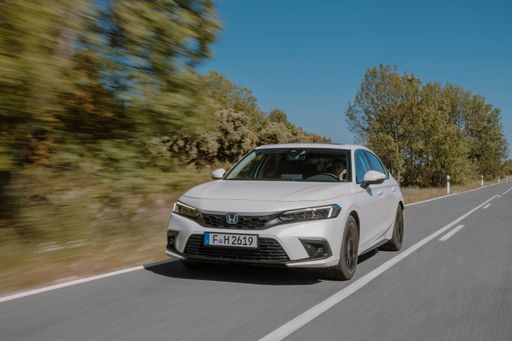
The design language of the Honda Civic reflects a sleek hatchback silhouette, showcasing a blend of sporty aesthetics and practical dimensions. With lengths ranging from 4551 mm to 4594 mm, the Civic maintains an aerodynamic profile that appeals to both young drivers and veterans who appreciate a classic. Its width of 1890 mm offers substantial road presence, complemented by a modest height of around 1408 mm.

On the other hand, the Peugeot 408 shines with its bold SUV style. Longer at 4687 mm and slightly narrower at 1848 mm than the Civic, the 408 provides an elevated road presence attributed to its SUV body type. Standing at 1478 mm in height, the 408 cuts a robust figure, indicative of its practicality and modern appeal.

Civic @ Honda Motor Co., Ltd.

Performance and Dynamics

The Honda Civic comes with an impressive range of power options, from a full-hybrid powertrain boasting 184 HP to a potent 329 HP variant, uniquely catering to different driving preferences. Its maximum speed ranges up to 275 km/h, and with an acceleration from 0-100 km/h as swift as 5.4 seconds, the Civic asserts itself as a capable challenger in the performance domain.

The Peugeot 408 offers diverse powertrains, from petrol MHEV to plugin hybrid and even full electric options. Its horsepower spans between 136 HP and 225 HP for petrol and plugin hybrid variants, and peaks with 214 HP for the electric model. Though the top speed reaches 233 km/h, its electrified options provide an impressive acceleration, reaching 0-100 km/h in as fast as 7.2 seconds.

408 @ Peugeot / Stellantis Media

Fuel Efficiency and Emissions

Efficiency is where the Civic truly shines, especially with its full hybrid engine offering a consumption of just 4.7 L/100km. Even the higher-performance models manage commendable efficiency. Its CO2 emissions start as low as 108 g/km, aligning it with environmentally-conscious choices.

Peugeot’s 408 sets a benchmark with its plugin hybrid achieving an incredible consumption of 1.5 L/100km, while the electric option embraces zero emissions entirely. CO2 emissions for the hybrid are impressively low at 33 g/km, appealing to eco-friendly drivers.

Civic @ Honda Motor Co., Ltd.

Technological Innovations

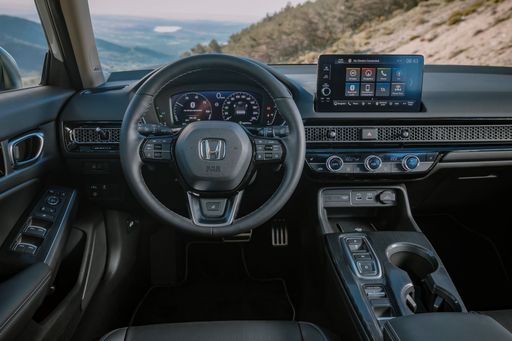
The Honda Civic rides the wave of modernity with meticulous ergonomic design and advanced driver-assist technologies. Features like adaptive cruise control and lane-keeping assistance come standard, enriched by an infotainment system that seamlessly integrates with the driver’s digital lifestyle.

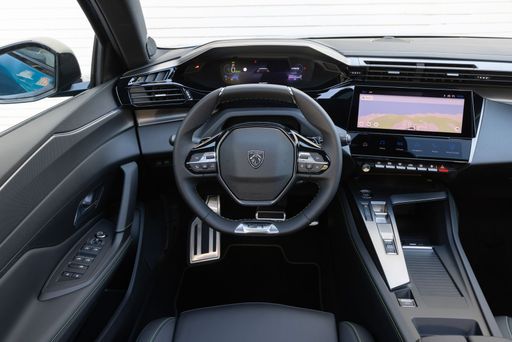
Peugeot’s 408 doesn’t lag with its array of cutting-edge features. The i-Cockpit is a testament to Peugeot's commitment to a driver-centric experience, featuring a compact steering wheel and a customizable digital display that keeps critical information at the driver's fingertips. Innovations in safety technology, such as active lane monitoring and collision detection, are noteworthy inclusions in the 408.

408 @ Peugeot / Stellantis Media

Space and Utility

The interior and cargo space in both these models cater to practical needs. The Civic offers trunk capacities around 404-410 liters, sufficient for everyday and medium-haul travel needs, while seating configurations remain versatile for driver and passenger comfort.

The Peugeot 408 impresses with a more generous trunk capacity, ranging up to 536 liters, thanks to its SUV design. The spacious cabin accommodates five passengers comfortably, further enhancing its family-friendly appeal.

Civic @ Honda Motor Co., Ltd.

Final Verdict

Choosing between the Honda Civic and Peugeot 408 boils down to personal preference and lifestyle. The Civic stands as a paragon of sportiness blended with efficient performance, catering to both spirited drives and eco-conscious commutes. Contrastingly, the Peugeot 408 attracts those who revel in SUV practicality while benefiting from cutting-edge hybrid and electric technologies.

In essence, both models are superheroes in their rights, showcasing automotive excellence in contemporary design, efficiency, and technology. Whether it's the Civic’s dynamic efficiency or the Peugeot’s eco-friendly innovations, the choice is ultimately yours to make. Both promise to deliver a satisfying drive, reflecting the future of automotive engineering.

Here’s where it gets real: The technical differences in detail

408 @ Peugeot / Stellantis Media

Costs and Efficiency:

Price and efficiency are key factors when choosing a car – and this is often where the real differences emerge.

Honda Civic has a minimal advantage in terms of price – it starts at 32500 £, while the Peugeot 408 costs 35100 £. That’s a price difference of around 2632 £.

Fuel consumption also shows a difference: Peugeot 408 manages with 2.70 L and is therefore convincingly more efficient than the Honda Civic with 4.70 L. The difference is about 2 L per 100 km.

Engine and Performance:

Under the bonnet, it becomes clear which model is tuned for sportiness and which one takes the lead when you hit the accelerator.

When it comes to engine power, the Peugeot 408 has a somewhat edge – offering 225 HP compared to 184 HP. That’s roughly 41 HP more horsepower.

In acceleration from 0 to 100 km/h, the Peugeot 408 is barely noticeable quicker – completing the sprint in 7.20 s, while the Honda Civic takes 7.80 s. That’s about 0.60 s faster.

In terms of top speed, the Peugeot 408 performs distinct better – reaching 233 km/h, while the Honda Civic tops out at 180 km/h. The difference is around 53 km/h.

There’s also a difference in torque: Peugeot 408 pulls slightly stronger with 360 Nm compared to 315 Nm. That’s about 45 Nm difference.

Space and Everyday Use:

Beyond pure performance, interior space and usability matter most in daily life. This is where you see which car is more practical and versatile.

Both vehicles offer seating for 5 people.

In curb weight, Honda Civic is slight lighter – 1517 kg compared to 1544 kg. The difference is around 27 kg.

In terms of boot space, the Peugeot 408 offers distinct more room – 536 L compared to 410 L. That’s a difference of about 126 L.

In maximum load capacity, the Peugeot 408 performs noticeable better – up to 1583 L, which is about 363 L more than the Honda Civic.

When it comes to payload, Peugeot 408 somewhat takes the win – 456 kg compared to 397 kg. That’s a difference of about 59 kg.

Who wins the race?

The Peugeot 408 proves to be wins the duel decisively and therefore becomes our DriveDuel Champion!
Peugeot 408 is the better all-rounder in this comparison.

from about £35,100
408 @ Peugeot / Stellantis Media

Peugeot 408

  • Engine Type : Electric, Petrol MHEV, Plugin Hybrid
  • Transmission : Automatic
  • Drive Type : Front-Wheel Drive
  • Power HP : 145 - 225 HP
  • Consumption L/100km : 2.7 - 5.1 L
  • Consumption kWh/100km : 14.80 kWh
  • Electric Range : 79 - 455 km

Honda Civic

The Honda Civic mixes practical daily usability with a surprisingly engaging driving character, wrapping clever interior design and dependable engineering in a tidy, modern package. It’s a smart buy for drivers who want sensible reliability, a bit of fun behind the wheel, and a shape that never looks like it’s trying too hard.

details

Peugeot 408

The Peugeot 408 blends a coupe-like roofline with practical sensibility, delivering striking looks and a surprisingly airy, premium-feeling cabin. On the road it prefers comfort and poise over manic thrills, making it a smart, stylish choice for buyers who want something a bit different from the usual family hatchback.

details
Honda Civic
Peugeot 408
Civic @ Honda Motor Co., Ltd.
408 @ Peugeot / Stellantis Media

Costs and Consumption

Price
32500 - 35500 £
Price
35100 - 48000 £
Consumption L/100km
4.7 - 5 L
Consumption L/100km
2.7 - 5.1 L
Consumption kWh/100km
-
Consumption kWh/100km
14.80 kWh
Electric Range
-
Electric Range
79 - 455 km
Battery Capacity
-
Battery Capacity
58.20 kWh
co2
108 - 114 g/km
co2
0 - 114 g/km
Fuel tank capacity
40 L
Fuel tank capacity
42 - 52 L

Dimensions and Body

Body Type
Hatchback
Body Type
SUV
Seats
5
Seats
5
Doors
5
Doors
5
Curb weight
1517 - 1533 kg
Curb weight
1544 - 1879 kg
Trunk capacity
404 - 410 L
Trunk capacity
471 - 536 L
Length
4560 mm
Length
4687 mm
Width
1890 mm
Width
1848 mm
Height
1408 mm
Height
1478 mm
Max trunk capacity
1187 - 1220 L
Max trunk capacity
1528 - 1583 L
Payload
348 - 397 kg
Payload
371 - 456 kg

Engine and Performance

Engine Type
Full Hybrid
Engine Type
Electric, Petrol MHEV, Plugin Hybrid
Transmission
Automatic
Transmission
Automatic
Transmission Detail
CVT
Transmission Detail
Reduction Gearbox, Dual-Clutch Automatic
Drive Type
Front-Wheel Drive
Drive Type
Front-Wheel Drive
Power HP
184 HP
Power HP
145 - 225 HP
Acceleration 0-100km/h
7.8 - 8.1 s
Acceleration 0-100km/h
7.2 - 9.4 s
Max Speed
180 km/h
Max Speed
160 - 233 km/h
Torque
315 Nm
Torque
230 - 360 Nm
Number of Cylinders
4
Number of Cylinders
4
Power kW
135 kW
Power kW
107 - 165 kW
Engine capacity
1993 cm3
Engine capacity
1199 - 1598 cm3

General

Model Year
2025
Model Year
2024 - 2025
CO2 Efficiency Class
C
CO2 Efficiency Class
A, C, B
Brand
Honda
Brand
Peugeot
What drivetrain options does the Honda Civic have?

The Honda Civic is offered with Front-Wheel Drive.

The prices and data displayed are estimates based on German list prices and may vary by country. This information is not legally binding.