VS

Honda Jazz vs Mazda 2 comparison

Compare performance (122 HP vs 115 HP), boot space and price (22,200 £ vs 14,200 £ ) at a glance. Find out which car is the better choice for you – Honda Jazz or Mazda 2?

Honda Jazz vs Mazda 2: Key differences

Honda Jazz

4.5 (6 Reviews)
rate
  • marginally more power
  • only slightly more efficient
  • very slightly more trunk space
details

Mazda 2

3.7 (1 Reviews)
rate
  • clearly cheaper
  • barely quicker 0–100 km/h
  • a bit lighter
details

All details on performance, efficiency, range and trunk space can be found in the technical comparison below – including user reviews for both models.

By Achim Sedelmaier

Jazz

Honda Jazz VS Mazda 2 — quick take

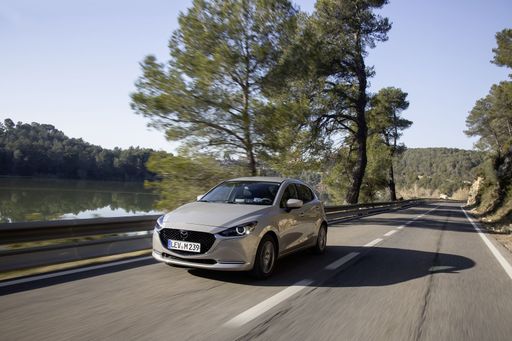
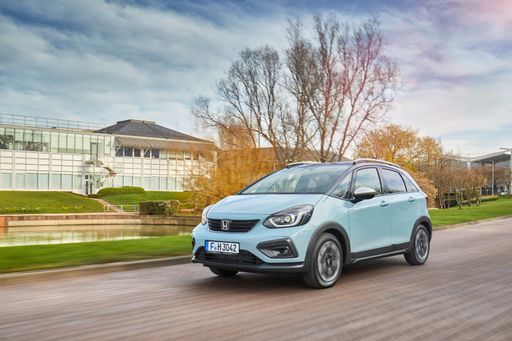
The Honda Jazz and Mazda 2 represent two different answers to the same brief: a small, economical hatch for everyday life. The Honda Jazz leans into interior cleverness and relaxed hybrid driveability, while the Mazda 2 trades that for lightness, sharper steering and a more analogue driving experience. For buyers the contrast is immediate — the Jazz feels like a small MPV with clever packaging, the Mazda 2 like a compact driver’s car that happens to be economical. Both are sensible choices, but they suit distinctly different priorities and budgets, which becomes clearer as you live with them. This page teases those real-world differences before you dive into the technical detail below.
2

Character and driving feel

The Honda Jazz presents itself as calm and obliging: the hybrid propulsion delivers usable low-end shove and a relaxed, unhurried temperament that promotes smooth commutes. The Mazda 2 is lighter on its feet and rewards a more engaged approach — the gearbox and steering feel immediate and connected, so the Mazda 2 feels brisker even if peak acceleration isn’t dramatically different. Where the Jazz masks effort with electric assistance, the Mazda 2 requires more revs and downshifts to keep the pace, which some drivers will enjoy and others will find tiring. In short, the Jazz is about effortless progress, the Mazda 2 about involvement and precision; pick based on whether you prefer being carried along or driving actively.

Jazz

Comfort and long-distance behavior

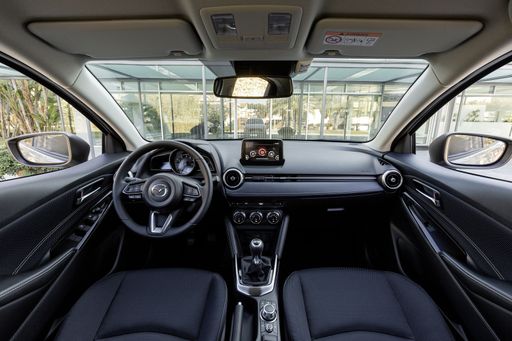
On longer runs the Honda Jazz tends to be the more relaxing companion thanks to its softer tuning and the hybrid’s low‑speed refinement, though the Jazz’s motor becomes more vocal under sustained heavy acceleration. The Mazda 2’s firmer suspension and taut responses make it feel agile but also more fussy over motorway joints and coarse surfaces, so extended trips can feel more wearing in the Mazda 2. Cabin feel differs too: the Mazda 2’s front area has a neat, slightly more premium presentation, while the Jazz impresses with robust main touch points and a practical, airy layout. If motorway serenity and an easy seat-of-your-pants experience matter, the Jazz leans closer to that brief; if you prize a taut, communicative chassis for mixed roads, the Mazda 2 is the one that will keep you alert.

2

Practicality and day-to-day usability

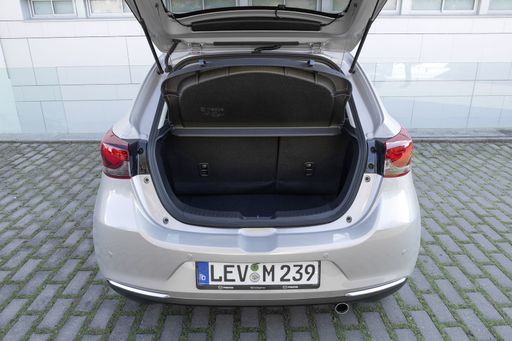
Practicality is where the Honda Jazz really separates itself: inventive rear seating and a low load lip turn awkward loads into simple routines, and the Jazz’s cabin space is noticeably more forgiving for rear passengers. The Mazda 2’s luggage area and back seat are compact and come with compromises — a higher boot lip and tighter rear knee room make everyday loading and family duties less carefree than in the Jazz. Both cars are competent for shopping and city errands, but the Jazz makes that daily choreography easier and less fiddly; the Mazda 2 asks you to travel lighter or plan your cargo more carefully. That difference in usability is decisive if your life usually involves strollers, awkward boxes or regular rear-seat passengers.

Jazz

City friendliness and maneuverability

In tight urban environments the Honda Jazz shines with excellent outward visibility and an upright seating position that makes traffic and parking less stressful, and its hybrid drive offers quiet, smooth low‑speed running. The Mazda 2 counters with a smaller kerb-to-kerb feel, sharper steering and a short turning radius that make quick lane changes and tight turns feel instinctive — the Mazda 2 simply dances through congested streets. Jazz owners trade some of the Mazda 2’s agility for confidence and load flexibility, while Mazda 2 owners accept a bit less visibility in return for a lighter, more responsive car. Choose the Jazz if visibility and easy loading trump sporty steering; choose the Mazda 2 if you want the most agile, hands-on city drive.

2

Who each car suits best — buyer fit

The Honda Jazz is best for pragmatic buyers who prioritise space, low‑stress daily driving and flexible cabin solutions — small families, urban commuters with gear to carry, or anyone who values straightforward usability over thrills. The Mazda 2 fits buyers who value driving engagement, low running costs and a lower purchase price — singles or couples who want a nimble, efficient car and enjoy a crisp manual gearbox or direct steering. Budget-conscious shoppers will notice the Mazda 2’s advantage on the sticker and in simplicity, while those who need real-world versatility will be happier with the Jazz. Read on to the technical comparison to see how those experiential differences map to drivetrains, weight and dimensions so you can match numbers to the real-world trade-offs described here.

Here’s where it gets real: The technical differences in detail

Jazz

Costs and Efficiency:

When it comes to price and running costs, the biggest differences usually appear. This is often where you see which car fits your budget better in the long run.

Mazda 2 is clearly cheaper – starting at 14,200 £ , while the Honda Jazz costs 22,200 £ . That’s a price difference of around 7,980 £.

Fuel consumption also shows a difference: the Honda Jazz uses 4.5 L/100km and is only slightly more efficient than the Mazda 2 with 4.7 L/100km. The difference is about 0.2 L/100km.

2

Engine and Performance:

Under the bonnet, it becomes clear which model is tuned for sportiness and which one takes the lead when you hit the accelerator.

When it comes to engine power, the Honda Jazz offers marginally more power – delivering 122 HP compared to 115 HP. That’s roughly 7 HP more horsepower.

When accelerating from 0 to 100 km/h, the Mazda 2 is barely quicker – completing the sprint in 9.1 s, while the Honda Jazz takes 9.4 s. That’s about 0.3 s quicker.

There’s also a difference in torque: the Honda Jazz delivers clearly more torque with 253 Nm compared to 151 Nm. That’s about 102 Nm more.

Jazz

Space and Everyday Use:

Whether family car or daily driver – which one offers more room, flexibility and comfort?

Both vehicles offer seating for 5 people.

In terms of curb weight, Mazda 2 is a bit lighter – 1,099 kg compared to 1,302 kg. The difference is around 203 kg.

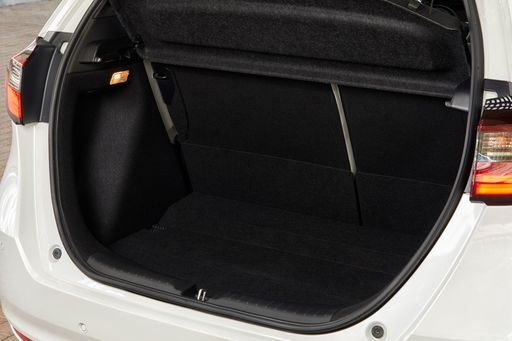
Looking at boot space, the Honda Jazz offers very slightly more boot space – 304 L compared to 280 L. That’s a difference of about 24 L.

When it comes to payload, the Mazda 2 carries a bit more – 437 kg compared to 388 kg. That’s a difference of about 49 kg.

Who wins the race in the data check?

The Mazda 2 comes out modestly ahead in the objective data comparison.
This result only shows which model scores more points on paper – not which of the two cars feels right for you.

from £14,200
2

Mazda 2

  • Engine Type Petrol MHEV, Petrol
  • Transmission Manuel, Automatic
  • Drive Type Front-Wheel Drive
  • Power HP 75 - 115 HP
  • Consumption L/100km 4.7 - 5.4 L/100km
Honda Jazz
Mazda 2

Costs and Consumption

View detailed analysis

Engine and Performance

View detailed analysis

Dimensions and Body

View detailed analysis

Honda Jazz

The Honda Jazz is a supremely practical small hatch that hides clever packaging and more usable space than it lets on, with friendly styling and an unfussy charm. It’s economical to run, easy to park and perfect for buyers who want reliable, versatile daily motoring without the hassle.

details

Mazda 2

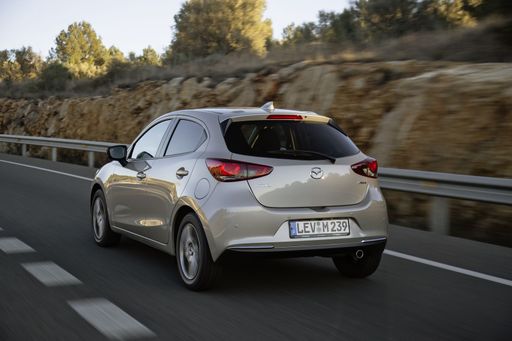
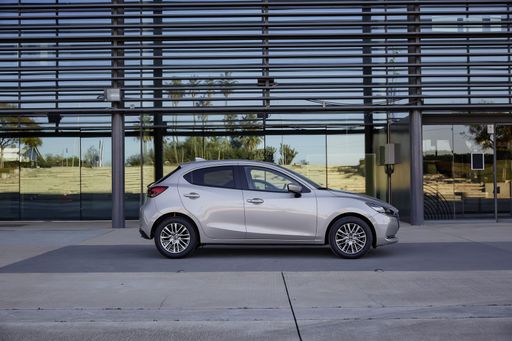
The Mazda 2 is a pocket-sized charmer that makes city driving feel light and lively, wrapped in sleek styling that looks right at home on trendy streets. Buyers who want an economical, fun-to-drive hatch with surprisingly grown-up cabin quality will find it hard to resist — it’s the kind of everyday companion that puts a grin on your face every time you head out.

details
Honda Jazz
Mazda 2

Costs and Consumption

Price
22,200 - 25,900 £
Price
14,200 - 21,700 £
Consumption L/100km
4.5 - 4.8 L/100km
Consumption L/100km
4.7 - 5.4 L/100km
Consumption kWh/100km
-
Consumption kWh/100km
-
Electric Range
-
Electric Range
-
Battery Capacity
-
Battery Capacity
-
co2
102 - 108 g/km
co2
107 - 122 g/km
Fuel tank capacity
-
Fuel tank capacity
44 L

Dimensions and Body

Body Type
Hatchback
Body Type
Hatchback
Seats
5
Seats
5
Doors
-
Doors
5
Curb weight
1,302 - 1,321 kg
Curb weight
1,099 - 1,120 kg
Trunk capacity
304 L
Trunk capacity
280 L
Length
-
Length
4,080 mm
Width
1,694 mm
Width
1,695 mm
Height
-
Height
1,515 mm
Max trunk capacity
-
Max trunk capacity
950 L
Payload
369 - 388 kg
Payload
420 - 437 kg

Engine and Performance

Engine Type
Full Hybrid
Engine Type
Petrol MHEV, Petrol
Transmission
Automatic
Transmission
Manuel, Automatic
Transmission Detail
Automatic Gearbox
Transmission Detail
Manual Gearbox, Automatic Gearbox
Drive Type
Front-Wheel Drive
Drive Type
Front-Wheel Drive
Power HP
122 HP
Power HP
75 - 115 HP
Acceleration 0-100km/h
9.4 - 9.7 s
Acceleration 0-100km/h
9.1 - 12.1 s
Max Speed
-
Max Speed
171 - 200 km/h
Torque
253 Nm
Torque
143 - 151 Nm
Number of Cylinders
4
Number of Cylinders
4
Power kW
90 kW
Power kW
55 - 85 kW
Engine capacity
1,498 cm3
Engine capacity
1,496 cm3

General

Model Year
2025
Model Year
2023
CO2 Efficiency Class
C
CO2 Efficiency Class
C, D
Brand
Honda
Brand
Mazda
DriveDuel uses data analysis and artificial intelligence to evaluate vehicle data and create content. Content is regularly reviewed and improved. The displayed prices are estimates based on German list prices, adjusted to the respective country’s VAT. Country-specific registration taxes are not included. This information is not legally binding.