VS

Honda Jazz vs Mazda 3 Hatchback - Differences and prices compared

Compare performance (122 HP vs 186 HP), boot space and price (23100 £ vs 24500 £ ) at a glance. Find out which car is the better choice for you – Honda Jazz or Mazda 3 Hatchback?

Jazz

Compact Hatchbacks Showdown: Honda Jazz vs. Mazda 3 Hatchback

The compact hatchback segment is crowded with choices, but the Honda Jazz and Mazda 3 Hatchback stand out for their blend of style, performance, and innovation. We delve into these two popular models to uncover what sets them apart in the market.
3 Hatchback

Design and Dimensions

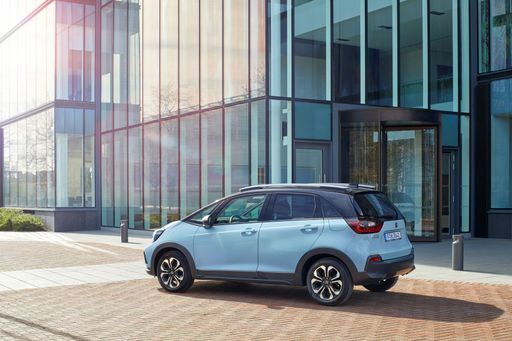
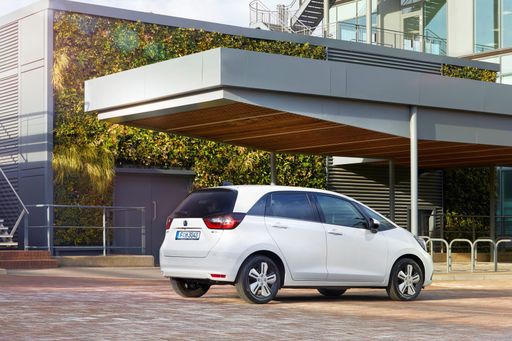
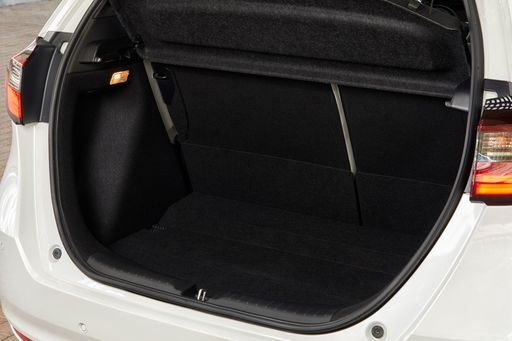
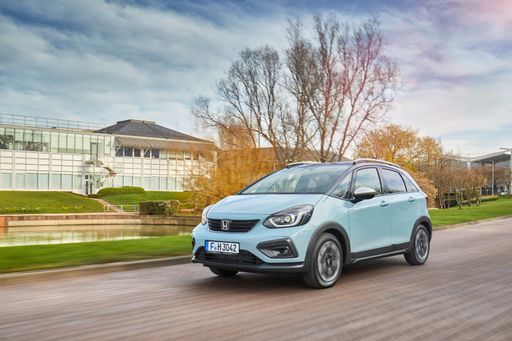
Starting with the Honda Jazz, which sports a practical, yet modern design. Measuring between 4089mm and 4105mm in length, and standing at 1526mm to 1556mm in height, it offers a compact profile that's well-suited for urban environments. The Jazz's design emphasizes practicality with its 5-door layout and an impressive trunk capacity of 304 liters, despite its smaller footprint.

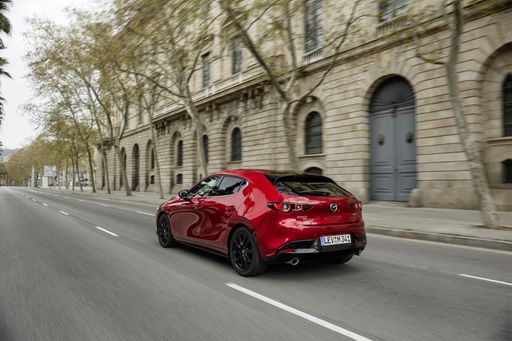
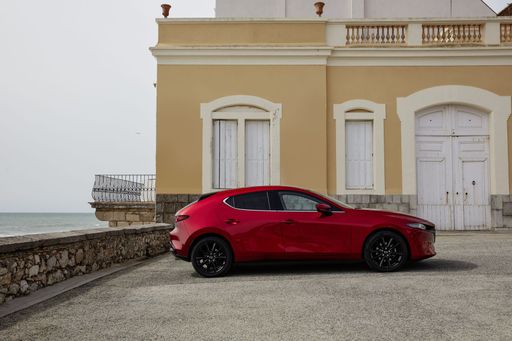
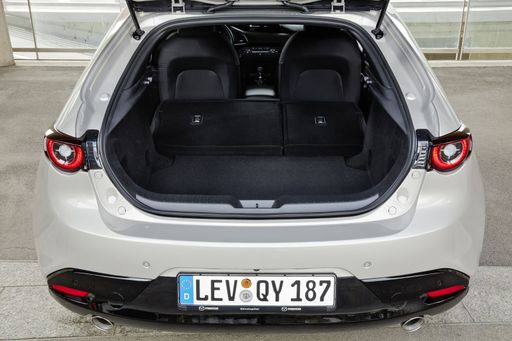
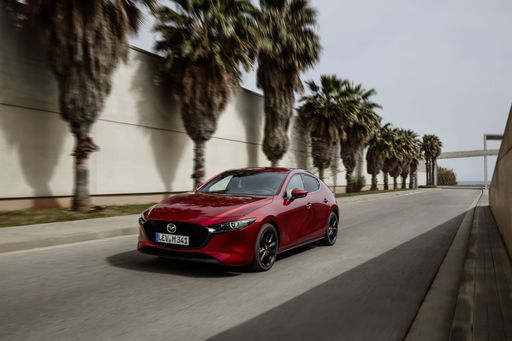
In contrast, the Mazda 3 Hatchback offers a more striking aesthetic characterized by sleek lines and a bold stance. It's longer at 4460mm and wider at 1795mm, combining sporty looks with ample interior space. With a trunk capacity of 351 liters, it offers more cargo space than the Jazz, aligning with its slightly larger build.

Jazz

Engine and Performance

Under the hood, the Honda Jazz is equipped with a full hybrid engine producing 122 HP (90 kW) and a smooth Continuously Variable Transmission (CVT). It provides an exemplary blend of power and efficiency, using just between 4.5 to 4.8 liters per 100 km, adjusting easily in varied conditions. The Jazz accelerates from 0 to 100 km/h in around 9.4 to 9.7 seconds and reaches a maximum speed of 175 km/h.

The Mazda 3 Hatchback offers a choice between a Petrol MHEV engine with power outputs ranging from 140 to 186 HP (103 to 137 kW), depending on the variant. Equipped with both manual and automatic transmission options, and available as front-wheel or all-wheel drive, it offers a more tailored driving experience. Its acceleration to 100 km/h is accomplished in 8 to 9.8 seconds, and it boasts a top speed of up to 216 km/h. Fuel consumption varies between 5.6 to 6.5 liters per 100 km.

3 Hatchback

Innovative Features

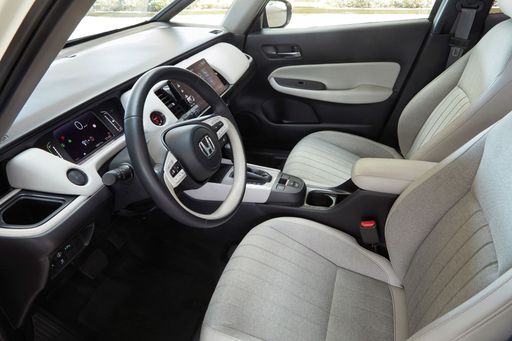
The Honda Jazz delivers innovation with its hybrid powertrain, offering advantages in fuel efficiency and reduced emissions (102-108 g/km CO2). Its clever Magic Seat system offers versatile configurations for enhanced cargo space and utility.

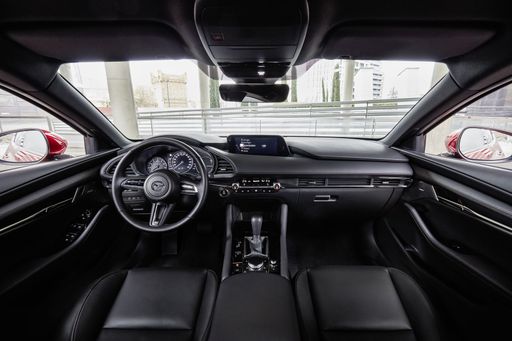
The Mazda 3, on the other hand, brims with technology, featuring an intuitive infotainment system and advanced safety features. Equipped with Mazda's Skyactiv technology in its engines, it improves both performance and fuel efficiency despite its larger engine capacities.

Jazz

Conclusion

Choosing between the Honda Jazz and Mazda 3 Hatchback depends largely on personal preference and needs. The Jazz excels in fuel efficiency and compact practicality, making it an ideal choice for city dwellers and eco-conscious drivers. Meanwhile, the Mazda 3 appeals to those desiring a dynamic and sporty drive, along with advanced features and a strong visual presence.

Ultimately, both hatchbacks offer the versatility and innovation that modern drivers expect, leaving the final decision to the nuances of style, performance, and personal taste.

Honda Jazz

4.8 (3 Reviews)
rate

Mazda 3 Hatchback

Here’s where it gets real: The technical differences in detail

3 Hatchback

Costs and Efficiency:

Price and efficiency are often the first things buyers look at. Here it becomes clear which model has the long-term edge – whether at the pump, the plug, or in purchase price.

Honda Jazz has a hardly perceptible advantage in terms of price – it starts at 23100 £ , while the Mazda 3 Hatchback costs 24500 £ . That’s a price difference of around 1448 £.

Fuel consumption also shows a difference: Honda Jazz manages with 4.50 L and is therefore distinct more efficient than the Mazda 3 Hatchback with 5.60 L. The difference is about 1.10 L per 100 km.

Jazz

Engine and Performance:

Under the bonnet, it becomes clear which model is tuned for sportiness and which one takes the lead when you hit the accelerator.

When it comes to engine power, the Mazda 3 Hatchback has a distinct edge – offering 186 HP compared to 122 HP. That’s roughly 64 HP more horsepower.

In acceleration from 0 to 100 km/h, the Mazda 3 Hatchback is a bit quicker – completing the sprint in 8 s, while the Honda Jazz takes 9.40 s. That’s about 1.40 s faster.

There’s also a difference in torque: Honda Jazz pulls minimal stronger with 253 Nm compared to 240 Nm. That’s about 13 Nm difference.

3 Hatchback

Space and Everyday Use:

Cabin size, boot volume and payload all play a role in everyday practicality. Here, comfort and flexibility make the difference.

Both vehicles offer seating for 5 people.

In curb weight, Honda Jazz is minimal lighter – 1302 kg compared to 1419 kg. The difference is around 117 kg.

In terms of boot space, the Mazda 3 Hatchback offers somewhat more room – 351 L compared to 304 L. That’s a difference of about 47 L.

When it comes to payload, Mazda 3 Hatchback slightly takes the win – 485 kg compared to 388 kg. That’s a difference of about 97 kg.

Who wins the race in the data check?

The Mazda 3 Hatchback holds a decisive overall lead in the objective data comparison.
This result only shows which model scores more points on paper – not which of the two cars feels right for you.

Honda Jazz
Mazda 3 Hatchback

Costs and Consumption

View detailed analysis

Engine and Performance

View detailed analysis

Dimensions and Body

View detailed analysis
from about £24,500
3 Hatchback

Mazda 3 Hatchback

  • Engine Type : Petrol MHEV
  • Transmission : Manuel, Automatic
  • Drive Type : Front-Wheel Drive, All-Wheel Drive
  • Power HP : 140 - 186 HP
  • Consumption L/100km : 5.6 - 6.5 L

Honda Jazz

4.8 (3 Reviews)
rate

The Honda Jazz is a supremely practical small hatch that hides clever packaging and more usable space than it lets on, with friendly styling and an unfussy charm. It’s economical to run, easy to park and perfect for buyers who want reliable, versatile daily motoring without the hassle.

details

Mazda 3 Hatchback

The Mazda 3 hatchback blends elegant design with a surprisingly sporty drive, giving a cabin that feels more upscale than you’d expect for the segment. Practical enough for everyday life yet eager to entertain behind the wheel, it’s a smart, good-humored choice that makes even grocery runs feel like a mini escape.

details
Honda Jazz
Mazda 3 Hatchback

Costs and Consumption

Price
23100 - 26700 £
Price
24500 - 35500 £
Consumption L/100km
4.5 - 4.8 L
Consumption L/100km
5.6 - 6.5 L
Consumption kWh/100km
-
Consumption kWh/100km
-
Electric Range
-
Electric Range
-
Battery Capacity
-
Battery Capacity
-
co2
102 - 108 g/km
co2
126 - 146 g/km
Fuel tank capacity
-
Fuel tank capacity
-

Dimensions and Body

Body Type
Hatchback
Body Type
Hatchback
Seats
5
Seats
5
Doors
-
Doors
-
Curb weight
1302 - 1321 kg
Curb weight
1419 - 1549 kg
Trunk capacity
304 L
Trunk capacity
351 L
Length
-
Length
-
Width
-
Width
1795 mm
Height
-
Height
-
Max trunk capacity
-
Max trunk capacity
-
Payload
369 - 388 kg
Payload
470 - 485 kg

Engine and Performance

Engine Type
Full Hybrid
Engine Type
Petrol MHEV
Transmission
Automatic
Transmission
Manuel, Automatic
Transmission Detail
CVT
Transmission Detail
Manual Gearbox, Automatic Gearbox
Drive Type
Front-Wheel Drive
Drive Type
Front-Wheel Drive, All-Wheel Drive
Power HP
122 HP
Power HP
140 - 186 HP
Acceleration 0-100km/h
9.4 - 9.7 s
Acceleration 0-100km/h
8 - 9.8 s
Max Speed
-
Max Speed
-
Torque
253 Nm
Torque
238 - 240 Nm
Number of Cylinders
4
Number of Cylinders
4
Power kW
90 kW
Power kW
103 - 137 kW
Engine capacity
1498 cm3
Engine capacity
1998 - 2488 cm3

General

Model Year
2025
Model Year
2025
CO2 Efficiency Class
C
CO2 Efficiency Class
D, E
Brand
Honda
Brand
Mazda
Is the Honda Jazz offered with different drivetrains?

The Honda Jazz is offered with Front-Wheel Drive.

The prices shown are estimates based on German list prices, adjusted for local VAT. Local registration taxes (e.g. NoVA, BPM or CO2 malus) are not included. This information is not legally binding.