
 Deutschland
 France
 Nederland
 Great Britain
 Sverige
 Norge
Norge Danmark
 Suomi
Suomi Italia
 Polska
 España
VS
Hyundai Bayon vs Mazda 3 Hatchback - Differences and prices compared
Bayon
@ Hyundai Motor Company
Costs and Efficiency:
Looking at overall running costs, both models reveal some interesting differences in everyday economy.
Hyundai Bayon has a clearly perceptible advantage in terms of price – it starts at 20100 £, while the Mazda 3 Hatchback costs 24500 £. That’s a price difference of around 4491 £.
Fuel consumption also shows a difference: Hyundai Bayon manages with 5.40 L and is therefore slight more efficient than the Mazda 3 Hatchback with 5.60 L. The difference is about 0.20 L per 100 km.
3 Hatchback
@ Mazda Motor Corporation
Engine and Performance:
Under the bonnet, it becomes clear which model is tuned for sportiness and which one takes the lead when you hit the accelerator.
When it comes to engine power, the Mazda 3 Hatchback has a decisively edge – offering 186 HP compared to 100 HP. That’s roughly 86 HP more horsepower.
In acceleration from 0 to 100 km/h, the Mazda 3 Hatchback is significantly quicker – completing the sprint in 8 s, while the Hyundai Bayon takes 11.30 s. That’s about 3.30 s faster.
In terms of top speed, the Mazda 3 Hatchback performs somewhat better – reaching 216 km/h, while the Hyundai Bayon tops out at 179 km/h. The difference is around 37 km/h.
There’s also a difference in torque: Mazda 3 Hatchback pulls to a small extent stronger with 240 Nm compared to 200 Nm. That’s about 40 Nm difference.
Bayon
@ Hyundai Motor Company
Space and Everyday Use:
Beyond pure performance, interior space and usability matter most in daily life. This is where you see which car is more practical and versatile.
Seats: offers more seating capacity – vs .
In curb weight, Hyundai Bayon is evident lighter – 1170 kg compared to 1419 kg. The difference is around 249 kg.
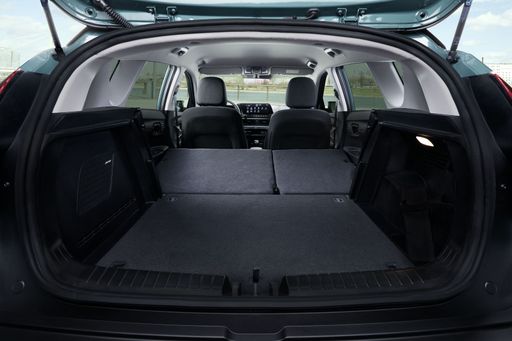
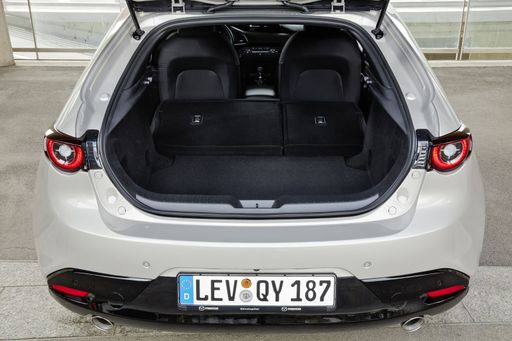
In terms of boot space, the Hyundai Bayon offers slightly more room – 411 L compared to 351 L. That’s a difference of about 60 L.
In maximum load capacity, the Hyundai Bayon performs slightly better – up to 1205 L, which is about 179 L more than the Mazda 3 Hatchback.
When it comes to payload, Mazda 3 Hatchback slight takes the win – 485 kg compared to 465 kg. That’s a difference of about 20 kg.
Who comes out on top?
Overall, the Mazda 3 Hatchback shows itself to be dominates this comparison and secures the title of DriveDuel Champion.
It convinces with the more balanced overall package and proves to be the more versatile choice for everyday use.
from about £24,500
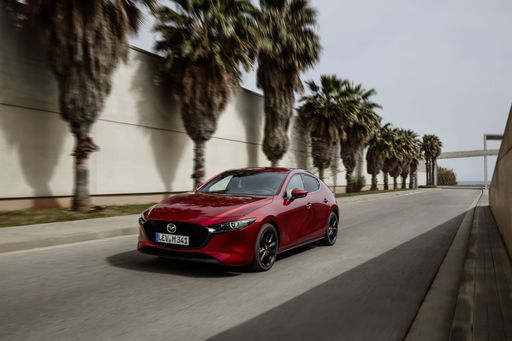 @ Mazda Motor Corporation
Mazda 3 Hatchback
Hyundai Bayon
Mazda 3 Hatchback
Costs and Consumption
View detailed analysis
View detailed analysis
Engine and Performance
View detailed analysis
View detailed analysis
Dimensions and Body
View detailed analysis
View detailed analysis
Hyundai Bayon
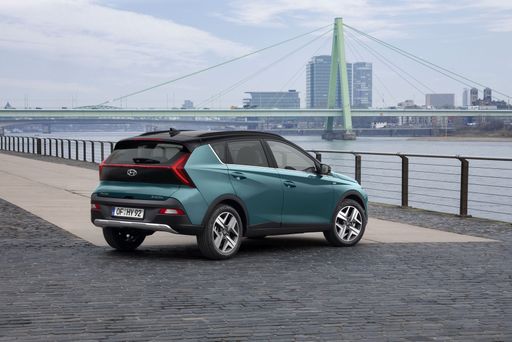
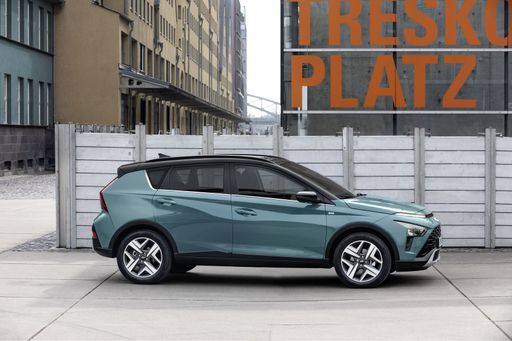
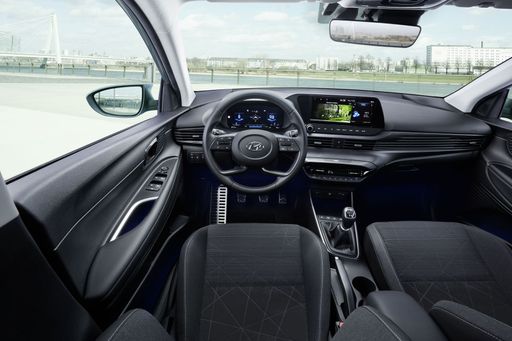
The Hyundai Bayon slips neatly between city runabout and small SUV, offering surprising practicality and a fresh, confident design that stands out in urban traffic. It's an easy buy for shoppers who want smart packaging, tidy handling and a dash of personality without fuss — a sensible little crossover that makes everyday driving a bit more enjoyable.
details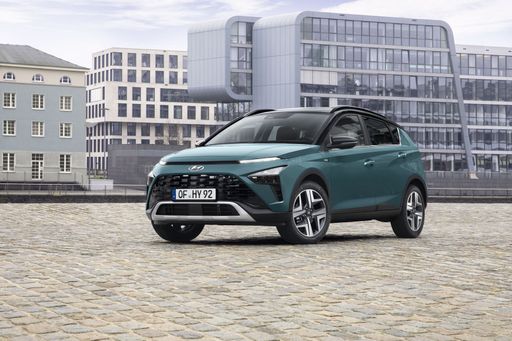 @ Hyundai Motor Company
 @ Hyundai Motor Company
 @ Hyundai Motor Company
 @ Hyundai Motor Company
 @ Hyundai Motor Company
Mazda 3 Hatchback
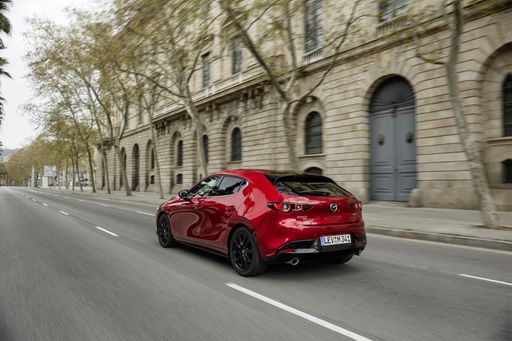
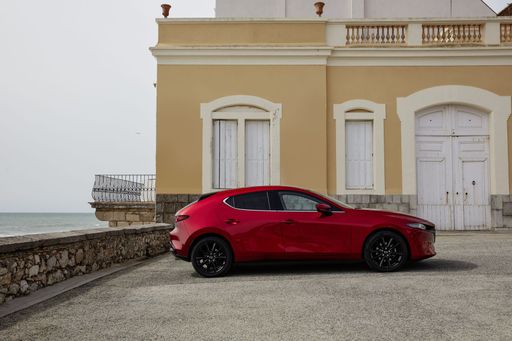
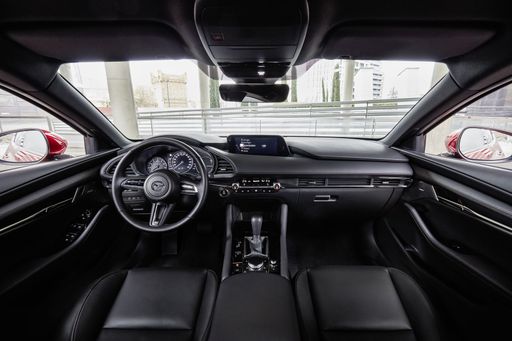
The Mazda 3 hatchback blends elegant design with a surprisingly sporty drive, giving a cabin that feels more upscale than you’d expect for the segment. Practical enough for everyday life yet eager to entertain behind the wheel, it’s a smart, good-humored choice that makes even grocery runs feel like a mini escape.
details
@ Mazda Motor Corporation
 @ Mazda Motor Corporation
 @ Mazda Motor Corporation
 @ Mazda Motor Corporation
 @ Mazda Motor Corporation
Hyundai Bayon
Mazda 3 Hatchback
|
@ Hyundai Motor Company
|
@ Mazda Motor Corporation
|
|
|
|
Costs and Consumption |
|
|---|---|
|
Price
20100 - 25800 £
|
Price
24500 - 35500 £
|
|
Consumption L/100km
5.4 - 5.5 L
|
Consumption L/100km
5.6 - 6.5 L
|
|
Consumption kWh/100km
-
|
Consumption kWh/100km
-
|
|
Electric Range
-
|
Electric Range
-
|
|
Battery Capacity
-
|
Battery Capacity
-
|
|
co2
124 g/km
|
co2
126 - 146 g/km
|
|
Fuel tank capacity
40 L
|
Fuel tank capacity
48 - 51 L
|
Dimensions and Body |
|
|---|---|
|
Body Type
SUV
|
Body Type
Hatchback
|
|
Seats
5
|
Seats
5
|
|
Doors
5
|
Doors
5
|
|
Curb weight
1170 - 1195 kg
|
Curb weight
1419 - 1549 kg
|
|
Trunk capacity
411 L
|
Trunk capacity
351 L
|
|
Length
4180 mm
|
Length
4460 mm
|
|
Width
1775 mm
|
Width
1795 mm
|
|
Height
1500 mm
|
Height
1435 mm
|
|
Max trunk capacity
1205 L
|
Max trunk capacity
1022 - 1026 L
|
|
Payload
460 - 465 kg
|
Payload
470 - 485 kg
|
Engine and Performance |
|
|---|---|
|
Engine Type
Petrol
|
Engine Type
Petrol MHEV
|
|
Transmission
Manuel, Automatic
|
Transmission
Manuel, Automatic
|
|
Transmission Detail
Manual Gearbox, Dual-Clutch Automatic
|
Transmission Detail
Manual Gearbox, Automatic Gearbox
|
|
Drive Type
Front-Wheel Drive
|
Drive Type
Front-Wheel Drive, All-Wheel Drive
|
|
Power HP
100 HP
|
Power HP
140 - 186 HP
|
|
Acceleration 0-100km/h
11.3 - 12.4 s
|
Acceleration 0-100km/h
8 - 9.8 s
|
|
Max Speed
176 - 179 km/h
|
Max Speed
199 - 216 km/h
|
|
Torque
172 - 200 Nm
|
Torque
238 - 240 Nm
|
|
Number of Cylinders
3
|
Number of Cylinders
4
|
|
Power kW
74 kW
|
Power kW
103 - 137 kW
|
|
Engine capacity
998 cm3
|
Engine capacity
1998 - 2488 cm3
|
General |
|
|---|---|
|
Model Year
2024
|
Model Year
2025
|
|
CO2 Efficiency Class
D
|
CO2 Efficiency Class
D, E
|
|
Brand
Hyundai
|
Brand
Mazda
|
What drivetrain options does the Hyundai Bayon have?
The Hyundai Bayon is available as Front-Wheel Drive.
The prices and data displayed are estimates based on German list prices and may vary by country. This information is not legally binding.